How Does AI Image Generation Work? A Simple Guide

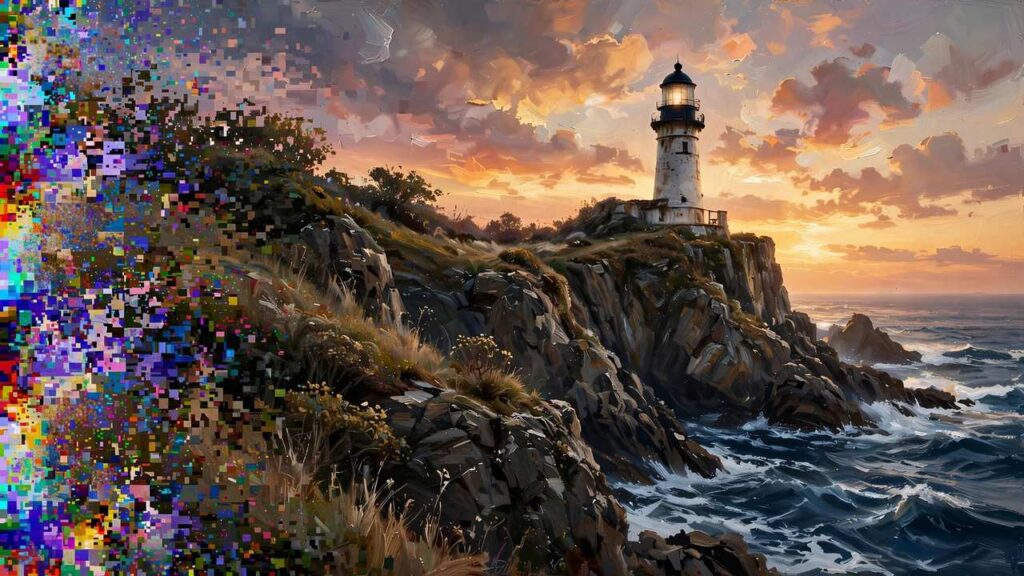
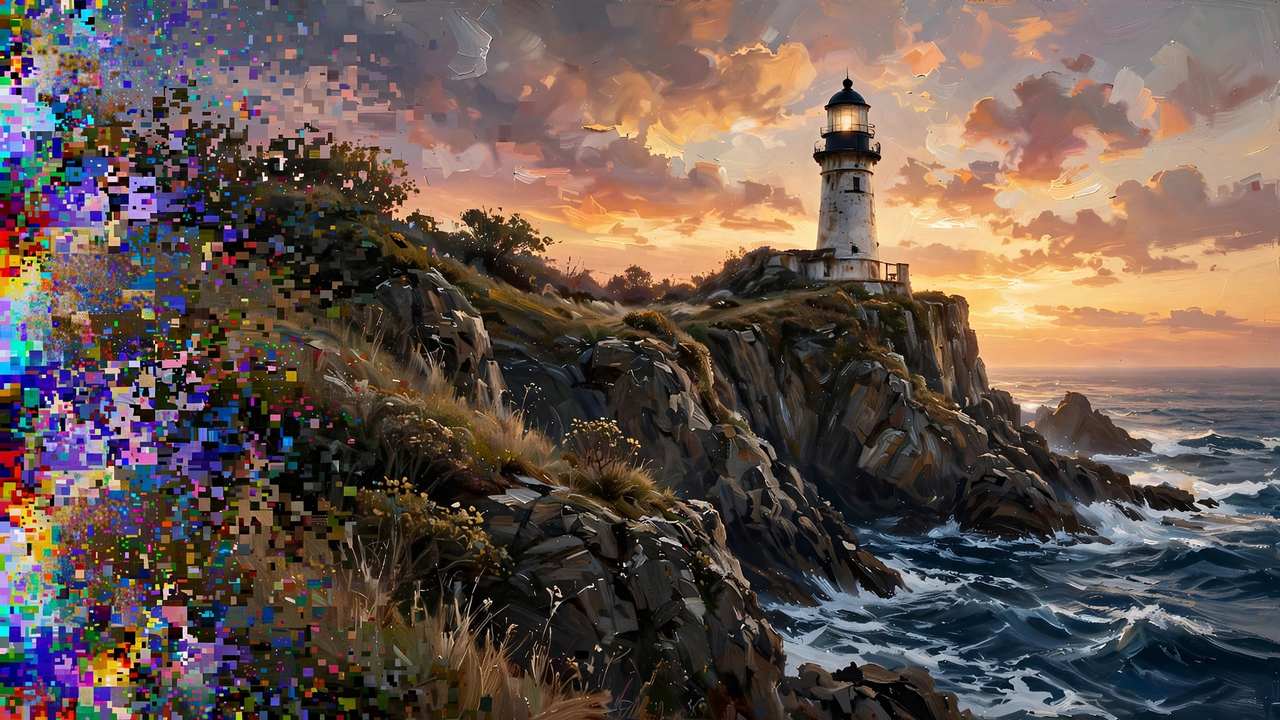
Type a sentence — “a lighthouse on a cliff at sunset, oil painting style” — and seconds later, a picture exists that no human ever drew. Not a photo pulled from somewhere. A brand-new image, invented on the spot, matching words never combined quite that way before.
How? The common misconception is that the AI found your image — searched a library and stitched pieces together. Wrong in the most interesting way. What actually happens is stranger: the machine predicts your image into existence, starting from pure static noise. It never saw your lighthouse. It dreams it up, guided only by what it learned from billions of pictures studied during training.
Grasp that — prediction, not retrieval — and everything else, including the spectacular failures, starts making sense.
What Is AI Image Generation?
AI image generation creates original images from text descriptions (prompts) — sometimes also from reference images, sketches, or edits. You describe what you want in words; the system produces a matching picture.
Today’s tools run on diffusion models, the gold standard for text-to-image. They learn to reverse a noise-adding process — a formulation established in a landmark 2020 paper on denoising diffusion probabilistic models (DDPM). The first major text-to-image model to capture the public imagination, DALL-E, debuted in 2021. The field hasn’t slowed since.
But first, lock in the mental model — it’s the key to this entire article.
The Key Idea: Prediction, Not Retrieval
An AI image generator doesn’t look up images — it predicts them.
Think of drawing a cat from memory. You don’t flip through a mental photo album and copy one. You have a learned sense of cat-ness — pointy ears, whiskers, tail — from every cat you’ve seen, and you reconstruct one from that understanding. Diffusion models work analogously: training absorbed patterns from billions of captioned images, building a statistical sense of what things look like and how words map to visuals.
Prompted, the model doesn’t search those billions of images. It generates — shaping random noise toward your description using everything it learned. The result never existed before. That’s why similar prompts yield genuinely different, original images — and why the technology raises fascinating questions about creativity and ownership.
How It Works: 6 Steps
Six stages, in plain language.
1. Your Input: Prompt + References
Your words are the steering wheel: “a lighthouse on a cliff at sunset, oil painting style.” Reference images, sketches, or an existing image to edit add guidance. Richer input, more control — though control has limits, as we’ll see.
2. The Encoder Turns Words into Numbers
A text encoder converts your prompt into numerical representations — vectors capturing meaning, not spelling. “Lighthouse,” “sunset,” “oil painting” become rich mathematical descriptions of what those concepts look like visually. This is the bridge between language and imagery.
3. Diffusion: From Noise to Image
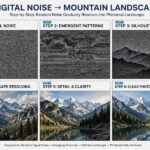
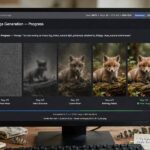
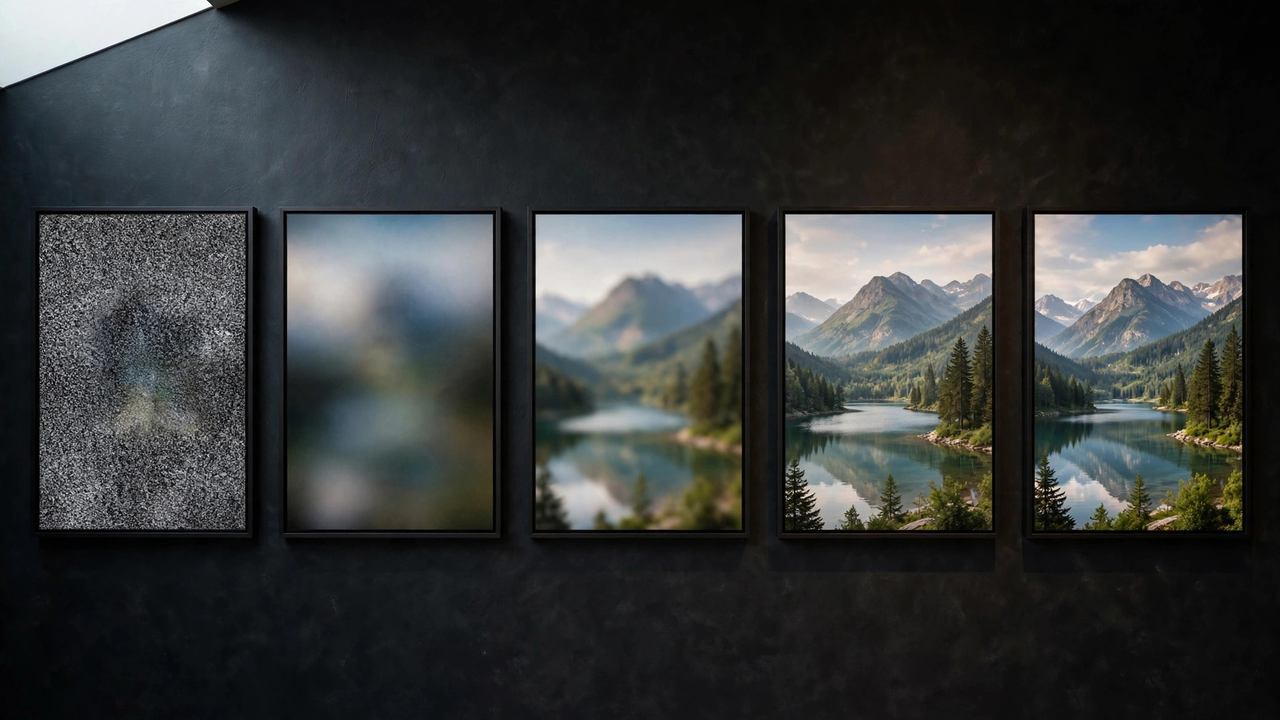
The heart of it. The model starts with pure random noise — an untuned television’s static — then denoises step by step: each pass removes noise and adds structure, guided by your prompt. Early steps set composition (sky here, cliff there); later steps refine detail (the beam, brushstroke texture).
Picture a sculptor revealing a statue by removing randomness instead of stone, consulting your description at every cut. After dozens of passes, noise becomes image. This denoising — reversing noise into structure — is exactly what the 2020 DDPM paper formulated, and why diffusion outputs look so coherent.
4. Attention Connects Words to Pixels
An attention mechanism decides which words influence which regions: “lighthouse” guides the tower; “sunset” the sky’s colors; “oil painting” the texture. Without it, the model would know what to draw but not where — lighthouse-ish colors smeared across a sunset-ish blob.
5. Decoding the Latent Image
Efficiency trick: the model denoises in latent space — a compressed abstract shorthand of the image, far smaller and faster than full resolution. A decoder then expands this latent sketch into the final image, adding genuine detail. Compose small, project large. Better latent representations are also why 4K output is becoming standard — a resolution jump unthinkable for generated imagery a few years ago.
6. Evaluate and Revise
The final stage is yours. The result is wrong — wrong style, six fingers — so you revise: adjust the prompt, change the seed, request variations, inpaint specific regions. Generation is iterative; professionals direct the model like a photographer directs a shoot — many takes, selective keeps.
Tools also split generate vs. edit vs. upscale into modes: create from scratch, modify an existing image, enhance detail. Same machinery, different starting points.
Training vs Generation: Two Different Things
People conflate these constantly — and the distinction explains both capabilities and controversies.
Training is the long, expensive, one-time phase: the model studies billions of captioned images, learning word-to-visual relationships over weeks or months of computation. Training is where the model learns.
Generation is the fast, cheap, every-time phase: the trained model turns your prompt into an image in seconds. Generation is where the model performs.
Why it matters: it explains the economics (training costs a fortune; generating costs pennies — hence cheap tools), the knowledge cutoff (the model only knows patterns from its training data; ask for something newer and it improvises, sometimes badly), and the copyright debate’s crux — the model learned from billions of images without exactly copying any. Which brings us, eventually, to the lawyers.
For broader context, generative AI is the bigger category — image generation is one member of a family that also writes, codes, and composes.
Model Types: Diffusion vs GAN vs Autoregressive
Diffusion dominates, but it’s not the only approach tried.
| Diffusion models | GANs | Autoregressive models | |
|---|---|---|---|
| Core idea | Reverse noise into images, step by step | Two networks compete: generator fakes images, discriminator judges them | Build images piece by piece in sequence, like writing |
| Strengths | Highest quality and coherence; the gold standard | Fast generation; historically key to photorealism | Strong at structured, sequential content |
| Weaknesses | Slower (many denoising steps) | Finicky training; mode collapse (limited variety) | Slower for large images; weaker pure image quality |
| Status | Dominant in today’s tools | Superseded for text-to-image, used in niches | Used in some systems, often combined |
Diffusion won because quality won. GANs generate through an adversarial game that’s powerful but unstable to train; autoregressive models build sequentially but haven’t matched diffusion’s fidelity. The field converged on denoising because it makes the prettiest pictures.
Deeper on the dominant architecture? Our explainer on what Stable Diffusion is takes the most famous open diffusion model apart.
Popular AI Image Tools
DALL-E (OpenAI) was the pioneer — the 2021 debut proving text-to-image was real. Built into ChatGPT, it’s the most accessible entry point: describe, receive, iterate, in a chat window.
Midjourney (now V7) is the artist’s favorite — renowned for aesthetic quality and painterly images that look deliberately beautiful, not merely accurate.
Adobe Firefly is the commercial-safe option, trained on licensed and public-domain content — Adobe’s answer to copyright anxiety, built for professional workflows.
FLUX.2 represents the open-model frontier — high quality with available weights for those who’d rather run and customize models than rent access.
Weighing the biggest names? Our Stable Diffusion vs Midjourney breakdown and Midjourney vs DALL-E comparison put them head to head on quality, cost, and use cases.
Why AI Images Still Get Things Wrong
Brilliant yet failing in revealing ways — each failure traces to prediction-not-retrieval. The model doesn’t know things; it predicts what they look like. Four classic modes:
Text. “HAPPY BIRTHDAY” becomes “HAPPY BIRTHADY” or beautiful gibberish. The model learned what text looks like — letterforms’ shapes — without learning to read. It draws the idea of letters, not words.
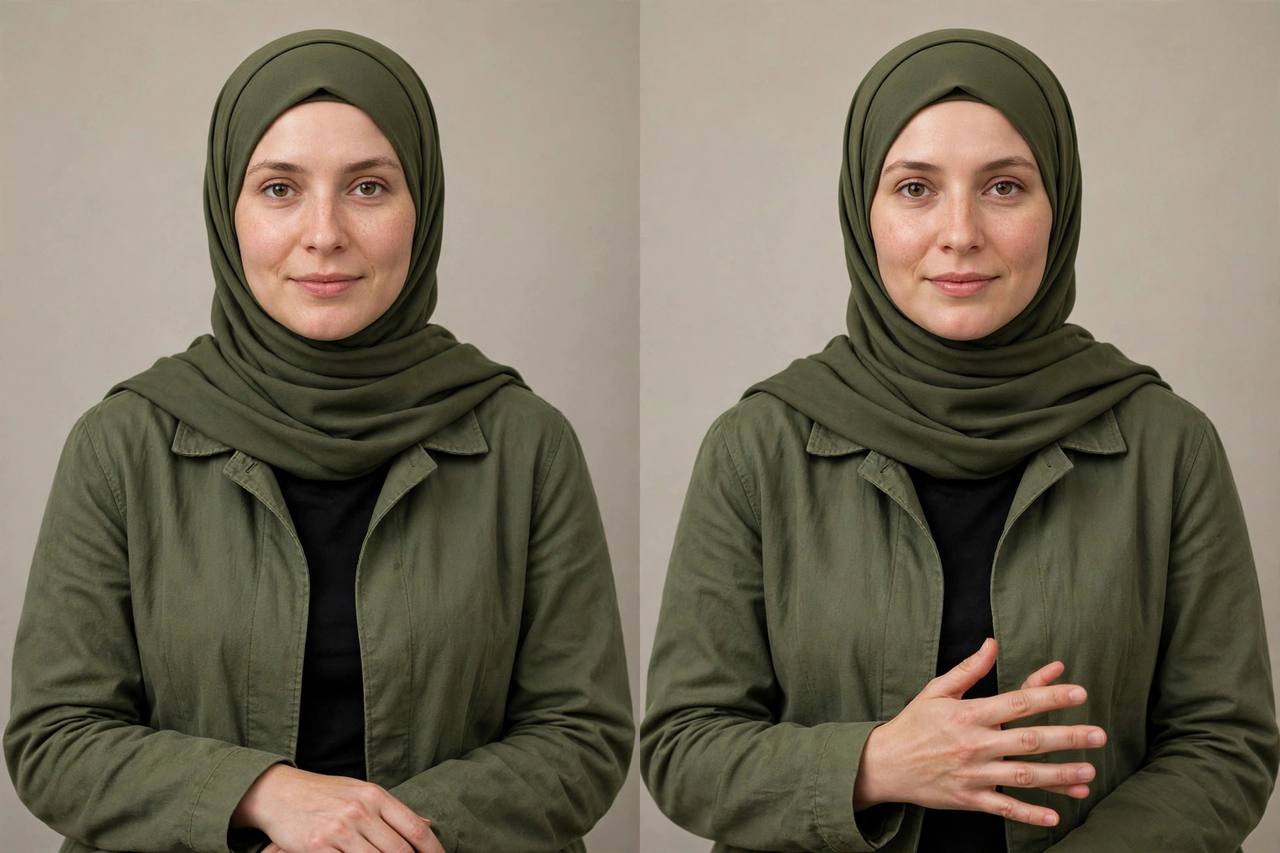
Hands. The infamous extra fingers. Hands are complex and appear at every angle and occlusion; the model’s statistical “hand-ness” is blurrier than its faces, so it improvises — confidently, wrongly.
Counts. “Three apples” yields two or four. Counting needs symbolic precision — precisely what a statistical prediction engine lacks. It knows apple-ness, not arithmetic.
Facts. A historically accurate scene request produces plausible nonsense — wrong uniforms, impossible architecture. The model predicts what such scenes typically look like, not what was true. Every AI image is a confident hallucination.
One more quirk: the same prompt gives different images because generation starts from random noise, controlled by the seed. Same prompt + same seed = same image; a new seed (the default) blooms the same words differently. Randomness isn’t a bug — it’s the variety engine. But it means you’re steering probabilities, not placing pixels.
Copyright and Ownership Questions
The uncomfortable part: models trained on billions of internet-scraped images — including copyrighted art and photography — without creators’ permission. Lawsuits from artists and stock-photo companies against major AI labs are active; the legal questions are genuinely unresolved.
The tension: is training learning (an art student studying museum paintings) or copying (scanning them into a product)? Models don’t store training images — prediction, not retrieval — but they benefit from them, and can echo specific artists’ styles strikingly.
Then the output side: can AI images be copyrighted? In the U.S., the Copyright Office requires human authorship — purely AI-generated images with no meaningful human creative input generally can’t be. The more a human directs, curates, and transforms, the stronger the claim. A spectrum, not a switch, and the law is still catching up.
Practical advice: treat AI images as powerful drafts, not legal certainties. For commercial work, prefer licensed-data tools (like Firefly), document your creative direction, and watch the lawsuits — the rules are being written now.
Frequently Asked Questions
How does AI image generation work?
Six steps: your prompt is encoded into numbers, the model starts from random noise, diffusion denoises it into a coherent image guided by your prompt, attention links words to regions, the latent result is decoded to full resolution, and you evaluate and revise. Prediction, not retrieval — the image is invented, not found.
What is a diffusion model in simple terms?
An AI that learned to turn static noise into coherent images by reversing a noise-adding process — removing randomness step by step while guided by your text prompt, like a sculptor revealing a statue. Formulated in a landmark 2020 paper (DDPM).
Why does the same prompt produce different images?
Generation starts from random noise controlled by a “seed.” Same prompt plus same seed gives the same image; a new seed (the default) blooms the same words differently. You’re steering probabilities, not placing pixels.
Why do AI images get hands and text wrong?
The model predicts what things look like rather than knowing what they are. It learned lettering’s visual texture without learning to read (garbled text), and its statistical sense of complex hands is blurrier than for faces (extra fingers). Same root cause behind wrong counts and invented facts.
Can AI-generated images be copyrighted?
Generally no in the U.S. — the Copyright Office requires human authorship, so purely AI-generated images with no meaningful human creative input can’t be copyrighted. More human direction, curation, and transformation strengthens the claim. The law is still evolving.
What are the best AI image generators?
DALL-E (2021 pioneer, in ChatGPT, most accessible), Midjourney V7 (best aesthetics, artist favorite), Adobe Firefly (licensed training data, safest commercially), and FLUX.2 (open-model frontier). Best depends on whether you prioritize ease, beauty, legal safety, or control.