How to Stop Losing Your Keys: The Launch Pad System

I once spent 40 minutes looking for my keys and found them in the refrigerator. The fridge. That was the day I admitted that learning how to stop losing your keys wasn’t about “being more careful” — careful is a mood, and moods don’t survive busy mornings. What works is a system so simple it runs on autopilot: one home for the keys, one rule for your pockets, and a bit of tech as backup. I haven’t lost my keys in over two years. Here’s the whole system, and it takes about ten minutes to set up.
The Launch Pad: One Home by the Door
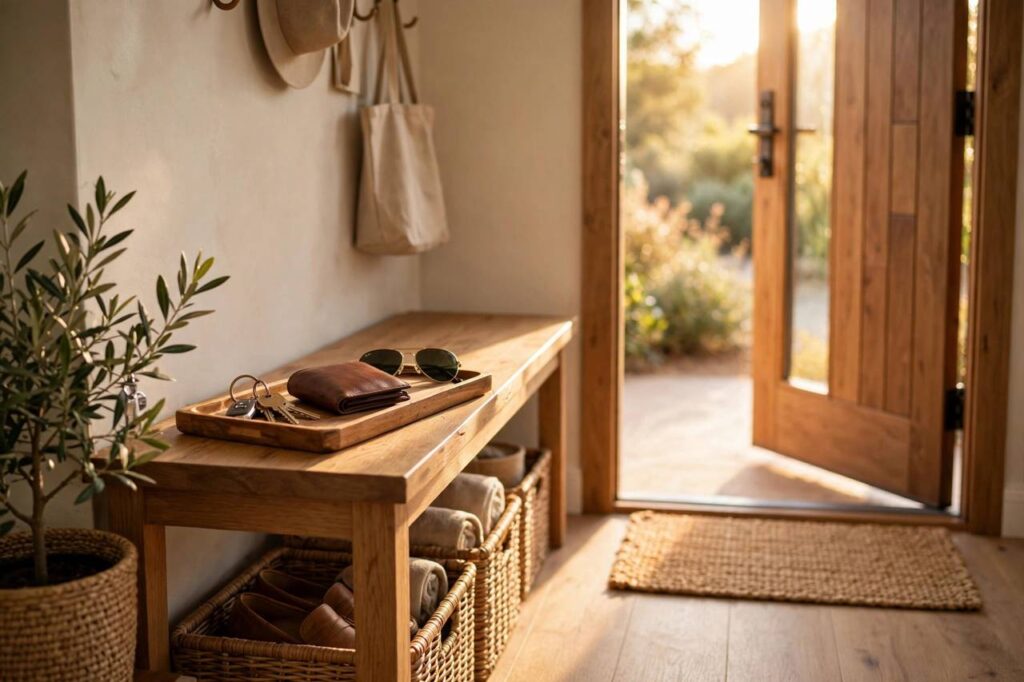
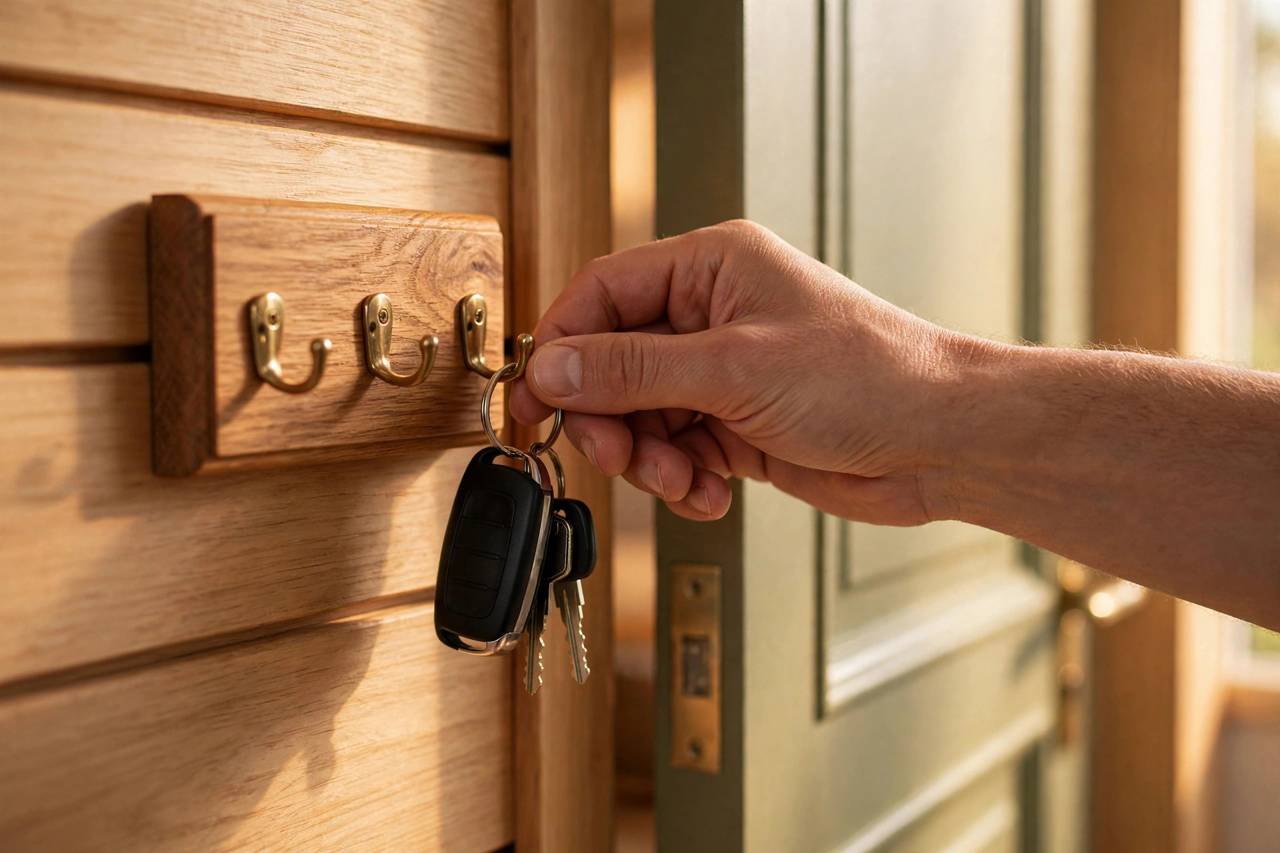
The core of the system: your keys live in exactly one spot, within arm’s reach of the door you use most — and they go there every single time you walk in, no exceptions. Call it the launch pad: an open tray, a wall hook, a small bowl on the entry table. Open is better than lidded — lids add a step, and steps get skipped when your hands are full of groceries.
Placement rules: it must be visible from the doorway (out of sight is out of mind), reachable without putting bags down first, and big enough for keys plus the other daily essentials — wallet, sunglasses. The launch pad isn’t just for keys; it’s the departure station for everything that leaves the house with you. If your entryway is tight, a wall-mounted shelf with hooks takes zero floor space — the same space-smart thinking in my guide to organizing a small apartment applies here: every centimeter near the door should earn its keep.
The Same-Pocket Rule
The launch pad handles home. The same-pocket rule handles everywhere else: your keys always go in the same pocket (or the same bag compartment), every time, without thinking. Right front pocket. Always. Not the jacket pocket today and the back pocket tomorrow — the same one, until it’s pure muscle memory.
This works because lost keys are almost never actually lost — they’re misplaced by variation. You put them “somewhere safe” (a different somewhere each time) and then can’t reconstruct which somewhere. Eliminate the variation and you eliminate the search. For bag users: designate one specific zip pocket as the key pocket and never deviate. It takes about two weeks for the muscle memory to lock in; until then, pat the pocket consciously every time you stand up to leave somewhere — the “phone, wallet, keys” pat-down is a ritual for a reason.
The Arrival Ritual: 5 Seconds That Prevent 40 Minutes
The system fails at exactly one moment: walking in the door distracted. So build a tiny arrival ritual: keys in the tray before anything else. Before the shoes come off, before the mail gets opened, before the phone gets checked — keys land in the launch pad. Five seconds, every time, no exceptions for “I’m just running back out in a minute” (that’s exactly when keys migrate to the fridge).
Household rule: everyone gets their own hook or tray section, labeled if needed. Shared launch pads become junk drawers — one person’s keys buried under another’s mail. Kids can learn this too; a low hook at their height makes it a game rather than a chore. The whole household running the same system is what makes it stick, because the environment reinforces the habit for everyone.
Tech Backup: Trackers and Spares
Systems are for prevention; tech is for the day prevention fails. A Bluetooth tracker (like an AirTag or Tile) on your keyring means a misplaced set is findable from your phone in seconds — it won’t stop you losing them, but it caps every search at about a minute. Worth it for the peace of mind alone.
And the unglamorous hero: a spare set, stored sensibly. One spare with a trusted neighbor or family member nearby, one in a lockbox if you live alone. Not under the doormat — everyone knows about the doormat, including the people you don’t want knowing. Cut spares before you need them; locksmiths charge emergency prices precisely because key emergencies always happen at the worst time.
When the System Breaks (Troubleshooting)
“I keep forgetting the tray”: the tray is in the wrong spot. Move it to where your hand naturally goes when you walk in — watch yourself for two days and place it there.
“My partner won’t do it”: give them their own hook and stop managing it. Systems adopted voluntarily stick; systems nagged about don’t. Yours working flawlessly is the best advertisement.
“I lose them outside the house”: that’s the same-pocket rule failing — recommit for two weeks, plus the tracker as backup.
“Too many keys”: audit the ring. Most people carry keys to places they haven’t visited in years. Keep daily keys on the main ring; archive the rest in a labeled envelope in a drawer.
That’s the whole system: one home, one pocket, one ritual, one tracker. Ten minutes to set up, five seconds a day to run, and the 40-minute fridge searches become a funny story instead of a lifestyle. If losing keys was a symptom of broader household chaos, the full cure is the same organized-home thinking — how to be more organized extends the launch-pad principle (everything has one home) to the entire house.
How to Stop Losing Your Keys, Wallet, and Phone Together
Keys are just the beginning — most people run the same losing game with their wallet and phone. The elegant fix is expanding the launch pad into a full departure station: one tray or shelf by the door with a designated spot for each daily essential — keys on the hook, wallet in the tray’s left section, phone on the charging pad, sunglasses and work badge in their zones. The arrival ritual extends naturally: everything lands in its spot within five seconds of walking in.
The same-pocket rule scales too: phone in the left pocket, wallet in the right (or the bag’s designated compartments) — every time, no variation. And the tracker strategy multiplies: a Bluetooth tracker on the keys, and use your phone’s built-in find features for the phone itself (set them up now, not when it’s lost — a lost phone with find-my-device disabled is just gone). The “pat-down” ritual before leaving anywhere — phone, wallet, keys, in that order — takes three seconds and catches 99% of forgets before the door closes behind you.
Think of it as one system with three clients rather than three separate problems. The principle never changes: one home per item, zero variation, tech as backup. Once the station is running, leaving the house stops being a scavenger hunt and starts being a two-second glide.
Building the Full Launch Pad Station
Ready to build the real thing? Here’s the shopping list — most of it you already own. The tray: one open tray or shallow basket, big enough for wallet + sunglasses + miscellany (a serving tray from the kitchen works perfectly). The hooks: one hook per household member for keys, mounted at reachable height by the door — adhesive hooks work fine in rentals. The charging spot: one cable or charging pad in the station so the phone lands there too, charging while it waits.
Setup: mount hooks at the height your hand naturally reaches, place the tray where bags get set down, and put the charging cable where the phone will actually land (not three feet away — friction kills rituals). Label sections if the household needs it. Total cost: nearly zero. Total time: fifteen minutes. Then run the arrival ritual for two weeks — keys, wallet, phone, every entry, no exceptions — and watch the morning search disappear from your life permanently. It’s the highest-ROI fifteen minutes in home organization.
Key Control for Multi-Car, Multi-Person Households
One person’s launch pad is simple; a household of four with three cars is a logistics operation. Scale the system: one hook per person, labeled — no sharing hooks, ever, because shared hooks become the junk drawer of the entryway. Car keys live on personal hooks, house keys on a separate master hook by the door (so anyone can grab house keys without hunting through someone’s car fob). Spare sets go in a lockbox, not with “whoever’s home.”
For teens with new driving privileges: their hook is part of the deal — keys on the hook or driving privileges pause. It sounds strict; it works because it’s mechanical, not moral. And do a quarterly key audit for the whole household: mystery keys get labeled or tossed, spares get verified (a spare that doesn’t work is worse than no spare — it’s false confidence), and the lockbox code gets refreshed. A household system only works if everyone’s in it — which is exactly why it has to be simple enough that everyone can be in it.
Set it up today — hooks, tray, the five-second ritual. Not this weekend, today: fifteen minutes and it’s done. Then give the muscle memory two weeks. There will be a day, about ten days in, when you walk in distracted, on the phone, arms full — and your hand puts the keys in the tray without you thinking about it. That’s the moment the system becomes permanent. The fridge incident becomes a story you tell at parties. And you’ll never spend forty minutes searching again.
Frequently Asked Questions
How do I stop losing my keys all the time?
Give them one home by the door (an open tray or hook), always use the same pocket when out, and make keys-in-the-tray your arrival ritual. Add a Bluetooth tracker as backup.
What is the best place to keep keys at home?
An open tray or wall hook within arm’s reach of the door you use most — visible from the doorway, reachable before you put bags down. Open beats lidded; lids add a skippable step.
Do key finders like AirTag really help?
Yes — they won’t prevent misplacement, but they turn every search into a one-minute phone ping instead of a 40-minute hunt. They’re backup for the habit system, not a replacement.
How do I get my family to stop losing keys?
Give everyone their own labeled hook or tray section at the door, keep it voluntary rather than nagged, and let your own consistency be the advertisement. Kids do well with a low hook that makes it a game.
Should I keep a spare house key, and where?
Yes — one with a trusted neighbor or nearby family member, or in a lockbox if you live alone. Never under the doormat. Cut spares before you need them to avoid emergency locksmith prices.