How to Learn Multiplication Tables Fast: The Pattern-Based System

Ask a kid to memorize 144 multiplication facts and watch their soul leave their body. But here is the secret that makes the whole task collapse: you do not need to memorize 144 facts. Once you understand commutativity — that 3×7 is the same as 7×3 — the chart nearly halves. Once you learn the easy tables and the patterns, what is left is a small handful of genuinely tricky facts. Learning how to learn multiplication tables fast is not about grinding harder; it is about shrinking the job before you start.
This guide gives you the pattern-based system I use with students: master the easy tables first (2s, 5s, 10s), learn the 9s finger trick and the doubling shortcuts, use commutativity to halve the chart, and follow a 10-minute daily plan that builds speed without tears. Whether you are a parent helping a child or an adult patching a gap, the system works the same.
How to Learn Multiplication Tables Fast — Step 1: Shrink the Chart
Write out the full 12×12 multiplication chart and stare at it: 144 facts, intimidating. Now cross out everything above the diagonal — because 3×7 = 7×3, 4×9 = 9×4, and so on, every fact appears twice. You just deleted nearly half the chart. What remains is about 78 unique facts, and we are about to delete most of those too.
This is worth teaching explicitly, not just using silently. Kids who understand that multiplication commutes — that order does not matter — have a mental tool, not just a smaller list. When they blank on 7×6, they can flip it to 6×7 and attack from the friendlier side. Understanding halves the work twice: fewer facts to learn, and two routes to each answer.
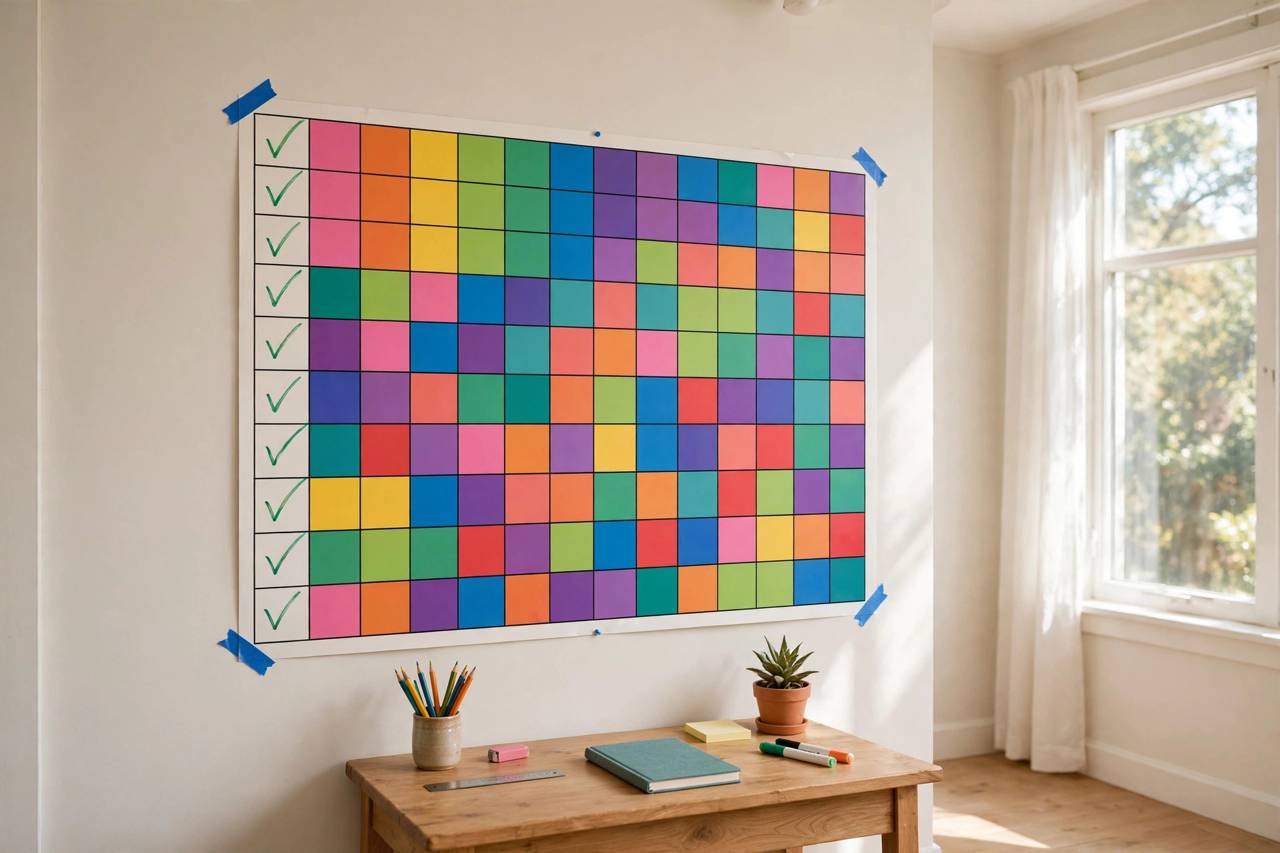
Draw the halved chart and put it on the wall. The visual matters — the learner should see the job getting smaller, not just hear it. Cross out each table as it is mastered. Progress you can see is motivation you do not have to manufacture.
Step 2: The Easy Tables First (2s, 5s, 10s, and 11s)
Do not start at the 2s and march upward — start with the tables that teach themselves. The 10s are trivially obvious (add a zero: 7×10=70). The 5s have a clean alternating pattern (5, 10, 15, 20… ending in 5 or 0). The 2s are just doubling, which kids usually know from addition. The 11s (up to 9) are doubles of the digit: 7×11=77. Four tables, nearly forty facts, learnable in days — and each one builds confidence for the harder ones.
The 5s deserve special attention because they teach the pattern mindset. Point out: every 5s answer ends in 5 or 0, alternating. The 10s are the 5s doubled. Suddenly the learner is not memorizing — they are deriving. That shift, from recall to reasoning, is the whole philosophy of this system.
Order of attack: 10s, then 5s, then 2s, then 11s. Test each table to quick-recall (under 3 seconds per fact) before moving on. Do not rush this phase — these easy wins build the fluency and confidence that carry the harder tables.
Step 3: The 9s Finger Trick and Doubling Shortcuts
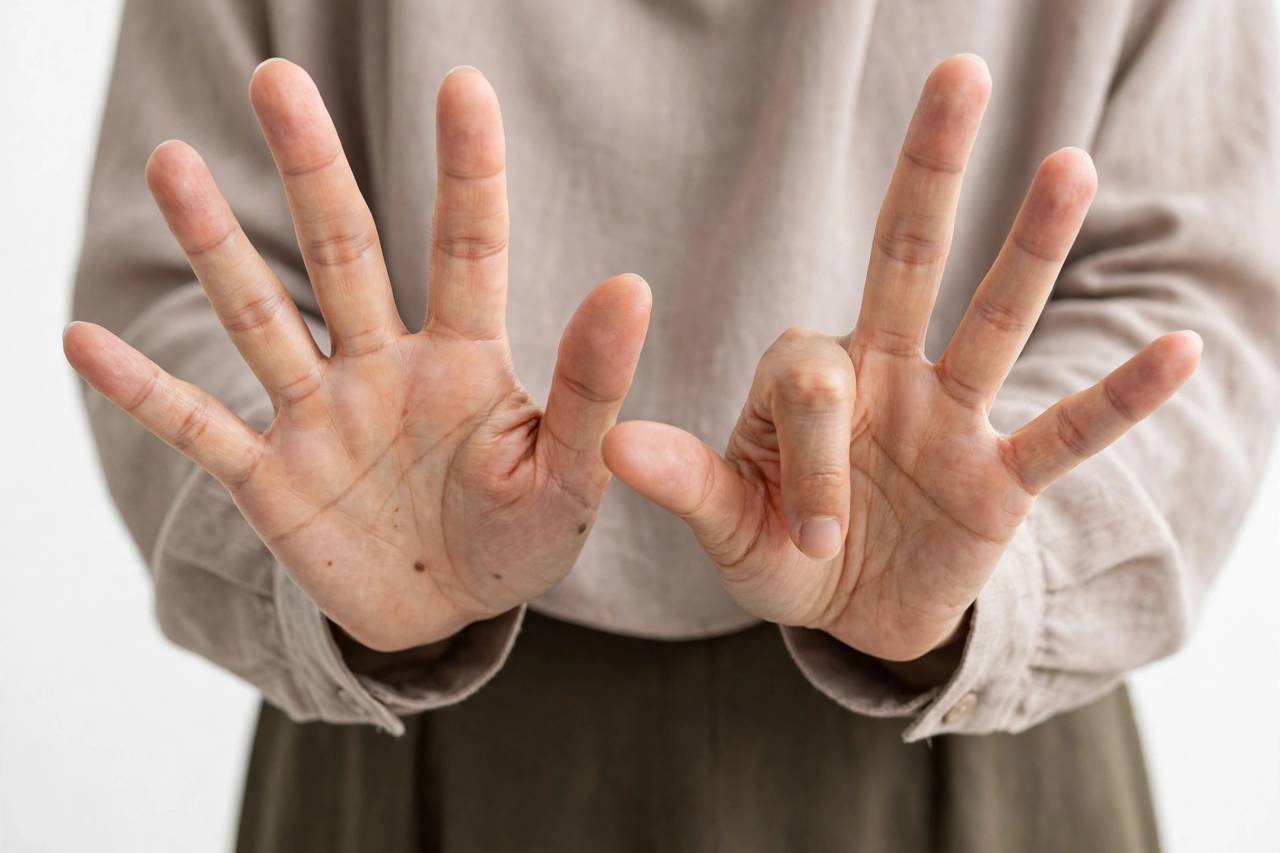
The 9s finger trick is pure magic the first time you see it, and it is worth learning even in the calculator age because it teaches pattern thinking. Hold both hands up, fingers spread. For 9×4: fold down the 4th finger from the left. Fingers to the left of the fold = 3 (tens), fingers to the right = 6 (ones). Answer: 36. It works for 9×1 through 9×10, every time.
The deeper 9s pattern is even more useful: the digits of every 9s answer sum to 9 (9×7=63; 6+3=9), and the tens digit is always one less than the multiplier (9×7: tens digit 6, which is 7−1). Teach both — the trick for instant answers, the pattern for understanding.
Doubling shortcuts handle the 4s and 8s: 4×6 is just double-double — double 6 is 12, double again is 24. 8×7: double 7 (14), double again (28), double again (56). It feels like more steps, but doubling is fast and nearly error-proof, and with practice it becomes automatic. The 6s and 7s are the last ‘hard’ tables — attack them with derived strategies: 6×7 = (5×7) + 7 = 35 + 7 = 42. Breaking hard facts into known facts is the master skill; it is also exactly how mental math works in real life.
The 10-Minute Daily Plan
Here is the daily routine, and it is deliberately short — frequency beats duration for memorization. Minutes 1-3: warm-up on mastered tables. Quick-fire oral quiz, mixed order, aiming for under-3-second recall. This is retrieval practice, and cognitive science is unambiguous that retrieving beats re-reading for building durable memory.
Minutes 4-7: new material. Introduce or drill the current target table using its pattern or trick — never just chanting. Say the fact, show the pattern, then quiz: ‘9×6? Use the finger trick… 54.’ Connect every new fact to something known. Minutes 8-10: mixed speed round. Shuffle all learned facts on flashcards or an app, and track the score. End on a success — finish with facts the learner knows cold, so the session ends with confidence, not frustration.
Three rules for parents and teachers. One: never drill a table that is not understood — tricks without comprehension collapse under pressure. Two: keep it positive and stop at frustration; a bad session undoes two good ones. Three: test recall in mixed order, not in sequence — reciting ‘6, 12, 18, 24’ in order is chanting, not knowing. Shuffle always. These same retrieval principles power effective flashcard study for every other subject too.
Games and Practice That Do Not Feel Like Drills
The plan above is the spine; games are the flesh. Multiplication bingo, card games (flip two cards, multiply, highest product wins — it is War with math), dice games (roll two dice, multiply, first to 100), and timed online games all work because they add speed pressure in a low-stakes wrapper. The learner practices recall dozens of times without noticing.
For independent practice, skip the worksheet chanting and use mixed, timed quizzes — many free sites generate them. The key features to look for: mixed order (not sequential), a timer (gentle pressure builds speed), and instant feedback. Five minutes on a good quiz app beats twenty minutes of writing tables in rows.
Real-world embedding helps too: grocery shopping (‘3 packs at $4 each?’), cooking (‘double the recipe — what’s 2×¾ cup?’), car rides (‘what’s 7×8?’). Facts tied to real situations stick better than facts tied to worksheets, and they teach the actual point of multiplication — which is using it, not reciting it. For learners who need a gentler on-ramp to structured study, starting homeschool-style routines has useful pacing ideas that transfer well.
Troubleshooting: When Facts Will Not Stick
Some facts resist. Every learner ends up with three to five ‘nemesis facts’ — often 7×8, 6×7, 8×7, 9×6. Do not drill the whole table harder; isolate the nemesis facts. Write each on an index card with its derivation on the back (7×8 = 56; back: ‘7×8 = (7×4)×2 = 28×2’). Drill only these, several times a day, until they surrender.
If the learner is guessing wildly, the issue is usually shaky foundations, not the current table — check that addition fluency and the concept of multiplication-as-repeated-addition are solid. Back up before pushing forward; times tables built on wobbly addition collapse in division later.
If the learner confuses similar facts (6×7 vs 7×8), teach them as a pair with a distinguishing story: ’56 = 7×8, seven ate (8) fifty-six.’ Silly mnemonics work precisely because they are silly — the brain remembers the odd one out. Pair-drilling confused facts together, rather than separately, trains discrimination directly.
And if anxiety is the blocker — tears, avoidance, ‘I’m bad at math’ — drop all timed work immediately. Timed drills on anxious learners measure panic, not knowledge. Go back to untimed pattern work, celebrate small wins explicitly, and reintroduce gentle timing only when confidence returns. Speed is the last thing to build, never the first.
Frequently Asked Questions
At what age should kids learn multiplication tables?
Most curricula introduce multiplication in 2nd-3rd grade (ages 7-9), with fluency expected by the end of 3rd grade. But readiness varies — a child solid on addition and skip-counting will learn faster than one pushed in early. Understanding first, speed second, always.
Should kids memorize or understand multiplication?
Both, in that order. Understanding (patterns, commutativity, derived facts) comes first and makes memorization dramatically easier. Pure rote memorization without understanding is fragile — it collapses on unfamiliar problems. The system in this guide builds understanding that becomes automatic recall.
How long does it take to learn all the tables?
With 10 focused minutes daily using the pattern system, most learners achieve solid 1-12 fluency in 6-10 weeks. Rushing it in a weekend produces short-term recall that evaporates. Spaced, daily, mixed practice is what builds permanent memory.
Are times tables still important with calculators everywhere?
Yes — for fluency, not for their own sake. Quick recall frees working memory for harder math: you cannot do long division, fractions, or algebra smoothly while computing 7×8 from scratch. Automaticity in basics is what makes advanced math feel easy.
What is the hardest multiplication table?
Usually the 7s and 8s, because they have the fewest obvious patterns and the most ‘nemesis facts’ (7×8, 8×7, 6×7). The strategy: learn them last, derive them from known facts (7×8 = 56 via doubling 7×4), and isolate individual stubborn facts for targeted drilling.
The Bottom Line: Shrink It, Pattern It, Practice It Daily
You are not memorizing 144 facts — you are learning about 78 unique ones, minus the easy tables, minus the patterns, leaving a small core of facts earned through ten daily minutes of mixed, understanding-first practice. That is the whole system.
Start with commutativity today: draw the halved chart, cross out the doubles, and watch the job shrink. Then 10s, 5s, 2s, 11s. The 9s finger trick is your reward for getting there.
Once the chart is conquered, keep it conquered. Fluency fades fast without use, so fold one minute of mixed-fact review into the routine for another few weeks — while brushing teeth, waiting for the bus, whatever dead time you can steal. And measure the finish line honestly: not “we finished the worksheet,” but a child who answers any fact in under three seconds without counting. When that is true across the board, you are done.