How to Choose Extracurricular Activities: The Depth-Over-Breadth Framework

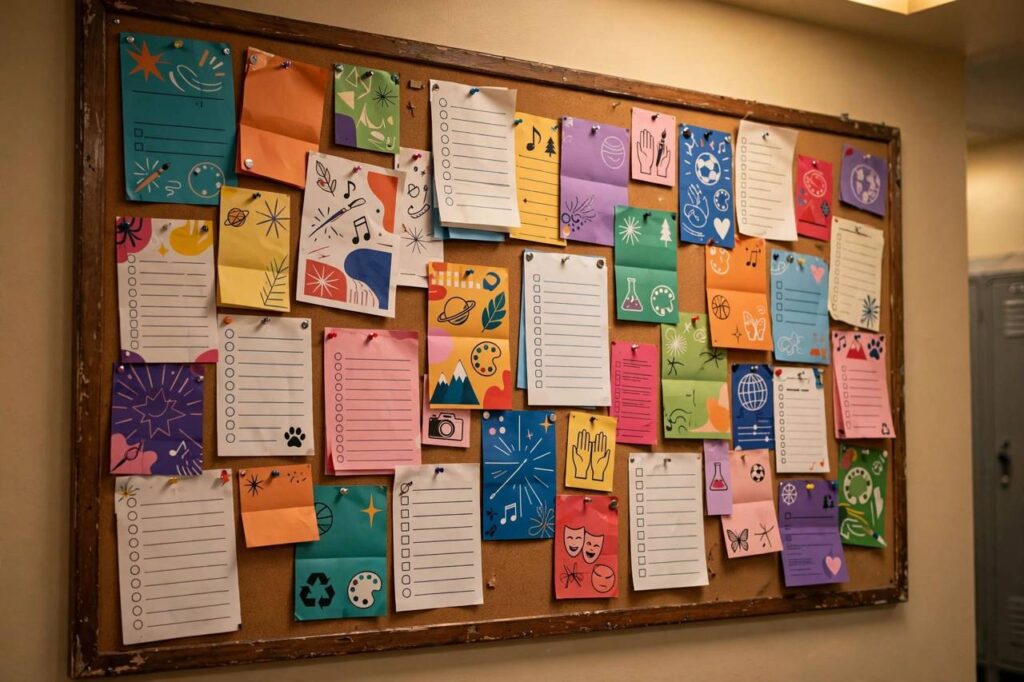
A few years back, I sat across from a ninth-grader whose weekly calendar looked like an airline route map: robotics on Mondays, soccer practice twice a week, debate team, youth orchestra, volunteering on Saturdays, and a part-time job squeezed in somewhere. She was exhausted, her grades were slipping, and when I asked which activity she would keep if she could only choose one, she just stared at me. Nobody had ever asked her to choose. That conversation is exactly why parents keep asking me how to choose extracurricular activities — not how to find more of them, but how to choose the right ones and let go of the rest.
Here is what a decade of teaching and tutoring has taught me: the students who get the most out of their free time are not the ones doing the most things. They are the ones who went deep on two or three activities they genuinely cared about. Admissions officers notice depth. Coaches notice depth. More importantly, students themselves feel the difference between a schedule that drains them and one that builds them. This guide gives you the framework I walk families through: start with the student, try before committing, and keep a running check on overload.
How to Choose Extracurricular Activities With the Depth-Over-Breadth Rule
The single most useful idea in this whole guide is simple: two or three activities pursued with real commitment will do more for a student — in skills, enjoyment, and yes, college applications — than ten activities attended half-heartedly. I have watched students list eight clubs on an application where they never attended a single meeting after the first month. It reads as padding, and experienced readers see through it.
Depth means progression. It means the student who joined the debate team as a shy freshman and became the team captain who coaches novices by junior year. It means the kid who started on the JV soccer bench and worked into a starting spot. Progression tells a story: this person commits, grows, and leads. A laundry list of one-semester memberships tells the opposite story.
So the first filter is a question: “Could my child stick with this for two or more years and get meaningfully better at it?” If the honest answer is no, it is not a rejection of the activity — it is just a signal to pick something else.
Start With the Student, Not the Schedule
Before browsing sign-up sheets, sit down and map what the student actually likes. I have families do a quick exercise: write down three things the student does when nobody is telling them what to do. If those three things are “draws, watches documentaries about space, and argues about everything,” you just wrote the extracurricular shortlist: art club, astronomy club or a science fair project, and debate team.
Also consider energy patterns. An introverted student might bloom in a writing club and wilt in a high-noise theater production — and that is fine. A kid who needs to move will struggle to love a purely academic club no matter how “impressive” it looks. Fit beats prestige every time. A nationally known program that makes your child miserable is worse than a small local club they love.
Do not forget logistics. An activity that requires a 45-minute drive each way, three evenings a week, carries a real cost in homework time and sleep. Be honest about what the family can sustain for a whole year before you sign the permission slip.
The Try-Before-Commit Checklist
Most schools and community organizations let students sample activities before registering. Use that window deliberately. Here is the checklist I give families:
- Attend at least two sessions. The first meeting is always awkward — for everyone. The second one tells you what the activity really feels like.
- Talk to a current member. Ask “what is the best part?” and “what do most people complain about?” The answers are usually honest.
- Check the time commitment in writing. “Two hours a week” sometimes means two hours plus weekend events, fundraisers, and travel. Get specifics.
- Watch a practice or rehearsal, not just the polished final event. The weekly grind is what your child is actually signing up for.
- Ask about costs beyond dues. Uniforms, equipment, travel, competition fees — the sticker price is rarely the real price.
- Give it a trial period. Agree in advance: “We will do this for one season/term, then decide together whether to continue.” A defined endpoint makes quitting a fair activity feel like a decision instead of a failure.
Balancing Activities With Academics
The non-negotiable rule: schoolwork comes first, and sleep comes before everything. A student who is falling asleep in class because of late practices is not “well-rounded” — they are overextended. I tell students to block out their fixed academic time first (homework, test weeks, projects), then see what realistically fits.
Watch the seasonal crunch points. The first month of school, midterms, and final exams are when overloaded schedules break. If an activity’s busiest season overlaps exactly with exam season, that conflict will happen every single year. Better to know that in September than to discover it in November.
One practical technique: cap total weekly activity hours. For most high schoolers, something like 6 to 10 hours per week outside school is sustainable; beyond that, grades and sleep start to suffer. The number is not magic — some kids handle more, some less — but having a number forces an honest conversation instead of a slow drift into exhaustion.
Warning Signs of Overload
Parents often ask me when “busy” becomes “too busy.” Watch for these signals:
- Grades drop in classes the student previously handled fine.
- Sleep shrinks below seven hours regularly, or the student can no longer fall asleep because their mind is racing.
- They stop enjoying an activity they used to love — dread, not excitement, on practice days.
- There is no unstructured time left at all: no hanging out with friends, no hobbies just for fun, no doing nothing.
- They get sick more often or complain of headaches and stomachaches before activities.
- Quitting feels impossible because of guilt toward a coach or team — commitment should not require self-harm.
When several of these appear together, something has to give. And that is allowed. Quitting an activity that is harming your child is good parenting, not a failure of commitment. The pros and cons of a gap year conversation taught me the same lesson at a bigger scale: stepping back strategically often leads to better outcomes than grinding through on autopilot.
Making Extracurriculars Count for College
Let us be direct about the college question, since it drives so much of this. Admissions readers are looking for evidence of passion, initiative, and impact — not volume. A student who started a recycling program at their school, ran it for three years, and expanded it to three other schools has a stronger story than a student with nine one-line memberships.
Leadership matters, but it does not have to mean a title. Mentoring younger members, organizing an event, or building something (a website, a fundraiser, a performance) all demonstrate the same qualities. If your child loves an activity but the school club is disorganized or nonexistent, starting their own group or joining a community organization shows initiative that applications reward.
And summer matters. One meaningful summer — an internship, a camp where they actually learned something, a job — can carry more weight than a year of token memberships. Depth, again, wins.
Handling the “But Everyone Else Is Doing More” Pressure
Let us address the anxiety driving most of this, because it is rarely about the activities themselves. It is about the fear that your child will fall behind some imagined competitor who does more. I hear it from parents constantly: “Her friend does four activities — should we add a fifth?” Here is what I tell them: you are comparing your child’s real, tired life to someone else’s highlight reel. You do not see the other family’s 11 p.m. homework sessions or the weekends lost to tournaments nobody enjoyed.
The research on overscheduling is not ambiguous — students with packed, parent-driven schedules report higher stress and lower enjoyment without better outcomes. And from the college side, I have never once heard an admissions officer say “we admitted her because she did nine things.” The students who stand out are the ones with a clear thread: the coder who built apps for three years, the writer who edited the paper and won a regional prize, the athlete who also coached younger kids. Depth creates a story; breadth creates a list. When the pressure hits, return to the question that matters: is my child growing, sleeping, and still liking their life? If yes, the schedule is right no matter what anyone else is doing.
Revisiting the Choice Every Year
Choosing activities is not a one-time decision — it is an annual review. Kids change fast. The sport they loved at twelve may bore them at fifteen; the quiet freshman may discover theater as a junior and light up. I recommend a simple end-of-year conversation every spring: what did you love, what drained you, what do you want to try, and what should we drop?
Give quitting the same dignity as continuing. A student who drops robotics after two solid years to go deep on music has not failed at robotics — they have gathered information about themselves, which is the entire point of adolescence. The only pattern worth worrying about is chronic quitting within weeks, which usually signals anxiety or perfectionism rather than genuine disinterest. Otherwise, treat each year as a new draft. The framework stays the same — depth over breadth, try before committing, watch for overload — but the answers are allowed to change as your child does.
Frequently Asked Questions
How many extracurricular activities should a high school student do?
Two to four is the sweet spot for most students: enough to show range, few enough to go deep. What matters more than the number is sustained commitment and visible progression in at least one or two of them.
Do extracurricular activities really matter for college admissions?
Yes, but not as a checklist. Colleges use activities to understand who the student is beyond grades — their interests, initiative, and ability to commit. Deep involvement in a few genuine interests beats a long list of shallow memberships every time.
Is it okay to quit an extracurricular activity?
Absolutely — quitting is a decision, not a moral failure. It is healthy to try something and discover it is not a fit. The problems only arise when quitting becomes a pattern of avoiding anything difficult, or when it is driven by overload rather than disinterest.
Should my child do activities just because they look good on applications?
No. Students can smell resume-padding a mile away, and so can admissions officers. Genuine interest is what creates the depth, leadership, and stories that applications actually reward. Choose from curiosity, not from fear.
What if my child does not want to do any extracurricular activities?
Start by finding out why. Some students are burned out; some have not found the right thing; some genuinely prefer unstructured time. One activity they enjoy is better than zero, and a part-time job or family responsibilities also count as legitimate outside commitments.

The best extracurricular story I have seen in years came from a student who picked exactly one activity — school newspaper — and went all in: staff writer freshman year, section editor sophomore year, editor-in-chief senior year, plus a summer journalism internship. That is what choosing looks like when it is done right: not filling a calendar, but finding something worth going deep on. And if you are weighing options alongside the bigger picture of how college applications work, remember that the narrative your child builds over two or three years of genuine commitment is the narrative that opens doors.