How Long Is an NFL Game? 60 Minutes vs. the 3-Hour Reality

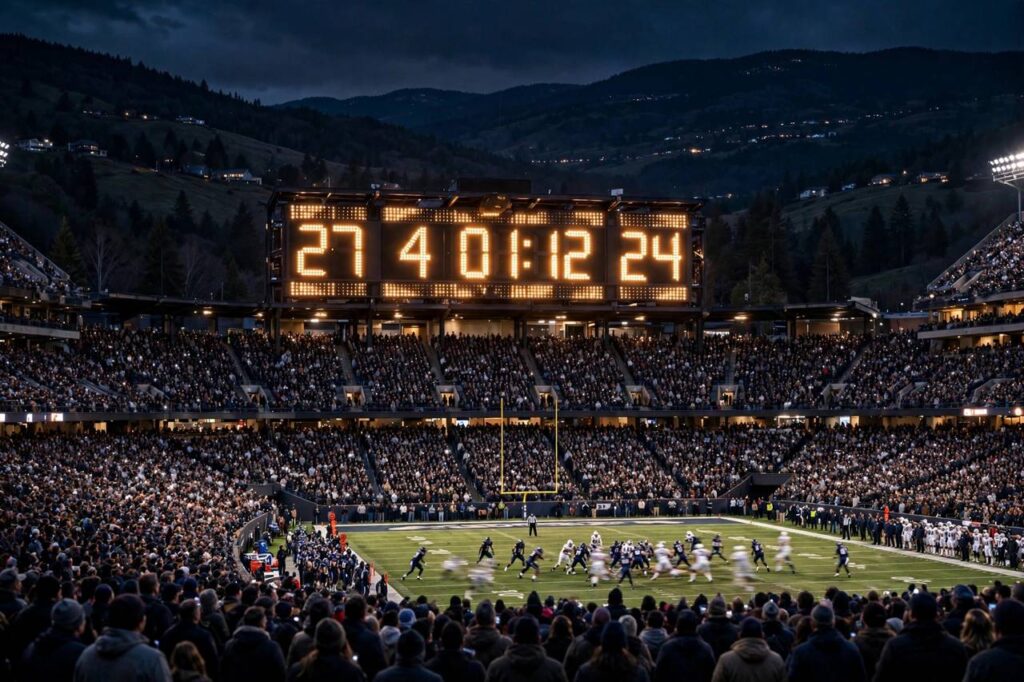
How long is an NFL game? The clock says 60 minutes. Reality says about 3 hours and 12 minutes. That gap — between the game time and the real time — is one of the most misunderstood things in sports, and it explains everything about how football is structured, broadcast, and experienced. I have timed it, because of course I have: the average NFL game in recent seasons runs 3 hours and 12 minutes from kickoff to final whistle. Here is where every minute goes.
The 60 minutes is real — it is the playing time, divided into four 15-minute quarters, and it is the only time that matters for the score. But the clock stops. Constantly. Incomplete passes, players stepping out of bounds, timeouts, penalties, quarter breaks, halftime, instant replay reviews, injuries, and the two-minute warnings all freeze it. The result: 60 minutes of game time stretches across more than three hours of real time, of which only about 11 to 15 minutes feature the ball actually in play. That last number shocks people every time, and it is the key to the whole puzzle.
How Long Is an NFL Game? The 60 Minutes Explained
Regulation is four 15-minute quarters. Between the first and second quarters (and the third and fourth) there is a short break — about two minutes, mostly for switching ends of the field. Halftime is the big one: 12 to 13 minutes in the regular season (longer for the Super Bowl, which stretches past 30 minutes for the halftime show). These are the structural pauses, and they are the smallest part of the real-time total.
If the game is tied after 60 minutes, regular-season games go to a 10-minute overtime period (playoff overtime runs 15 minutes, and playoff games cannot end in a tie). Overtime rules have evolved — both teams are now guaranteed a possession in playoff overtime — but the key point for timing is that overtime is the exception, not the rule. Most games end in regulation, inside that 3:12 window.
The play clock governs the rhythm within the 60 minutes: 40 seconds between plays (25 after certain stoppages). This is the metronome of football — snap the ball before it hits zero or take a delay-of-game penalty. Forty seconds times roughly 120-140 plays per game is where the “action” lives, compressed into those 11-15 minutes of actual ball-in-play time that studies have measured. The rest is the huddle, the line, the read, the reset. Football is a game of explosions separated by deliberation.
Where the Other Two Hours Go
The stoppages are the sport. An incomplete pass stops the clock. A runner stepping out of bounds stops the clock. A first down in college stops it (in the NFL, the clock keeps running on first downs except in the final two minutes — one of the meaningful NFL/college differences). Each team gets three timeouts per half. Penalties stop everything while officials sort it out. Instant replay reviews — coaches’ challenges and automatic reviews of scoring plays and turnovers — can take several minutes each.
Then there is the two-minute warning: an automatic timeout at the 2:00 mark of each half, a relic of the stadium-clock era that survived because television loves it. It functions as a free timeout for both teams and a guaranteed commercial break. Football’s clock rules were not designed for drama, but they produce it: the final two minutes of a close game, with the clock stopping on every incompletion and out-of-bounds play, routinely take 20+ real minutes to play. The most exciting part of the game is also the slowest.
Injuries stop the clock and stop the broadcast’s momentum — the league has tightened protocols here, and injury timeouts are handled with increasing care. Commercial breaks are the elephant in the room: the NFL’s broadcast contracts depend on advertising inventory, and the game’s natural stoppages are where the inventory lives. Kickoffs, punts, timeouts, quarter breaks, the two-minute warning — each is a commercial pod. The 3:12 runtime is not an accident of the rules. It is the rules and the business in equilibrium.
The Broadcast vs. The Stadium Experience
Here is the part that divides fans: the game you watch on TV and the game in the stadium are different products with different clocks. The broadcast fills every stoppage — replays, analysis, graphics, commercials — so the 3:12 feels continuous. In the stadium, the stoppages are dead air: standing around, watching the referee stand under a hood, waiting. Stadium fans experience the 11 minutes of action inside 3+ hours of waiting far more acutely.
This is why the NFL obsesses over pace. The league has trimmed halftime, standardized replay review times, and experimented with kickoff rules partly to manage the runtime. But there is a floor: football’s structure — the stoppages, the strategy between plays, the commercials that pay for everything — means the game will never be a crisp two hours. The 3:12 is the product of a century of accumulated rules and a multi-billion-dollar broadcast economy. It is not changing.
For comparison: a baseball game runs about 2:45-3:00 with the pitch clock, an NBA game about 2:15, a soccer match about 2:00 flat (the clock never stops). Football is the longest major American team sport by real time, and the shortest by ball-in-play time. Both facts are true. Both facts define it.
NFL vs. College: The Timing Differences
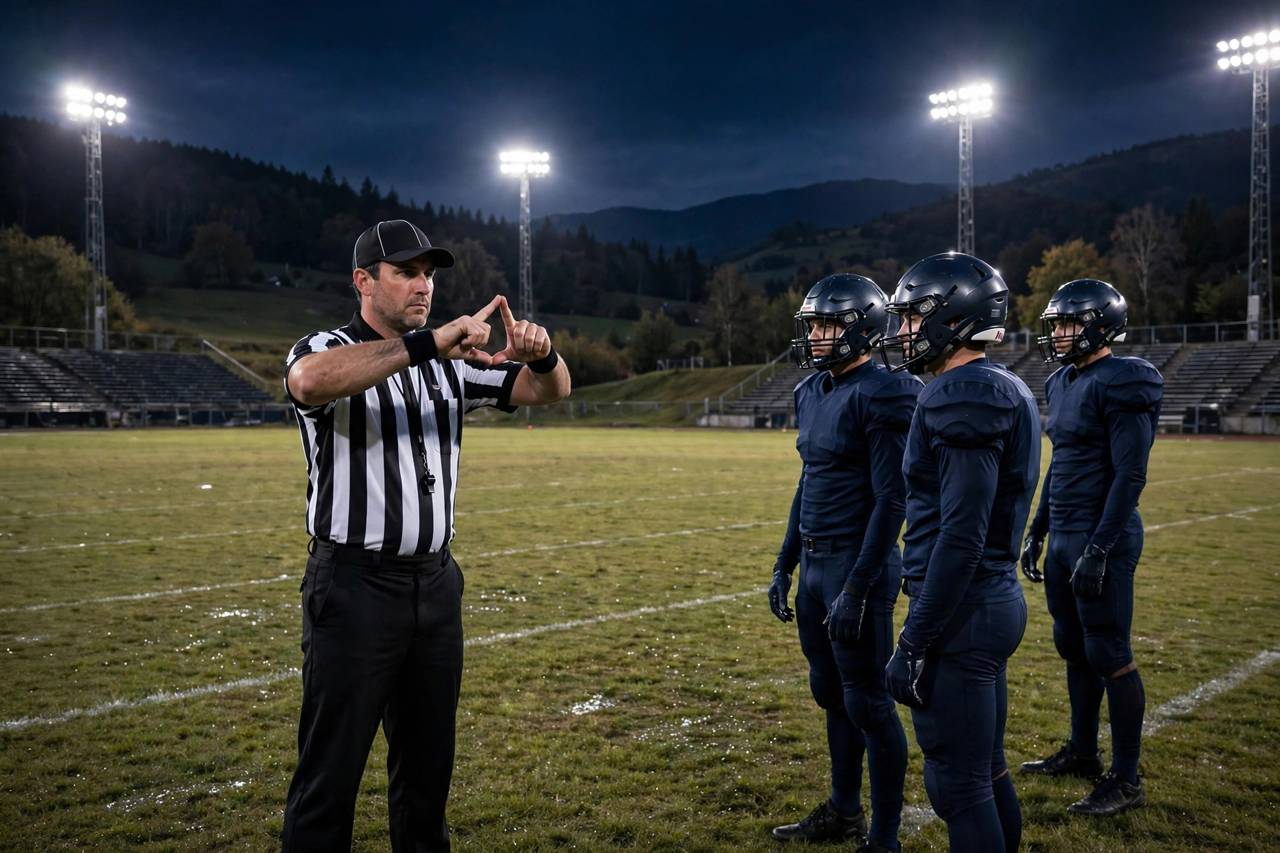
College football plays by different clock rules, and the games run longer — often 3.5 hours. The key difference: in college, the clock stops after every first down (to move the chains), while the NFL keeps it running except in the final two minutes of each half. That single rule adds dozens of stoppages per game. College also has longer halftimes (20 minutes, for the marching bands) and, until recent rule changes, more clock stoppages overall. The NFL’s 3:12 is the efficient version of football.
Overtime differs too. The NFL plays a 10-minute sudden-death-ish period (with both teams guaranteed a possession in the postseason). College uses the alternating-possession shootout from the 25-yard line — no clock at all, just rounds until someone wins, which has produced 7- and 8-overtime marathons. The sports share a shape but not a tempo, and the clock rules are why.
Why the Game Will Not Get Shorter
Every few years someone proposes shortening NFL games — running clocks, fewer commercials, streamlined reviews — and it never happens, for structural reasons. The stoppages are the strategy: the chess match between plays, the personnel substitutions, the challenge decisions, all require the pauses. Remove them and you have a different sport. The commercials are the economics: the broadcast rights that fund the salary cap are priced on advertising inventory, and the inventory lives in the stoppages.
The league has made marginal trims — standardized replay review procedures, the 40-second play clock, kickoff rule experiments — but the 3-hour game is the equilibrium of strategy, safety (players need recovery between plays), and business. Fans complain about the length and then watch all of it, including the commercials, because the final two minutes of a close game — those 20 real minutes of clock-stopping drama — are the best television in sports. The length is the price. The ending is the product.
Preseason and Other Formats
Preseason games run slightly shorter in practice (less at stake, fewer reviews, running clocks in blowouts) but follow the same rules. The Pro Bowl’s flag-football replacement is a different animal entirely. And for the growing international audience watching at odd hours: yes, the game really does take 3+ hours, and yes, it is worth setting the alarm for. Plan accordingly — and plan for overtime.
The Anatomy of a Broadcast: What Fills 3:12
It helps to see the 3:12 from the producer’s chair. A broadcast has roughly 100 commercial breaks’ worth of inventory to place, and the game’s structure provides the slots: after kickoffs, after punts, after scores, after turnovers, at quarter breaks, at the two-minute warning, during reviews, during injury timeouts. The director’s job is threading the game through the inventory without the audience feeling managed — replays and analysis fill the gaps between the ads, and the best broadcasts make the whole thing feel seamless.
The red-zone and whip-around shows exist because of this structure: with 8-13 games in the Sunday afternoon window, producers cut between the moments that matter, and the stoppages in each game are what make the switching possible. The 3:12 is not just one game’s runtime — it is the raw material for an entire Sunday of programming. Understanding the clock means understanding that you are watching two products at once: a sport, and a television show about the sport.
Shortest and Longest: The Extremes
The extremes tell the story. The shortest NFL games — blowouts with running clocks and few stoppages — can finish under 2:45. The longest — multiple overtimes, heavy replay review, weather delays — have pushed past 4 hours (weather delays aside, which stop the clock entirely and do not count in the official game time). Playoff games average longer than regular-season games: more at stake means more challenges, more reviews, more deliberate pace. The 3:12 is a mean with real variance, and any given Sunday can give you either end of it.
Frequently Asked Questions
How long does an NFL game last in real time?
About 3 hours and 12 minutes on average, from kickoff to final whistle. Playoff games and close finishes with heavy replay review can run longer; blowouts with running clocks in effect can run shorter.
Why is only 60 minutes on the clock?
The 60 minutes is playing time — four 15-minute quarters. The clock stops for incomplete passes, out-of-bounds plays, timeouts, penalties, reviews, and quarter breaks, which is why 60 minutes of game time spans 3+ hours of real time.
How much actual action is in an NFL game?
Studies have measured roughly 11 to 15 minutes of actual ball-in-play time per game. The rest is huddles, pre-snap reads, stoppages, and breaks — football is bursts of action separated by strategy.
How long is NFL halftime?
12 to 13 minutes in the regular season. The Super Bowl halftime is much longer (30+ minutes) to accommodate the halftime show.
What is the two-minute warning?
An automatic timeout at the 2:00 mark of each half. It originated when stadium clocks were unofficial; it survives as a strategic timeout for both teams and a guaranteed broadcast break.
Can an NFL game end in a tie?
In the regular season, yes — if neither team scores in the 10-minute overtime period, the game is a tie. Playoff games cannot end tied; overtime continues (in 15-minute periods) until someone wins.