How Are NFL Schedules Made? The Formula, the Panel, and Flex Scheduling

Every spring, 32 fan bases study a list of 17 games like it is scripture. How are NFL schedules made? Behind that list is one of the most intricate scheduling operations in sports: a rigid mathematical formula that decides most of every team’s opponents years in advance, a small panel of executives who arrange 272 games into 18 weeks, and a supercomputer-assisted process that weighs television, travel, competitive balance, and stadium availability. I have always found the schedule release fascinating because it looks like chaos and is actually close to clockwork. Here is how the machine works.
The first thing to know: the NFL schedule is not drawn from a hat, and it is not designed to be “fair” in the way fans mean. It is designed to be structured — every team plays a balanced mix dictated by formula, and the television networks get the matchups they paid billions for. The formula decides who you play. The schedule-makers decide when.
How Are NFL Schedules Made? The 17-Game Formula
Since 2021, every NFL team plays 17 regular-season games, and the formula that assigns opponents is almost entirely predetermined. Here is how a team’s 17 opponents are chosen:
Six games: division opponents, home and away. Each team plays the other three teams in its division twice — once home, once away. These are the rivalry games, and they never change. The AFC East always plays the AFC East.
Four games: one full division in your conference. Each team plays all four teams from one other division in its own conference, on a three-year rotation. This year it might be the AFC West; in three years it comes back around.
Four games: one full division in the other conference. Each team plays all four teams from a division in the opposite conference, on a four-year rotation. This is why your team plays every team in the league at least once every four years — the interconference rotation guarantees it.
Two games: same-conference finish-based matchups. Teams play two opponents from the remaining two divisions in their own conference, matched by the previous season’s standings — first-place teams play first-place teams, and so on. This is the formula’s competitive-balance mechanism: good teams get harder schedules, bad teams get easier ones.
One game: the 17th game. Added with the 17-game season, this is an interconference matchup based on the previous season’s divisional standings, with the AFC and NFC alternating home-field advantage each year. It preserves the symmetry: every team now plays an odd number of games, with conferences alternating who gets the extra home game.
Count it up: 6 + 4 + 4 + 2 + 1 = 17. Fourteen of the seventeen opponents are essentially locked in by rotation before the season even starts. Only the two same-conference games (and the 17th game’s specific pairing) depend on performance. When fans complain that the schedule is rigged for or against their team, the formula is the answer: almost nobody’s schedule is anyone’s choice.
The Six-Person Panel: Turning Opponents Into a Schedule
Knowing who plays whom is the easy part. Deciding when — which week, which day, which time slot — is where the human artistry lives. That job belongs to a small group inside the NFL’s scheduling department, historically led by a handful of executives (the group is often described as a six-person team) who spend months building the schedule each spring.
The constraints they juggle are staggering. Each team gets one bye week. No team plays more than three consecutive road games. Teams coming off Monday night get scheduling consideration. Stadium availability matters — several NFL stadiums share with baseball teams or host concerts, and some dates are simply blocked. Travel is optimized where possible: West Coast teams playing East Coast early games, the league’s international games in London and Germany, and the competitive fairness of rest differentials (a team coming off a bye playing a team on a short week is the kind of edge the schedulers try to minimize).
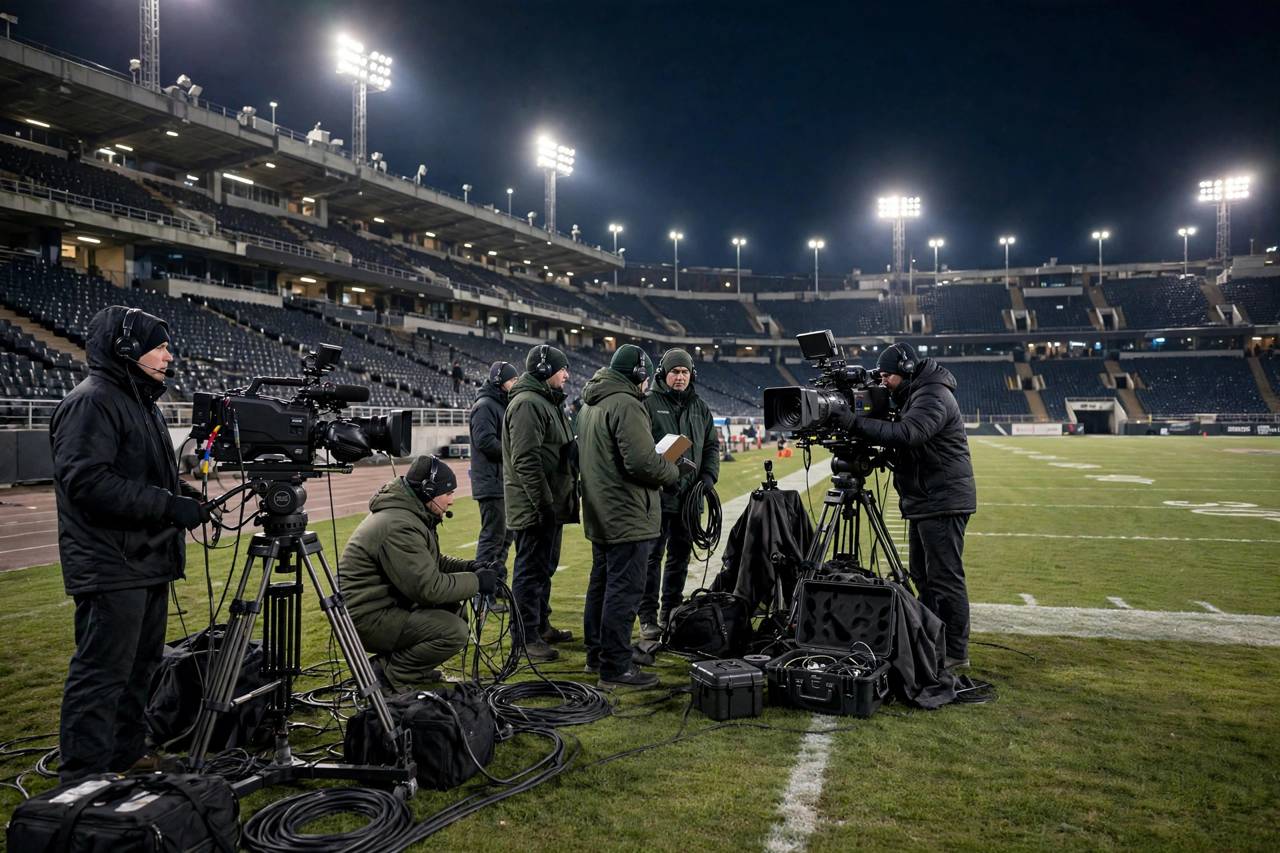
Then there is television, the 800-pound gorilla. The NFL’s broadcast partners pay tens of billions for rights, and the schedule is built to feed them. Sunday afternoon games go to the AFC/NFC packages, Sunday night goes to the premier primetime slot, Monday night gets its showcase, and Thursday night has its own package. Marquee matchups — the Super Bowl rematch, the great quarterback duels, the storied rivalries — are placed where they will draw the most viewers. The schedule is a television programming grid that happens to involve football.
The process is iterative and computer-assisted: scheduling software generates thousands of candidate schedules against the constraints, and the human panel refines them, trading off competing demands. A perfect schedule does not exist — every year, some team gets a brutal three-game road stretch or a short-week disadvantage, and every year the panel insists it was unavoidable. Usually, it was.
Flex Scheduling: The Primetime Reshuffle
The schedule released in May is not final — not for the important slots. Flex scheduling lets the league swap the Sunday night (and now Monday night) matchups in the season’s second half, replacing a dud with a game that matters. If the scheduled Sunday night game features two 3-8 teams and another slot has a division-title showdown, the league flexes the good game into primetime.
Flexing has rules and limits. It generally applies from midseason onward, requires advance notice (about 12 days, so fans and networks can adjust), and cannot be used recklessly — the league protects certain teams from being flexed too often and respects competitive considerations. But the principle is pure television: primetime is too valuable to waste on a game nobody will watch.
This is also why the schedule release has become a television event itself, with teams producing elaborate reveal videos. The league turned the announcement of the grid into content — because in the modern NFL, the schedule is not just logistics. It is programming, and programming is the product.
What the Formula Means for Your Team
For fans, the formula has practical consequences worth knowing. First, strength of schedule is mostly inherited: it comes from your division’s quality and your rotation draw, not from anyone’s favoritism. Second, the schedule is cyclical: that brutal rotation through a stacked division will come back around in three or four years, for better or worse. Third, primetime games are earned by relevance: teams that matter get the night slots, and flex scheduling means a hot start can earn your team a bigger stage in December.
And the next time someone says the league rigged the schedule against their team, you can tell them the truth: fourteen of seventeen opponents were decided by a rotation set years ago, and the rest came from where they finished last season. The NFL schedule is not rigged. It is something rarer — a system so thoroughly designed that it only looks like chaos.
The International Games and Other Constraints
The schedule has grown complications the original formula never imagined. The international games — regular-season games played in London, Germany, and now additional markets — remove home games from teams’ schedules and add long-haul travel the panel must absorb. Teams that play abroad typically get scheduling consideration (often a bye the following week), and the league balances which teams sacrifice home games over multi-year cycles. The international series is a strategic priority for the league, which means the schedulers treat it as a fixed input, not a preference.
Stadium conflicts are the unglamorous constraint that eats the most planning time. Several teams share stadiums with MLB teams (or did, historically), concerts and events block dates, and some stadiums host college games. The panel works from a master availability calendar, and a surprising number of scheduling puzzles reduce to “the stadium is booked that Sunday.” Weather is a softer input — the league avoids scheduling cold-weather teams’ big late-season home games where it can matter for competitive reasons, though tradition (Green Bay in January) overrides optimization.
Then there are the protected rivalries and anniversary games: Thanksgiving (Detroit and Dallas host every year, a tradition dating to the 1930s and 1960s respectively), Christmas games when the calendar allows, the season opener (hosted by the defending Super Bowl champion since 2004), and the international showcases. These tentpoles are placed first. Everything else is built around them.
The Schedule Release as Television Event
It is worth pausing on what the schedule release has become. The NFL turned a logistics announcement into a primetime television special, with teams producing elaborate reveal videos — heists, parodies, celebrity cameos — that compete for viral attention. The reveal videos now get covered like the games themselves. This is not accidental: in a league with no games for six months, the schedule is content, and content is the business.
Fans, meanwhile, have built an entire analytical culture around the release: strength-of-schedule rankings (computed from opponents’ prior-year records the minute the schedule drops), rest-differential analysis (which teams face opponents coming off byes), and the annual debate over who got screwed. Most of it overstates the panel’s power — the formula decides the opponents, and the panel arranges them — but the scrutiny is the point. Thirty-two fan bases, one list of 17 games each, infinite argument. The schedule works exactly as designed.
Frequently Asked Questions
How many games are in an NFL regular season?
17 games per team over 18 weeks (each team gets one bye week), for 272 total regular-season games. The league expanded from 16 to 17 games in 2021 — the first expansion of the regular season since 1978.
How does the NFL decide who plays whom?
By formula: 6 division games, 4 against a rotating same-conference division, 4 against a rotating opposite-conference division, 2 same-conference games based on prior-year standings, and 1 interconference 17th game based on standings. Only the opponents’ timing is chosen by the scheduling panel.
What is flex scheduling in the NFL?
The league’s ability to swap Sunday night (and selected Monday night) matchups during the season’s second half, moving a more compelling game into primetime. It requires advance notice and follows league rules protecting competitive balance.
When is the NFL schedule released?
Typically in May, about four months before the season kicks off in September. The release has become a major media event, with teams producing creative announcement videos.
Why do some teams get more primetime games?
Television demand. Networks pay for compelling matchups, so relevant, popular, and contending teams get the night slots. Flex scheduling can add primetime games for teams that get hot during the season.
Do all NFL teams play each other?
Not every season, but every team plays every other team at least once every four years, guaranteed by the interconference divisional rotation. Division opponents, of course, meet twice every single year.