How to Keep Towels Soft and Fluffy for Years

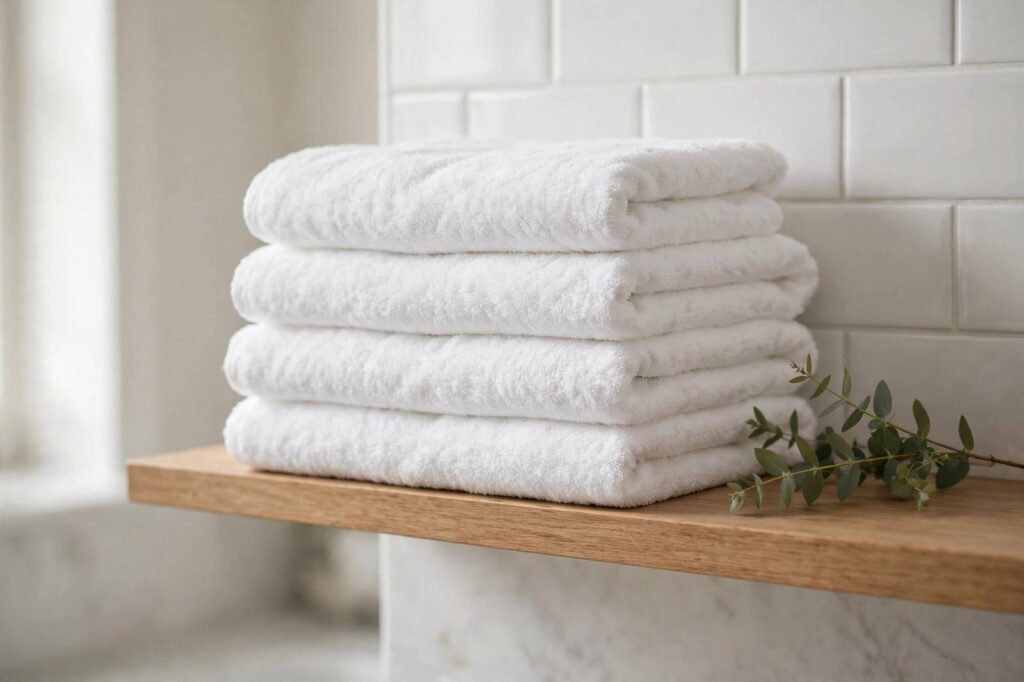
There is nothing quite like the disappointment of a towel that used to be cloud-soft turning into something resembling sandpaper. I have rehabilitated my share of crunchy towels, and learning how to keep towels soft and fluffy comes down to understanding one counterintuitive truth: the product marketed to make things soft — fabric softener — is the main reason your towels are stiff.
This guide exposes the fabric-softener trap, gives you the wash routine that actually works (including the vinegar trick and when to use borax), covers the hard-water problem most guides ignore, and explains proper drying — because half the softness battle is won or lost in the dryer.
The Fabric-Softener Trap
Fabric softener works by coating fibers with a thin layer of chemicals (typically silicones or quaternary ammonium compounds) that feel slick to the touch. On clothes, that is fine. On towels, it is sabotage: the coating builds up with every wash, clogging the cotton fibers’ ability to absorb water and making the towel feel stiff and waxy instead of soft.
The cruel irony: the worse your towels get, the more softener you add, and the worse they get. If you have been using fabric softener on towels for years, your first step is to stop completely and strip the buildup — I will show you how below. Dryer sheets do the same thing, by the way. Banish them from towel loads too.
The Wash Routine That Actually Works
Wash towels separately from clothes — zippers, hooks, and rough fabrics abrade towel fibers, and lint from other garments embeds in the loops. Use hot water (check the care label, but most cotton towels handle it) and use less detergent than you think: about half the recommended amount. Excess detergent does not rinse out fully and leaves the same kind of residue as softener.
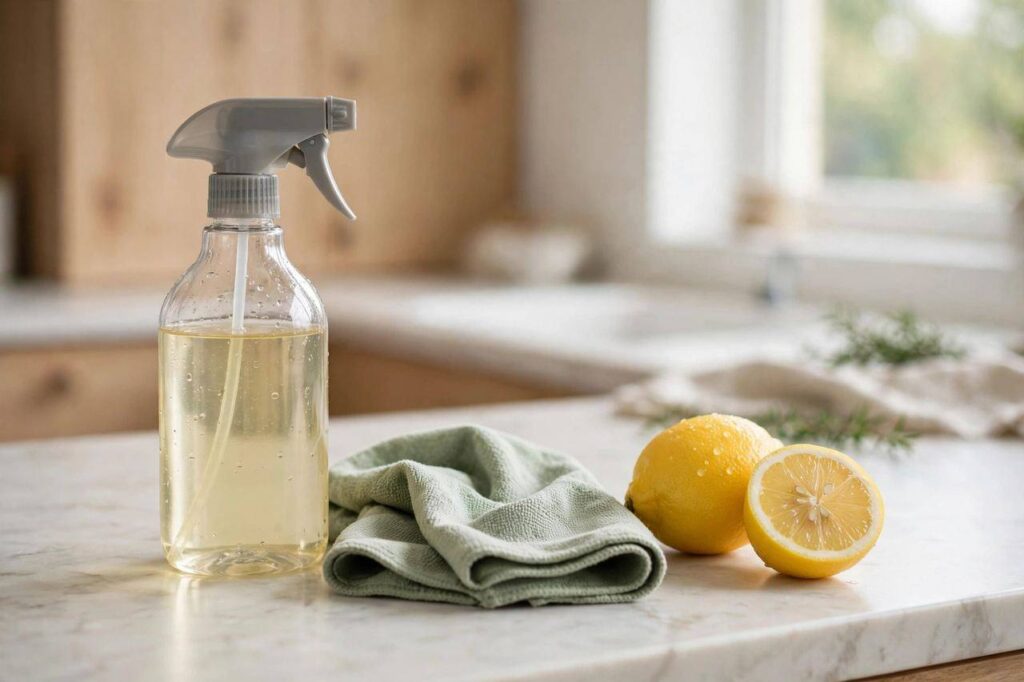
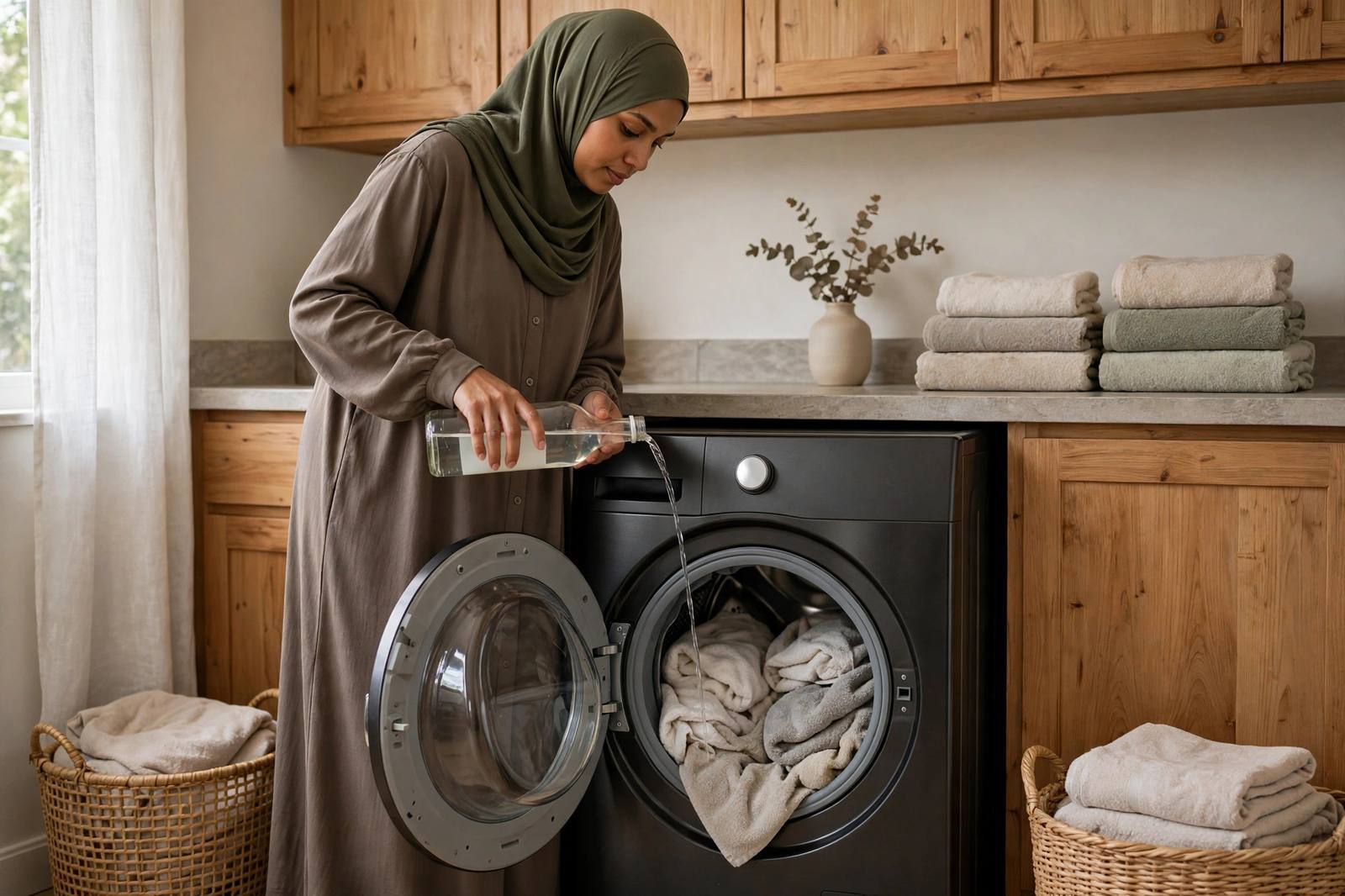
Add half a cup of white distilled vinegar to the rinse cycle — either in the fabric softener dispenser or tossed in when the rinse begins. Vinegar dissolves detergent residue and mineral deposits, leaving fibers clean and springy. Do not worry about the smell; it rinses out completely. Then run an extra rinse cycle if your machine allows it. Towels are thick, and one rinse often is not enough to clear everything out.
The Vinegar + Baking Soda Reset
For towels that are already crunchy, do a reset wash. Wash the towels in hot water with one cup of white vinegar and no detergent. Then wash them again in hot water with half a cup of baking soda and no detergent. The vinegar dissolves mineral and product buildup; the baking soda deodorizes and softens the fibers.
I do this reset on my towel rotation twice a year, and it genuinely restores towels I thought were done. It is also the fix for musty-smelling towels — that sour smell is usually mildew or trapped residue, and the double wash clears both.
When to Bring In Borax
Borax (sodium borate) is the heavy-duty helper for tough cases. Add half a cup to your regular wash along with your detergent — it softens water, boosts the detergent’s cleaning power, and helps dissolve the mineral deposits that stiffen fibers. It is especially useful if your towels feel rough no matter what you do, which usually points to hard water.
One caution: keep borax away from kids and pets in its dry form, store it securely, and do not use it on delicate fabrics. For sturdy cotton towels, though, it is a workhorse.
The Hard-Water Problem
If you live in a hard-water area, mineral deposits (calcium and magnesium) are constantly stiffening your towels no matter how perfectly you wash them. Signs: towels feel rough straight out of the wash, white towels look dingy, and you need extra detergent for everything.
The fixes, in order of effort: add a water softener product or half a cup of washing soda to every towel load; install a whole-house water softener if the problem affects everything (it also helps your skin, appliances, and plumbing); and never skimp on the vinegar rinse, which counteracts mineral deposits directly. Moving to a softer-water solution transformed my towels more than any detergent ever did.
Drying: Where Softness Is Won or Lost
How you dry matters as much as how you wash. The dryer is actually good for fluffiness — tumble drying on medium heat with wool dryer balls fluffs the fibers and keeps them springy. The dryer balls (or clean tennis balls in a pinch) beat the towels as they tumble, preventing the fibers from matting flat. Skip the heat on high, which damages cotton over time.
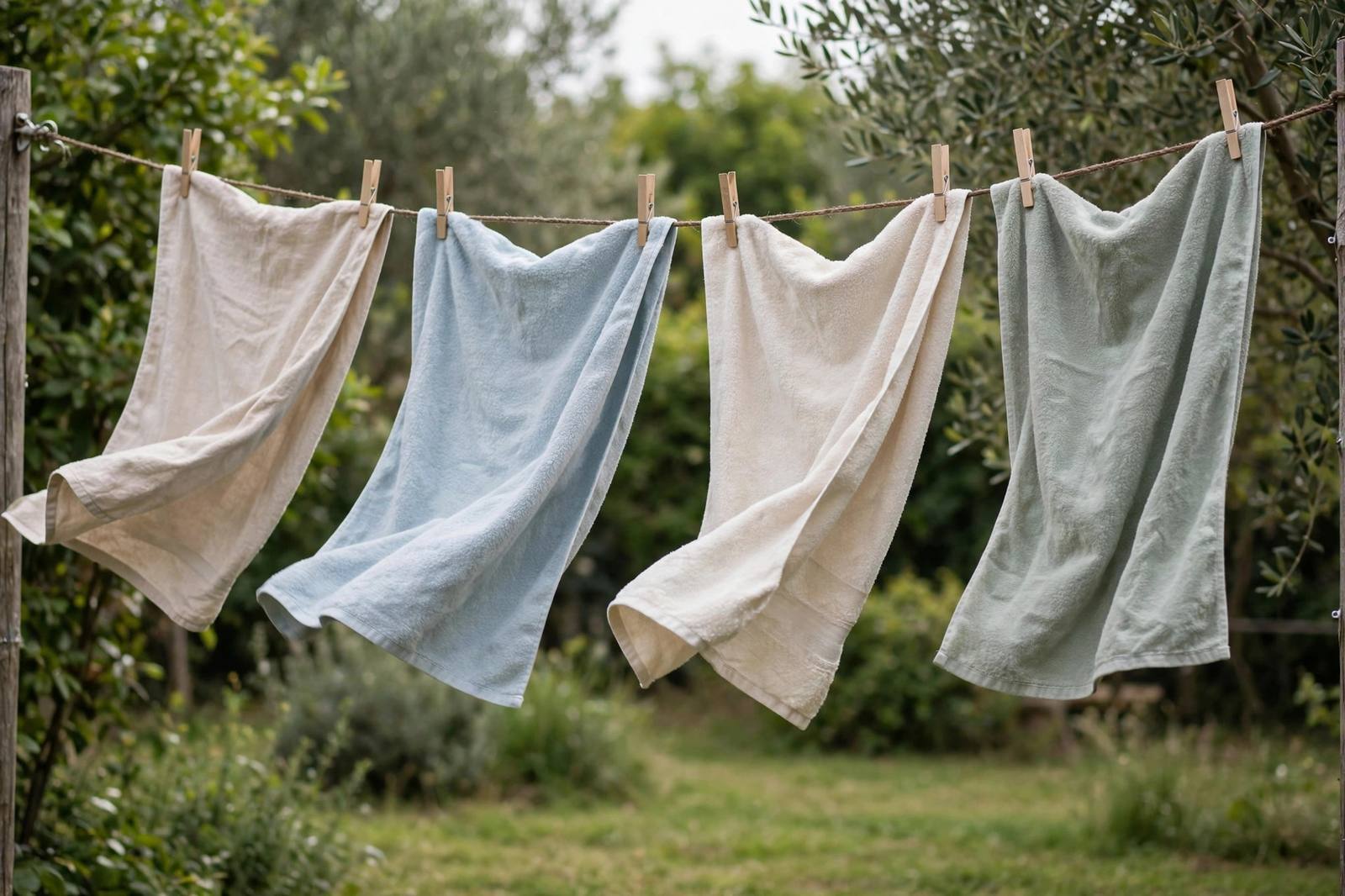
If you line-dry, shake each towel vigorously before hanging — this alone makes a noticeable difference — and give them a quick ten-minute tumble in the dryer afterward if you can. Line-dried-only towels will always be stiffer; that is physics, not failure. And whatever you do, do not leave towels sitting damp in the washer — that is how mildew starts, and mildew means odor and stiffness.
Buying Towels That Stay Soft
Some of this is decided at purchase. Look for 100% cotton (or cotton-rich) towels with a GSM (grams per square meter) of 500-700 — that is the sweet spot of plush but practical. Below 400 GSM, towels are thin and wear out fast; above 700, they are luxurious but take forever to dry and can get musty.
Long-staple cotton (Egyptian, Turkish, Supima) has smoother, stronger fibers that stay soft longer than short-staple cotton. And wash new towels before first use — manufacturers coat them with finishes that reduce absorbency, and one hot wash with vinegar strips it off.
How to Keep Towels Soft and Fluffy: Towel Types Compared
Not all towels age equally, so it helps to know what you are working with. Egyptian cotton has extra-long staple fibers, which means smoother, stronger threads that resist the fraying that makes old towels rough — it is the premium choice and stays soft longest with proper care. Turkish cotton is slightly less smooth but more absorbent and dries faster, making it the practical luxury pick; its softness actually improves over the first few washes.
Standard cotton (often just labeled “cotton” or “U.S. cotton”) is perfectly good for everyday towels if you follow the wash routine in this guide — most mid-range towels are this, and they stay soft for years with vinegar rinses and no softener. Microfiber towels dry fast and pack small, which travelers love, but they never have that plush cotton feel and they are prone to holding odors; wash them separately and never with softener. Bamboo-derived towels are marketed as ultra-soft and eco-friendly — they start wonderfully soft but can wear faster than cotton, so treat them gently and expect a shorter lifespan.
Storing Towels So They Stay Fresh
Softness does not end at the dryer. Store towels in a dry, ventilated space — a damp linen closet undoes good washing fast. Do not pack them in tightly; compressed towels develop musty odors and flat spots. Fold them loosely with the folded edge facing out, which looks better and keeps the plush loops from getting crushed.
Rotate your stock: using the same two towels daily while six sit in the closet means the daily pair wears out in months. A rotation of four to six bath towels per person evens out the wear beautifully. Between uses, hang towels spread out so they dry fully — a bunched-up damp towel is a mildew farm, and mildew means odor that no wash routine fully fixes. And wash the towels you keep in the guest bathroom twice a year even if unused; stored textiles absorb ambient moisture and odors over time.
Why New Towels Aren’t Absorbent (And the Fix)
If you have ever dried off with a brand-new towel and felt like it was pushing water around, you are not imagining it. Manufacturers coat new towels with softening finishes and silicone-based treatments that make them feel luxurious on the store shelf but actually repel water. The fix is simple: before first use, wash new towels in hot water with a cup of white vinegar and no detergent. This strips the coating off, and the towel that comes out will be noticeably more absorbent than the one that went in.
Skip the fabric softener on that first wash too — for the reasons covered above, it just re-coats what you stripped. One more tip: wash new colored towels separately the first couple of times, as excess dye bleeds. After two or three proper washes, a good towel hits its stride: soft, absorbent, and ready for years of service.
Putting It All Together: Your Towel Routine
Here is the complete routine in one place. Wash towels separately in hot water with half the normal detergent, add half a cup of white vinegar to the rinse, and run an extra rinse. Never use fabric softener or dryer sheets on towels. Tumble dry on medium with wool dryer balls, or line-dry with a vigorous shake first. Twice a year, run the vinegar-then-baking-soda reset wash. If your water is hard, add washing soda to every load or consider a softener. Follow this and your towels will stay soft, absorbent, and fresh-smelling for years — the way towels are supposed to feel.
Frequently Asked Questions
Why are my towels stiff after washing?
The usual culprits: fabric softener buildup, too much detergent, hard-water minerals, or insufficient rinsing. Strip the buildup with a vinegar and baking soda reset wash, then switch to the routine above.
Does vinegar really soften towels?
Yes — white vinegar in the rinse cycle dissolves detergent residue and mineral deposits that stiffen fibers. Use half a cup per load; the smell rinses out completely.
How often should I replace towels?
With good care, quality towels last 2-3 years of regular use. Replace them when they stay thin, rough, or musty despite reset washes, or when the fibers start shedding excessively.
Is it better to tumble dry or line dry towels?
Tumble drying on medium heat with dryer balls gives the fluffiest result. Line drying is fine and energy-efficient, but shake towels well first and expect a firmer texture.
Can I use fabric softener on towels at all?
It is best avoided entirely — softener coats fibers, reduces absorbency, and causes the stiffness you are trying to fix. Vinegar in the rinse does the softening job without the buildup.