How to Tell If a Pineapple Is Ripe: 5 Reliable Tests

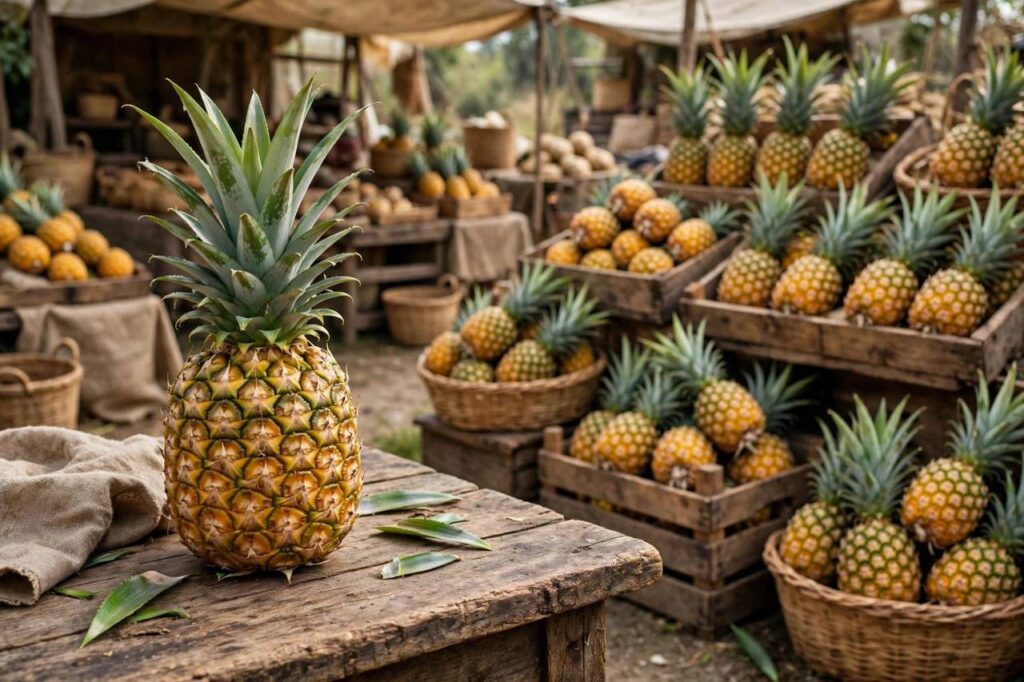
Here is a fruit fact that will change how you shop forever: a pineapple does not ripen after it is picked. Not slowly, not a little, not if you leave it on the counter next to the bananas and whisper encouragement. Unlike many fruits, pineapples are non-climacteric — a delightfully nerdy word that means once it leaves the plant, its sweetness is locked in. So how to tell if a pineapple is ripe is really a question about how to pick a good one at the store, because the pineapple you bring home is the pineapple you have got. Let me give you the science and the five tests that actually work.
I love this topic because it is a perfect little mystery of everyday science. Everyone has a pineapple-picking ritual — thumping it, sniffing it, yanking a leaf — and most of those rituals contain a grain of truth wrapped in folklore. I went through the plant science to sort the real signals from the superstition. What follows is what botanists and produce experts actually agree on, translated for those of us standing in the produce aisle with a shopping list and limited patience.
How to Tell If a Pineapple Is Ripe: The Five Tests
Use these together, not in isolation. No single test is definitive, but a pineapple that passes four or five of them is a very safe bet.
1. The smell test (most reliable). Flip the pineapple over and sniff the base — the flat bottom end. A ripe pineapple smells sweet, fragrant, and distinctly pineapple-y. No smell means underripe. A fermented, vinegary, or alcoholic smell means overripe — it has started fermenting, and you should put it back. This is the test produce professionals trust most, because aroma compounds are a direct signal of the sugars and esters inside.
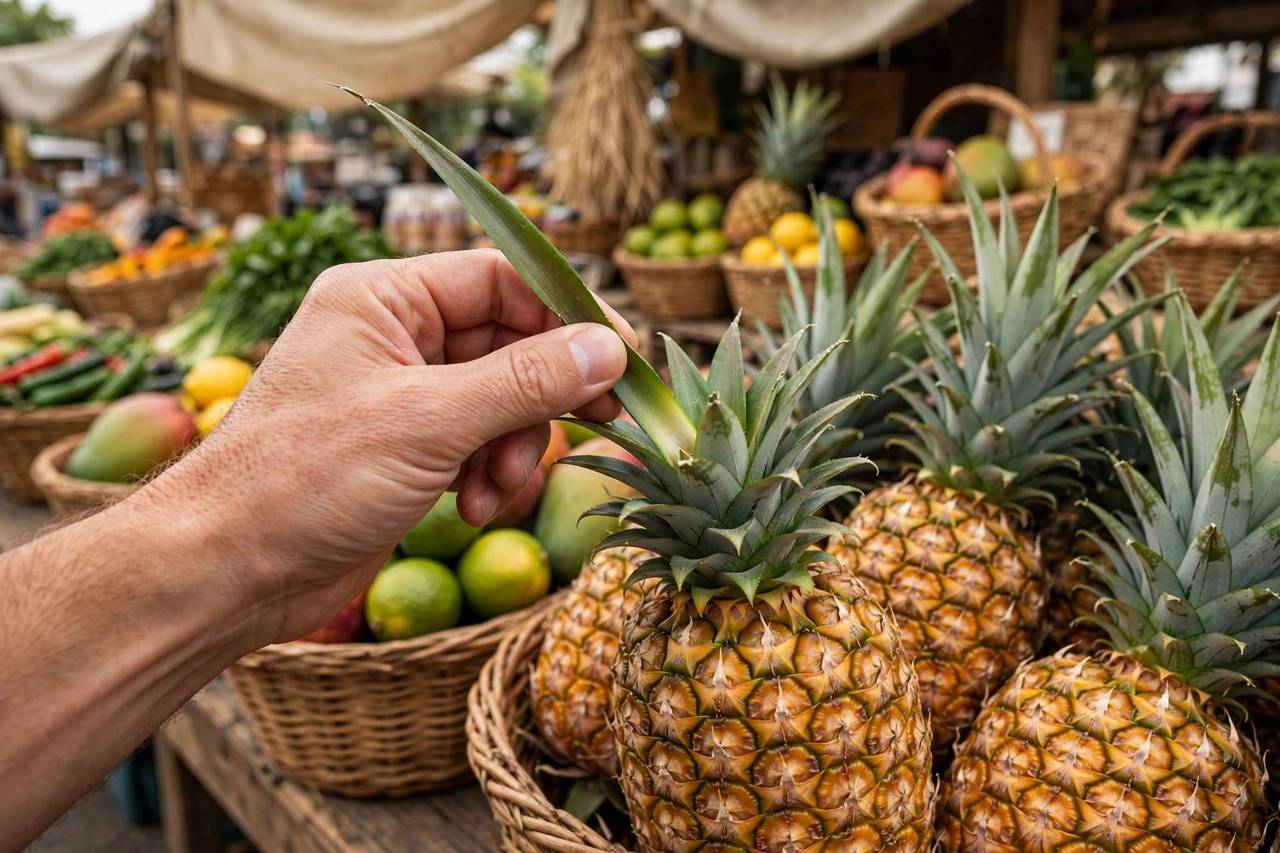
2. The leaf test. Grab one of the inner leaves from the crown and give it a gentle tug. On a ripe pineapple, it pulls out with slight resistance — not effortlessly, not with a fight. If it slides out with zero effort, the fruit is likely overripe. If you practically need tools, it is underripe. Be gentle; you are testing, not harvesting.
3. The color check. Look for golden-yellow color spreading up from the base. A fully green pineapple is underripe; deep golden color reaching well up the sides suggests ripeness. But — and this is the folklore-busting part — color is an imperfect signal. Some varieties stay greenish even when ripe, and some are picked with good color but poor flavor. Use color as supporting evidence, never as the verdict.
4. The feel test. Squeeze gently. A ripe pineapple gives very slightly under pressure — firm with a whisper of yield, like a ripe avocado’s much firmer cousin. Rock hard means underripe. Noticeably soft or with soft spots means overripe or bruised. Also check for mold in the leaf crown and around the base, and skip any fruit with dark, sunken eyes.
5. The weight test. Pick up two similarly sized pineapples and compare. The heavier one is juicier — more weight means more juice and sugar inside. This is the tiebreaker test: when two pineapples both look good, take the heavyweight.
The Science: Why Pineapples Don’t Ripen Off the Plant
Time for the nerdy bit, because it is genuinely fascinating. Fruits fall into two camps. Climacteric fruits — bananas, avocados, tomatoes, peaches — continue ripening after harvest. They produce ethylene gas, which triggers the conversion of starches to sugars even sitting on your counter. That is why a hard avocado becomes a perfect avocado three days later.
Non-climacteric fruits — pineapples, citrus, grapes, strawberries — do not. Their sugar content is fixed at harvest. A pineapple picked underripe will never get sweeter, no matter how long you wait. It may soften slightly and its color may deepen, which fools people into thinking it is “ripening,” but the sweetness is not improving. It is just getting older.
This is why the picking moment matters so much for pineapples specifically. Commercial growers harvest at a precise maturity stage — the fruit must be mature enough to have developed its sugars, which is judged by size, color break at the base, and sugar testing in the field. A pineapple harvested too early is doomed to be tart forever. Your job as a shopper is to identify the ones that were picked at the right moment, using the five tests above. The science also explains why the old trick of “leave it on the counter for a few days to ripen” is wishful thinking — you are aging it, not ripening it.
Choosing at the Store: A Field Guide
Now let us put it into practice. Stand in front of the pineapple display and run the sequence: eyes first, then nose, then hands. Scan for fruits with healthy green crowns (brown, dried-out leaves suggest age), golden color rising from the base, and plump, well-formed eyes — the hexagonal segments on the skin should be relatively flat and uniform, not deeply ridged or shrunken.
Pick up your candidates and smell the base. This single step eliminates most bad choices. Then feel for the slight give, check the weight, and do the gentle leaf tug. The whole process takes about thirty seconds per pineapple once you have done it a few times, and it is weirdly satisfying — you will feel like you have a superpower in the produce aisle.
A note on size and shape: bigger is not better. Choose pineapples that feel heavy for their size with a uniform shape — lopsided fruits often have uneven ripening. And if you are choosing between a perfect-looking pineapple with no smell and a slightly less pretty one that smells amazing, take the fragrant one every time. Aroma is the truth-teller.
One more shopping consideration: seasonality and origin. Pineapples are grown in tropical regions year-round, so they never truly go “out of season” the way peaches do — but supply and price do fluctuate with growing cycles and shipping. The pineapples you see in winter traveled a long way, which is one more reason to trust the smell test over appearance: a fruit that looks flawless after a long journey may have been picked early for durability. The fragrant, slightly imperfect one was more likely picked at proper maturity. When a store has them on a good sale, that often signals peak supply — which is exactly when quality is highest. Buy two.
What About Cutting It Open? Reading the Inside
Sometimes you do everything right and still get a disappointing pineapple. Here is how to read the evidence when you cut it open, so you can calibrate your picking for next time. The flesh should be a rich golden yellow — pale, whitish flesh means underripe. It should smell sweet and taste sweet-tart, not mouth-puckeringly sour and not fermented.
If you cut into an underripe pineapple, all is not lost. Grilling or cooking transforms it — heat caramelizes the sugars that are there and softens the flesh, making even a tart pineapple delicious. Grilled pineapple on burgers, in salsas, or with a sprinkle of salt and chili is one of food’s great redemption arcs. An overripe pineapple, meanwhile, is perfect for smoothies, juicing, or cooking down into a compote, where texture no longer matters.
And if you encounter the infamous mouth-tingle or slight burning sensation from fresh pineapple — that is bromelain, a protein-digesting enzyme the fruit uses as defense. It is literally, mildly digesting your mouth. Cooking deactivates it, which is another reason grilled pineapple feels so much gentler. Science is delicious.
Storing Your Pineapple: Whole, Cut, and Long-Term
Whole and uncut: A whole ripe pineapple keeps at room temperature for a day or two, or in the refrigerator for up to about a week. Refrigeration slows the aging (remember — not ripening, aging). Store it upside down if you like; the folk wisdom says sugars settle at the base and flipping redistributes them. The science on this is thin, but it does no harm.
Cut: Once cut, pineapple must be refrigerated in an airtight container, where it keeps for three to five days. Keep the juice — it is liquid gold for smoothies and marinades. Cut pineapple also freezes beautifully: spread chunks on a tray, freeze solid, then bag them. Frozen pineapple is a smoothie ingredient that needs no introduction.
The crown: Do not throw it away. Twist off the leafy crown, peel back the lower leaves, let it dry for a day, and plant it in soil — it will grow into a pineapple plant. It takes an absurdly long time to fruit indoors (think years, and it needs serious warmth and light), but as a botanical party trick, growing a pineapple from a grocery store crown is hard to beat. Curiosity is a superpower, after all.
Frequently Asked Questions
Will a pineapple ripen on the counter?
No — not in any way that increases sweetness. Pineapples are non-climacteric, meaning their sugar content is fixed at harvest. A green pineapple left on the counter may soften and change color, but it will not get sweeter. Choose a ripe one at the store using the smell, leaf, color, feel, and weight tests.
What does a ripe pineapple smell like?
Sweet and fragrant at the base — unmistakably pineapple. No aroma means underripe; a fermented, vinegary, or alcoholic smell means overripe. The base (bottom) gives the truest reading because aroma compounds concentrate there.
Should the leaves pull out easily on a ripe pineapple?
An inner crown leaf should pull out with gentle resistance — not effortlessly, not with a struggle. Effortless removal suggests overripeness; leaves that will not budge suggest the fruit is underripe. Use this as one signal among several, not the sole test.
Why does fresh pineapple make my mouth tingle?
That is bromelain, a protein-digesting enzyme in the fruit. It mildly irritates the soft tissues of your mouth. Cooking or grilling deactivates the enzyme, which is why cooked pineapple does not cause the sensation. Very ripe pineapples also tend to cause less tingling.
How long does cut pineapple last in the fridge?
Three to five days in an airtight container. A whole uncut ripe pineapple lasts about a week refrigerated. For longer storage, freeze cut chunks — they keep for months and are perfect for smoothies.