How to Remove Armpit Stains from White Shirts

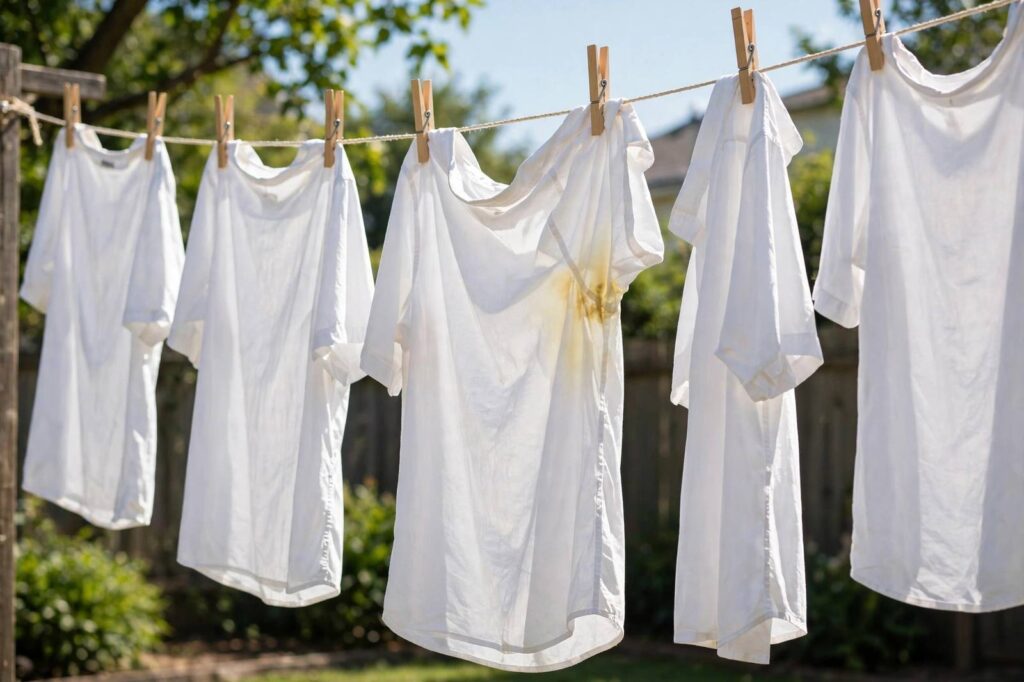
There is a special kind of heartbreak in pulling your favorite white shirt out of the dryer and seeing those yellow underarm stains staring back at you. I have been fighting this battle for years, and learning how to remove armpit stains from white shirts properly took me from tossing shirts every summer to keeping them crisp for seasons. The stains are not really sweat — they are a chemical reaction — and once you understand that, they are surprisingly beatable.
This guide covers why the stains happen, why bleach is the worst thing you can use on them, the methods that actually work ranked from gentlest to strongest, and how to prevent them in the first place. Everything here is tested in a real household laundry room, not a lab.
Why Armpit Stains Happen (It’s Not Just Sweat)
Here is the part that surprised me: sweat itself is mostly clear. The yellowing comes from the aluminum in your antiperspirant reacting with the proteins in your sweat. That is why the stains show up even when you barely broke a sweat, and why they get worse over time as the reaction bakes in with heat.
Two implications follow. First, the dryer is the enemy — heat sets the stain permanently, so always check underarms before a shirt goes in the dryer. Second, prevention can be as simple as switching from an aluminum-based antiperspirant to an aluminum-free deodorant, which I will cover at the end.
Why Bleach Backfires on Armpit Stains
This is the mistake I see everywhere, and I made it myself for years. Chlorine bleach seems like the obvious answer to yellowing on white shirts. It is actually one of the worst things you can do.
Chlorine bleach reacts with the proteins in sweat the same way it reacts with other organic matter — it oxidizes them, which can set the yellow color deeper into the fabric rather than lifting it. On top of that, bleach weakens cotton fibers, so you end up with a shirt that is both stained and thinner. If you must whiten, use oxygen bleach (sodium percarbonate) instead — it lifts stains without the harsh protein reaction, and it is far gentler on fabric.
Method 1: Baking Soda Paste (The Gentle Starter)
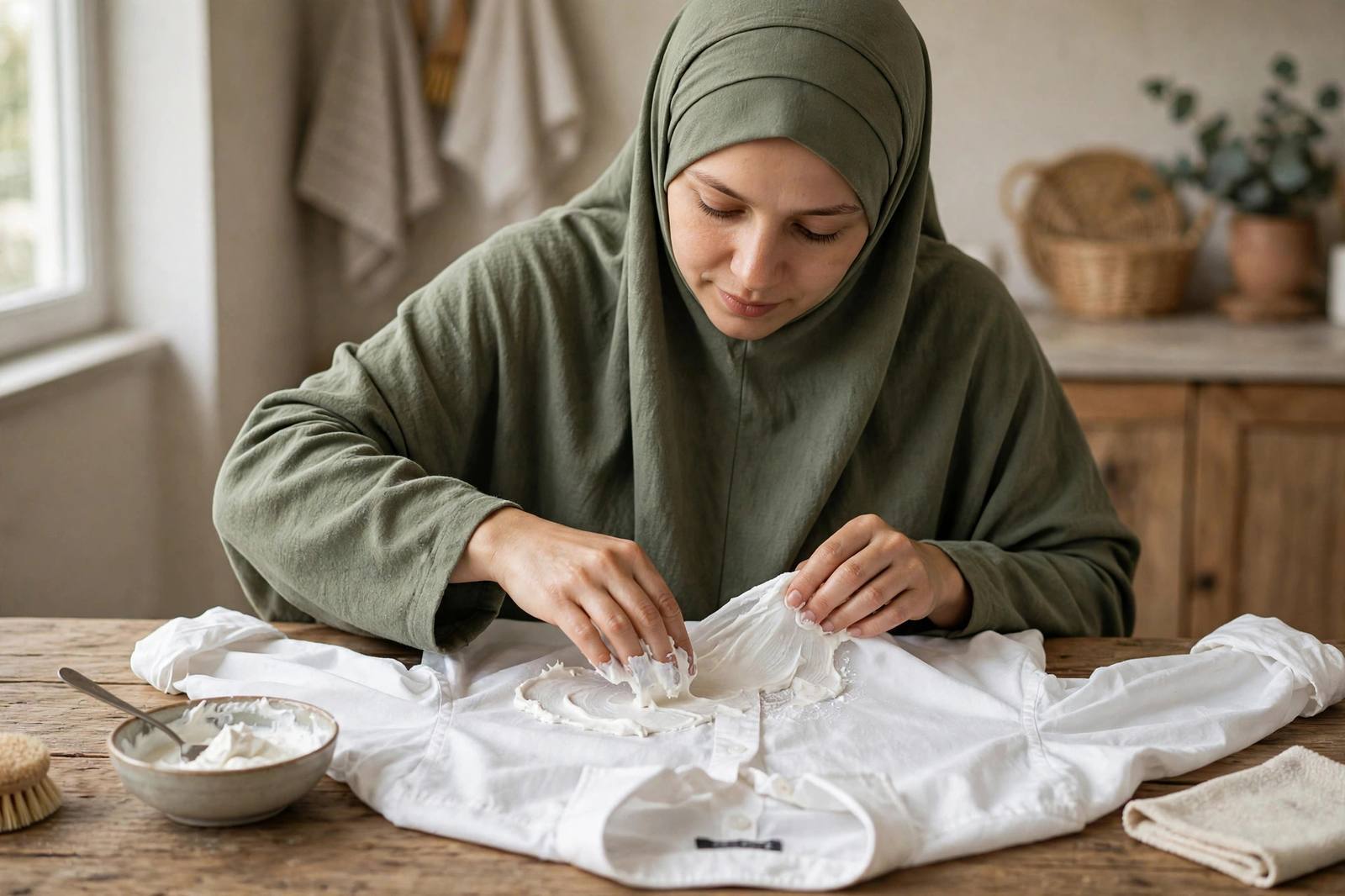
For fresh or light stains, start here. Mix baking soda with a little water to form a thick paste — about the consistency of toothpaste. Work it into the damp underarm area with an old toothbrush, using gentle circular motions. Let it sit for 30 minutes, then wash the shirt in the hottest water the fabric label allows.
Baking soda works as a mild alkali and a gentle abrasive: it loosens the protein-aluminum residue without damaging fibers. I use this as my regular maintenance treatment — a quick paste on shirt underarms every few washes keeps light staining from ever building up.
Method 2: Dish Soap + Hydrogen Peroxide (The Workhorse)
This is my most-used method and the one I recommend to friends first. Mix one part dish soap (the plain kind, like Dawn) with two parts hydrogen peroxide (the 3% solution from any pharmacy). Apply the mixture to the stain, gently scrub with a soft brush, and let it sit for 30 to 60 minutes before washing normally.
Why it works: the dish soap cuts through the oily component of sweat residue, while hydrogen peroxide is an oxygen-based whitener that breaks down the yellow compounds without the protein-setting reaction of chlorine bleach. This handles medium stains — the kind that have been through a few washes already — in a single treatment most of the time.
A note on colored fabrics: hydrogen peroxide is generally color-safe, but test on an inside seam first if the shirt is not white. For white shirts, you can be generous.
Method 3: White Vinegar Soak (The Overnight Fix)
For stubborn stains, white distilled vinegar is your overnight weapon. Fill a basin with cool water and add one cup of white vinegar. Submerge the shirt so the underarm areas are fully soaked, and leave it for at least a few hours — overnight is better.
Vinegar is a mild acid, which means it attacks the alkaline aluminum-salt deposits from the opposite direction that baking soda does. After soaking, wash the shirt as normal, adding half a cup of baking soda to the wash cycle for good measure. I have rescued shirts I was ready to throw away with this method.
Method 4: Oxygen Bleach Soak (The Heavy Artillery)
When nothing else has worked, it is time for oxygen bleach — sodium percarbonate, sold as OxiClean or store-brand equivalents. Dissolve a scoop in hot water (as hot as the fabric allows), submerge the shirt, and soak for up to six hours.
Oxygen bleach releases hydrogen peroxide in water, giving you the whitening power without chlorine’s downsides. It is safe for most fabrics and colors, and it is the method professional laundries lean on. I keep a tub of it in my laundry room at all times — it handles not just armpit stains but dingy socks, stained tablecloths, and grimy grout-adjacent laundry disasters.
Method 5: Lemon Juice + Sunlight (The Natural Option)
If you prefer to keep things chemical-free, lemon juice plus sunlight is the classic. Squeeze fresh lemon juice onto the stain, rub it in, and lay the shirt in direct sunlight for a few hours. The citric acid loosens the stain and UV light is a natural whitener.
This works best on fresh stains and white cotton. It is slower than the other methods, but it is free, and there is something satisfying about the old-fashioned approach. Just make sure the lemon juice is rinsed out before wearing — citric acid left in fabric can weaken it over time.
What to Do About Old, Set-In Stains
Stains that have been through the dryer multiple times are the hardest case, because heat bonds the proteins to the fibers. Do not give up, though — layer your methods. Start with the vinegar soak overnight, then apply the dish soap and hydrogen peroxide mixture, then finish with an oxygen bleach soak. In my experience, even year-old stains fade dramatically with this sequence, though they may not vanish completely.
If a shirt has been bleached with chlorine in the past, be honest with yourself about expectations — the stain may be chemically locked in. At that point, the shirt becomes a layering piece or a donation.
How to Prevent Armpit Stains for Good
Removal is satisfying, but prevention is better. The single biggest change: switch to an aluminum-free deodorant. No aluminum means no yellow reaction, full stop. It took me one summer to convert, and the difference in my white shirts was dramatic.
Other habits that help: apply antiperspirant at night (it works better and transfers less to fabric), let it dry fully before dressing, and wash white shirts promptly rather than letting them sit in the hamper. A quick cold rinse of the underarm area before tossing a shirt in the hamper prevents the proteins from setting. And remember the golden rule: check underarms before the dryer, every single time.
How to Remove Armpit Stains From White Shirts: Delicate Fabrics and Colors
The methods above assume sturdy white cotton, but not every shirt qualifies. For delicate fabrics like silk or wool blends, skip the scrubbing entirely — work any treatment in gently with your fingertips, use cool water only, and lean on the vinegar soak rather than peroxide. For colored shirts with underarm discoloration, hydrogen peroxide is usually still safe at 3%, but test on an inside seam first and reduce soak times. Oxygen bleach is color-safe and my preferred choice for anything that is not white.
For performance fabrics and synthetics, the problem is often odor more than visible staining, since synthetics show yellowing less. A vinegar soak followed by a wash with a sports-specific detergent handles both. And for vintage or expensive shirts, consider taking them to a professional cleaner and specifically mentioning perspiration stains — pros have enzyme treatments that are not sold retail, and a five-dollar cleaning beats replacing a fifty-dollar shirt.
When to Stop Treating and Repurpose the Shirt
There comes a point with every veteran shirt where chemistry surrenders. The signs: the stain has survived the full layered treatment twice, the fabric is thinning at the underarm, or chlorine bleach was used in the past and the yellow is locked in permanently. Continuing to treat at that point just wears the shirt out faster.
Retire it with dignity instead. A stained white shirt becomes a perfect undershirt, a painting or gardening shirt, or cleaning rags cut into generous squares — old cotton makes the best dusting cloths. I keep a dedicated drawer for retired shirts and have not bought cleaning rags in years. The goal was never to keep every shirt forever; it was to stop throwing away shirts that still had life in them.
The Weekly Habit That Prevents Stains Entirely
The people with permanently crisp white shirts are not better at stain removal — they just never let stains form. The habit takes two minutes a week: when you sort laundry, check the underarms of white shirts before they go in the wash. Any hint of yellow gets the baking soda paste treatment right then, before washing. Shirts with no staining go straight in.
Pair that with the aluminum-free deodorant switch and prompt washing, and new stains simply stop appearing. I have not had to do a full peroxide treatment in over a year since adopting this routine. Prevention is not glamorous, but it beats every removal method ever invented.
Frequently Asked Questions
Can armpit stains be removed after drying?
Yes, though it is harder. Heat sets protein stains, so skip the dryer until the stain is gone. Layer the vinegar soak and hydrogen peroxide methods, and expect to repeat the treatment.
Does baking soda really remove armpit stains?
For fresh or light stains, yes — a baking soda paste lifts surface residue effectively. For older stains, it works best as a first step before stronger methods like hydrogen peroxide or oxygen bleach.
Why do my white shirts get yellow underarms even without sweating much?
The yellow comes from aluminum in antiperspirant reacting with sweat proteins, not from sweat volume. Switching to an aluminum-free deodorant usually stops new stains from forming.
Is it safe to use hydrogen peroxide on colored shirts?
Generally yes — 3% hydrogen peroxide is color-safe for most fabrics, but always test on a hidden seam first, especially with dark or delicate materials.
How do I keep white shirts white long-term?
Wash whites separately in hot water with oxygen bleach added monthly, avoid chlorine bleach, treat underarm areas promptly, and line-dry in sunlight when you can — UV is a free whitener.