Magma vs Lava: The Difference Is Only Location — And It Changes Everything

This is the vocabulary question I get most often from students, usually right after they have used the two words interchangeably in an essay and lost a mark for it. Magma and lava are the same molten rock. The difference between them is one thing only: where the rock happens to be. Everything else students argue about — temperature, thickness, explosiveness — flows from that single fact of location, and by the end of this article you will see how much follows from it.
The One-Line Difference
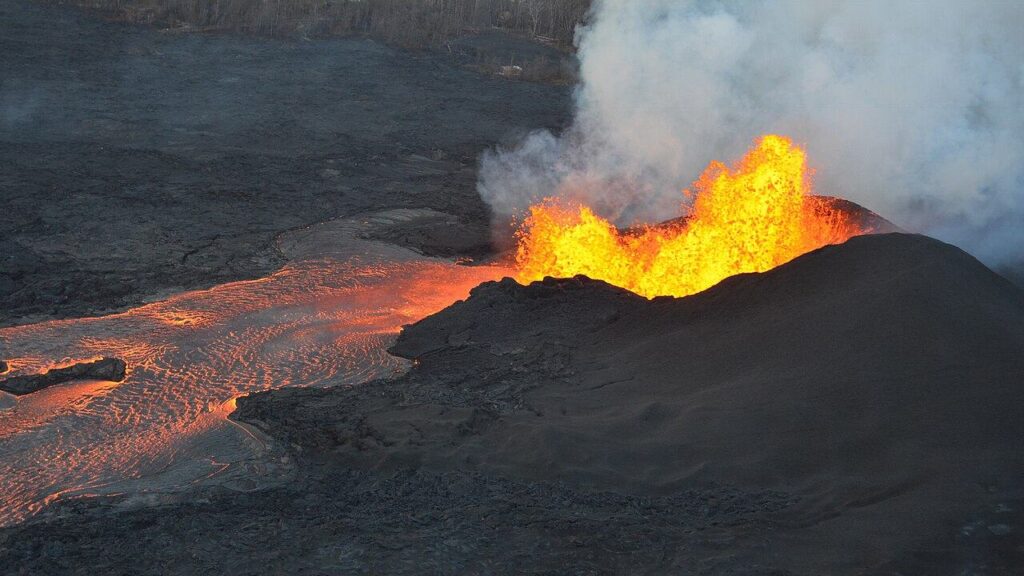
Scientists use the term magma for molten rock that is underground, and lava for molten rock that breaks through Earth’s surface — that is the United States Geological Survey’s definition, and it really is the whole definition. Molten rock beneath the surface: magma. The same molten rock, erupted: lava. There is no change of substance at the boundary, no chemical ceremony at the vent. A volcano does not manufacture lava; it releases magma, and the name changes the moment the rock crosses from inside the Earth to outside it.
Underground, magma can be found in the crust right below a volcano or deeper, within the mantle — and for a volcano to erupt at all, it must have such a source of magma feeding it. If you remember one line from this article, make it that one, because every other difference in this comparison is a consequence of crossing that line — of moving from a high-pressure, insulated world to an exposed, cooling one.
Same Stuff, Different Name
It is worth insisting on how literally “same stuff” this is. Lava has the same composition as the magma it came from; the textbook phrase is that the composition does not change when magma reaches the surface and becomes lava. What both are made of is also worth knowing, because it explains the behaviour later. Magma and lava contain three components: a liquid part called the melt, made of ions from molten minerals; solids carried within it; and volatiles — gases dissolved in the melt, held in solution by the pressure around them. Keep those dissolved gases in mind. Underground, they are prisoners of pressure. At the surface, they are not, and that single change drives much of what an eruption looks like and what the cooled rock becomes.
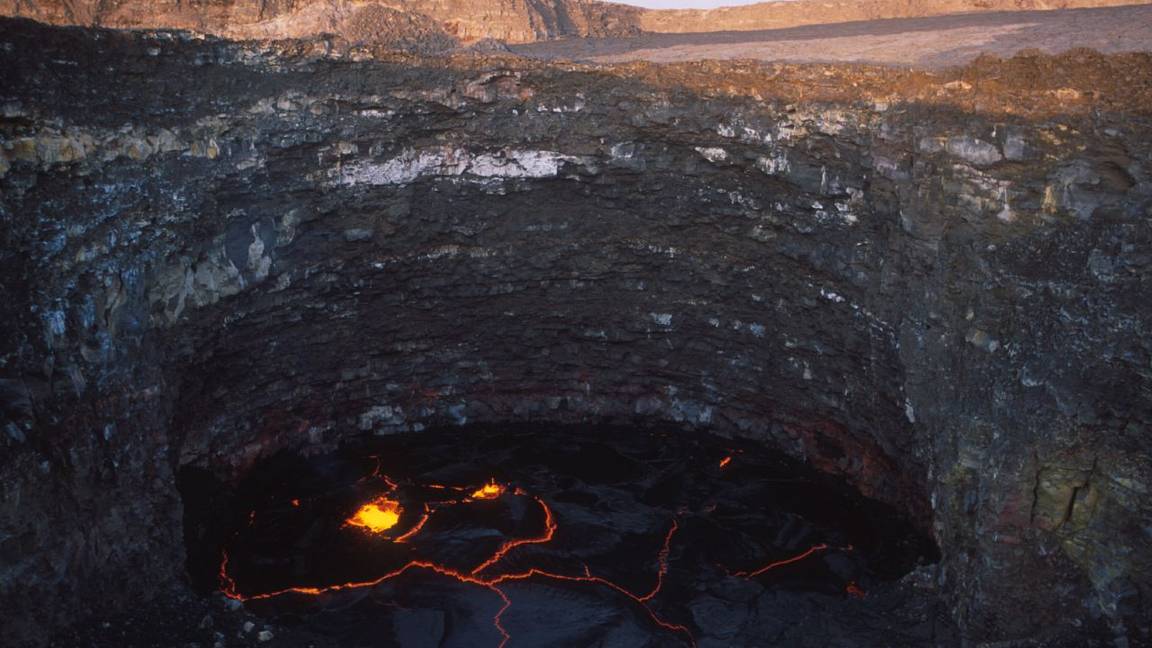
The material also has an address while it waits: magma collects in chambers beneath the volcano — where magma waits: the magma chamber is covered properly in our guide to a volcano’s parts — and it is from there that the journey to a new name begins.
What Actually Changes at the Surface
The gases get out
Underground, the immense pressure keeps magma’s gases dissolved, the way carbonation stays in a sealed soda bottle. As magma rises and the pressure on it falls, those gases come out of solution and form bubbles. National Geographic’s analogy is the shaken soda can: the rush of vapour, once the confinement is gone, can trigger an explosive eruption. Which magmas suffer most from this is the next section’s subject — but note the sequence now, because it is purely a location story: same gas, same rock; pressure underground keeps it dissolved, and the surface sets it free.
Cooling speed — and the rocks it leaves behind
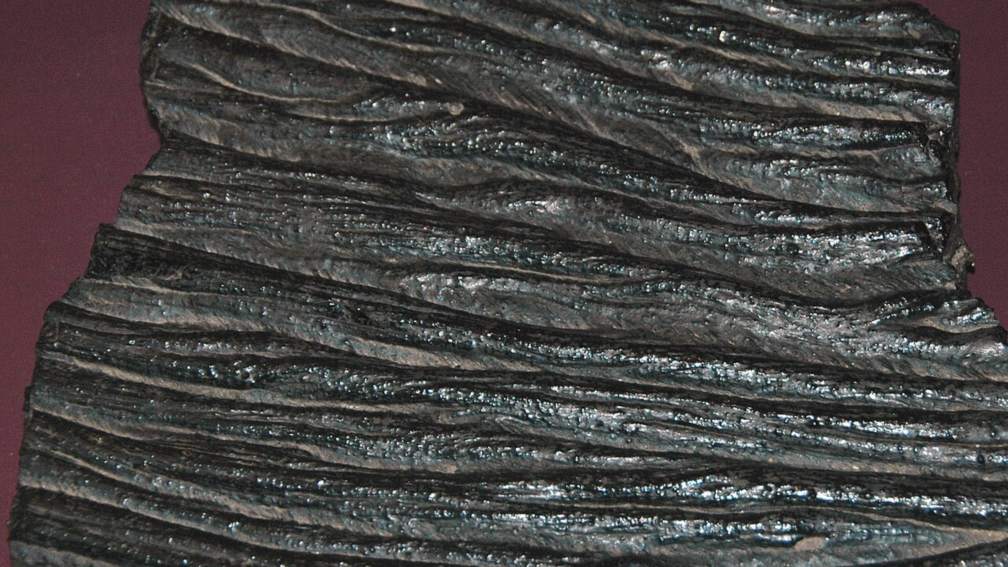
Lava cools quickly, because at the surface it is exposed to the comparatively cold atmosphere — or, sometimes, to water. Magma trapped at depth cools slowly, insulated by the rock around it. Cooling speed writes itself into the rock: igneous rocks formed from lava are fine-grained, called extrusive, because the crystals had no time to grow; rocks formed from magma that solidified at depth are coarse-grained, called intrusive, because slow cooling let the crystals grow large. So the magma/lava distinction survives even after everything has gone cold and hard: geologists reading a rock’s grain size are reading where it cooled, which is to say, which name the molten rock had when it froze.
A word on temperature
Location changes temperature too, though less than students expect — surface lava is already cooling from the moment it erupts. As a general range, most lava at volcanoes runs around 700 to 1,300°C, which is the typical temperature of the upper mantle it came from. That is a range, not a table: temperature varies systematically with the magma’s chemistry, and the full breakdown lives in our guide to lava temperatures by type, in full. What matters for this article is the direction of travel: eruption is the start of cooling, and nothing that reaches the surface stays at its underground best.
Runny vs Sticky: Mafic and Silicic Magmas
Location is the difference between the words, but chemistry is the difference between volcanoes — and here the controlling ingredient is silica, the mineral that makes up glass and quartz. Mafic magmas, like Hawaii’s, contain between 47 and 63 percent silica. They are fairly runny for molten rock, with viscosities ranging from molasses to peanut butter, and they are the hottest variety of magma: between 1,800 and 2,200°F (≈980–1,200°C). Silicic magmas contain more than 63 percent silica, and that silica makes them viscous to a degree that changes everything. At their runniest, silicic magmas flow about as well as lard or caulk — which is to say, barely at all. They are also cooler: rhyolite, an especially silica-rich type, reaches only about 1,200 to 1,500°F (≈650–815°C).
Now bring back the gases. Because silicic magmas are colder and goopier, their dissolved gases have a harder time venting out; the gas builds up inside the sticky melt instead of escaping, and the magma becomes more explosive — National Geographic compares it to adding more and more carbonation to a soda. Then, when the pressure confining it is finally released, the trapped gas expands in a rush.
That is why the iconic steep cones — the stratovolcanoes — are loaded with silicic magmas, while Hawaii’s low-silica basaltic magmas have much less explosive force and instead ooze and spatter, building broad shield volcanoes. Runny magma lets its gas go and flows; sticky magma keeps its gas, and eventually the gas does the moving. It is the same three components in both cases — melt, solids, volatiles — behaving differently because of one ingredient’s percentage.
A Real Magma System: Beneath Yellowstone
Abstract definitions land better with one real system, and Yellowstone’s is the best documented. Beneath the Yellowstone caldera sit two magma bodies, not one. The shallower is composed of rhyolite, a high-silica rock type, and stretches from about 5 km to about 17 km beneath the surface; it is about 90 km long and about 40 km wide, and it is mostly solid — only about 5 to 15 percent of it is melt. The deeper reservoir is composed of basalt, a low-silica rock type, and extends from 20 to 50 km down.
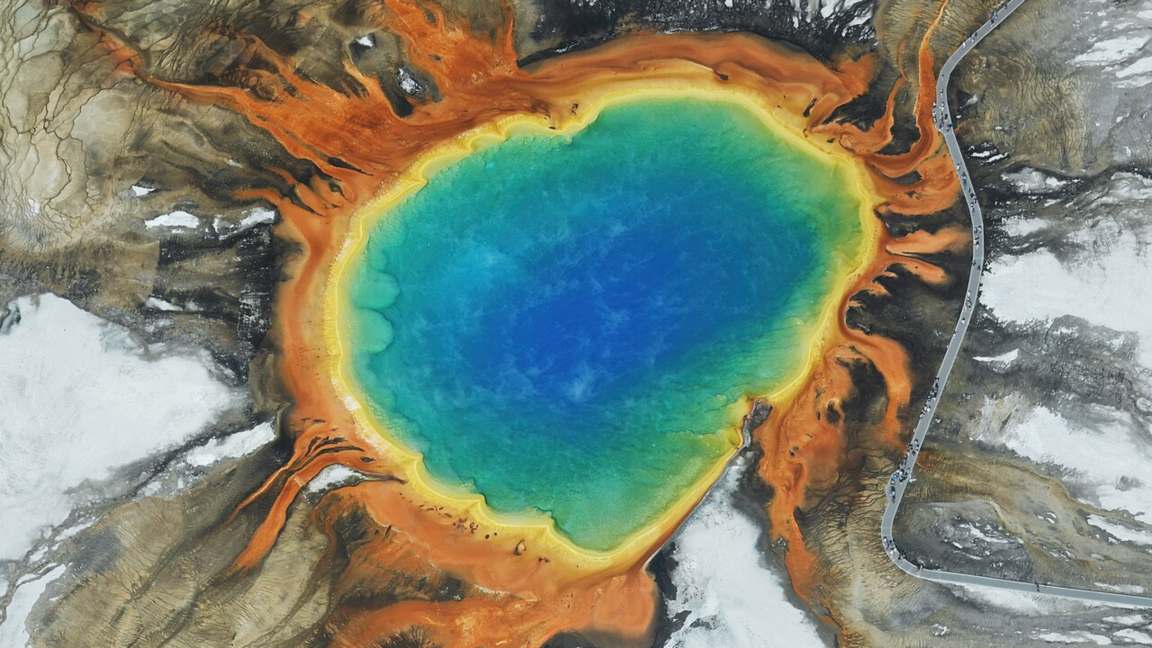
Read that again and notice what it does to the cartoon version of a magma chamber: not a cavern of liquid fire, but a vast, mostly solid body with melt distributed through it, stacked in two chemically different layers — the cool, sticky, silica-rich kind above, the hot basaltic kind below. The runny-versus-sticky contrast from the previous section is not two volcanoes on two continents; at Yellowstone it is two floors of the same building. And all of it, every cubic kilometre of both bodies, is magma — because all of it is still underground. It only earns the name lava on the day some of it breaks the surface, which is what happens when magma reaches the surface in an eruption.
Magma vs Lava: The Comparison Table
| Magma | Lava | |
|---|---|---|
| Location | Underground — in the crust below a volcano or within the mantle | At Earth’s surface, after erupting |
| Composition | Melt + solids + dissolved gases (volatiles) | The same — composition does not change at the surface |
| Gases | Dissolved, held in by pressure | Escaping — bubbles form as pressure drops |
| Cooling | Slow, insulated at depth | Fast, exposed to air or water |
| Rocks it forms | Coarse-grained (intrusive) | Fine-grained (extrusive) |
| Typical temperature | Mafic 1,800–2,200°F (≈980–1,200°C); rhyolite ≈1,200–1,500°F (≈650–815°C) | Most lava around 700–1,300°C |
Frequently Asked Questions
No — if anything, the reverse. Lava is magma that has reached the surface and begun cooling in the open air; the hottest magmas, the mafic ones, run about 1,800–2,200°F (≈980–1,200°C) underground. Location, not heat, is what separates the two words.
No. The naming is one-way: once molten rock has erupted at the surface it is lava, and once lava cools and solidifies it is igneous rock. If that rock is ever melted again deep underground, the new melt is magma — but it is a new generation of it, not the old lava changing its name back.
Three components: a liquid melt of ions from molten minerals, solid material carried within it, and volatiles — gases dissolved in the melt under pressure. Lava has exactly the same composition as the magma it came from; what changes at the surface is that the gases escape and cooling begins.
In magma chambers — bodies of magma collected beneath the volcano, in the crust or upper mantle. Yellowstone’s system shows they need not be simple: it has two stacked bodies, a mostly solid rhyolite body about 5–17 km down with only 5–15% melt, over a basalt reservoir 20–50 km deep.