How to Plan a Small Garden: Big Harvests, Tiny Space

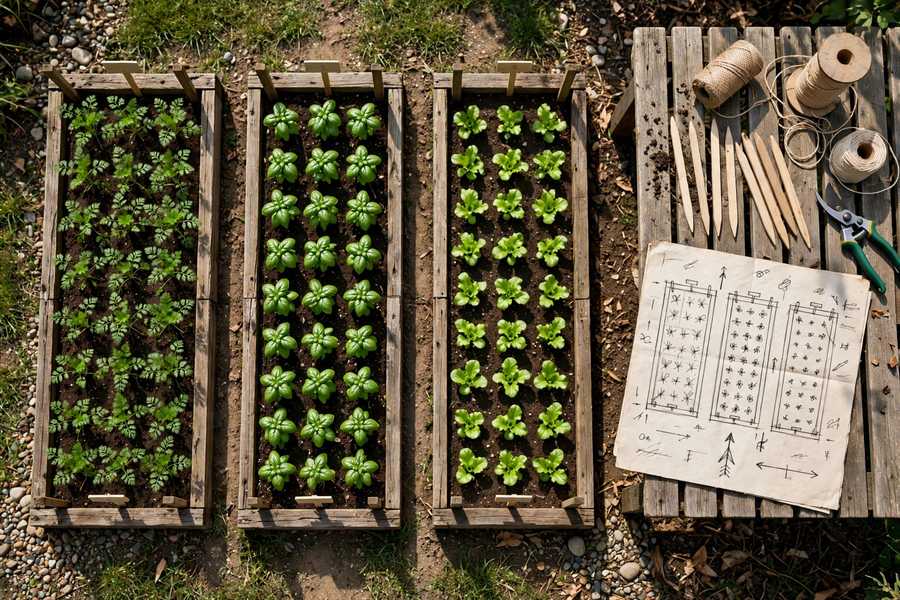
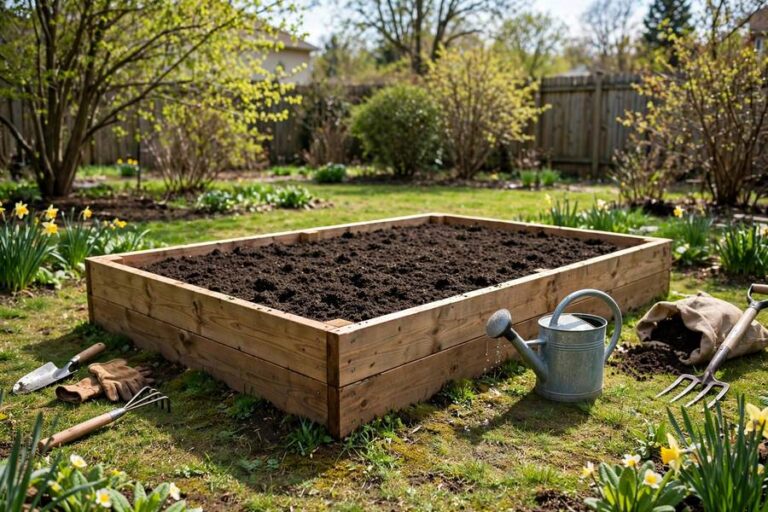
My current garden is smaller than my first one, and it produces more food. That sounds backwards until you realize that small gardens force the exact disciplines that make gardens productive: every square foot gets attention, nothing is planted and forgotten, and you learn to stack functions the way nature does. How to plan a small garden is really a lesson in thinking vertically, timing plantings so the soil is never idle, and choosing varieties bred for tight spaces. Whether you have a 4×8 bed, a patio of containers, or a narrow side yard, this guide will show you how to map your space, layer your plantings, and schedule successions so your small plot out-produces gardens three times its size. Start with the fundamentals in my guide on how to start a garden, then use this plan to make every inch count.
Map Your Space Before You Plant Anything
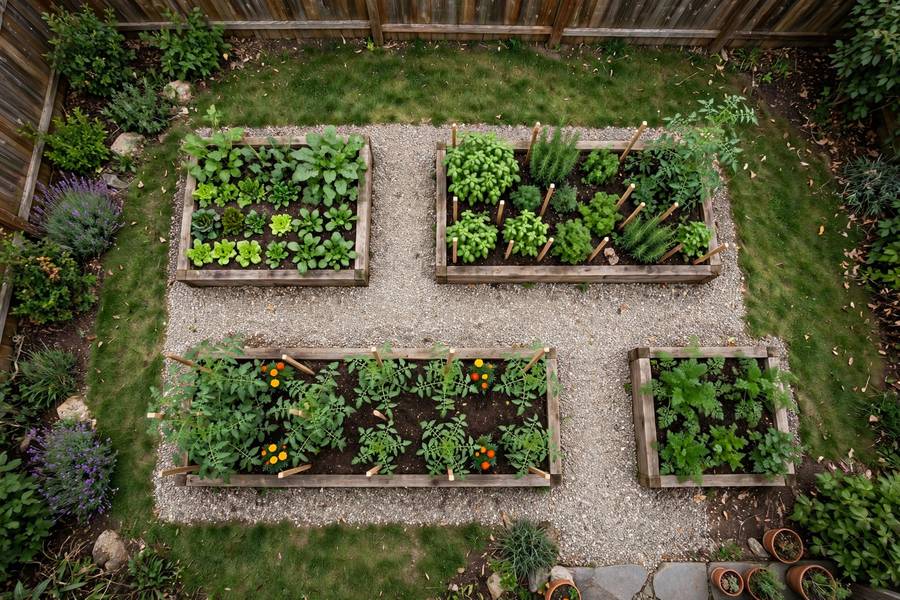
Planning starts with measuring, not dreaming. Get a tape measure and record the actual dimensions of your growing area, noting sun exposure through the day, water access, and any structures you can use for vertical growing. I sketch mine on graph paper with each square representing one foot; it takes twenty minutes and prevents every spacing disaster I suffered in my unplanned first year.
On your map, mark the sunniest spots for fruiting crops like tomatoes and peppers, and note any afternoon shade for lettuce and spinach. Mark your water source, because hauling watering cans across the yard gets old by July and you will water less often than your plants need. Mark fences, walls, and railings too: these are free trellises, and vertical space is the small garden’s secret weapon. A good map turns a small space from a limitation into a puzzle you can solve.
Think Vertical: Trellises, Cages & Hanging Planters
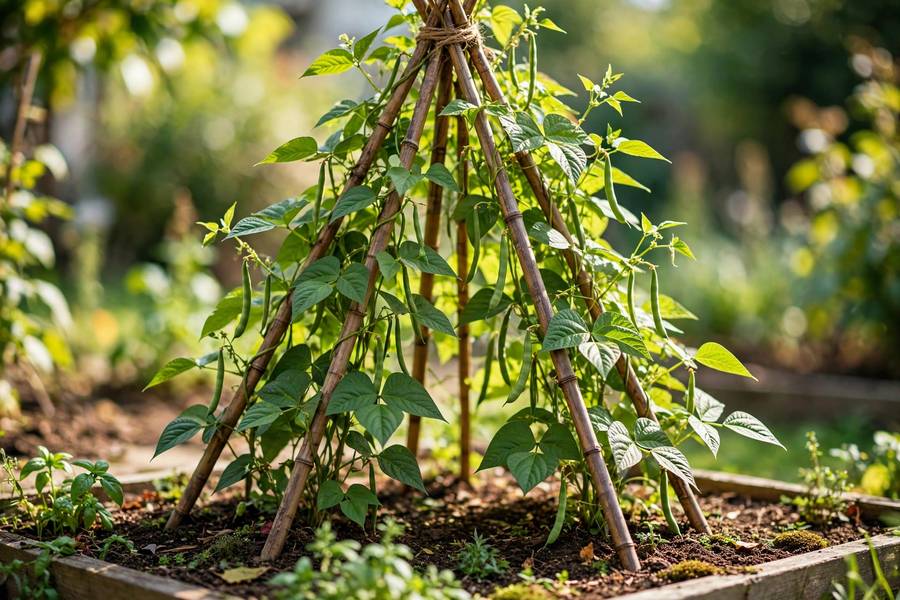
The fastest way to double a small garden is to grow up. Cucumbers, pole beans, peas, and small squash varieties all climb happily on trellises, turning one square foot of ground into six square feet of growing surface. My pole beans on a simple teepee of bamboo poles produce more in two square feet than bush beans do in eight. A sturdy trellis on the north side of a bed grows food without shading anything behind it.
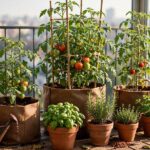
Tomatoes need cages or stakes regardless, but in a small garden, train them to a single stem tied to a tall stake and prune the suckers; you get fewer but earlier and larger fruits per plant, and each plant occupies half the space. Hanging planters and wall-mounted pockets handle herbs and strawberries, keeping them off precious ground entirely. Even a sunny fence can host a row of fabric pocket planters. When ground is scarce, every vertical surface is a garden bed waiting to happen.
One caution from experience: make sure trellises are sturdy before plants get heavy. A collapsed cucumber trellis in August is a tangled mess you will be untangling instead of harvesting.
Succession Planting: Never Let Soil Sit Empty
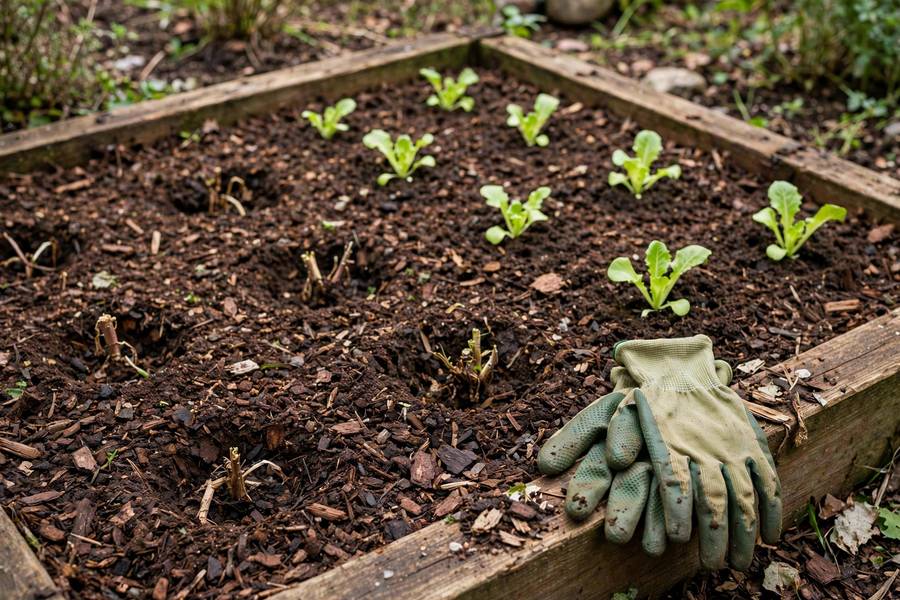
Big gardens plant once in spring. Smart small gardens plant in waves. Succession planting means sowing new crops as soon as old ones finish, so your soil works from March to November instead of May to August. My spring lettuce bed becomes summer beans becomes fall spinach, and that one patch produces three harvests where a plant-once garden gets one.
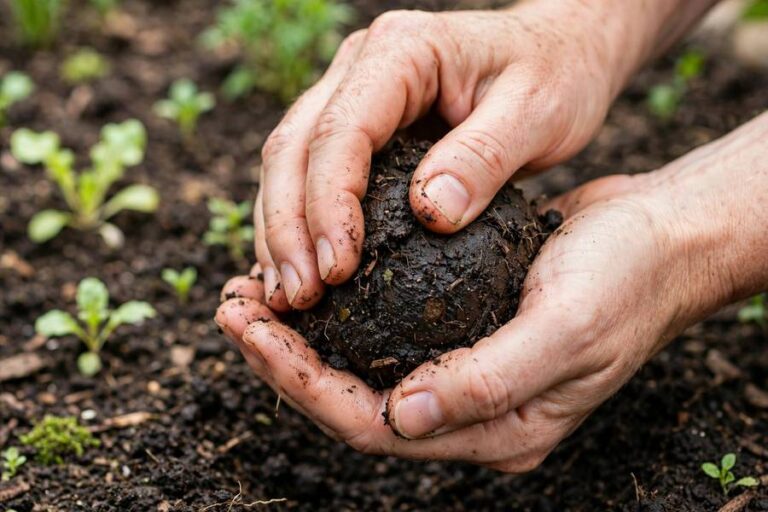
The rhythm is simple. In early spring, plant fast cool crops: radishes, lettuce, spinach. As they finish in early summer, replace them with warm-season transplants or bean seeds. In late summer, sow fall crops where the beans and cucumbers are winding down. Keep a small stash of seedlings ready in pots so there is no gap between harvest and replanting. This is also where homemade compost earns its keep: heavy succession needs fed soil, and a handful of compost in each replanted spot keeps fertility up all season.
Interplanting: Friendly Crops Sharing Space
Interplanting is the art of growing two crops in the space of one by pairing plants with different timing or shapes. My favorite example: radishes sown between slow-growing carrot rows. The radishes are harvested in a month, right as the carrots need the room. Lettuce tucked under tomato transplants gets harvested before the tomatoes shade it out. Green onions planted along bed edges use space that would otherwise grow weeds.
The rules are simple. Pair fast with slow, shallow-rooted with deep-rooted, and tall with short. Do not interplant two heavy feeders competing for the same nutrients at the same time. Done well, interplanting can increase a small bed’s output by a third or more, and it keeps the soil covered, which suppresses weeds and retains moisture. It feels like a magic trick the first season you do it: the same bed, visibly more food.
Start with just one or two interplanting pairs your first season. Radishes with carrots is the classic training-wheels combination; master it, then get creative. Keep a simple map of what grew where each season. Interplanting works best when you can see last year’s pairings at a glance, and rotation planning becomes almost automatic when the history is on paper instead of in your memory.
Choose Compact Varieties Bred for Small Spaces
Plant breeders have been working for small-space gardeners, and the results are wonderful. Look for words like patio, dwarf, bush, compact, and container on seed packets. Patio tomatoes stay under two feet tall but still produce full-size fruit. Bush cucumbers sprawl three feet instead of six. There are even compact zucchini varieties bred for containers that produce normally on half the plant.
Dwarf fruit trees and columnar apples turn a narrow side yard into an orchard; I have a columnar apple in a large pot that fruits reliably every fall. Strawberries in hanging baskets, dwarf blueberries in pots, herbs in window boxes: small-space varieties mean the only real limit is sun, not square footage. Read variety descriptions with your space in mind, and choose the plant that fits the space rather than fighting the space to fit the plant.
My Small-Space Seasonal Calendar
Here is the rhythm that works in my small garden, adaptable to most temperate zones. March: sow peas, radishes, and lettuce under cover if nights are still cold. April: transplant hardened-off greens, direct-sow carrots and beets. May: after the last frost, plant tomatoes, peppers, beans, cucumbers, and basil. June: sow a second round of beans and start fall brassica seedlings in pots.
July: harvest heavily, keep everything watered and mulched, sow fall lettuce. August: plant fall spinach, kale, and radishes where summer crops finish. September and October: harvest fall crops, sow garlic, and mulch empty beds with leaves for winter. November: put the garden to bed under mulch and plan next year with a cup of tea.
December through February is planning season, and it counts as gardening. Review your journal: what produced, what flopped, what your family actually ate. Order seeds early for the best variety selection, sketch next year’s layout with rotations in mind, and clean and oil your tools. Gardeners who plan in winter plant with purpose in spring, and purpose is what turns a small plot into a genuinely productive one.
Follow this calendar alongside my guide on how to start a garden, and your small plot will feed you far beyond what its size suggests.A well-planned 4×8 bed using vertical growing and succession planting can produce hundreds of pounds of vegetables per season. Small gardens often out-produce larger ones per square foot because every inch gets attention and the soil is never left idle.
Succession planting means sowing new crops as soon as earlier ones finish, so the same space produces multiple harvests per season. For example: spring lettuce, then summer beans, then fall spinach in one bed. It roughly doubles or triples a small garden’s output.
Prioritize vertical climbers (pole beans, cucumbers on trellises), compact varieties (patio tomatoes, bush cucumbers), fast crops for succession (radishes, lettuce), and high-value herbs. Skip space hogs like corn, pumpkins, and full-size melons in tiny spaces.
Grow vertically with trellises, interplant fast crops with slow ones (radishes between carrots), use succession planting for multiple harvests, and choose compact varieties. These four strategies together can triple a small bed’s productivity.
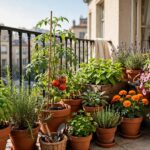
Yes. Containers on a sunny balcony can grow cherry tomatoes, peppers, lettuce, herbs, beans, and radishes very productively. Use 5-gallon or larger pots for fruiting plants, quality potting mix, and daily summer watering. See container gardening basics for the full setup.