How to Make Chia Pudding: Tested Recipe Guide

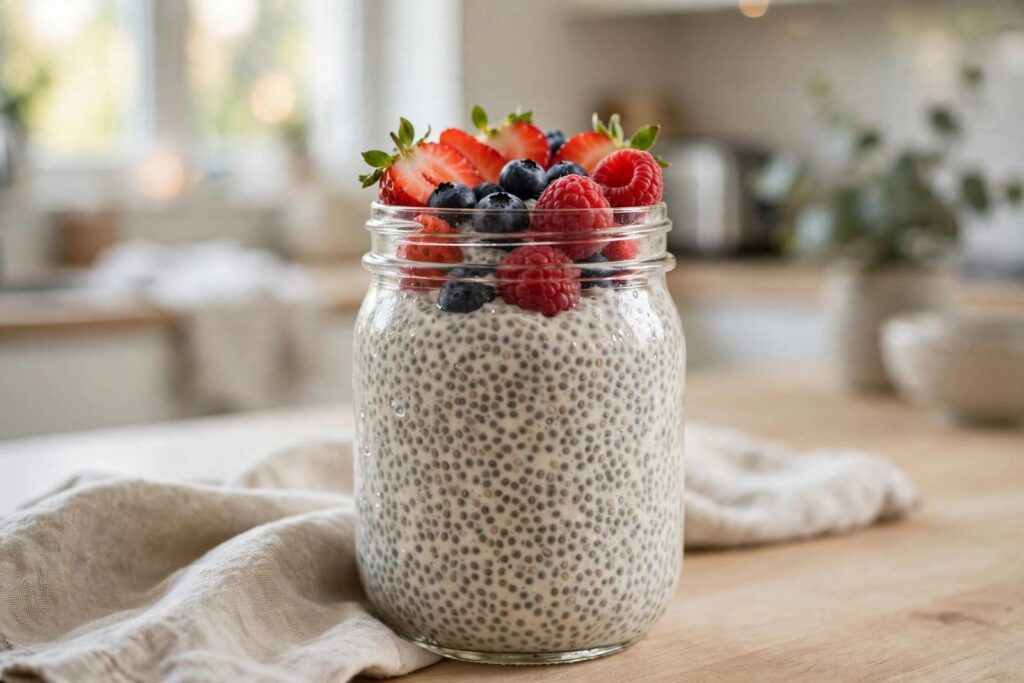
I make chia pudding every single week. Not because it’s trendy — because it’s the easiest healthy breakfast I know: five minutes of actual work the night before, and breakfast is waiting in the fridge. But here’s what nobody tells you: most people’s first chia pudding is a lumpy, bland disappointment. I know, because mine was too.
The difference between bad chia pudding and great chia pudding comes down to three things: the ratio, the second stir, and patience. I’ve tested this in my own kitchen more times than I can count — different milks, different ratios, different timings. This is the method that never fails me.
Why I Make Chia Pudding Every Week
Five minutes. That’s the real prep time — not “five minutes plus the part where you pretend.” You mix, you wait, you stir once more, you refrigerate. The fridge does the rest while you sleep.
I started making it for the convenience and kept making it for the texture: thick, creamy, endlessly customizable. It’s breakfast, snack, and dessert depending on what you put on top. And once you nail the base method below, the variations are infinite. Let’s build the base first.
What Is Chia Pudding?
Chia pudding is a thick, dessert-like pudding formed when chia seeds absorb liquid and swell into a gel. The seeds do all the work — no cooking, no thickeners, no special equipment.
The science is simple: chia seeds can absorb up to 10 times their weight in liquid. Each tiny seed grows a gel coating as it hydrates, and millions of those gel-coated seeds together create the pudding texture. That’s it. That’s the whole recipe, conceptually: seeds + liquid + time.
The Ratio That Never Fails Me
Memorize this: 2 tablespoons of chia seeds to 1/2 cup of milk per serving. That’s the universal ratio — the one that produces thick-but-spoonable pudding every time, confirmed across every reliable recipe I’ve tested.
Scaling for meal prep (same ratio, multiplied):
| Servings | Chia seeds | Milk |
|---|---|---|
| 1 | 2 tbsp | 1/2 cup |
| 4 | 1/2 cup | 2 cups |
| 7 (full week) | 3/4 cup + 2 tbsp | 3 1/2 cups |
The 1- and 4-serving rows are the classic ones; the 7-serving row is just the same ratio scaled up for a full week of prep. The ratio is the law — the table is just arithmetic.
Too much liquid and you get chia soup. Too little and you get chia cement. 2 tbsp : 1/2 cup. Write it on a sticky note until it’s muscle memory.
What You’ll Need
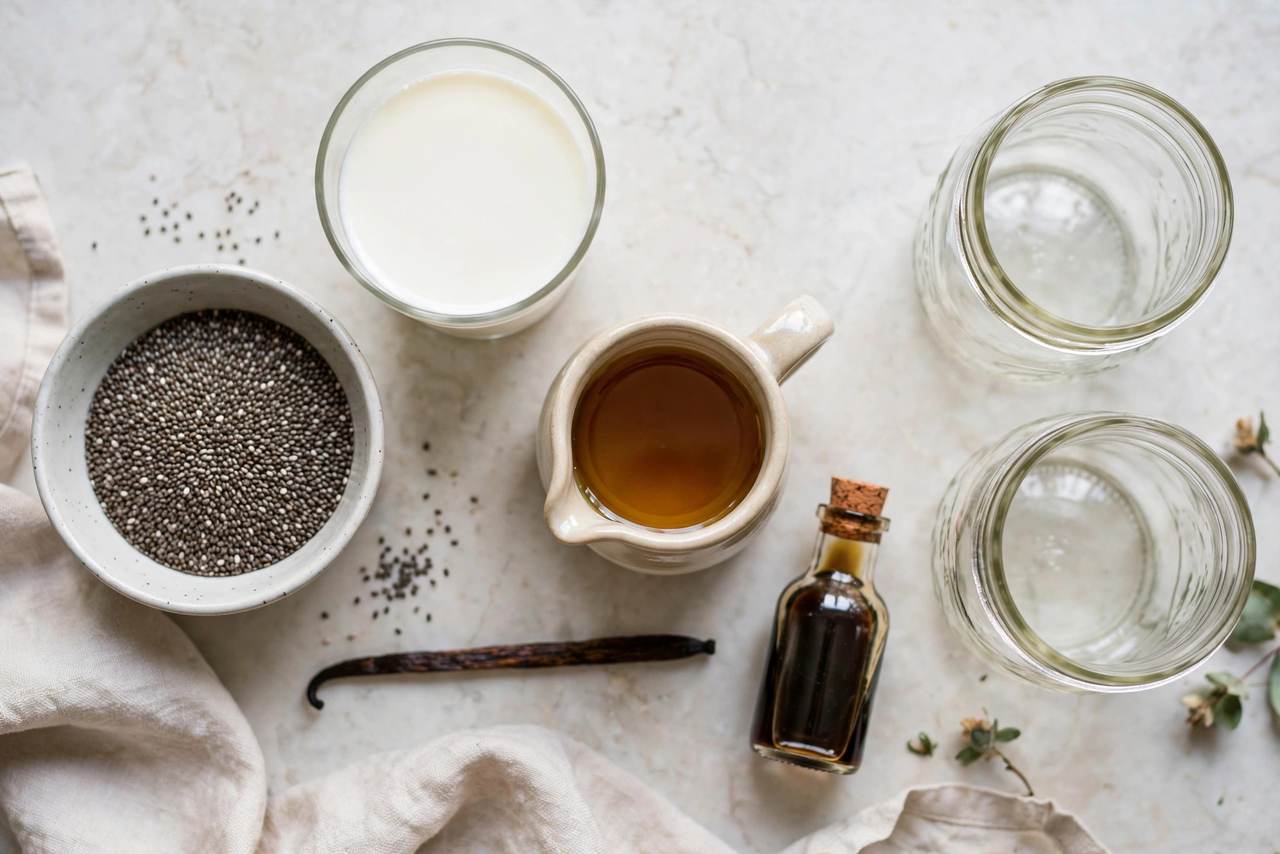
- Chia seeds — black or white; there’s no nutritional difference between them, so buy whichever is cheaper or looks better in the jar
- Milk of choice — dairy, almond, oat, coconut; any of them work (more on this below)
- Sweetener — 1 teaspoon maple syrup per serving is my baseline; honey and agave work too
- Vanilla extract — a splash; the difference between “fine” and “great”
- A mason jar or container with a lid — for mixing, shaking, and storing
That’s the whole ingredient list. Five things, and two of them are equipment.
Step by Step: How I Make It
- Mix. Combine 2 tbsp chia seeds, 1/2 cup milk, 1 tsp maple syrup, and a splash of vanilla in your jar. Stir well — get the seeds fully distributed, no dry pockets.
- Wait 2 minutes. Let it sit. The seeds start hydrating immediately.
- THE SECOND STIR. This is the step everyone skips and the reason most chia pudding is clumpy. Stir or shake again after 2–5 minutes — this breaks up the clumps forming as the seeds swell and redistributes everything evenly. One source says ~2 minutes, another says 5; the point is the same: stir twice, not once. This single technique is the difference between smooth pudding and lumpy disappointment.
- Refrigerate at least 2 hours. The pudding needs time to fully set — overnight is better. Make it before bed; eat it for breakfast. Minimum 2 hours if you’re in a hurry, but overnight gives the best texture.
- Top and serve. Stir once more before serving (it thickens as it sits — a splash of milk loosens it to your liking), add toppings, eat.
Five steps, five minutes of work, one life-changing breakfast habit.
The overnight wait is doing more than setting the texture, by the way — it’s doing your morning for you. There’s a particular joy in opening the fridge to find breakfast already made, and it’s the reason this recipe survives in my rotation year after year. Most “healthy breakfast” advice fails on busy mornings. This one was designed for them.
Which Milk Is Best?
Any milk works — dairy, almond, oat, coconut. The pudding sets with all of them. What changes is the creaminess:
- Dairy milk / coconut milk — richest, creamiest result
- Oat milk — naturally creamy, great dairy-free pick
- Almond milk — lighter, slightly thinner; still delicious
Use what you have. The ratio doesn’t change, the method doesn’t change. If your almond-milk version seems thin, give it the full overnight set — or add an extra teaspoon of chia.
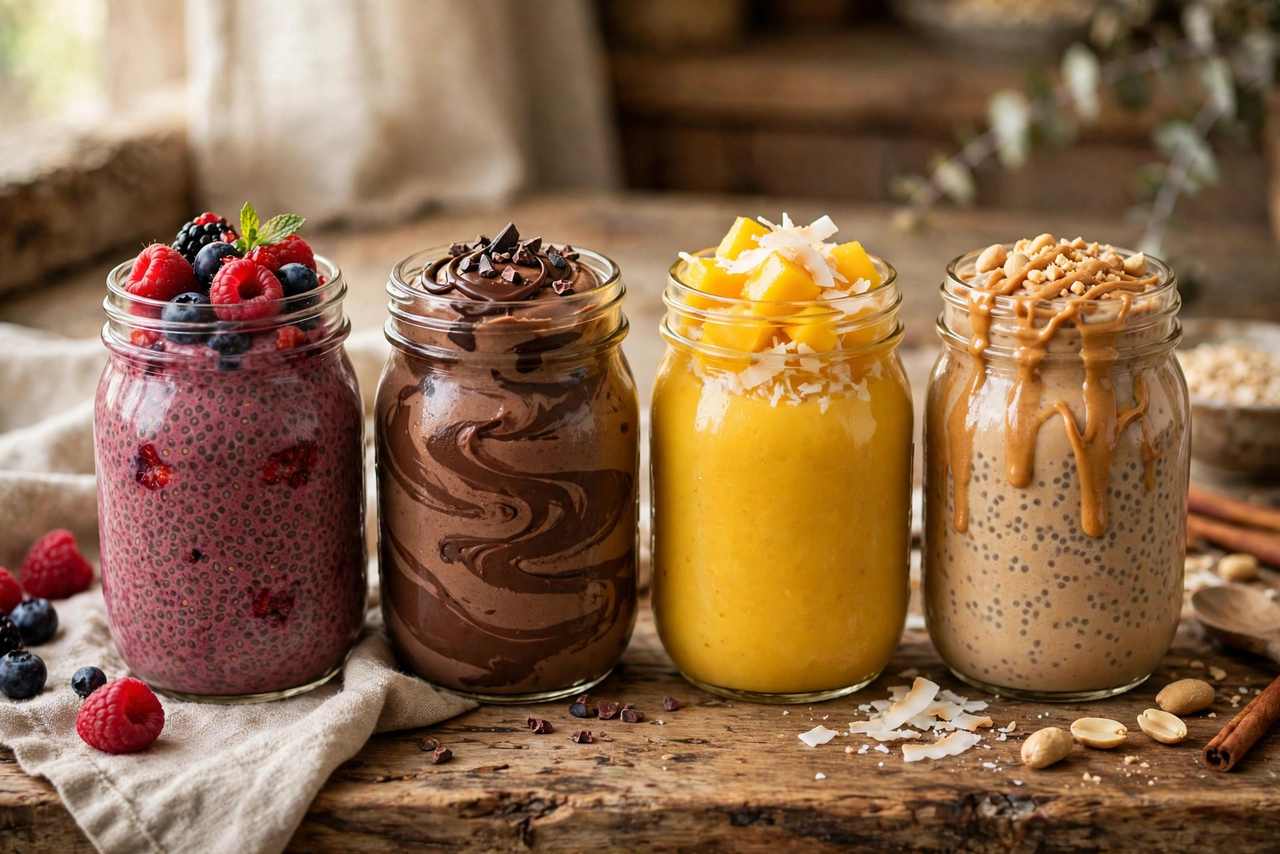
5 Variations I’ve Actually Tested
Once the base is dialed in, these are my tested rotations:
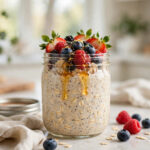
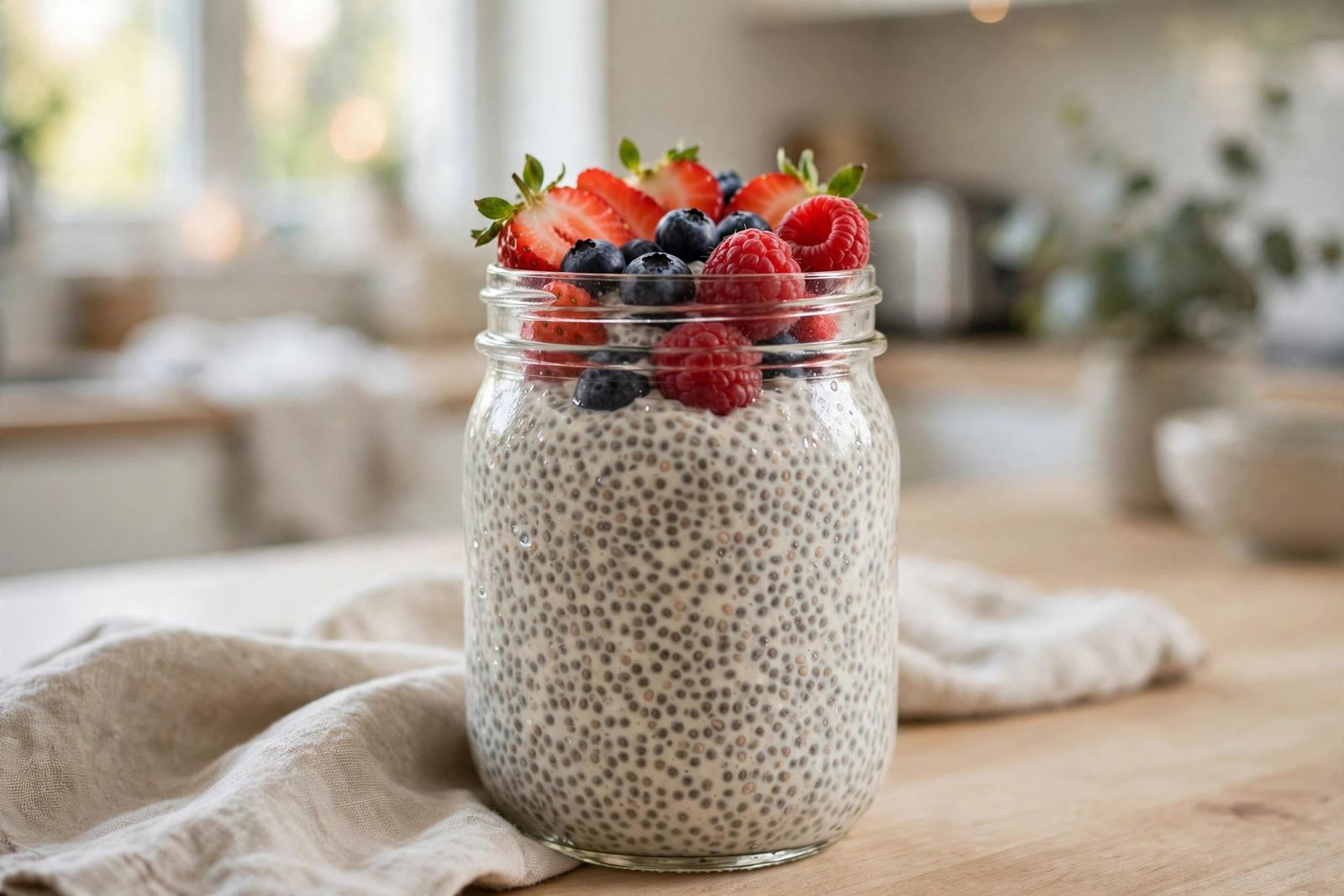
- Vanilla-berry. The base recipe + a handful of fresh berries and an extra drizzle of maple syrup. The classic for a reason.
- Chocolate. Add 1 tablespoon cocoa powder to the base mix (whisk it into the milk first to avoid lumps). Top with banana slices.
- Tropical. Coconut milk as the base + diced mango and a sprinkle of toasted coconut. Tastes like vacation.
- PB & J. Swirl in a tablespoon of peanut butter + a spoonful of jam. The seed’s texture with the PB is genuinely great.
- Blended-smooth (for kids). Blend the whole thing after setting for a completely smooth pudding — no seed texture at all. The picky-eater conversion tool.
Troubleshooting: What Went Wrong?
| Problem | Cause | Fix |
|---|---|---|
| Too thin / soupy | Too much liquid (or not enough time) | Stir in more chia, 1 tsp at a time; give it the full overnight set |
| Too thick | Too many seeds (or over-set) | Stir in milk, a splash at a time, until it’s spoonable |
| Clumpy | Missed the second stir | Next time: stir at 2 min AND at 5 min. For this batch, whisk vigorously or blend briefly |
| Bland | Under-sweetened / no vanilla | More sweetener + vanilla; toppings (fruit, cocoa, PB) carry flavor too |
| Bitter seeds | Stale seeds | Check freshness — chia lasts a long time, but rancid seeds taste bitter. Buy fresh |
How to Store It
Refrigerate in an airtight jar for up to 5 days. That’s the conservative, tested number — one source claims up to 7 days, but I go with 5 for safety and texture (the pudding is best in the first 3–4 days anyway).
Meal-prep move: make Sunday jars for the week — five jars, five breakfasts, zero morning decisions. Stir before serving and loosen with a splash of milk if it’s thickened overnight. Keep toppings separate until serving (berries get soggy sitting on top for days).
Why It’s Worth Making
The nutrition, per 2 tablespoons (1 oz / 28g) of chia seeds:
- ~140 calories
- 4g protein
- 11g fiber — that’s a serious fiber hit for breakfast
- 7g unsaturated fat, including omega-3 ALA (alpha-linolenic acid) — chia is one of the richest plant sources of it
- 18% of daily calcium
One safety note, and it’s important: never eat dry chia seeds by the spoonful. They swell in liquid — including the liquid in your throat. Always soak them first. The pudding method is the safe method.
For the breakfast-prep ecosystem: how-to-meal-prep-for-beginners is the system this fits into, how-to-freeze-bananas-for-smoothies and how-to-keep-bananas-fresh-longer cover the topping supply chain, and easy-meal-ideas-for-picky-eaters has more family-friendly wins.
Frequently Asked Questions
What is the perfect ratio for chia pudding?
2 tablespoons of chia seeds to 1/2 cup of milk per serving. Scale it directly: 1/2 cup chia to 2 cups milk makes 4 servings.
How long does chia pudding need to set?
At least 2 hours in the refrigerator; overnight is better for the thickest, creamiest texture.
Why is my chia pudding clumpy?
You skipped the second stir. Stir or shake again 2–5 minutes after the first mix — this breaks up clumps as the seeds swell and is the single most important technique.
How long does chia pudding last in the fridge?
Up to 5 days in an airtight jar (the conservative, tested figure). Stir before serving and loosen with a splash of milk if needed.
Can I make chia pudding with any milk?
Yes — dairy, almond, oat, and coconut milk all work. Dairy and coconut give the richest result; almond is lighter. The ratio and method don’t change.
Can I eat chia pudding every day?
It’s designed for it — 11g of fiber and 4g of protein per serving make it a solid daily breakfast. Vary your toppings for nutritional range, and always eat it soaked, never dry.