How to Cook Quinoa Properly: Fluffy Every Time

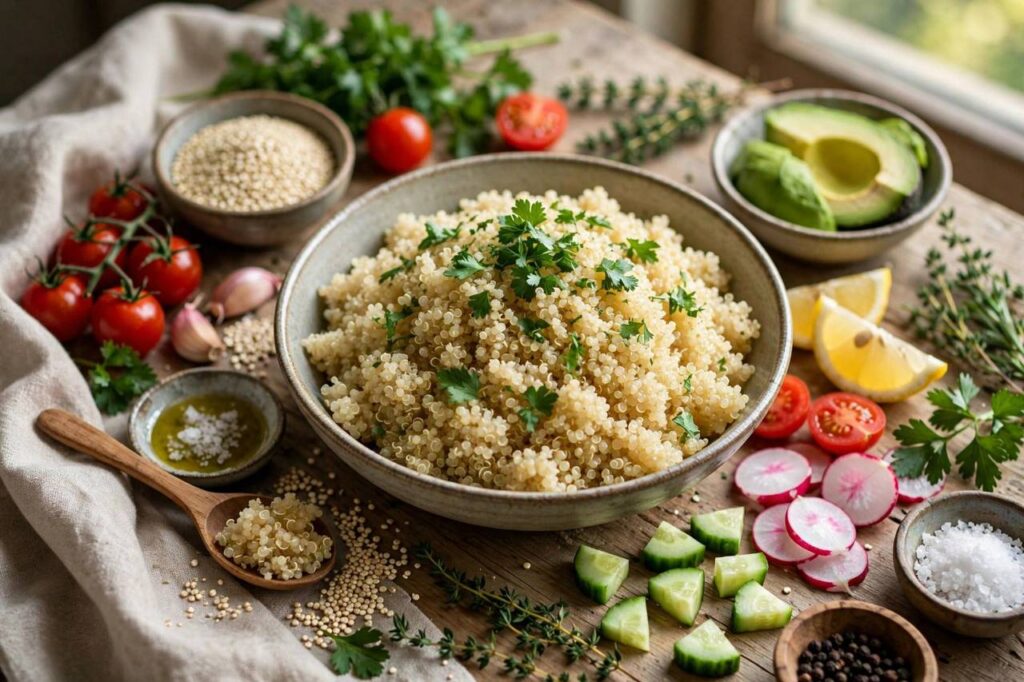
If your quinoa has ever come out mushy, bitter, or just plain sad, you are not alone — and the fix is easier than you think. Learning how to cook quinoa properly comes down to three small things most recipes gloss over: rinsing off the bitter coating, getting the water ratio right, and letting it rest before you fluff it. Get those three right and you get light, fluffy grains with a delicate nutty flavor and that lovely little pop. Get them wrong and you get porridge. I have cooked quinoa weekly for years, for picky kids and skeptical dinner guests alike, and this is the method that never fails. We will also cover the mistakes that ruin it, the best ways to serve it, and how to store it for the week.
Why Quinoa Needs Rinsing First
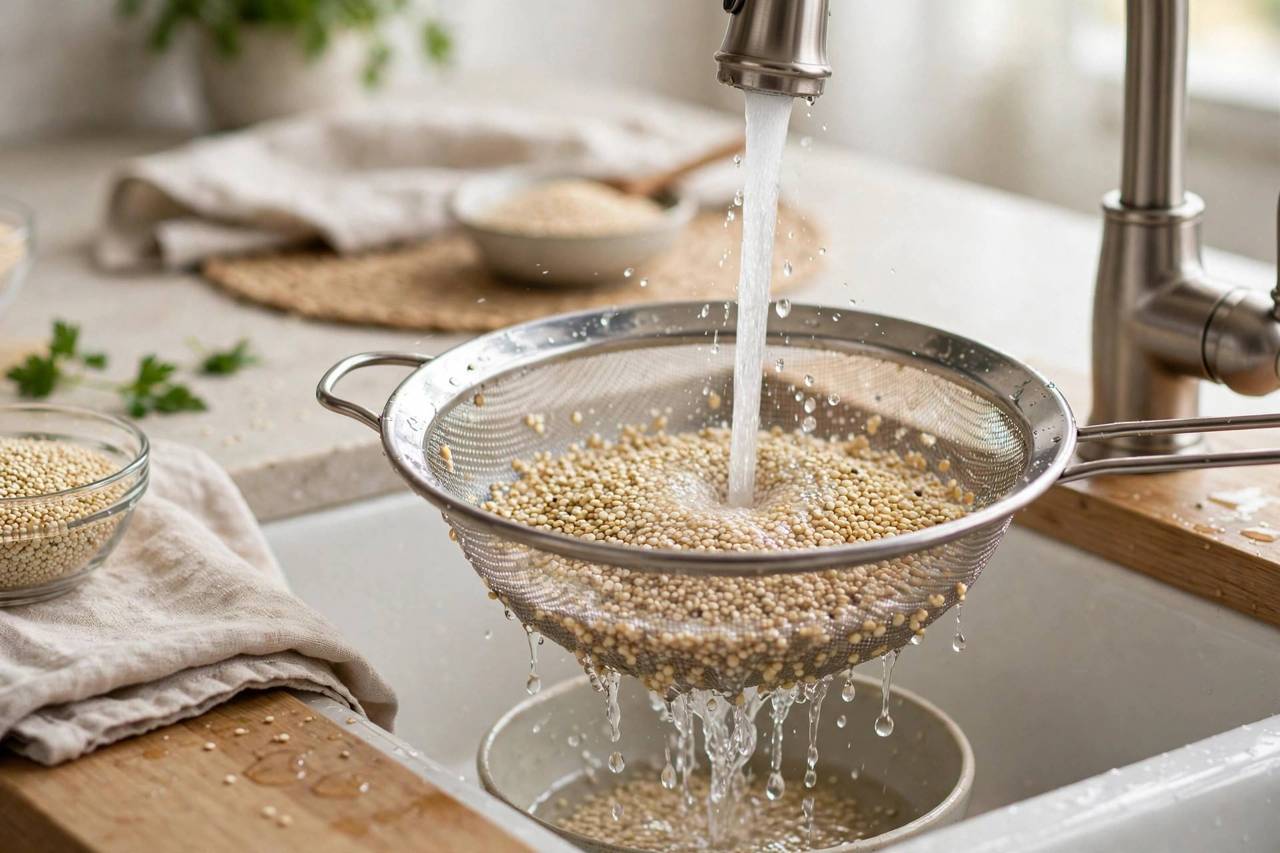
Every quinoa seed wears a natural coating called saponin, and saponin tastes bitter and soapy. It is the plant’s way of telling birds to leave it alone, and it works on humans too — unrinsed quinoa has a harsh edge that no amount of seasoning fully hides. Some brands sell “pre-rinsed” quinoa, and it is better than nothing, but I rinse it anyway because factory rinsing is inconsistent and thirty seconds under the tap costs nothing. Put your quinoa in a fine-mesh strainer — the grains are tiny and will slip straight through a colander — and run cold water over it, swishing with your fingers for about half a minute. The water will look slightly foamy at first; that is the saponin washing away. Keep going until the water runs mostly clear. This single step is the difference between quinoa people tolerate and quinoa people actually enjoy, and it is the step beginners skip most often. If you have ever decided you “just don’t like quinoa,” there is a good chance you never had it properly rinsed.
The Ratio and the Method, Step by Step
The classic ratio is one part quinoa to one and three-quarter parts liquid — so one cup of dry quinoa takes one and three-quarter cups of water or broth. Many recipes say two cups of liquid, and that extra quarter cup is exactly what turns fluffy grains into mush. Measure, don’t eyeball. Here is the full method. Rinse one cup of quinoa as described above and let it drain. Optional but worth it: toast the damp grains in a dry saucepan over medium heat for two to three minutes, stirring, until they smell nutty and a few start to pop. This deepens the flavor noticeably. Add your liquid and a good pinch of salt, then bring it to a boil. The moment it boils, drop the heat to the lowest simmer and cover with a tight lid. Walk away for fifteen minutes — no peeking, no stirring. Stirring releases starch and makes it gummy, and lifting the lid lets steam escape. After fifteen minutes, check: the grains should look translucent with a little white spiral tail (the germ) curling out, and the liquid should be absorbed. If a spoonful of liquid remains, give it two more minutes. Then — and this is the step everyone rushes — take it off the heat and let it sit, still covered, for five full minutes. The resting time lets the grains firm up and finish steaming. Finally, fluff gently with a fork, not a spoon, using a light lifting motion. That is it. Perfect quinoa, every time.
Water, Broth, and Flavor Variations
Water gives you clean, neutral quinoa that takes on whatever you mix it with. Broth — chicken or vegetable — builds savory flavor straight into the grain, and it is my default when the quinoa is the base of a bowl or a side dish. Coconut milk, thinned half-and-half with water, makes a rich version that works beautifully under curries. Beyond the liquid, you can layer flavor at every stage. Toast the grains as described above. Sauté a little diced onion and garlic in the pot before adding the quinoa and liquid. Toss in a bay leaf or a strip of lemon peel while it simmers and fish it out before fluffing. Stir in fresh herbs, lemon zest, or a knob of butter at the end. For a Mediterranean bowl, I cook it in water, then toss the warm grains with olive oil, lemon juice, cucumber, tomatoes, olives, and feta. For breakfast, cook it in a mix of milk and water, then top with fruit, nuts, and honey — it eats like a heartier oatmeal. Quinoa is a blank canvas with a nutty undertone, which means it plays well with bold dressings and spices. The grain itself should never be bland, though; salt the cooking liquid the way you would for pasta, because unseasoned quinoa tastes like missed opportunity.
Troubleshooting: Fixing Common Quinoa Problems
Mushy quinoa almost always means too much water, too much heat, or skipped resting. Next time, cut the liquid to the one-to-one-and-three-quarter ratio, keep the simmer truly low, and honor the five-minute rest. If it is already mushy, spread it on a sheet pan and bake at low heat for ten minutes to dry it out — it will not be perfect, but it becomes usable for patties or fritters. Crunchy or undercooked grains mean the lid was not tight, the heat was too low to maintain a simmer, or you lifted the lid and let the steam out. Add a few tablespoons of hot water, re-cover, and give it five more minutes. Bitter taste means skipped rinsing — there is no fix after cooking, so this one is purely preventive. Bland quinoa means under-salting; toss the cooked grains with a well-seasoned dressing and it recovers fine. Gummy texture comes from stirring during cooking or using a spoon to mash it at the end; fluff with a fork and a light hand. And if the bottom scorched, do not scrape it — scoop the good grains off the top and leave the burned layer behind. Every one of these mistakes is a one-time lesson. Once you have cooked it right twice, your hands just know.
Serving Ideas and Weekly Meal Prep
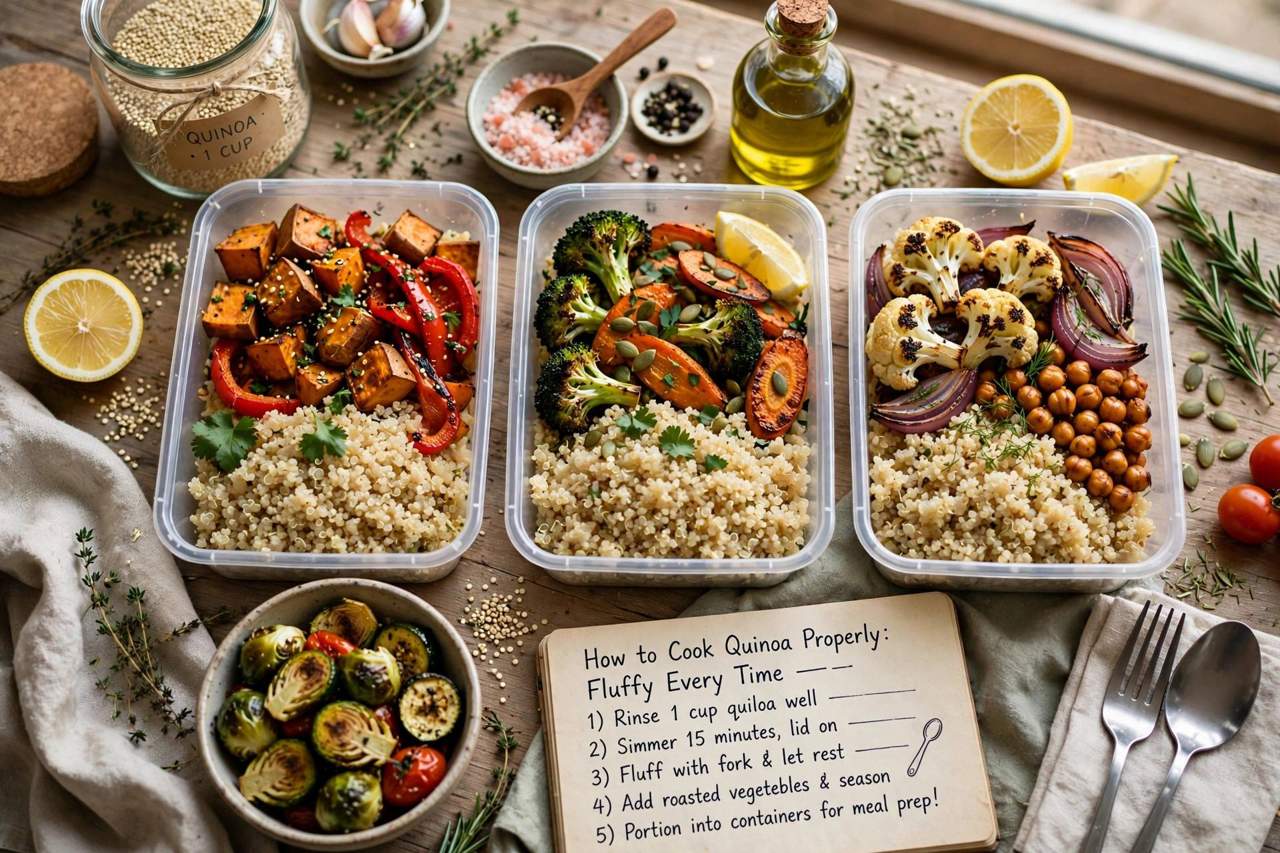
Quinoa earns its keep by being ready when you are. A big batch on Sunday becomes lunches all week: grain bowls with roasted vegetables, burrito bowls with black beans and corn, or a simple tabbouleh-style salad that improves as it sits. It holds beautifully in the fridge for four to five days in a sealed container — portion it out so you are not opening and closing the main batch. It also freezes well for up to three months; freeze in single portions, thaw overnight in the fridge, and refresh with a sprinkle of water in the microwave. As a side dish, it replaces rice anywhere: under stir-fries, beside roasted chicken, folded into soups in the last ten minutes. For entertaining, a warm quinoa pilaf with toasted nuts and dried fruit looks generous on a platter and suits nearly every diet at the table — naturally gluten-free, and a complete protein, which makes it a quiet hero for vegetarian guests. It is also a natural fit if you are into batch cooking, since one pot of grains anchors a whole week of different meals. One cup dry makes about three cups cooked, which feeds three to four as a side or two generously as a main. Cook once, eat well all week — that is the whole philosophy.
Choosing and Storing Quinoa
At the store you will meet three main types. White quinoa is the mildest and fluffiest — the best all-rounder and the one beginners should buy. Red quinoa holds its shape more firmly and looks beautiful in salads, with a slightly heartier chew. Black quinoa is the firmest and most dramatic looking, great for visual contrast but an acquired taste in texture. Tri-color blends give you a bit of everything and look festive. They all cook the same way, so mix freely. Buy from stores with good turnover, because quinoa contains natural oils that can go stale; it should smell faintly nutty, never musty or rancid. Store dry quinoa in an airtight jar in a cool, dark cupboard, where it keeps for many months. Once cooked, refrigerate within two hours and use within five days. And a final tip from years of weeknight cooking: double the batch every time. Plain cooked quinoa in the fridge is an invitation — tomorrow’s lunch, a quick fried “rice,” a soup thickener — and future you will be grateful.
How to Cook Quinoa Properly in a Rice Cooker (and Other Shortcuts)
The stovetop method is the gold standard, but weeknights call for shortcuts. A rice cooker handles quinoa beautifully: rinse the grains, add them with liquid at the same one-to-one-and-three-quarter ratio, and run the white rice cycle. The cooker manages the simmer and the shutoff for you — just let it rest five minutes with the lid closed before fluffing, the same as stovetop. An Instant Pot works too: one minute at high pressure with a natural release of ten minutes, same ratio, same rest. The microwave is the emergency option — combine rinsed quinoa and liquid in a large microwave-safe bowl (it foams up, so go big), cook uncovered about two-thirds of the time, stir once, and finish; the texture is slightly less even but perfectly serviceable for a bowl. Whichever shortcut you use, the non-negotiables do not change: rinse first, measure the liquid, and rest before fluffing. One more weeknight trick is the pilaf method — sauté the rinsed grains in a little oil with diced onion for two minutes before adding liquid. It adds barely any time and gives you a noticeably deeper flavor, which matters when the quinoa is the main event rather than a background grain. And if you truly cannot be bothered some nights, pouches of pre-cooked quinoa are fine — expensive per serving, but better than skipping the meal.
Frequently Asked Questions
Do I really need to rinse quinoa?
Yes. The natural saponin coating tastes bitter and soapy, and skipping the rinse is the most common reason people think they dislike quinoa. Rinse in a fine-mesh strainer under cold water for about thirty seconds, even if the package says pre-rinsed.
What is the right quinoa to water ratio?
One cup of dry quinoa to one and three-quarter cups of liquid. Many recipes call for two full cups, which is too much and produces mushy grains. Measure carefully, simmer covered on low for fifteen minutes, then rest five minutes before fluffing.
Why is my quinoa mushy?
Too much water, heat that is too high, stirring during cooking, or skipping the rest period. Use the 1:1.75 ratio, keep the simmer gentle, do not lift the lid, and let it stand covered for five minutes off the heat before fluffing with a fork.
How long does cooked quinoa last in the fridge?
Four to five days in a sealed container. It also freezes well for up to three months in single portions. Thaw overnight in the refrigerator and refresh with a sprinkle of water when reheating.
Is quinoa gluten-free?
Yes, quinoa is naturally gluten-free. However, if you have celiac disease, buy quinoa labeled certified gluten-free, since bulk-bin quinoa can pick up cross-contamination from shared processing and storage with wheat products.