Why Tech Giants Are Building Their Own AI Chips: Inside the Race to Break Free From Nvidia

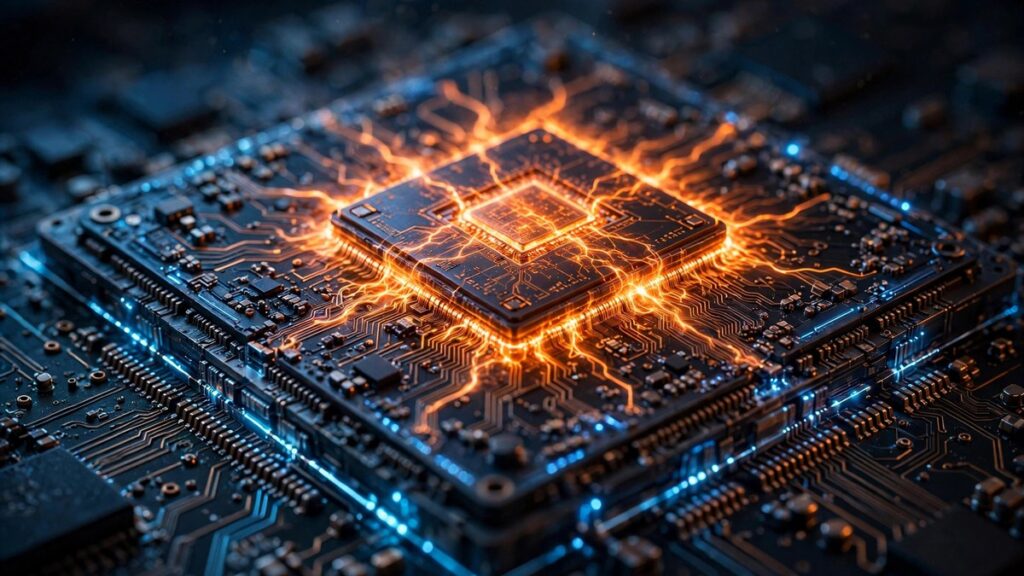
Renting Nvidia’s chips costs the giants billions a year — so they are spending billions more to never need them again.
On October 12, 2026, Microsoft made one of its boldest hardware bets yet. The company announced Maia 300, its third-generation custom AI chip, and said it will scale its own silicon to multi-gigawatt data-center deployments starting in 2027, making its own chips the primary system behind Microsoft’s AI products. CEO Satya Nadella called it the company’s biggest bet yet on its own silicon.
Microsoft is not alone. Google has built its own Tensor Processing Units (TPUs) for years, and Amazon develops its Trainium chips for its cloud platform. The question is why the world’s largest cloud companies all want to design their own chips instead of simply buying them. The answer comes down to cost, power, and control.
What Did Microsoft Announce?
Maia 300 is an AI accelerator: a processor designed for one specific job, running trained AI models to produce answers, write code, and handle conversations. Microsoft designed it with what it calls an inference-first architecture, meaning it is optimized for running models rather than training them from scratch.
The headline numbers, all published by Microsoft itself:
- Multi-gigawatt deployments from 2027. Microsoft plans to make its own Maia chips the primary inference system across its products and services, starting with production deployments next year.
- 40% more tokens per megawatt. Microsoft says the chip should deliver 40% more AI output per unit of power than leading GPU-based systems.
- Up to 7x the rack-scale throughput of its predecessor. A full rack holds 96 accelerators inside a 167-kilowatt power envelope.
- Third-generation silicon. The earlier Maia 200 chip is already in production, serving workloads like Microsoft Copilot, and delivers up to 1.7 times more tokens per watt than leading GPU infrastructure, according to Microsoft.
Microsoft also published a full summary of the announcement, noting that Maia 300 is built for emerging workloads including long-context reasoning and sustained, multi-step agentic tasks, the kind of work AI agents perform.
It is worth remembering that these figures come from Microsoft’s own testing, not independent benchmarks. Production deployment does not begin until 2027, so real-world results are still a year away.
Training vs Inference: The Two Jobs of AI Chips
To understand the trend, you need to know that AI chips do two very different jobs.
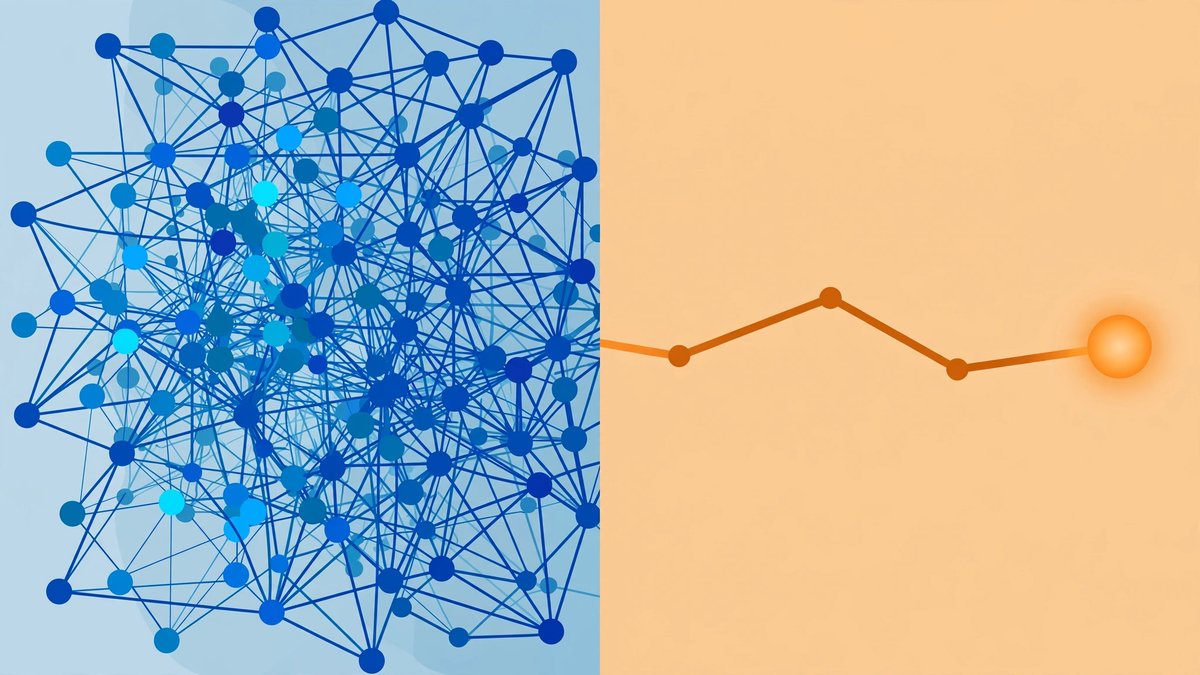
Training is the process of teaching a model: feeding it enormous amounts of data so it learns patterns. Training is done in huge batches, and raw computing power matters most. This is where Nvidia’s GPUs dominate.
Inference is the process of using a trained model: taking a user’s question and generating an answer. Inference happens every time someone asks a chatbot a question or an agent runs a task. It is sensitive to speed and memory, not just raw power, and it is what most AI products actually spend their time doing.
Inference is where the money goes. Every Copilot conversation, every search answer, every agent task runs through inference hardware. A chip designed specifically for inference can be far more efficient at that one job than a general-purpose GPU, which is exactly what Microsoft is betting on.
Why Build Your Own Chip? Three Reasons
1. Cost
AI computing has become extremely expensive. Data centers full of processors, power supplies, and cooling equipment cost billions, and demand keeps rising. When you rent computing power from a chip supplier, you pay their margin on top. Designing your own chip removes that markup and lets you tune the hardware exactly to your software.
Microsoft’s Maia 200 already shows the logic: the company says it delivers up to 1.7 times more tokens per watt for built-in AI features in Teams, Copilot, and Cowork compared with leading GPU infrastructure. More output per watt means lower electricity bills and fewer chips needed for the same workload.
2. Power and efficiency
Data centers are hitting physical limits. Power availability, not chip supply, is increasingly the bottleneck for AI expansion. A chip that produces more AI output per megawatt lets a company grow its AI services without building entirely new power-hungry facilities.
This is the central claim behind Maia 300: 40% more tokens per megawatt, achieved through a multi-chiplet design that separates compute, memory, and input/output functions, with compute chiplets built on TSMC’s advanced N2P process. The 96-accelerator rack design packs enormous memory bandwidth, 1.7 petabytes per second, into a single rack.
3. Control
Owning the chip means controlling your own future. Microsoft is one of Nvidia’s largest customers, which leaves it dependent on another company’s pricing, supply, and product schedule. Custom silicon gives the cloud giants independence: they can design around their own workloads, keep their data flows private, and avoid competing with everyone else for the same hardware.
Amazon is pursuing a related strategy from the software side. As reported in the same week as the Maia announcement, Amazon is in talks to acquire the AI startup Decart for a reported $7 billion, partly because Decart’s technology helps developers run AI workloads across different processors instead of depending on a single chip supplier. Control over the whole stack, from silicon to software, is the prize.
The Bigger Picture: A Silicon Arms Race
The shift is industry-wide. Google’s TPUs power much of its AI research and cloud business. Amazon’s Trainium chips serve its cloud customers. Now Microsoft is going further than any of them, planning for its own chips to handle most of its AI inference.
Nvidia is not disappearing from this picture. Training frontier models still demands enormous raw computing power, and Nvidia’s GPUs remain the standard there. Microsoft itself says Nvidia will stay an important supplier for training. What is changing is who runs the day-to-day work of answering questions and serving users, and that is where the tech giants want their own silicon.
The stakes are financial as well as technical. Reuters has reported that Microsoft aims to deploy potentially more than a million of its own chips, and Morgan Stanley estimates AI infrastructure could require $1.5 trillion in external financing by 2028. When the sums are this large, even small efficiency gains translate into billions of dollars.
What Does It Mean for Ordinary Users?
You will never buy a Maia chip, and you do not need to understand its specifications. What matters is the effect on the products you use.
More efficient inference chips could make AI services cheaper to run and faster to respond. Long, multi-step agent tasks, the kind of work that currently costs real money per request, become practical at scale. Features that are limited today because they are expensive to run could become standard.
The honest caveat: none of this is proven yet. Maia 300 begins production deployment in 2027, and Microsoft’s efficiency claims are its own projections. The direction is clear, but the results will take time to verify.
Maia 300 is Microsoft’s third-generation custom AI accelerator, announced in October 2026. It is designed for AI inference, the process of running trained models to answer questions and perform tasks, and will become the primary inference system for Microsoft’s products and services starting in 2027.
Three reasons: cost, power efficiency, and control. Custom chips tuned to Microsoft’s own software can deliver more AI output per watt, reduce dependence on a supplier’s pricing and availability, and let Microsoft design hardware around the workloads it actually runs.
Training teaches an AI model by processing huge amounts of data, and it needs maximum raw computing power. Inference uses the trained model to answer questions and perform tasks, where speed, memory, and efficiency matter more. Nvidia dominates training; tech giants are targeting inference with their own chips.
Yes. Google developed Tensor Processing Units (TPUs) for its AI research and cloud services years ago. Amazon builds Trainium accelerators for its AWS cloud platform. Microsoft’s Maia program is the latest and most aggressive entry in this trend.
Probably, over time. Cheaper inference means AI services cost less to operate, which can lower prices or remove usage limits. But the benefits depend on Microsoft’s efficiency claims holding up in production, and that will not be verifiable until deployments begin in 2027.
Not exactly. Nvidia’s GPUs remain the standard for training large AI models, which still requires enormous computing power. Microsoft and others continue to buy Nvidia hardware for training while shifting inference, the day-to-day serving of AI answers, to their own chips.