Why Is the Singapore Grand Prix a Night Race? European TV, Tropical Heat and Pure Spectacle

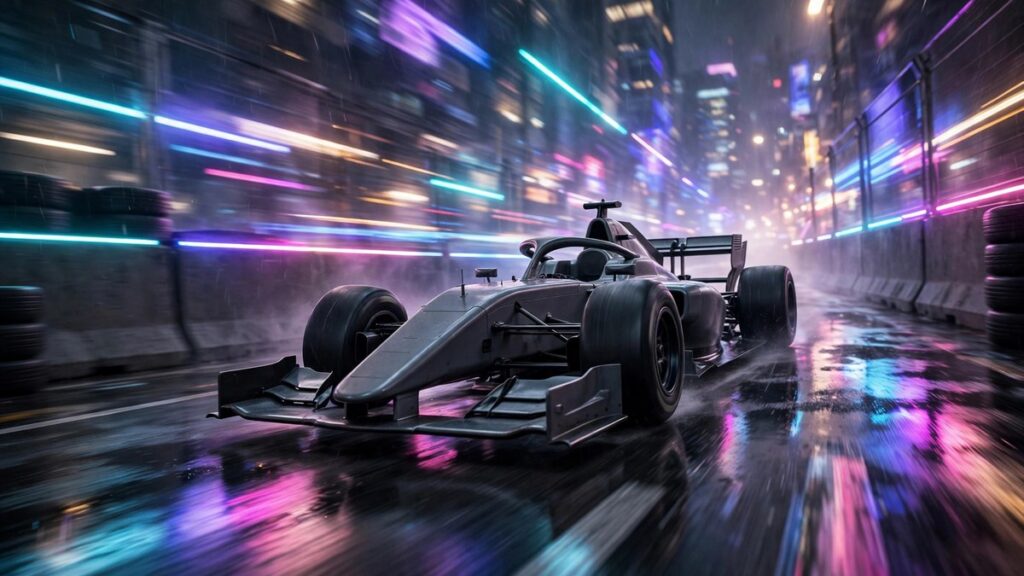
It is 30 degrees at midnight, the cars pass at 300 km/h, and Europe watches over breakfast — Singapore at night is no accident.
Max Verstappen won the Singapore Grand Prix for the first time in his career, beating Charles Leclerc by 7.335 seconds with rookie Kimi Antonelli third, according to AFP reports on 12-13 October 2026. But the result was only part of the story. The Singapore Grand Prix remains one of the most visually striking races on the calendar because it is held entirely under floodlights — the first night race in Formula 1 history. Here is why.
The news: Verstappen’s long-awaited Singapore win
Verstappen started from pole position with a lap of 1:31.373 and controlled the 62-lap race, finishing in 1:42:00.785 for Red Bull Racing. Ferrari’s Charles Leclerc — who also set the fastest lap at 1:35.202 — came home second, 7.335 seconds behind, while Mercedes driver Kimi Antonelli completed the podium, 24.573 seconds off the lead.
For Verstappen, it was a notable breakthrough: despite years of dominance in Formula 1, Singapore’s demanding street circuit had previously eluded him. The AFP report carried by The Express Tribune confirmed the Dutchman finally added Marina Bay to his list of conquered tracks.
A short history of the Singapore Grand Prix
Motor racing in Singapore actually began long before Formula 1 arrived. The original Singapore Grand Prix ran from 1961 to 1973 on the Thomson Road circuit, then disappeared for 35 years because of safety concerns and the disruption of closing public roads. When Formula 1 finally returned, around 110,000 tickets were made available for the country’s first modern Formula 1 race, and the 2008 event went on to achieve a full sell-out.
The race returned in a new form in 2008. A five-year deal was signed between Singapore GP Pte Ltd, the Singapore Tourism Board and Formula 1, and the event was staged on a brand-new street circuit around Marina Bay in the city centre. The inaugural race, held on 28 September 2008, was the first Formula 1 race ever run at night.
That first race was dramatic. Ferrari’s Felipe Massa took pole and looked set to win until a botched pit stop dropped him to the back. Renault’s Fernando Alonso won — though the result was later tarnished by the “Crashgate” scandal, when it emerged that Alonso’s teammate Nelson Piquet Jr. had been ordered to crash deliberately to bring out a safety car at a moment that suited Alonso.
Since then, Singapore has become a fixture of the calendar. Sebastian Vettel holds the record with five wins at Marina Bay, and in 2022 the race’s contract was extended to keep it on the calendar until at least 2028.
Why do they race at night?
The short answer is television. Formula 1’s biggest television audiences are in Europe, and Singapore is eight hours ahead of Central European time. A race held in the tropical afternoon heat of Singapore would air in the middle of the European morning — far from ideal viewing.
As documented in the race’s history, staging the event at night meant it could be broadcast live at a convenient time for TV audiences outside the Asia-Pacific region. The cars thundering past the Singapore Flyer and the Marina Bay skyline at night in the evening local time land on European screens in the mid-afternoon — prime Sunday viewing.
But the night setting did more than solve a scheduling problem. Formula 1’s own account of how Singapore changed the sport describes how the floodlit city circuit became one of the championship’s most distinctive sights. The lighting system averages around 3,000 lux — roughly four times brighter than a typical stadium — and was extensively tested and approved by the FIA, Formula 1’s governing body, to make sure drivers could see clearly and safely. Pre-race concerns about glare or reflections in wet conditions quickly proved unfounded.
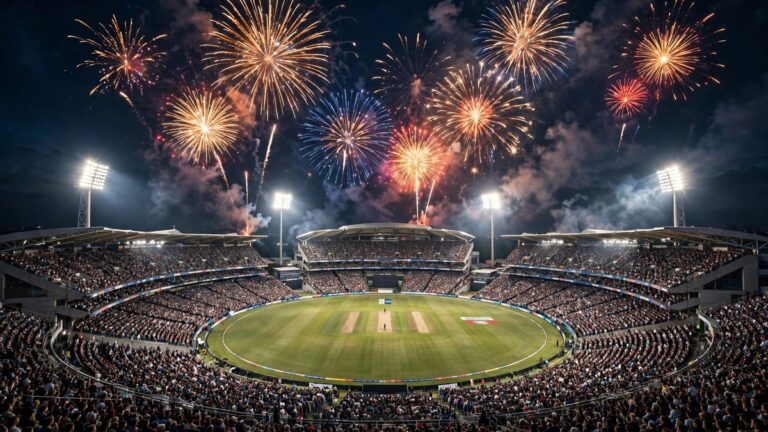
The night race also created a spectacle that daytime racing cannot match. Post-race fireworks light up the Marina Bay skyline the moment the winner crosses the line, a tradition that has since been copied by other night races including Bahrain, Abu Dhabi and Las Vegas. Drivers mark the occasion with special one-off helmet designs — chrome, reflective and LED finishes that shimmer under the floodlights — and teams regularly run special liveries for the weekend.
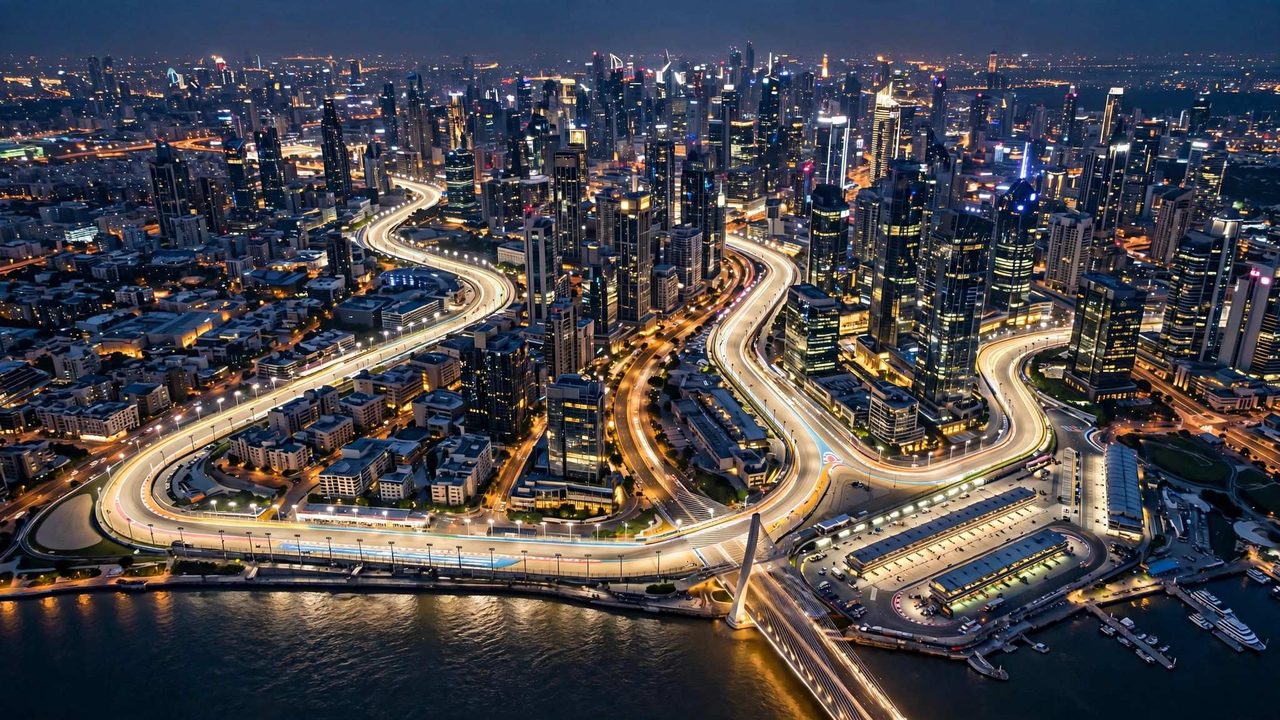
The Marina Bay street circuit
Unlike purpose-built tracks, the Singapore race is held on a street circuit — temporary barriers and fences turn public roads around Marina Bay into a 4.927 km race track for one weekend a year. Street circuits are narrower and more unforgiving than permanent tracks, with concrete walls replacing the wide run-off areas of circuits like Silverstone.
That is why Singapore is regarded as one of the most physically demanding races of the season. The race runs to 62 laps, close to two hours in tropical humidity, and the bumpy street surface punishes both drivers and cars. Until the 2024 race, every Singapore Grand Prix had featured at least one safety car appearance — 24 deployments in total — a record that underlines how little margin for error the walls allow.
A blueprint for the sport
Singapore proved that Formula 1 could race safely and spectacularly after dark. The floodlight system, the street circuit threading through a city centre, and the festival atmosphere around the event became a template. Night races are now an established part of the calendar, but every one of them follows the path Marina Bay lit first — literally.
The first night-time Singapore Grand Prix was held on 28 September 2008 at the new Marina Bay Street Circuit. It was the first race in Formula 1 history to be run entirely under floodlights, and it was won by Fernando Alonso for Renault.
Primarily for television: Singapore’s time zone means a night race airs at a convenient afternoon hour for European TV audiences, the sport’s largest viewership. The night setting also created one of F1’s most distinctive spectacles, with floodlit streets, the city skyline, and post-race fireworks.
The lighting system averages around 3,000 lux — about four times brighter than a typical stadium — and was extensively tested and approved by the FIA before the first race in 2008.
Sebastian Vettel holds the record with five victories at Marina Bay. Max Verstappen added his name to the winners’ list with his first Singapore victory in 2026, beating Charles Leclerc by 7.335 seconds.
The current circuit is 4.927 km long, and the race is run over 62 laps — a total distance of just over 305 km, close to two hours of racing in tropical humidity.
What’s Next
The night-race idea Singapore proved now anchors the calendar — Jeddah and Las Vegas also race under lights — but Marina Bay remains the original test: the heat, the humidity and the walls have not changed since 2008.