What to Wear to Jury Duty (and What Gets You Sent Home)


Got a jury duty summons and immediately thought about what to wear to jury duty? You are not alone — it is one of the most Googled courtroom questions there is, and for good reason. Show up too casually and you risk irritating the judge; overdress and you will just be uncomfortable on those hard benches. The sweet spot is business casual: neat, respectful, and comfortable enough for hours of sitting.
Here is the thing most guides skip: jury duty is not a fashion event, it is a civic obligation that might involve a lot of waiting in an uncomfortable room. The best-dressed juror is the one the judge never notices. Dress like a responsible adult going to a serious meeting, and you will be exactly right.
The Simple Formula
For both men and women, the jury duty formula is the same: clean, pressed, modest, and comfortable. Think of what you would wear to a parent-teacher conference or a job interview at a relaxed office. Collared shirts, blouses, sweaters, dark trousers, khakis, modest skirts or dresses at or below the knee — all of these are perfect.
Comfort deserves emphasis because courthouse waiting rooms are famously unforgiving. You may sit for hours with little to do. Choose clothes you can sit in all day without fussing, and shoes you can walk in, since you may be moving between rooms and through security.
What to Wear to Jury Duty: Women
Women have the most flexibility here, which is both a blessing and a curse. Reliable options include dark trousers or a modest skirt with a blouse or sweater, a simple knit dress with a cardigan, or a blazer over a top. Layers are smart — courtrooms are often aggressively air-conditioned.
Keep necklines modest, hemlines at or below the knee, and skip anything tight, sheer, or revealing. Closed-toe shoes are the safer choice, though neat flats of any kind are fine. Minimal jewelry, natural makeup, and you are done.
What to Wear to Jury Duty: Men
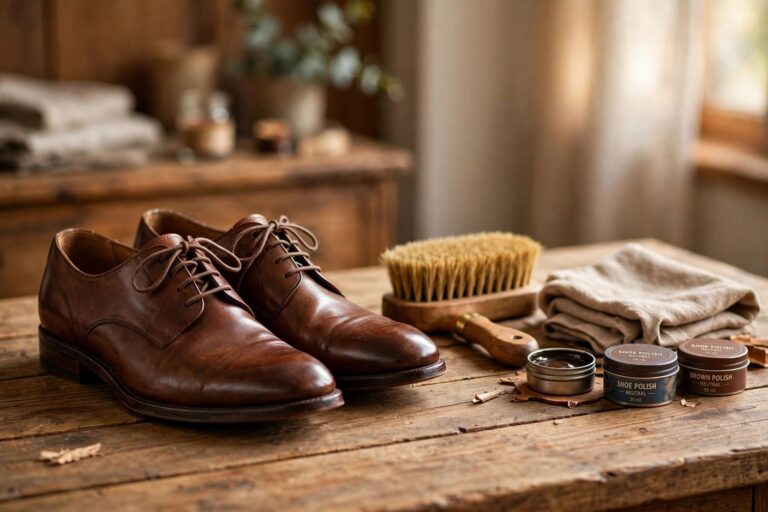
For men, khakis or dark trousers with a collared shirt — button-down or polo — is the standard jury duty uniform. A blazer or sports coat elevates it if you want to look sharp, but a full suit is unnecessary and will make you the most overdressed person in the jury pool. Tuck the shirt in, wear a belt, and choose closed shoes.
Ties are optional. If wearing one makes you feel more confident, wear one. If it makes you feel like you are playing dress-up, skip it. The judge cares that you look respectful, not that you look like a lawyer.

What Will Get You Sent Home (or Scolded)
Courts do have dress codes, and judges do enforce them. The items most likely to get you a stern word or a trip home to change: shorts, tank tops, flip-flops, athletic wear, ripped or dirty clothing, and anything with offensive graphics or slogans. Hats are generally not worn inside the courtroom. Some courts also frown on excessively casual footwear.
The “sent home” scenario is real but rare — most judges will simply warn you. Still, being the person the judge singles out on day one is a terrible way to start. When in doubt, dress one notch more formally than you think necessary.
The Comfort Strategy
Let me share the practical wisdom that only comes from experience or from listening to people who have served. Bring a sweater or light jacket regardless of the season — courtrooms run cold. Wear shoes you have already broken in. Bring a book or something quiet to do during the inevitable waiting periods. And eat a real breakfast, because the schedule is not yours to control.
Women: a crossbody bag or small tote that sits comfortably on your lap beats a bulky purse. Men: empty your pockets before security to speed things up, and leave the pocketknife at home — it will be confiscated.
What About the Actual Trial?
If you are selected for a jury, the dress code stays the same throughout the trial — business casual, every day. You do not need a week’s worth of different outfits; two or three rotations are fine. Nobody is tracking your wardrobe. What matters is consistency: show up on time, look neat, and pay attention.
One more consideration for trial days: avoid anything that could be seen as making a statement. No political slogans, no provocative graphics, nothing that could suggest bias. You are there to be impartial, and your clothes should say so.
Building a Jury-Duty-Ready Closet
If your wardrobe is mostly casual, jury duty is a good excuse to assemble a small rotation of grown-up basics — and those basics will serve you for job interviews, family events, and everything in between. A versatile capsule wardrobe of neutral trousers, simple tops, and one good blazer covers jury duty and a dozen other occasions. Think of the summons as a nudge, not a burden.
Selection Day: Dressing for Voir Dire
Your first day is usually jury selection — lawyers questioning the pool to seat the actual jury — and first impressions genuinely matter here. The attorneys are watching the pool, forming quick reads on who seems attentive, responsible, and impartial. You do not need to impress anyone, but looking neat and serious certainly does not hurt.
This is the day to be at your most polished within the business-casual range. A blazer, a tucked-in shirt, clean shoes. Think of it as the one day of jury duty where your appearance might actually be evaluated, however informally. After selection, the daily standard relaxes into comfortable neatness.
Different Courts, Slightly Different Rules
Not all courthouses are the same. Federal courts tend to be more formal in atmosphere than local municipal courts, and some judges are famously particular about decorum. Urban courthouses see everything and are generally more relaxed; small-town courts can be more traditional. None of this changes the core advice — business casual works everywhere — but it is worth knowing that the range of acceptable runs a little wider in some places than others.
If your summons includes specific dress instructions, follow them over any general guide, including this one. Some courts explicitly list prohibited items. When the court speaks, the court wins.
The Security Checkpoint: Dress Smart
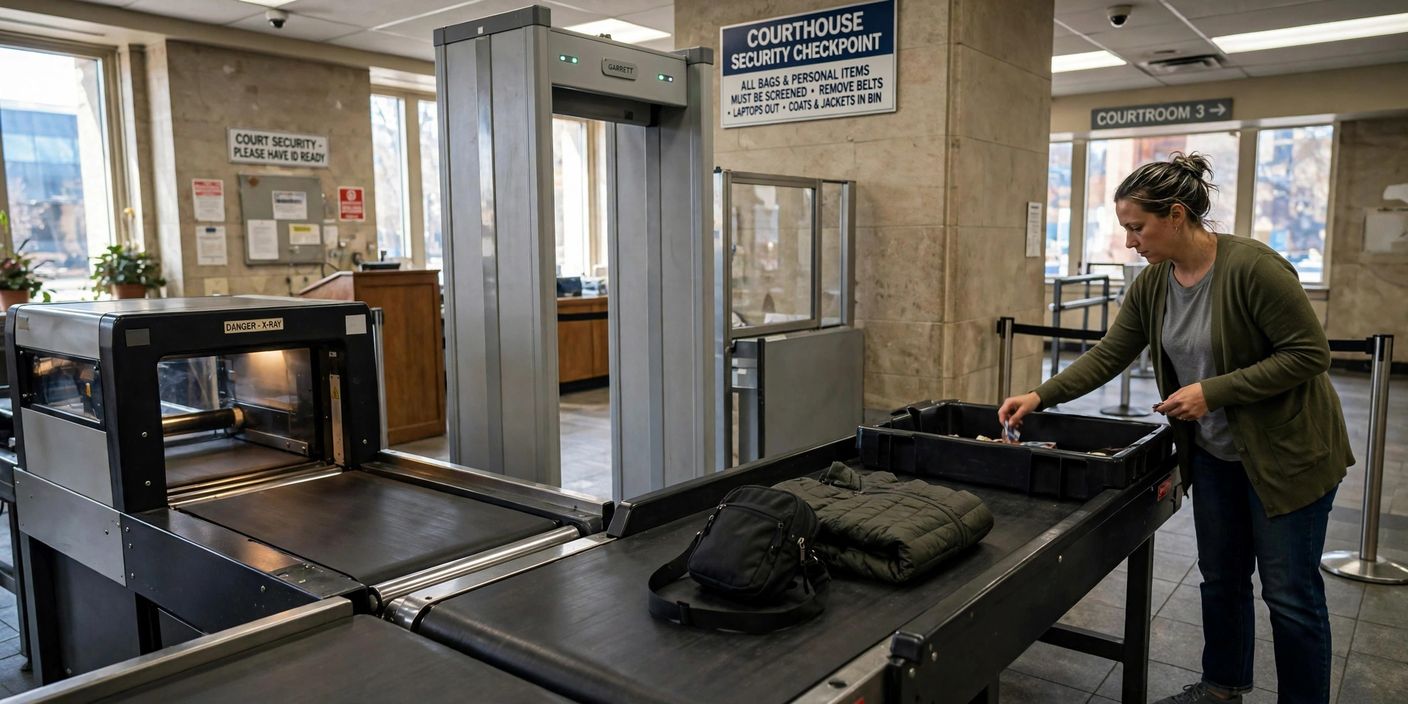
Every courthouse has airport-style security, and your outfit choices can make it painless or miserable. Slip-on shoes save everyone time. Minimal metal — skip the heavy belt buckle, the steel-toed boots, the armful of bangles — means fewer wandings and re-scans. Keep your bag organized so the X-ray operator can see what is what.
Leave at home: pocketknives, multitools, scissors, and anything that could even theoretically be called a weapon. These will be confiscated, and in some jurisdictions you will not get them back. Also leave the giant water bottle — many courts restrict liquids, and you can buy one inside or from a nearby shop.
What Jurors Actually Wear
Let me demystify this with some honesty about what the jury pool really looks like. On any given morning, you will see the full spectrum: retirees in neat casual wear, office workers who came straight from jobs with dress codes, young people in their cleanest casual clothes, and always a few people who clearly Googled “what to wear to jury duty” at midnight and landed somewhere sensible.
You will also see a few people who did not get the memo — gym clothes, flip-flops, graphic tees. Here is what happens to them: usually nothing dramatic. A deputy or clerk may have a quiet word. Occasionally a judge comments. Mostly they just sit there feeling underdressed while everyone else looks composed. Do not be that person. The bar is low, but it exists.
The Multi-Day Kit
If you are seated on a trial, you may be coming back for several days. Pack a small daily kit: a sweater for the cold courtroom, a book or e-reader for waiting periods, a notebook and pen (some jurors like taking notes; check whether your court allows it), snacks that are quiet and not smelly, and any medication you might need. Keep it all in one small bag so you are not juggling things through security each morning.
For the wardrobe itself, you need less than you think. Three business-casual outfits in rotation will carry you through a two-week trial without anyone noticing or caring. Laundry exists. Nobody is watching your clothes — they are watching the trial, which is exactly as it should be.
A Final Word: Take It Seriously, Dress Easily
Jury duty is one of the few times the state asks ordinary people to do something genuinely important, and the dress code is part of that seriousness. But it should not be a source of stress. If you remember nothing else: clean, modest, comfortable, and one step above casual. That is the whole formula.
And if you are still standing in front of the closet the night before your summons, unsure — lay out the outfit early, try it on, and go to bed. The morning of jury duty has enough unknowns without adding a wardrobe crisis. Show up neat, show up on time, and do the job. The robe of civic duty, it turns out, is just regular clothes worn with a little care.
Frequently Asked Questions
Can I wear a jacket or sweater into the courtroom?
Yes, and you should bring one. Courtrooms are famously over-air-conditioned, and you may sit for hours. A blazer, cardigan, or light jacket doubles as comfort and polish.
Do security rules affect what I can wear?
Avoid excessive metal jewelry, steel-toe boots, and anything with spikes or chains that will slow you down at the metal detector. Dress simply and you will glide through screening.
Can I wear religious clothing to jury duty?
Yes. Religious dress is protected, and courts accommodate it routinely. Wear it in the same neat, respectful spirit as the rest of your outfit.
What should I wear if I am called during a heatwave?
Choose lightweight fabrics in dark neutrals — linen or cotton trousers, a breathable blouse or shirt — and bring a layer for the cold courtroom. The outside temperature does not change the dress code.
Does the court tell you what to wear?
Most courts include dress guidance with the jury summons, and many post rules on their website. Read it before you go — specific courts sometimes ban items like shorts, tank tops, or flip-flops outright.
Quick Answers
Can I wear jeans to jury duty?
It depends on the court. Dark, clean, unripped jeans are tolerated in many courthouses but frowned upon in others. Since you cannot know your judge’s stance in advance, trousers or khakis are the safer choice.
Can I wear sneakers to jury duty?
Clean, plain sneakers are usually fine, though dress shoes or neat casual shoes look more respectful. Avoid athletic running shoes, flip-flops, and anything dirty or flashy.
Do I have to wear a suit to jury duty?
No. A suit is more formal than necessary and may make you uncomfortable during long waits. Business casual — collared shirt, neat trousers or skirt — is the expected standard.
Can I wear a hat in the courtroom?
Generally no, except for religious head coverings, which are always permitted. Remove baseball caps and fashion hats before entering the courtroom.
What should I wear to jury duty in summer?
Lightweight business casual: a short-sleeve collared shirt or modest blouse, light trousers or a knee-length skirt. Bring a layer for the air conditioning — courtrooms are cold year-round.