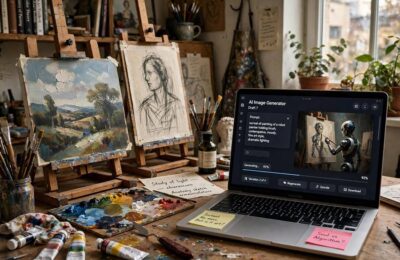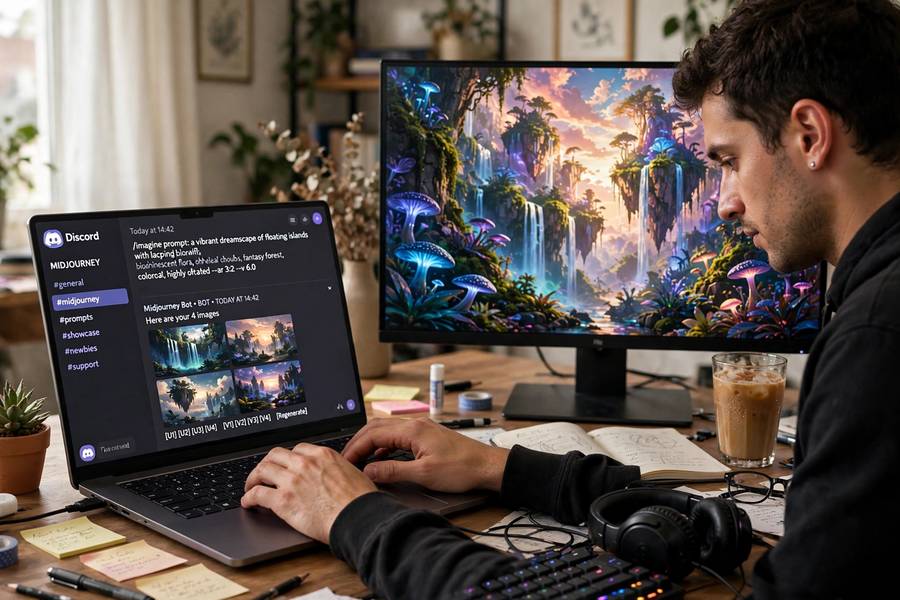
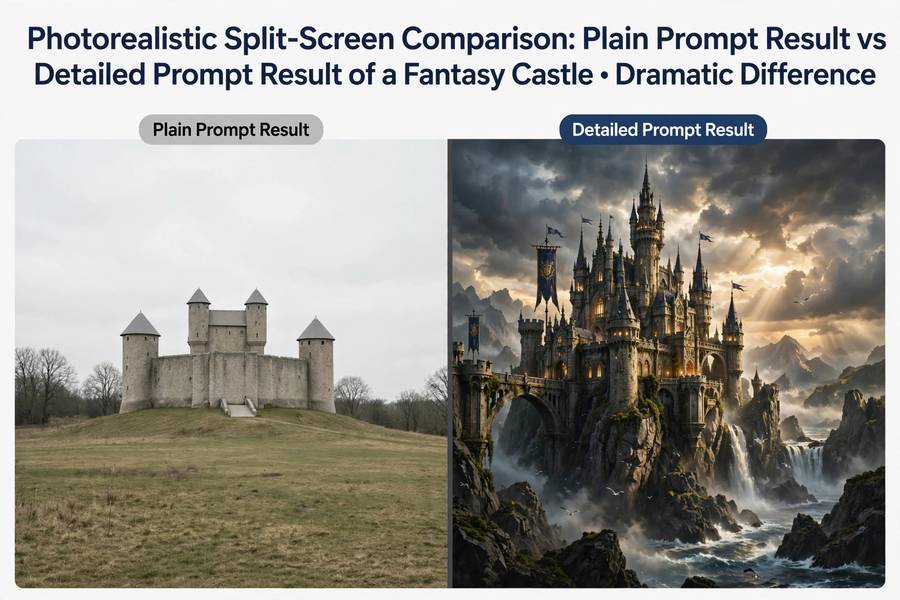
My first Midjourney prompt was “cool dragon.” The result looked like a lizard that had given up on life. My fiftieth prompt was a paragraph specifying the dragon’s species, the lighting, the camera lens, the art style, and the mood — and it looked like a movie poster. The difference between those two images was entirely in the words I typed.
Learning how to write Midjourney prompts is the single highest-leverage skill in AI image generation. The model is extraordinarily capable, but it’s also literal, stubborn, and weirdly picky about word order. This guide teaches the anatomy of a working prompt, the vocabulary that moves the needle, and the iteration habits that separate decent results from stunning ones. If you haven’t set up the tool yet, start with how to use Midjourney; the mechanics of how Midjourney works explain why these techniques matter.
Table of Contents
- The Anatomy of a Midjourney Prompt
- Subject First: Be Absurdly Specific
- Style Keywords: The Biggest Lever
- Lighting: The Secret Ingredient
- Camera and Composition Terms
- Parameters: The Control Panel
- The Iteration Habit
- Common Prompt Mistakes
- Prompting People vs Prompting Places
- Image Prompts and Multi-Prompts
- Seasonal and Trend Words
- Frequently Asked Questions
The Anatomy of a Midjourney Prompt
A strong prompt has a predictable structure, and once you see it, you can’t unsee it:
Subject + details, style, lighting, camera/composition, parameters
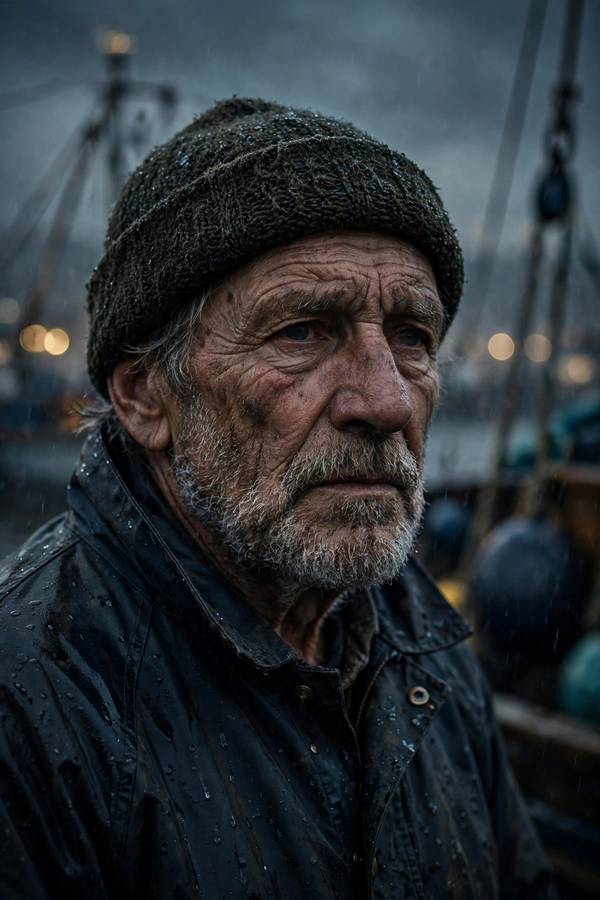
In practice: /imagine prompt: weathered fisherman mending nets on a dock at dawn, photorealistic, National Geographic style, golden hour backlight, shallow depth of field, 85mm lens --ar 16:9
Each chunk does a job. The subject tells the model what to draw. The details keep it specific. The style sets the aesthetic universe. The lighting controls mood more than almost anything else. The camera terms shape composition. The parameters handle technical settings. Beginners write the subject and stop; experienced users write all six, and the quality gap is enormous. The general principles overlap with prompt engineering for beginners — specificity and iteration work everywhere.
Subject First: Be Absurdly Specific
“Dog” gives you a generic dog. “Elderly golden retriever with graying muzzle, lying on a worn Persian rug, head resting on paws, soulful eyes” gives you a photograph that makes people emotional. Midjourney can’t read your mind, but it will faithfully render whatever detail you provide — so provide it.
The trick is concrete nouns and visual adjectives. Not “beautiful woman” (the model has no idea what you mean) but “woman in her sixties with silver-streaked hair and laugh lines, wearing a linen shirt.” Not “nice house” but “craftsman bungalow with a wraparound porch, morning mist in the garden.” Every specific word is a decision you’re making instead of leaving to chance — and the model makes different decisions than you would.
Style Keywords: The Biggest Lever
If subject is what to draw, style is the universe it lives in — and it’s the highest-impact part of most prompts. A short vocabulary here transforms everything:
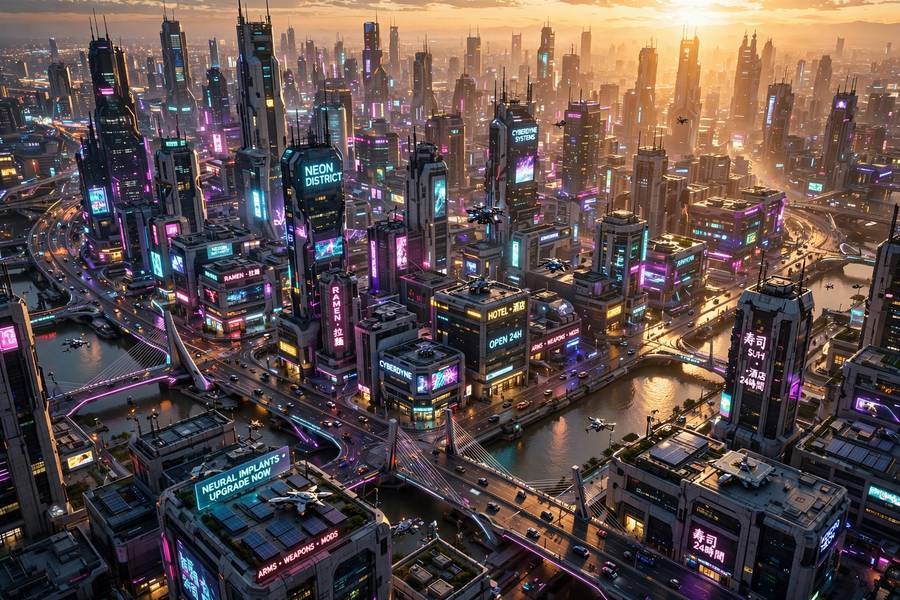
Photorealistic styles: photorealistic, hyperrealistic, shot on 35mm film, National Geographic photography, cinematic still. Art styles: oil painting, watercolor, ukiyo-e, art deco poster, charcoal sketch. Digital aesthetics: cyberpunk, synthwave, dark fantasy concept art, studio ghibli style, pixel art.
One caution: style keywords interact. “Photorealistic oil painting” confuses the model — pick one lane. And artist names (“in the style of…”) are powerful but ethically murky territory; the debate over whether AI can make real art is covered in can AI make art, and it’s worth reading before you build a workflow on mimicking living artists.
Lighting: The Secret Ingredient
Ask experienced prompt writers for their one tip and lighting comes up constantly. Lighting determines mood more reliably than any other single element:
golden hour for warmth and nostalgia. blue hour for melancholy calm. dramatic chiaroscuro for Renaissance-style contrast. neon glow for cyberpunk energy. soft window light for intimate portraits. volumetric fog for atmosphere and depth. rim lighting to separate subjects from backgrounds.
Try this experiment: run the same subject with “harsh midday sun” versus “candlelight.” Same words otherwise, completely different emotional register. Lighting is the cheapest mood control in prompting — two words that change everything.
Camera and Composition Terms
Midjourney responds remarkably well to photography vocabulary, because its training data is full of captioned photos:
Lenses: 85mm portrait lens (flattering compression), wide angle 24mm (expansive scenes), macro (extreme close-up detail), tilt-shift (miniature effect).
Shots: close-up, medium shot, aerial view, dutch angle, over-the-shoulder, establishing wide shot.
Depth: shallow depth of field, bokeh background, sharp focus throughout.
These terms work because they’re precise professional shorthand the model has seen millions of times. “Cinematic” is vague; “anamorphic widescreen, teal and orange grade” is a recipe. The more your prompt reads like a shot list a cinematographer would understand, the better the output.
Parameters: The Control Panel
After the descriptive text, parameters (the --flags) fine-tune behavior:
--ar 16:9sets aspect ratio (widescreen; default is square).--stylize 250controls how strongly Midjourney’s aesthetic preferences apply (0–1000).--chaos 20adds variation between the four generated images.--no text, watermarkexcludes unwanted elements.--v 6pins a model version.
Parameters go at the very end of the prompt. Beginners can ignore most of them initially — a great descriptive prompt with default parameters beats a mediocre prompt with clever flags every time. Master the words first; the flags are seasoning.
The Iteration Habit
Here’s the uncomfortable truth: nobody writes a perfect prompt on the first try. Professionals iterate. The workflow: generate four images, pick the best, hit V to make variations of it, adjust the prompt based on what went wrong, repeat. Each cycle teaches you something about how the model interprets your words.
Keep a prompt journal — even a notes file — of what worked. “Golden hour backlight + 85mm = great portraits” is knowledge that compounds. Within a month you’ll have a personal vocabulary of reliable combinations, and your first-attempt quality will double. Prompting is a craft, and crafts reward deliberate practice.
Common Prompt Mistakes
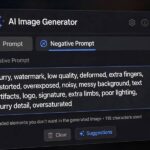
The greatest hits of failure, so you can skip them: Too vague (“nice landscape”) — the model fills gaps with clichés. Too long — after about 60 words, later words get diluted; prioritize. Contradictions (“photorealistic cartoon”) — pick one. Negative phrasing (“not ugly, no blur”) — the model often latches onto the concept you’re negating; use --no instead. Ignoring the first image set — variations of a near-miss beat restarting from scratch. And prompting in a hurry — thirty seconds of thought before generating saves ten minutes of regenerating.
Prompting People vs Prompting Places
Different subjects need different prompting strategies, and the people-vs-places split is the most important one. For people, specificity about age, expression, clothing, and lighting matters enormously — “woman” is a void the model fills with clichés, while “elderly woman with silver hair in a bun, gentle smile, wearing a hand-knit sweater” gives it a person. Add emotion words (contemplative, joyful, weary) and the portrait gains a soul.
For places and landscapes, composition and atmosphere carry the weight: foreground elements, depth layers, weather, time of day. “Mountain” is boring; “jagged peaks above a mist-filled valley, pine forest in midground, hiker with red jacket on a ridge for scale, storm light breaking through” is a photograph. The rule: people need character detail, places need spatial detail. Prompt the dimension your subject lives in.
Image Prompts and Multi-Prompts
Two advanced techniques for when words aren’t enough. Image prompts let you feed Midjourney a reference image alongside text — the model blends the image’s composition, style, or character with your description. It’s the fastest way to nail a specific aesthetic: find an image with the vibe you want, use it as a prompt component, describe what should change. Character consistency across a series becomes dramatically easier.
Multi-prompts (using :: to separate concepts with weights, like “space::2 ship”) give fine control over how much influence each concept carries. They’re fiddly and version-dependent, but for the specific problem of “the model keeps ignoring part of my prompt,” they’re the precision tool. Learn these after you’ve mastered basic prompting — they’re force multipliers for the already-competent, and confusion for beginners. Crawl, walk, then blend.
Seasonal and Trend Words
A small vocabulary upgrade with outsized returns: seasonal and trend adjectives. Words like “cottagecore,” “dark academia,” “brutalist,” “biophilic,” or “Japandi” carry entire aesthetic worlds in a single token — the model has seen thousands of images tagged with them. Dropping one into a prompt instantly restyles the output with a coherent design language you’d otherwise need a paragraph to describe.
Seasonal words work the same way: “autumnal,” “wintry,” “monsoon,” “harvest.” They set color palette, lighting, and mood simultaneously. The caution: trend words age fast and can feel dated within a year — “cheugy” prompts from 2022 look it. Use them for contemporary work, avoid them for timeless pieces. And combine sparingly: one trend word per prompt is a style; three is a mood board having an argument.
Frequently Asked Questions
Follow the structure: specific subject with concrete details, a style keyword, lighting description, camera/composition terms, and parameters at the end. Example: “weathered fisherman mending nets at dawn, photorealistic, golden hour backlight, 85mm lens –ar 16:9”.
Concrete visual nouns, photography terms (85mm, bokeh, golden hour), established style names (ukiyo-e, cyberpunk, oil painting), and lighting descriptions. Specific professional vocabulary beats vague adjectives like “beautiful” or “nice”.
Aim for 20-60 words. Shorter prompts give the model creative freedom; longer ones give control but dilute the influence of later words. Cover subject, style, lighting, and composition — then stop.
Vague prompts produce clichés. Add specific details (age, texture, setting, era), a distinct style keyword, and lighting terms. Then iterate: vary the best result rather than restarting from scratch.
At the very end, after all descriptive text. Example: “/imagine prompt: lighthouse in storm, dramatic, cinematic –ar 16:9 –stylize 250 –no text”. Descriptive words first, flags last.
Keep reading: