How to Read Faster With Comprehension (Without the Gimmicks)


Let us clear something up first: most speed-reading courses are selling a fantasy. The famous claims — 1,000 words per minute with full comprehension — do not survive scientific scrutiny. What does survive is less exciting but genuinely useful: most readers can increase their speed 50 to 100 percent while keeping comprehension intact, by fixing specific bad habits.
I have coached students through this, and the gains are real but bounded. This guide covers what actually works, what does not, and how to measure your progress honestly — because the only speed that matters is words understood per minute, not words glanced at.
I will be straight with you about what the science supports and what it does not — because the speed-reading industry profits from your hope, and I would rather profit you the truth.
Speed-Reading Myths, Honestly Addressed
The central myth is that you can read 1,000+ words per minute with full comprehension by 'reading' whole pages at once. Controlled studies consistently find that comprehension collapses at those speeds — what is actually happening is skimming, which is a different and legitimate skill, not fast reading. Anyone selling otherwise is selling.
Subvocalization — the inner voice 'saying' words as you read — is widely blamed, and widely misunderstood. Completely eliminating it is neither possible nor desirable for difficult text; it is part of how you process complex meaning. The real target is excessive subvocalization on easy text, where your inner voice artificially caps your speed at talking pace.
Photo-reading, peripheral-vision reading, and similar schemes have no credible evidence behind them. I mention them only so you do not waste money. Everything below has actual support, and none of it requires buying anything.
Fix Regressions: The Biggest Free Gain
Regression — eyes jumping back to re-read — is the largest speed tax on most readers, and much of it is habit, not need. Studies of eye movements show poor readers regress on up to 30 percent of fixations. Simply becoming aware of it and using a pacer (finger, pen, or cursor) to keep your eyes moving forward typically adds 20 to 40 percent speed with no comprehension loss.
The pacer technique is almost embarrassingly simple: guide your eyes with a finger or pen moving smoothly under the lines at a pace slightly faster than comfortable. Your eyes follow the motion, regressions drop, and your brain adapts within days. It feels strange for a week and then becomes invisible.
Distinguish necessary from habitual regression. Re-reading because you genuinely did not understand is fine — that is comprehension monitoring, a good habit. Re-reading from anxiety, perfectionism, or drift is the tax. The pacer eliminates the second kind while leaving the first intact.

Preview and Structure Your Reading
Before reading anything substantial, spend one to two minutes previewing: title, headings, first sentences of paragraphs, conclusion. This builds a mental scaffold so your brain processes details faster — you are filing information into prepared slots instead of building the structure on the fly. This alone can add 15 to 25 percent effective speed on nonfiction.
Adjust speed to purpose and difficulty, deliberately. Dense textbook chapters get slow, careful reading with pauses for recall; news articles and familiar material get fast, paced reading. Skilled readers vary speed constantly; poor readers read everything at one anxious pace. Deciding your speed before you start is itself a speed technique. what active recall is
For familiar material, practice 'chunking' — taking in phrases instead of single words. Your eyes already move in jumps (saccades); training yourself to land on phrase centers rather than each word widens your effective span. This develops naturally with paced practice on easy texts.
A Four-Week Practice Plan
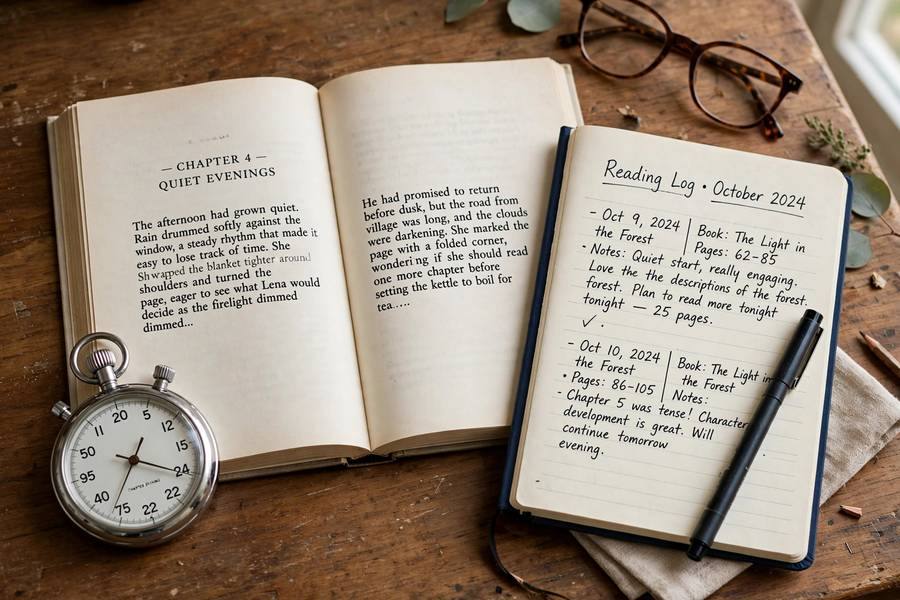
Week one: baseline and pacer. Time yourself on three typical texts, answer five comprehension questions on each, and compute words-per-minute times accuracy — that is your real speed. Then read everything with a pacer for the week. Most students see immediate gains.
Week two: preview habit. Add the two-minute preview before every substantial reading, and start varying speed deliberately — mark sections for fast, normal, and slow reading before you begin. Log your times; watching the numbers move is motivating.
Week three: push the pacer 10 to 15 percent faster than comfortable on easy material only. Comprehension will dip slightly at first — that is normal and temporary. Keep difficult material at comfortable speed; speed training happens on easy texts. how to prepare for the GRE
Week four: re-test on the original baseline texts (or equivalent). Typical results I see: 50 to 80 percent faster with equal or better comprehension, because the comprehension practices — previewing, purposeful speed — improved understanding too. Maintain with paced reading a few times weekly; the gains persist with light maintenance. tips for studying history exams
When to Read Slowly on Purpose
Speed is a tool, not a virtue. Poetry, philosophy, legal documents, and difficult textbook passages deserve slow reading with frequent pauses — trying to speed-read them is like sprinting through a museum. The mark of a skilled reader is knowing which speed each text deserves.
Your first read of truly new concepts should be slow enough for recall pauses: read a section, close the book, restate the idea. This feels inefficient but produces the durable understanding that fast skimming never does. Speed up on the second pass, when the concepts are familiar.
If comprehension ever drops during speed practice, slow down immediately. The rule is absolute: speed without comprehension is just moving your eyes. Measure both, always, and let comprehension set the ceiling.
Reading Academic Papers Efficiently
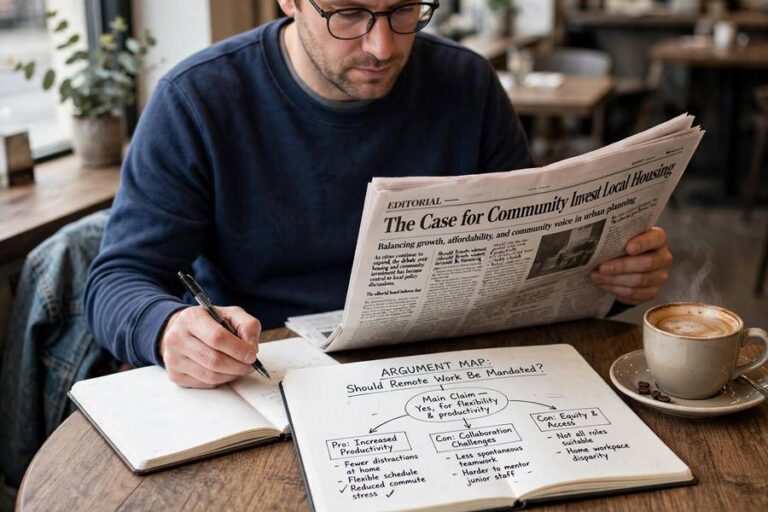
Academic papers are not read front to back — even professors do not read them that way. The efficient order: abstract, then conclusions, then headings and figures, then methods only if you need them, then the full text of sections that matter. This triage respects the paper's structure instead of fighting it.
Read the abstract twice — once to decide if the paper deserves your time, once to build the framework before diving in. A reader who understands the claim before reading the evidence processes the evidence three times faster than one discovering the claim on page eight.
Figures and tables first, prose second. In most empirical papers, the figures contain the actual findings; the prose argues about them. Study each figure until you can state its message in one sentence, then read the text to check your understanding. Students who do this report that 'dense' papers suddenly feel navigable. how to study for final exams
Take structured notes per paper: research question, method in one line, key finding, one strength, one limitation. Five lines per paper builds a literature map that makes the tenth paper in a topic dramatically easier than the first — background knowledge compounds, and structured notes capture it.
Know when to stop reading a paper. If the abstract shows it is tangential, the methods are beyond your needs, or three pages in you have what you came for — stop. Efficient readers abandon papers freely; inefficient readers finish everything out of guilt. Your reading list is infinite; your hours are not.
Build a personal paper workflow: a folder per project, consistent file naming, and your five-line notes in one running document. The tenth paper takes half the time of the first when the system carries the overhead instead of your memory.
One more honest note: your maximum useful speed depends heavily on background knowledge. An expert skims their field at astonishing rates because every other sentence is already known — the 'speed' is really recognition. Building domain knowledge is therefore a speed technique, and the fastest readers are usually just the most knowledgeable.
Track comprehension separately from speed, always. A simple five-question quiz after each timed read, scored honestly, keeps you honest. The moment comprehension dips below 70 percent, you are skimming, not speed-reading — label it correctly and choose deliberately.
Teach the techniques to someone else once you have them working. Explaining regressions and pacing to a friend cements your own practice and reveals the parts you were doing on autopilot. Teaching is the final mastery step for reading skills too.
You can increase reading speed 50 to 100 percent with intact comprehension by fixing regressions, using a pacer, and previewing — but claims of 1,000+ words per minute with full comprehension are not supported by evidence.
Excessive subvocalization on easy text caps speed at talking pace, and reducing it helps. But some inner speech is normal and necessary for difficult material — do not try to eliminate it entirely.
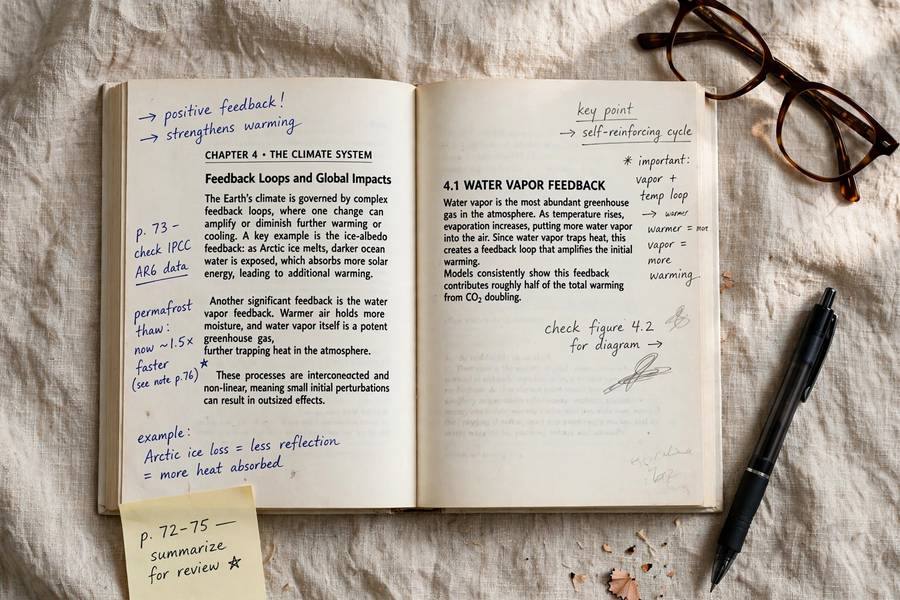
Preview for two minutes (headings, summaries), read at varied speeds with a pacer, pause for recall after each section, and review your margin notes. This is faster overall than one slow anxious pass.
Time yourself on a typical text, count the words, and answer comprehension questions — real speed is words per minute multiplied by comprehension percentage. Track both weekly.
No. Skimming deliberately samples a text for gist; speed reading (properly done) processes every word faster. Both are legitimate skills for different purposes — skim to decide what deserves a full read.
No — the techniques are reversible habits, not brain changes. If comprehension ever suffers, slow down; the underlying reading ability is untouched. Practice on easy texts keeps it safe.