How to Hang Shelves on Drywall: A Beginner’s DIY Guide

Nothing transforms a room like shelves, and nothing ruins the moment like a shelf crashing down at 2 AM. Hanging shelves on drywall intimidates a lot of beginners, but here is the truth: drywall is easy to work with once you understand how it holds weight. This guide will show you how to hang shelves on drywall the right way, from finding studs to choosing anchors, so your shelves stay up for years. Basic tools, one afternoon, zero disasters.
How to Hang Shelves on Drywall: The 2-Minute Physics of Weight
Drywall (gypsum board) is strong in compression but weak when you pull on it. A screw driven straight into drywall alone will rip out under surprisingly little weight. That is why shelf failures happen: the fastener, not the shelf, gives up.
There are two ways to beat this. Hit a stud: the wooden framing behind the drywall. A screw into a stud can hold 50+ pounds easily; this is always the best option. Use the right anchor: when no stud is available, anchors spread the load across a wider area of drywall, gripping from behind the panel. The right anchor in drywall holds 25-75 pounds depending on type. The wrong fastener holds almost nothing. Know which situation you are in before you drill.
Tools and Materials You’ll Need
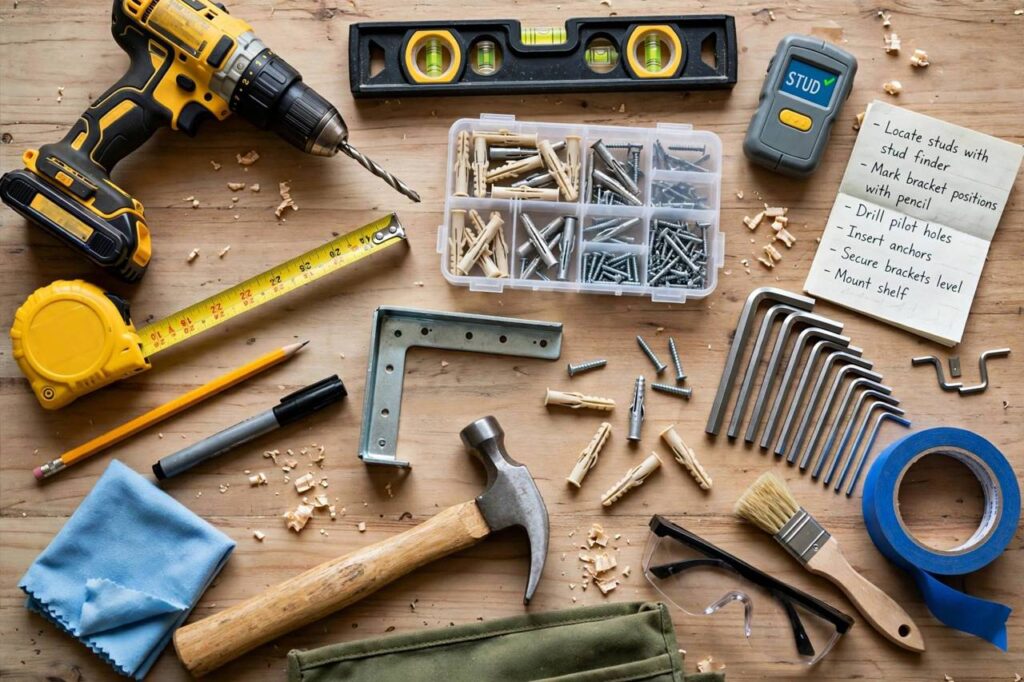
Essential: drill/driver with drill bits and driver bits, stud finder (electronic ones cost $20-40 and earn their keep), level (a 2-foot level minimum; longer is better), tape measure, pencil, and the shelf with its brackets or mounting hardware.
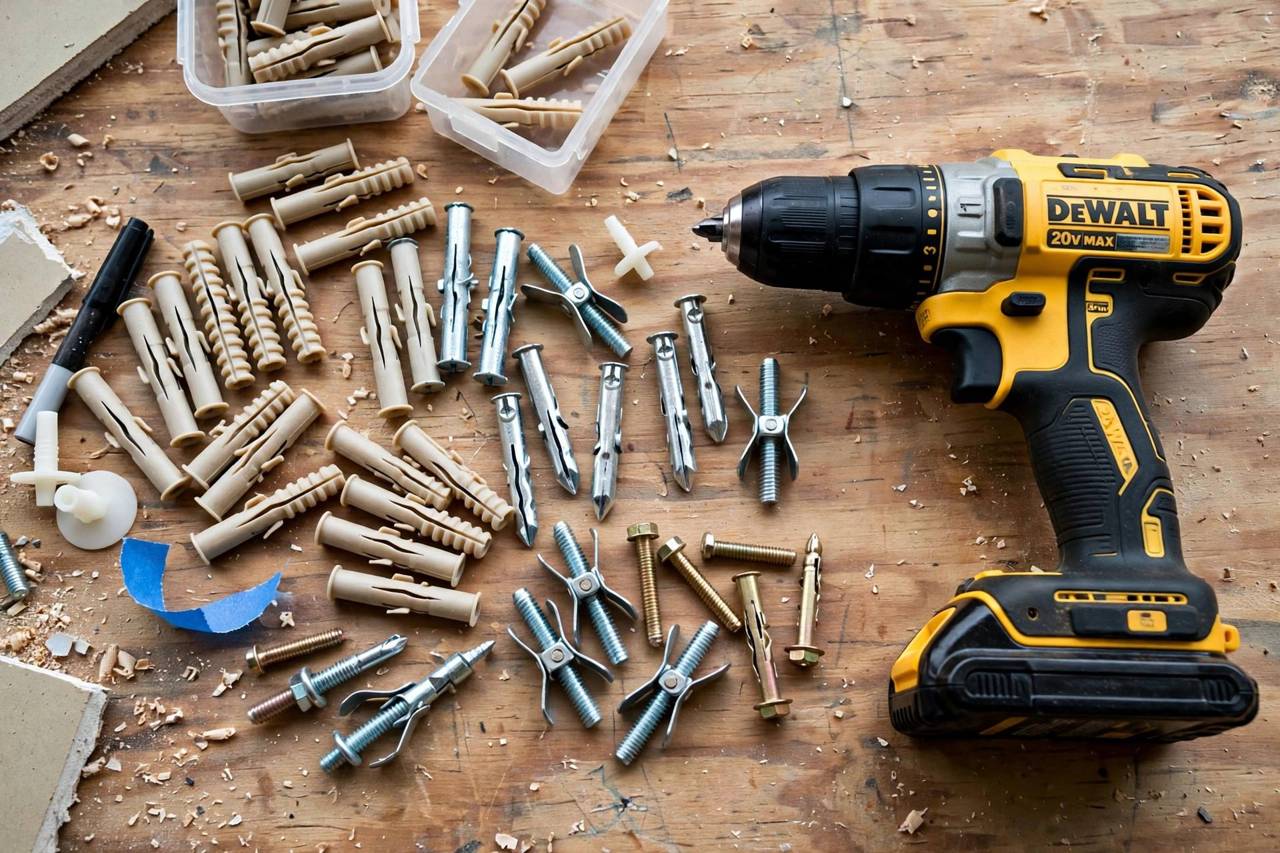
Anchors to have on hand: plastic expansion anchors (light duty, up to ~25 lbs), self-drilling threaded anchors (medium, easy to install, ~50 lbs), and toggle bolts (heavy duty, ~75+ lbs, the gold standard when no stud exists). Buy a variety pack; they are cheap and you will use them forever.
Nice to have: painter’s tape (mark positions without marking walls), a small vacuum for dust, and a second pair of hands for long shelves.
Step 1: Plan Placement and Find the Studs
Decide shelf height first. For display shelves, eye level (57-60 inches to center) is the gallery standard. For functional shelves over desks, 18-24 inches above the surface keeps things reachable. Mark the desired position lightly with painter’s tape.
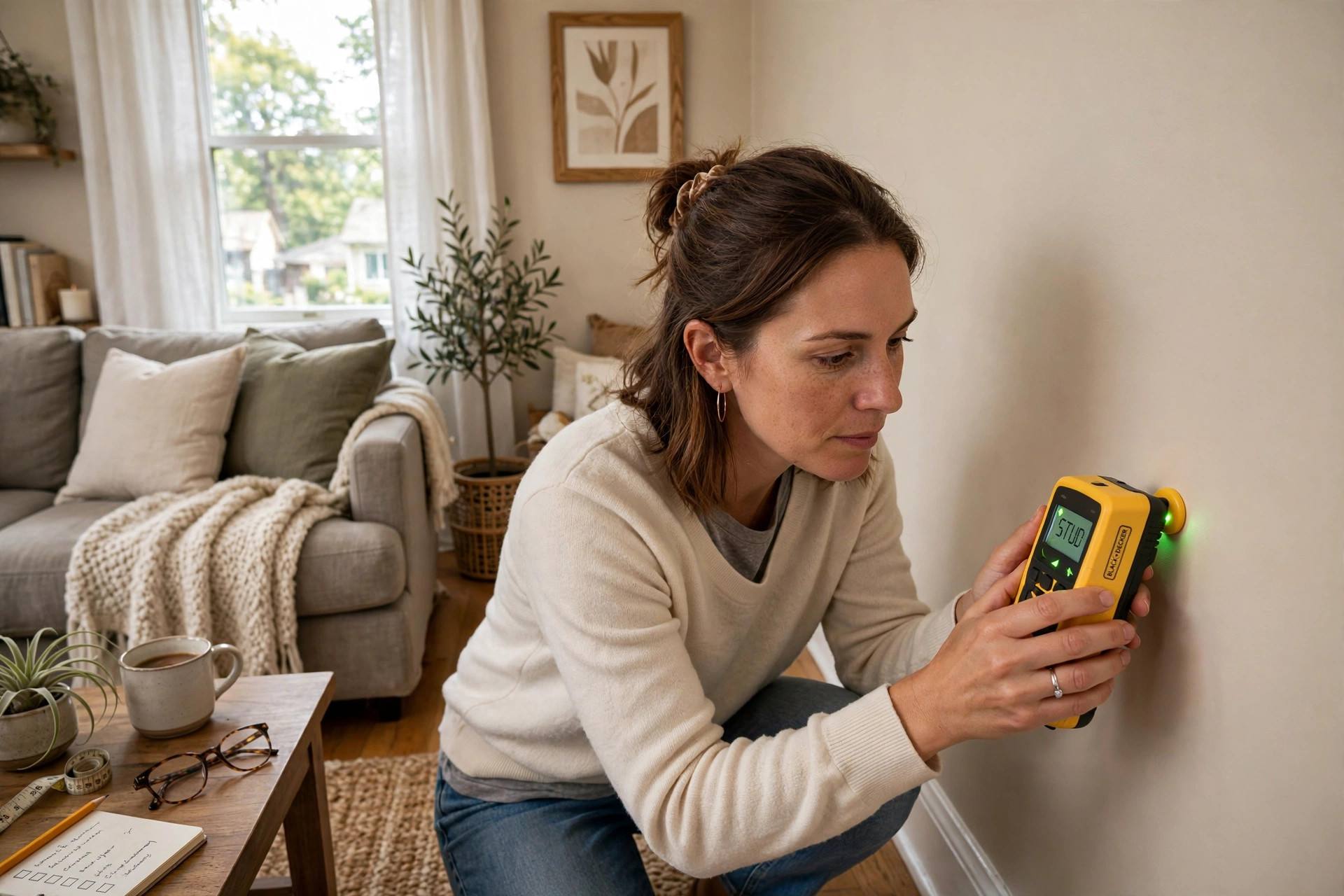
Now find studs. Run your electronic stud finder slowly across the wall; it beeps or lights at stud edges. Mark both edges and find the center. Studs are typically 16 inches apart (sometimes 24). Verify by finding two in a row at the expected spacing. No stud finder? Knock along the wall: solid thuds indicate studs, hollow sounds indicate empty drywall. The outlet trick works too: electrical boxes attach to studs, so a stud usually sits beside every outlet and switch.
Plan bracket positions to hit studs wherever possible. Even one bracket in a stud dramatically increases capacity. Mark everything with painter’s tape before drilling a single hole.
Step 2: Choose the Right Anchor for Each Hole
Match the anchor to the load and the situation:
Bracket hits a stud: use a 2.5 to 3-inch wood screw directly into the stud. No anchor needed. This is the strongest possible mount.
Light shelf, no stud (under 20 lbs total): plastic expansion anchors or self-drilling threaded anchors. Drill a pilot hole (or just drive threaded anchors straight in), tap in the anchor, drive the screw.
Heavy shelf or books, no stud: toggle bolts. Drill the specified hole size, push the toggle through (wings fold, then spring open behind the drywall), and tighten. Toggles are fiddly but incredibly strong.
Rule of thumb: estimate your shelf’s loaded weight honestly, books are heavy, a foot of books weighs 15-20 pounds, then choose anchors rated for at least double. Overkill is underrated in shelf hanging.
Step 3: Mark, Level, and Drill
Hold the bracket (or shelf with pre-drilled bracket holes) against the wall at your taped marks. Use the level to get it perfectly horizontal; even a slight tilt is visible forever. Mark each hole position with a pencil through the bracket holes.
Drill pilot holes at your marks. For studs, drill slightly smaller than the screw. For anchors, follow the anchor’s specified bit size exactly; too big and the anchor spins uselessly. Drill straight, not at an angle, and stop when you feel the bit break through the drywall (about half an inch).
Pro tip: put a small piece of painter’s tape on your drill bit at the desired depth as a visual stop. It prevents drilling into pipes or wires, which is the nightmare scenario. If you hit unexpected resistance or hear something odd, stop and investigate.
Step 4: Install Anchors and Mount the Shelf
Install anchors per their type: tap in expansion anchors flush, screw in threaded anchors until flush, push toggles through and tighten until snug. Then position the bracket, drive screws through bracket holes into anchors or studs, and tighten firmly but not gorilla-tight; overtightening strips drywall anchors.
Set the shelf on the brackets, check level once more, and secure per the shelf’s hardware. Load gradually: put half the weight on, check for movement or creaking, then load fully. A properly mounted shelf feels absolutely rigid. Any wobble means something needs tightening or a better anchor.
Floating Shelves: The Special Case
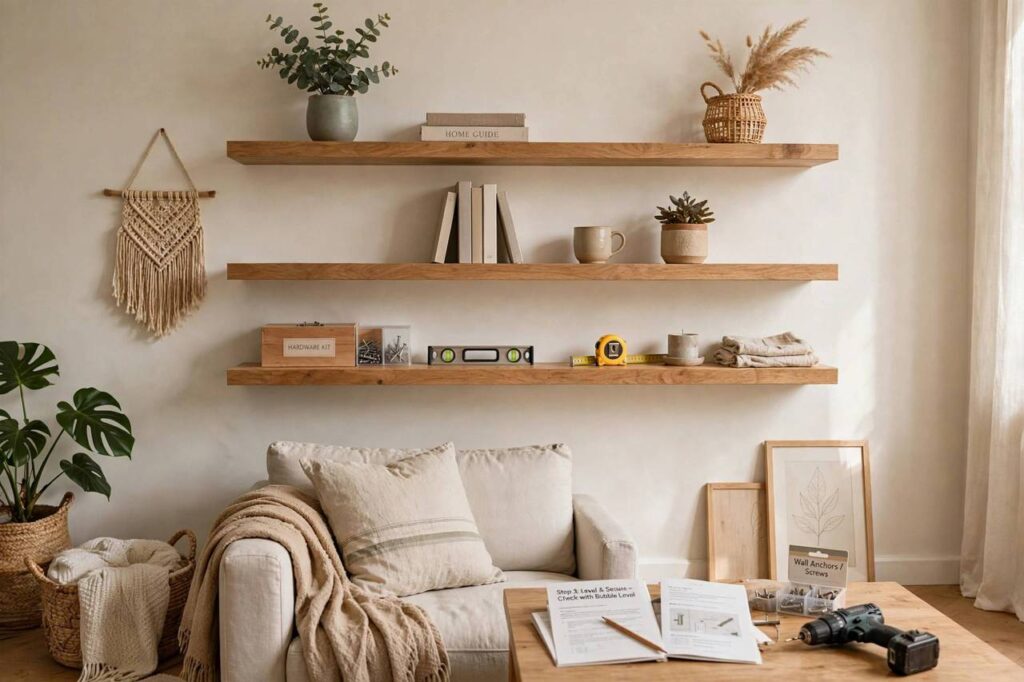
Floating shelves (no visible brackets) use hidden rods or a cleat system inside the shelf. They look sleek but demand precision: the mounting bar must be perfectly level, and stud mounting is strongly preferred because all the weight hangs on that hidden hardware.
Installation follows the same principles: find studs, level obsessively, use the manufacturer’s hardware. The critical difference is tolerance: visible brackets forgive small errors, hidden mounts do not. Measure twice, drill once, and test-load before styling. For heavy floating shelves without stud access, use multiple toggle bolts and keep loads modest; floating shelves are for display, not libraries.

Weight Limits: What Drywall Can Actually Hold
Realistic numbers, properly installed: a single wood screw in a stud holds 50-80 lbs in shear. Plastic expansion anchors hold 20-30 lbs each. Self-drilling threaded anchors hold 40-60 lbs each. Toggle bolts hold 70-100 lbs each in half-inch drywall.
But shelves fail at the weakest point, so think in systems. Two brackets, each with two toggle bolts, theoretically holds 280+ lbs, but the shelf board itself may bow or the drywall may crumble around clustered holes. Practical limits: light display shelves (decor, small plants) on any good anchor; book shelves need studs or toggles every 16-24 inches; anything over 50 lbs total wants at least one stud. When in doubt, add another bracket. Brackets are cheap; drywall repair is not.
Common Mistakes That Cause Shelf Disasters
Nails instead of screws. Nails pull straight out of drywall under load. Always screws, always anchors or studs.
Guessing instead of finding studs. “Probably a stud here” is how shelves fall. Verify with a finder, every time.
Wrong anchor for the weight. Plastic anchors for a bookshelf is a time bomb. Match anchor rating to double the real load.
Skipping the level. Eyeballing looks fine until the shelf is loaded and the tilt becomes permanent decor.
Drilling blind near utilities. Pipes and wires run through studs. Drill shallow pilot holes, stop at resistance, and never drill directly above outlets or below plumbing without caution.
Patching Holes (For When Plans Change)
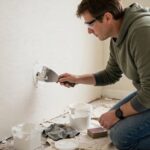
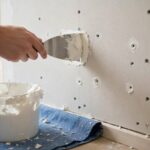
Small anchor holes are a 10-minute fix: fill with spackle, let dry, sand smooth, touch up paint. Keep a small jar of your wall paint for exactly this. Larger toggle-bolt holes need a self-adhesive mesh patch plus spackle, still easy. The fear of holes should never stop you from hanging shelves; drywall is the most forgiving wall material to repair. That is genuinely one of its virtues.
Hanging Shelves on Other Wall Types
Not every wall is drywall. Plaster (older homes): harder and more brittle; drill slowly with a masonry bit to avoid cracking, and always use anchors, plaster crumbles around screws. Concrete or brick: requires a hammer drill and masonry anchors or concrete screws; standard drywall anchors will not work. Tile: drill through tile with a diamond or carbide bit at low speed with water cooling, then anchor into the substrate behind.
Metal studs: common in commercial buildings and some homes; they look like studs on a finder but will not hold wood screws. Use toggle bolts or specialized metal-stud anchors, which grip the thin steel. When in doubt about your wall type, drill a small test hole in a hidden spot and inspect the debris: white powder means drywall, gray dust means plaster or concrete, wood shavings mean a stud. Five seconds of investigation prevents five kinds of failure.
Key Takeaways
To hang shelves on drywall: understand that screws need studs or anchors, never bare drywall. Find studs with a finder and plan brackets to hit them. Choose anchors rated for double your honest load estimate: plastic for light, threaded for medium, toggle bolts for heavy. Mark with painter’s tape, level obsessively, drill to spec, and test-load gradually. Floating shelves need extra precision and prefer studs. Patching holes is easy, so do not let fear of drilling stop you. Measure twice, drill once, enjoy shelves that stay up.
FAQ
Can you hang shelves on drywall without studs?
Yes, using the right drywall anchors. Toggle bolts hold 70-100 lbs each and are the best choice for heavy shelves without studs. Light shelves work with threaded or expansion anchors.
How much weight can a drywall anchor hold?
Plastic expansion anchors: 20-30 lbs each. Self-drilling threaded anchors: 40-60 lbs each. Toggle bolts: 70-100 lbs each. Always choose anchors rated for at least double your shelf’s loaded weight.
How do I find a stud in drywall?
Use an electronic stud finder, knock and listen for solid vs. hollow sounds, or check beside electrical outlets (boxes attach to studs). Studs are typically spaced 16 inches apart.
Why did my shelf fall off the wall?
Almost always fastener failure: screws into bare drywall without anchors, anchors underrated for the weight, or nails instead of screws. Rehang with proper anchors or into studs.
Are floating shelves hard to install on drywall?
They demand more precision than bracketed shelves since the hardware is hidden, and they strongly prefer stud mounting. With careful leveling and the right anchors, they are very doable for beginners.
Keep Reading
- How to Hang Shelves Without Drilling (Renter-Friendly Methods)
- How to Patch Drywall Holes Fast: Quick Fixes for Every Size
- How to Patch a Hole in Drywall: From Nail Holes to Big Gaps