

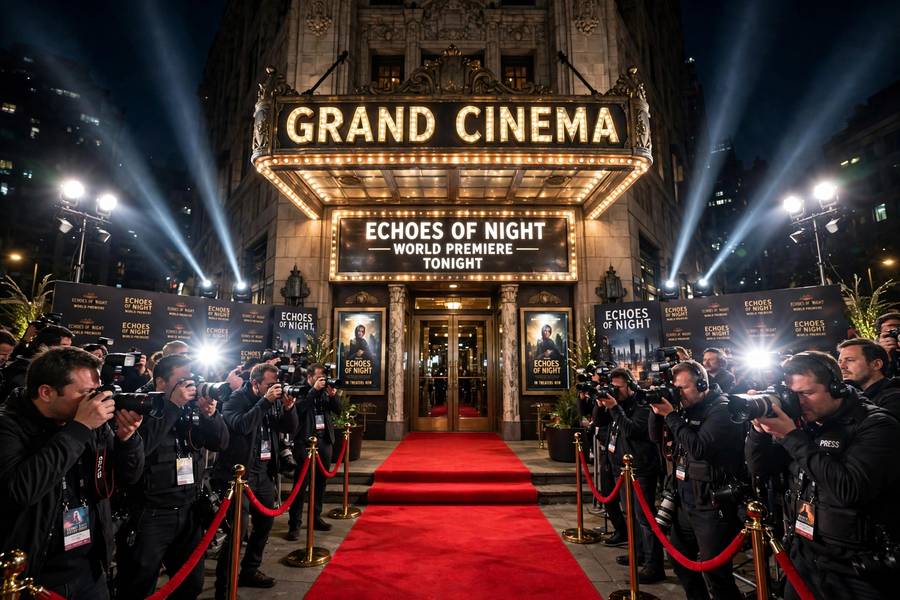
Every year, a few thousand lanyarded people descend on a small French town, watch movies for two weeks, and decide what the film world discusses for a year. That’s Cannes. Sundance does it in snow; Venice on an island; thousands of smaller festivals everywhere else, all year.
But how do film festivals work, really? Beneath the red carpets, a festival is three machines at once: a curated exhibition (the screenings you see), a competition (the awards), and a market (the deals you don’t). Most coverage ignores the last two — like reviewing a restaurant by its menu design. Here’s the full machine, from submission to sale.
Table of Contents
- How Do Film Festivals Work? The Three Machines
- Submissions: How Films Get In (and Mostly Don’t)
- Selection and Programming: The Curator’s Art
- Premieres, Screenings, and the Festival Experience
- Awards and Juries: What the Prizes Actually Mean
- The Market: Where Films Get Bought and Sold
- The Festival Circuit: Strategy, Politics, and Prestige
- Frequently Asked Questions
How Do Film Festivals Work? The Three Machines
Every major festival runs three operations simultaneously:
1. The exhibition. The public face: screenings, premieres, galas, Q&As. Films meet their first real audience — press, industry, and (at most festivals) the public.
2. The competition. Selected films compete for juried awards — the Palme d’Or, the Golden Lion, Sundance’s Grand Jury Prize. Awards generate prestige, headlines, sometimes box office. The competition is also a narrative engine: it gives the festival winners, losers, talking points.
3. The market. The business nobody photographs. Distributors buy films, sales agents shop titles territory by territory, producers package future projects. Cannes has the Marché du Film; Berlin the European Film Market; Sundance deals happen in Main Street condos. Many festival films aren’t competing at all — they’re there to be sold.
Three machines, different masters — which explains most behavior that looks strange from outside: masterpieces playing out of competition, mediocre films getting galas, the “best” film rarely winning top prize. Different machines, different logics.
Submissions: How Films Get In (and Mostly Don’t)
The funnel is brutal. Cannes gets ~2,000 feature submissions for ~20 competition slots. Sundance gets 14,000+ across categories for a few hundred. Lottery odds — but the process is structured.
The submission. Filmmakers submit via platforms (FilmFreeway dominates), paying $50–$150 fees, providing a secure screener plus synopsis, credits, premiere status, specs. Deadlines are hard.
Premiere status is currency. Top festivals demand premieres — world premieres for competition, international or regional for sidebars. An already-premiered film is dramatically less attractive. Filmmakers hold finished films for months awaiting decisions: premiering at the wrong (smaller) festival can kill big-festival chances. The premiere hierarchy is the festival world’s caste system.
The pre-screeners. Before programmers see anything, pre-screeners watch submissions and write coverage — yes/no/maybe. One pre-screener watches hundreds of films; yours gets maybe ten minutes to earn a full viewing. Openings matter enormously. Slow-burn masterpieces die here constantly. Unfair, and everyone knows it.
Fees. Submission fees are significant revenue — thousands of films × ~$75 — meaning festivals profit from filmmakers they reject. Reputable ones aren’t fee farms, but the incentive is worth knowing.
The back door. Not everything comes through submissions. Programmers scout other festivals, track buzz, invite directly. A24’s latest doesn’t submit like a student film — it gets a phone call. The submission process is the front door; the industry has side entrances.
Selection and Programming: The Curator’s Art
If submissions are the funnel, programming is the art — more political than brochures admit.
The programmers. Each major festival has a team led by an artistic director (Cannes’s Thierry Frémaux is film’s most powerful curator). Programmers watch hundreds of films and argue for favorites. The lineup is negotiated consensus — taste, politics, strategy.
What they’re selecting for. Quality is necessary but not sufficient. Programmers balance geography (global representation), genres (not all bleak dramas), genders and backgrounds (increasingly scrutinized), star power (galas need celebrities), and narrative — the festival as a “story” the press can tell. A great film duplicating another’s slot can lose out. Programming is curation, not ranking.
Sections and sidebars. Competition (the main event), Un Certain Regard / Horizons (innovation), Out of Competition (big films needing no awards), midnight (genre), shorts, docs. Placement is a statement — Competition says “among the year’s best”; midnight says “this is fun.” Filmmakers lobby for placement.
The politics. Countries lobby for their films. Studios negotiate packages (your awards contender for our star vehicle’s gala). Veterans get the benefit of the doubt; newcomers need champions. Not corrupt — just how cultural institutions work. The “pure meritocracy” story is fiction. The lineup is a settlement between art, commerce, diplomacy, and ego.
For filmmakers: knowing how movies are made is half the battle; knowing how they get seen is the other half.

Premieres, Screenings, and the Festival Experience
The premiere hierarchy. Galas — red carpet, stars, flashbulbs — are media events staged for cameras. Press screenings come first (critics, under embargo). Public screenings bring real audiences. Industry screenings serve buyers. One film can play all four in sequence, each with different stakes.
The standing ovation economy. “12-minute standing ovation at Cannes!” — treat with deep skepticism. Festival audiences are primed to ovate; it’s ritual, not review. Ovation length correlates weakly with quality. The films getting polite applause and buzzing walkouts are often the real winners. The ovation is theater about theater.
Q&As and the talent circus. Casts do junkets, photo calls, Q&As — exhausting, tightly scheduled, essential for buzz. A charismatic director Q&A can save a divisive film; a disastrous press conference can sink one. Talent agents choreograph festival appearances like military campaigns.
The audience. The best and worst viewers: knowledgeable and passionate, but jaded and agenda-driven (prize-winner? walk out for the next screening?). A film judged as a festival event gets judged fresh by civilians months later.
Logistics as endurance sport. For attendees: 4–5 films daily, 8:30 AM screenings, midnight parties, constant networking. Veterans plan like military operations. The glamour photos hide the sleep deprivation.
Awards and Juries: What the Prizes Actually Mean
The juries. Competition winners are chosen by juries — filmmakers, actors, artists, led by a president. They watch everything, deliberate (sometimes for days), award prizes. Jury dynamics are unpredictable: strong personalities dominate, compromises produce consensus winners, the president’s taste weighs heavily.
What prizes mean (and don’t). The Palme d’Or is cinema’s most prestigious prize — with wildly varying commercial impact. Some winners (Pulp Fiction, Parasite) become phenomena; others vanish into art-house obscurity. The prize guarantees prestige and distribution, not audiences. Sundance’s Grand Jury Prize has the better commercial record — winners arrive with US distribution attached.
The campaign. Awards campaigning starts at festivals: parties, interviews, guild screenings. By Oscar season, festival prizes set the narrative — the Palme winner as “arthouse choice,” the Sundance breakout as “indie darling.” Festivals are awards season’s primary elections.
Snubs and scandals. The ignored masterpiece, the baffling winner — not bugs, but the discourse engine. A festival without arguments is one nobody covers.
Do awards matter? For filmmakers: enormously — prizes transform careers, unlock financing, find audiences. For viewers: partially — a decent (not perfect) “worth your time” filter. For the industry: absolutely — they set market prices.
The Market: Where Films Get Bought and Sold
The hidden engine — where real money moves.
Sales agents and distributors. Most indie films arrive with a sales agent shopping the film territory by territory (US, UK, France, Japan…). Distributors buy release rights: theatrical, streaming, TV. Festival reception directly sets the price — a rapturous premiere can trigger an overnight bidding war multiplying the ask.
Deal anatomy. Sundance is famous for overnight wars: ecstatic premiere, morning bidding, multimillion headlines. The number usually covers US rights plus a release commitment; international sales are negotiated separately. A $15 million Sundance deal sounds enormous until you learn what studios spend on marketing for wide release.
Market vs. festival screenings. Many Cannes films never play the festival proper — they screen in the Marché du Film for buyers only. Some are bought and sold without a single public screening. The festival is the shop window; the market is the warehouse.
Packaging futures. Markets aren’t just for finished films. Producers shop projects — scripts with attached directors and stars — seeking financing. “We’ll announce at Cannes” means using the media glare to close deals. Half the festival “news” is market advertising.
The streamers changed everything. Netflix, Amazon, Apple buying festival films rewired the economics: bigger checks, fewer theatrical releases, new prestige math. A Netflix acquisition is lucrative and global — but ends the theatrical dream. Filmmakers choose between money/reach and the big screen. Every deal reflects that tension.
The Festival Circuit: Strategy, Politics, and Prestige
The calendar. Sundance (January) → Berlin (February) → Cannes (May) → Venice/Telluride/Toronto (late summer) → New York (fall) → awards season. Each has a character: Sundance discovers, Cannes consecrates, Venice launches campaigns, Toronto tests audiences. Filmmakers strategize premieres like military campaigns — Sundance buzz or Cannes prestige?
The hierarchy. Cannes tops the prestige pyramid (the Palme is cinema’s top prize, full stop). Venice launches awards campaigns. Berlin is the political/arthouse heavyweight. Sundance is the commercial discovery engine. Below: excellent regionals (SXSW, Tribeca, Locarno, San Sebastián) and thousands of smaller festivals serving local and niche audiences.
Should you submit? Honest filmmaking tips: submit where your film fits — genre festivals for genre films, regionals for local stories. Don’t burn your premiere on a festival that can’t serve the film. And budget for attendance: getting in is step one; working the rooms is step two.
The criticisms. Elite, expensive, exclusionary — accreditation, travel, and lodging filter for privilege. Historic programming blind spots are slowly correcting. The annual Riviera carbon footprint is indefensible and unaddressed. The premiere-status game holds finished work hostage. All true — and festivals remain cinema’s best discovery mechanism.
Why they endure. In an infinite-content era, festivals do what algorithms can’t: consecrate. A homepage promotes; Cannes anoints. Ritual creates meaning — a Cannes premiere enters history differently than a Tuesday drop. That difference, content versus cinema, is what the whole machine exists to produce.

Frequently Asked Questions
Film festivals run three operations at once: curated public screenings, juried competitions for awards, and markets where distributors buy films. Filmmakers submit (or are invited), programmers select, films premiere in a strict hierarchy, juries award prizes, and deals are negotiated throughout.
Filmmakers submit via platforms like FilmFreeway with entry fees; pre-screeners filter thousands of entries; programmers select balancing quality, geography, genre, and prestige. Premiere status is critical — top festivals demand world premieres — and established filmmakers are often invited directly.
Cannes is the most prestigious — the Palme d’Or is cinema’s top prize. Venice launches awards campaigns, Berlin is the arthouse heavyweight, and Sundance is the premier discovery festival for independent film with the strongest commercial track record.
Rarely directly — most festivals don’t pay screening fees to filmmakers. The money comes from the market: distribution deals negotiated at the festival, where a strong premiere can trigger bidding wars worth millions for the film’s rights.
Premiere status means the film hasn’t screened publicly before — world, international, or regional premiere. Top festivals require it for competition slots, which is why filmmakers hold finished films for months: premiering at a smaller festival can disqualify them from the majors.
Sales agents shop films to distributors territory by territory during the festival’s market. Strong premiere reactions trigger bidding wars — Sundance is famous for overnight multi-million-dollar deals. The market runs parallel to public screenings, often in separate venues for buyers only.