
“Arthouse film” — the phrase alone makes some people roll their eyes and others lean in closer. If you’ve ever wondered what it actually means (and whether it’s for you), welcome. I’m the friend who watches everything, and I’m here to tell you that arthouse cinema is less intimidating and more rewarding than its reputation suggests.
No snobbery in this guide. Just an honest explanation of what arthouse means, how these films differ from what you’re used to, and — most importantly — where to start if you’re curious.
Table of Contents
- The Short Answer
- Where the Term Comes From
- What Makes a Film “Arthouse”
- Arthouse vs. Mainstream: The Real Differences
- Common Misconceptions (Let’s Clear These Up)
- Where to Watch Arthouse Films
- Where to Start: A Beginner’s Path
- How to Watch (Yes, There’s a How)
- Frequently Asked Questions
The Short Answer
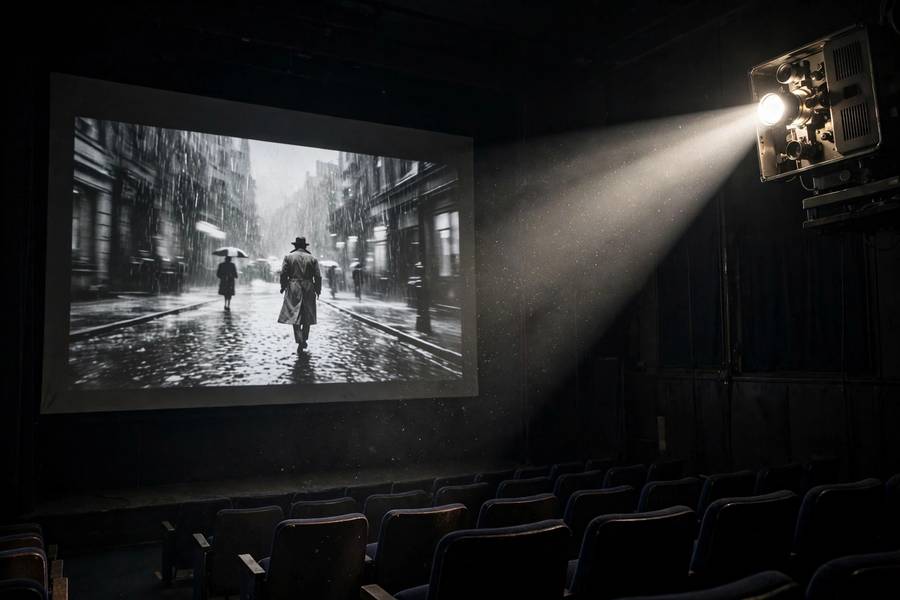
Arthouse cinema refers to films made primarily as artistic expression rather than commercial entertainment — prioritizing the director’s vision, unconventional storytelling, and emotional or intellectual depth over mass appeal. Think smaller budgets, festival premieres, limited releases, and films that trust you to do some of the work.
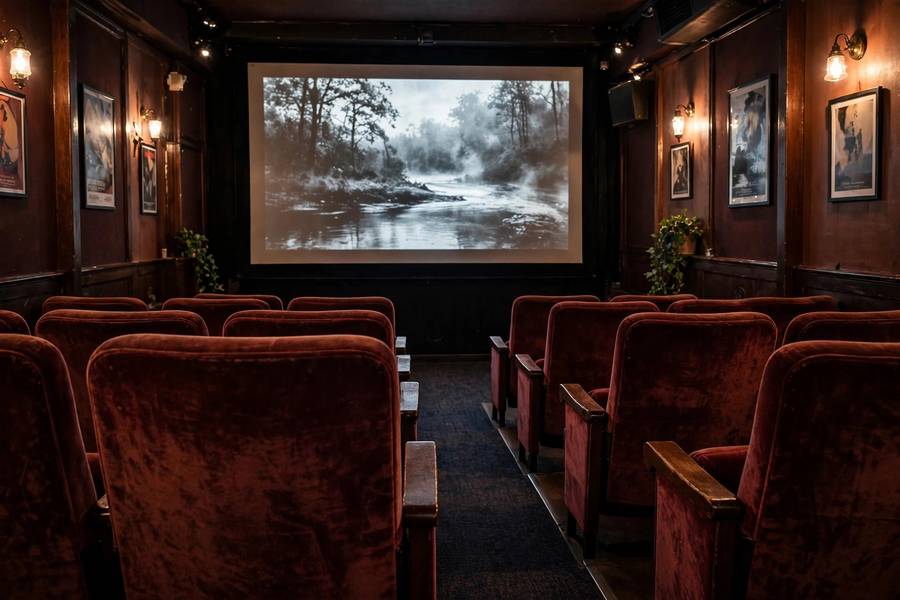
The name comes from the “art houses” — the small, independent theaters that showed such films when mainstream cinemas wouldn’t.
Where the Term Comes From
In the early-to-mid 20th century, most movie theaters showed what the big studios made: entertainment for the masses. But there were always films that didn’t fit — foreign films, experimental works, movies by directors with uncompromising visions.
Small independent theaters — literally called “art houses” — started screening these films for audiences who wanted something different. The term stuck: “arthouse” now describes both the films and the ecosystem around them (the theaters, the festivals, the distributors).
The concept got its intellectual backbone from the French New Wave critics-turned-directors of the 1950s-60s, who argued for the director as auteur — the author of the film, with a personal vision worth taking seriously as art. That idea — film as personal expression, not just product — is the philosophical core of arthouse cinema.
What Makes a Film “Arthouse”
There’s no official certification (thankfully). But arthouse films tend to share these traits:
Director-driven. The director’s vision leads; commercial considerations follow. When a studio executive and a director disagree on an arthouse film, the director usually wins — the opposite of the mainstream model.
Formal experimentation. Unusual structures, long takes, minimal dialogue, non-linear timelines, ambiguous endings. Arthouse films play with how stories are told, not just what stories are told.
Ambiguity over answers. Mainstream films resolve; arthouse films resonate. You’re often left with questions rather than conclusions — and that’s the point. The film continues in your head after the credits.
Realism or surrealism (sometimes both). Either unflinching naturalism (long, quiet scenes of ordinary life) or dream-logic surrealism — both rejecting the polished middle ground of commercial cinema.
Smaller scale. Lower budgets, unknown actors (or famous actors working for scale), real locations instead of sets. Constraints become aesthetics.
Festival premieres. Cannes, Venice, Berlin, Sundance — arthouse films live on the festival circuit, where they’re discovered, debated, and distributed.
Subtitles (often). A huge share of arthouse cinema is international. If subtitles bother you, that’s the first barrier to break through — and it’s worth it.
None of these alone defines arthouse, and plenty of mainstream films borrow these traits. It’s a spectrum, not a category with membership cards.
Arthouse vs. Mainstream: The Real Differences
Let me put it in practical terms:
| Mainstream | Arthouse | |
|---|---|---|
| Primary goal | Entertain broadly, profit | Express vision, explore ideas |
| Storytelling | Clear three-act structure | Often unconventional or open |
| Pacing | Tight, propulsive | Often slow, contemplative |
| Endings | Resolved | Often ambiguous |
| Budget | Large | Small to medium |
| Stars | Bankable names | Often unknown or against type |
| Audience | Everyone | Self-selected curious viewers |
| Success metric | Box office | Critical reception, influence, longevity |
The key insight: these aren’t value judgments. A great blockbuster and a great arthouse film are both great — they’re just optimizing for different things. Anyone who tells you one is inherently superior is selling something (usually their own taste).
For context on how the mainstream side gets built, my piece on how movies are made covers the commercial machinery.

Common Misconceptions (Let’s Clear These Up)
“Arthouse means boring.” Some are slow, yes. But “slow” isn’t “boring” — it’s a different rhythm. And plenty of arthouse films are thrilling, funny, or devastating. Boring arthouse films exist, but so do boring blockbusters.
“You need a film degree to enjoy them.” Nope. You need curiosity and patience. The films do the teaching — that’s what they’re for.
“They’re all depressing.” A persistent myth. There’s joyful, hilarious, romantic arthouse cinema. The misconception comes from the fact that serious gets mistaken for sad.
“It’s just for snobs.” The snobbery is real in some corners of the culture around it, but the films themselves don’t care about your credentials. Ignore the gatekeepers; watch the movies.
“They’re all foreign.” Plenty of English-language arthouse cinema exists. But yes, you’ll watch more subtitled films — consider it a feature.
“Nothing happens in them.” Things happen — they just happen internally, slowly, or off-screen. The action moved from the plot to the psychology. Once you tune into that frequency, it’s riveting.
Where to Watch Arthouse Films
The ecosystem has never been more accessible:
Streaming services. Several platforms specialize in arthouse, independent, and classic cinema — curated libraries that are the opposite of algorithmic sludge. Worth a subscription if you’re serious.
Mainstream streamers. The big platforms all carry arthouse titles mixed into their catalogs. Search by director or festival (“Cannes winners”) rather than browsing.
Local independent theaters. If you’re lucky enough to have one nearby, go. Seeing these films with an audience — in the dark, no phones — is the intended experience. Many do retrospectives and themed series.
Film festivals. Even small local festivals program arthouse work. It’s the most exciting way to discover films: no reputation yet, just the work.
Libraries. Criminally underused. Most public libraries have excellent DVD/streaming collections of classic and arthouse cinema. Free.
Physical media. Boutique Blu-ray labels restore and package arthouse classics beautifully. For the committed.
Where to Start: A Beginner’s Path
If you’re new, don’t start with the most challenging stuff. Here’s a ramp:
Step 1: Accessible arthouse. Films that are clearly artful but also entertaining — the ones that make you think “oh, movies can do that?” without punishing you. Gateway films exist in every era.
Step 2: Follow a director. Find one whose film you loved and watch three more. Directors are the organizing principle of arthouse — filmographies are rabbit holes worth falling into.
Step 3: Follow a festival. Pick Cannes or Sundance winners from the last decade. Festivals are curation engines; trust them.
Step 4: Go international. One film each from Japan, France, Iran, South Korea, and Senegal. Your sense of what cinema is will permanently expand.
Step 5: The deep cuts. Now you’re ready for the slow, the strange, the challenging. You’ll know when you get here — curiosity will pull you, not duty. And when watching turns into wanting to make, these filmmaking tips are a solid first step — or learn how to write a screenplay and start with the words.
One rule: If you’re not feeling a film after 30 minutes, stop. Life’s too short, and the right film at the wrong time is the wrong film. Come back later.
How to Watch (Yes, There’s a How)
A few habits that transform the experience:
- No phone. Not on silent — in another room. These films reward undivided attention; they punish half-attention.
- Watch at night. Fewer distractions, better immersion. Matinees are for blockbusters.
- Don’t pause to “figure it out.” Let ambiguity sit. The film will either resolve it or it won’t — both are valid.
- Sit with the ending. Give it ten minutes before judging. Some films bloom in retrospect.
- Talk about it after. Arthouse films are social objects — half the pleasure is the argument afterward.
- Read one review after, not before. Spoiler-free context enriches; pre-loaded opinions narrow.
Frequently Asked Questions
Arthouse cinema refers to films made primarily as artistic expression rather than commercial entertainment — prioritizing the director’s vision, unconventional storytelling, and emotional or intellectual depth. The term comes from the small independent “art house” theaters that originally screened such films.
Mainstream films optimize for broad entertainment and profit: clear structures, tight pacing, resolved endings, big budgets. Arthouse films optimize for artistic vision: unconventional storytelling, contemplative pacing, ambiguous endings, smaller budgets. Neither is inherently superior — they’re different goals.
Some are slow, but slow isn’t boring — it’s a different rhythm. Plenty of arthouse films are thrilling, funny, or devastating. The misconception comes from mistaking seriousness for sadness and from viewers expecting blockbuster pacing. With the right mindset (and the right starter films), they’re riveting.
Specialized streaming services with curated arthouse libraries, mainstream streamers (search by director or festival), local independent theaters, film festivals, public libraries (excellent free collections), and boutique Blu-ray labels for the committed.
Start with accessible arthouse — artful but entertaining films that show what cinema can do without punishing you. Then follow a director you love, explore recent festival winners, go international (one film each from several countries), and save the most challenging works for when curiosity pulls you there.
No. You need curiosity and patience — the films do the teaching. Watch with full attention (phone away), let ambiguity sit instead of pausing to figure it out, and talk about the film afterward. One spoiler-free review after watching enriches the experience more than any theory.