

You’ve seen the memes: the rubbery de-aged face, the weightless superhero landing, the $200 million video-game cutscene. CGI — computer-generated imagery — is the most powerful and most abused tool in modern filmmaking. It can put dinosaurs in a theme park or make you weep at a cartoon alien. It can also make a blockbuster look like a screensaver.
So what is CGI in movies? Any image created or manipulated with software rather than captured by a camera — from erasing a boom mic to building alien worlds. The interesting story isn’t the definition. It’s how the sausage gets made, why some of it is timeless and some curdles in five years, and what the CGI era has done to movies themselves.
Table of Contents
- What Is CGI in Movies? The Definition That Matters
- The CGI Pipeline: How a Shot Gets Made
- The Milestones: How CGI Conquered Hollywood
- Why Some CGI Ages Like Wine and Some Like Milk
- CGI vs. Practical Effects: The False War
- The Invisible CGI You Never Notice
- Where CGI Goes From Here
- Frequently Asked Questions
What Is CGI in Movies? The Definition That Matters
CGI (computer-generated imagery) is imagery created with computer software and integrated into live-action footage — or used to build entire shots with no camera involved. The range:
- Full CG environments: alien planets, fantasy cities, historical recreations.
- Digital characters: from Gollum to the Na’vi — beings animated or performance-captured entirely in software.
- Simulation effects: explosions, water, crowds, destruction — physics calculated, not staged.
- Invisible effects: wire removal, set extensions, de-aging, face replacement. The CGI you never notice is most of the CGI there is.
- Compositing: fusing live footage, CG elements, and matte paintings into one seamless frame.
What CGI is not: “the fake-looking stuff.” That’s a failure mode, not a definition. When people say “the CGI was bad,” they mean the visible CGI was bad. Understanding how movies are made today means grasping that nearly every frame of a modern blockbuster has passed through a computer — a big Marvel film can contain 2,000–3,000 VFX shots, and even a small drama might hide 300 invisible ones.
The CGI Pipeline: How a Shot Gets Made
A single complex VFX shot passes through more hands than most people realize. Here’s the pipeline, simplified:
1. Previsualization. The action is roughly animated in 3D before shooting — crude figures standing in for actors — so directors can plan camera moves and choreography. The Avengers’ big battles existed as previz months before cameras rolled.
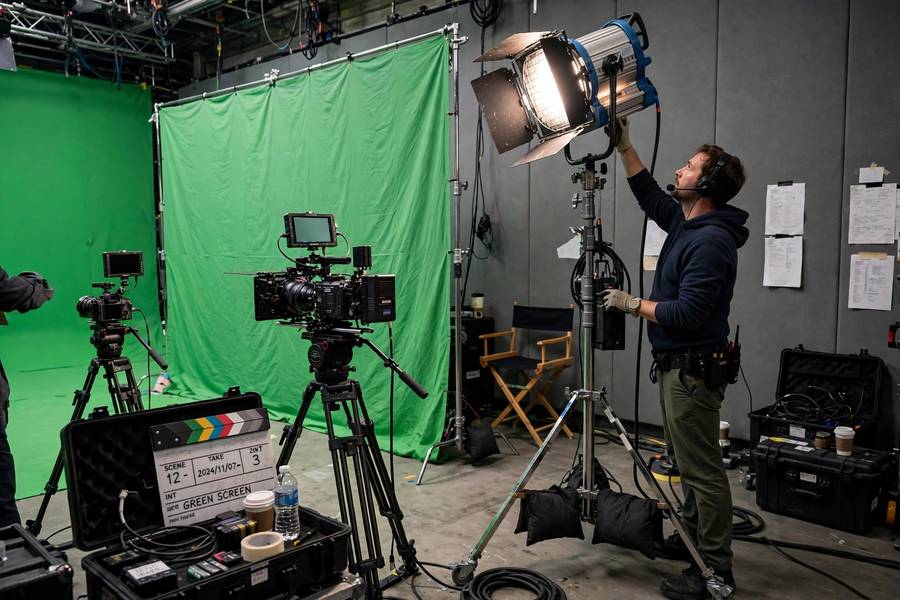
2. On-set capture. The live-action plate is filmed against green screen, with tracking markers, lighting references, and LIDAR scans. Capture quality determines everything downstream. Garbage plate, garbage shot.
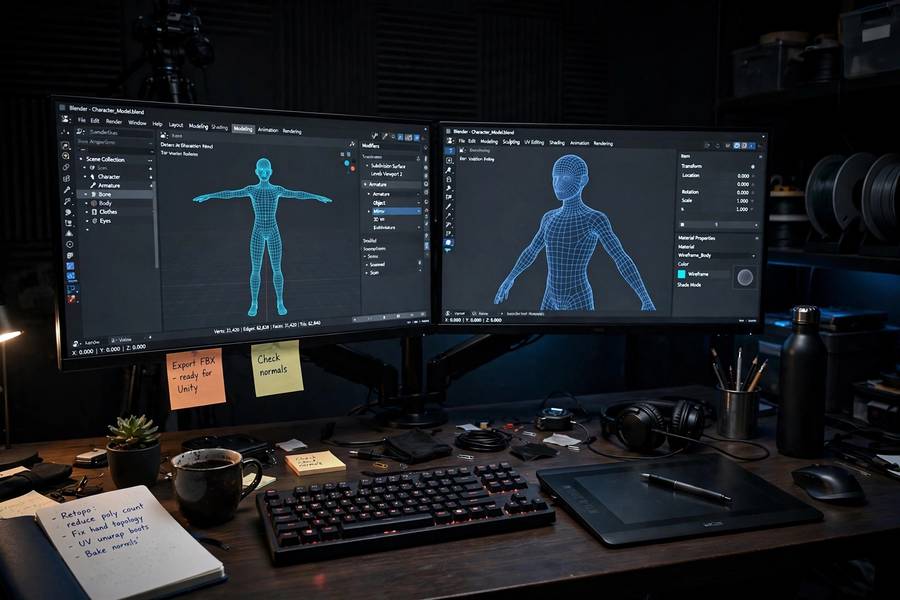
3. Modeling. Artists sculpt 3D models — characters, creatures, environments — with millions of polygons. A hero model like Thanos takes a team months.
4. Texturing and shading. The model gets “skin”: color, roughness, subsurface scattering (light penetrating skin — what makes digital humans look alive or dead). Photorealism lives or dies here.
5. Rigging. A digital skeleton — bones, muscles, controls — so animators can pose the model. Hero facial rigs run to hundreds of controls.
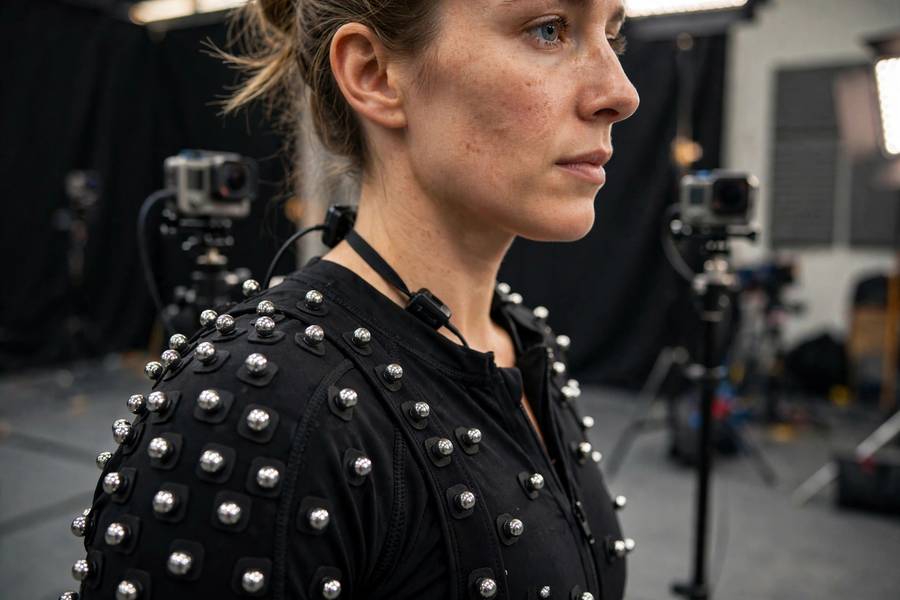
6. Animation / motion capture. The performance: hand-keyframed (still the gold standard for creatures) or motion-captured from actors in marker suits. Serkis’s Gollum proved mocap is acting, not a shortcut.
7. Simulation. Cloth, hair, water, destruction — physics engines calculate behavior. One collapsing building can mean millions of simulated fragments.
8. Lighting and rendering. Virtual lights match the set; then each frame is calculated pixel by pixel. One frame can take hours on a render farm — every screen second costs days of compute.
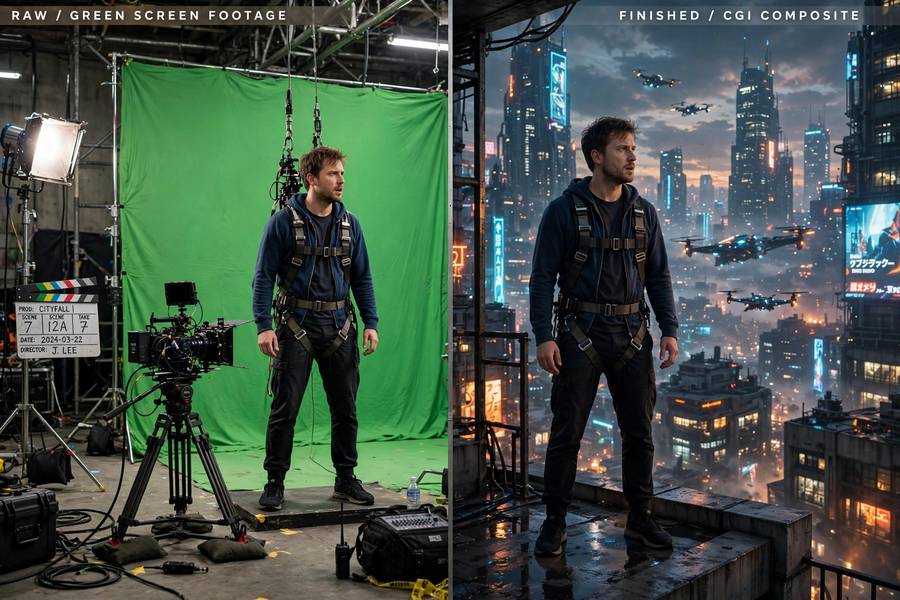
9. Compositing. All layers — plate, CG, simulations, grade — are fused into one photographic reality: matching grain, lens artifacts, motion blur. Bad compositing is why CGI looks “pasted on.”
10. Review. Directors iterate dozens of versions per shot. The crunch this creates is the industry’s open secret and ongoing scandal.
The Milestones: How CGI Conquered Hollywood
The takeover happened in stages, each one expanding what audiences would accept:
Tron (1982). The pioneer — primitive now, proof of concept then. Reportedly disqualified from an effects Oscar because computers were “cheating.” The Academy has opinions.
The Abyss (1989) and Terminator 2 (1991). Cameron’s one-two punch. The Abyss’s water tentacle was the first photorealistic CG character; T2’s T-1000 proved CG could carry a villain. ILM wrote the playbook here.
Jurassic Park (1993). The earthquake. Spielberg planned stop-motion; ILM’s CG test changed cinema history overnight. The genius was restraint: limited dinosaur screen time, night and rain hiding imperfections, Stan Winston’s animatronics blended in. Thirty years on, it still holds up — proof that how you use CGI matters more than the tech.
Toy Story (1995). The first fully CG feature — proof computers could carry a film’s worth of emotion, not just effects shots.
The Matrix (1999) and Lord of the Rings (2001–2003). Bullet time and Massive (the crowd software behind Helm’s Deep) pushed virtual cinematography forward. Gollum — Serkis plus Weta — remains the digital-character benchmark.
Avatar (2009). Cameron again: a decade of R&D for performance-capture and virtual cameras. Thin story; world-building tech that reset the industry’s ambitions. Every LED volume since descends from Avatar.
The Marvel era (2008–present). CGI became the default — entire third acts in computers, digital stunt doubles, de-aging. The volume broke the VFX labor model: its own story.
Why Some CGI Ages Like Wine and Some Like Milk
Jurassic Park (1993) still looks great. Films from 2016 look like video games. Why?
Restraint beats raw power. Jurassic Park shows its dinosaurs sparingly, in rain and darkness, blended with practical effects. Modern blockbusters show everything in bright daylight for twenty minutes — and the eye finds every flaw.
Physics and weight. Bad CGI fails on weight, not detail. A character can have perfect skin and still look wrong moving without mass — landing without impact, turning without momentum. Your brain is a lifetime-trained physics engine; it spots violations instantly.
The uncanny valley. We’re hyper-specialized at reading faces — micro-expressions, eye moisture, skin deformation. Slightly-off digital humans trigger revulsion precisely because they’re close. Stylized characters dodge the valley by not attempting photorealism. The lesson: aim for believability, not reality.
Lighting integration. The number-one giveaway: lighting that doesn’t match the plate — a studio-lit character in a dusk-lit scene. Great compositing matches grain, distortion, motion blur. The audience never thinks “great compositing” — they just believe the shot.
Time and money. The dirty secret: most bad CGI is a schedule problem, not a technology problem. Rushed shots, cut revisions, crunched artists. When a $250 million film looks rubbery, you’re usually seeing a calendar, not a capability.
Art direction. The best-aged CGI had strong art direction constraining it — a defined look, a real-world reference. CGI without art direction is expensive noise.
CGI vs. Practical Effects: The False War
The internet loves this fight: practical effects (miniatures, prosthetics, animatronics, in-camera tricks) versus CGI. It’s a false binary, and the best filmmakers know it.
The truth: the best effects are hybrid. Jurassic Park blended animatronics and CG. Mad Max: Fury Road — celebrated as a “practical” triumph — has ~2,000 VFX shots; the stunts are real, the skies and landscapes digital. The Mandalorian’s Volume is neither purely practical nor digital — it’s both, fused.
Practical gives you real light, real physics, happy accidents, something for actors to react to. CGI gives you the impossible, the dangerous, the too-expensive-to-build, and infinite revision.
The smartest filmmaking tips converge on one rule: shoot as much practically as you can, enhance digitally, never let the audience see the seam. Nolan — cinema’s famous practical purist — uses CGI extensively; he just uses it invisibly. The real debate isn’t practical vs. digital. It’s discipline vs. excess — and that applies to both.
The Invisible CGI You Never Notice
Most CGI is invisible by design — and there’s vastly more of it than the spectacle shots.
That period drama you love? The street was extended digitally, modern buildings erased, the sky replaced. The “single take” action scene? Stitched from a dozen takes. Crowds multiplied, weather changed, tattoos removed, locations relocated — all CGI, all unnoticed.
Fincher’s films are stuffed with it — Zodiac has hundreds of VFX shots nobody discusses because they’re perfect. The Social Network’s rowing scene put one actor’s face on two bodies via face replacement. This isn’t spectacle; it’s craft.
Which reframes the “CGI is ruining movies” discourse: it targets visible spectacle while ignoring that the same technology quietly enables the “realistic” films people praise. Modern cinema — including prestige dramas — runs on computers. The question was never whether to use CGI. It’s whether to use it well.
The tech-curious should note: today’s deep-learning advances grew out of graphics research, and how AI models are trained hints at where real-time rendering is heading. The line between “rendered” and “generated” is blurring fast.
Where CGI Goes From Here
Three trends are reshaping the craft right now:
Virtual production. LED volumes (the Mandalorian’s StageCraft) let filmmakers shoot “on location” anywhere — CG environments rendered in real time behind actors, with correct lighting and reflections. In-camera spontaneity plus digital flexibility: the biggest production shift since green screen.
AI-assisted effects. Machine learning already handles rotoscoping, cleanup, de-aging, and face replacement faster than traditional methods — raising real questions about actor consent and digital likeness rights. The craft is accelerating; the ethics are scrambling.
The labor reckoning. Years of unsustainable crunch, now facing unionization efforts and public complaints. Better-rested artists make better effects — the audience can literally see the difference.
My prediction: the future isn’t more or less CGI, but smarter CGI — Jurassic Park’s discipline, Fincher’s invisibility, serving stories that would work without it. The technology was never the problem. The best CGI has always been the kind that serves the story so completely you forget to notice. That hasn’t changed — it’s just harder to achieve, and more impressive when someone pulls it off.
Frequently Asked Questions
CGI (computer-generated imagery) is any film imagery created with computer software rather than captured by a camera — from full digital environments and creatures to invisible touch-ups like wire removal, set extensions, and de-aging.
Early pioneers include Tron (1982) and The Last Starfighter (1984), but the breakthrough was The Abyss (1989) and Terminator 2 (1991), followed by Jurassic Park (1993) — the film that proved CGI could create photorealistic creatures and changed Hollywood forever.
Bad CGI usually fails on weight and physics (characters move without mass), mismatched lighting, or the uncanny valley with human faces. Most often it’s a schedule problem, not a technology problem — rushed shots with cut revisions look unfinished.
VFX (visual effects) is the umbrella term for all effects work, including practical effects and compositing. CGI specifically means imagery generated by computer. All CGI in a film is VFX, but not all VFX is CGI — miniatures and prosthetics are VFX too.
Jurassic Park (1993) remains the benchmark for aging gracefully thanks to restraint and hybrid practical-digital work. Avatar (2009), the Lord of the Rings trilogy, and Mad Max: Fury Road are the other consensus picks for landmark CGI craft.
Neither is inherently better — the best films use both. Practical effects give real light and physics; CGI enables the impossible. Mad Max: Fury Road and Jurassic Park are celebrated hybrids. The real divide is discipline vs. excess, not digital vs. physical.