Best Board Games for Large Groups: 8+ Player Picks

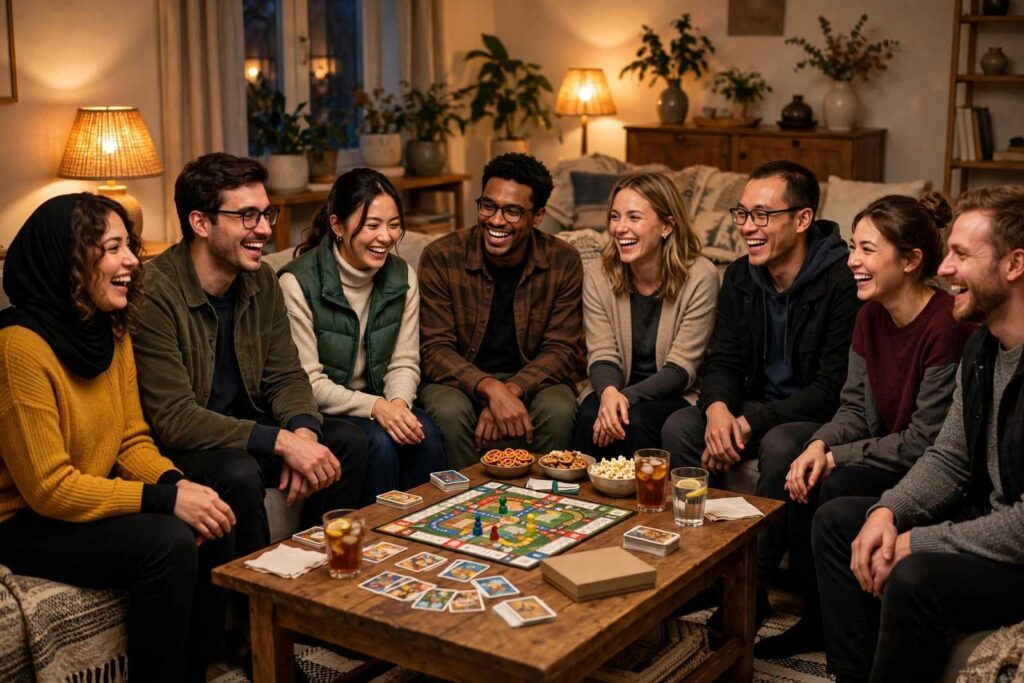
Here’s the thing nobody tells you about hosting game night for a big crowd: most board games are designed for four people. Buy a random “party game” for your twelve-person gathering and you’ll spend twenty minutes explaining rules while half the room checks their phones. The game matters less than the fit.
I’m the friend who always knows what’s good — and who will never let you waste two hours on a dud. So here are the rules for picking games for large groups, eight games that actually work at scale, and the ones to skip. Every player count below was verified against the publisher’s own specs, because “supports 8 players” on a game box has burned me before.
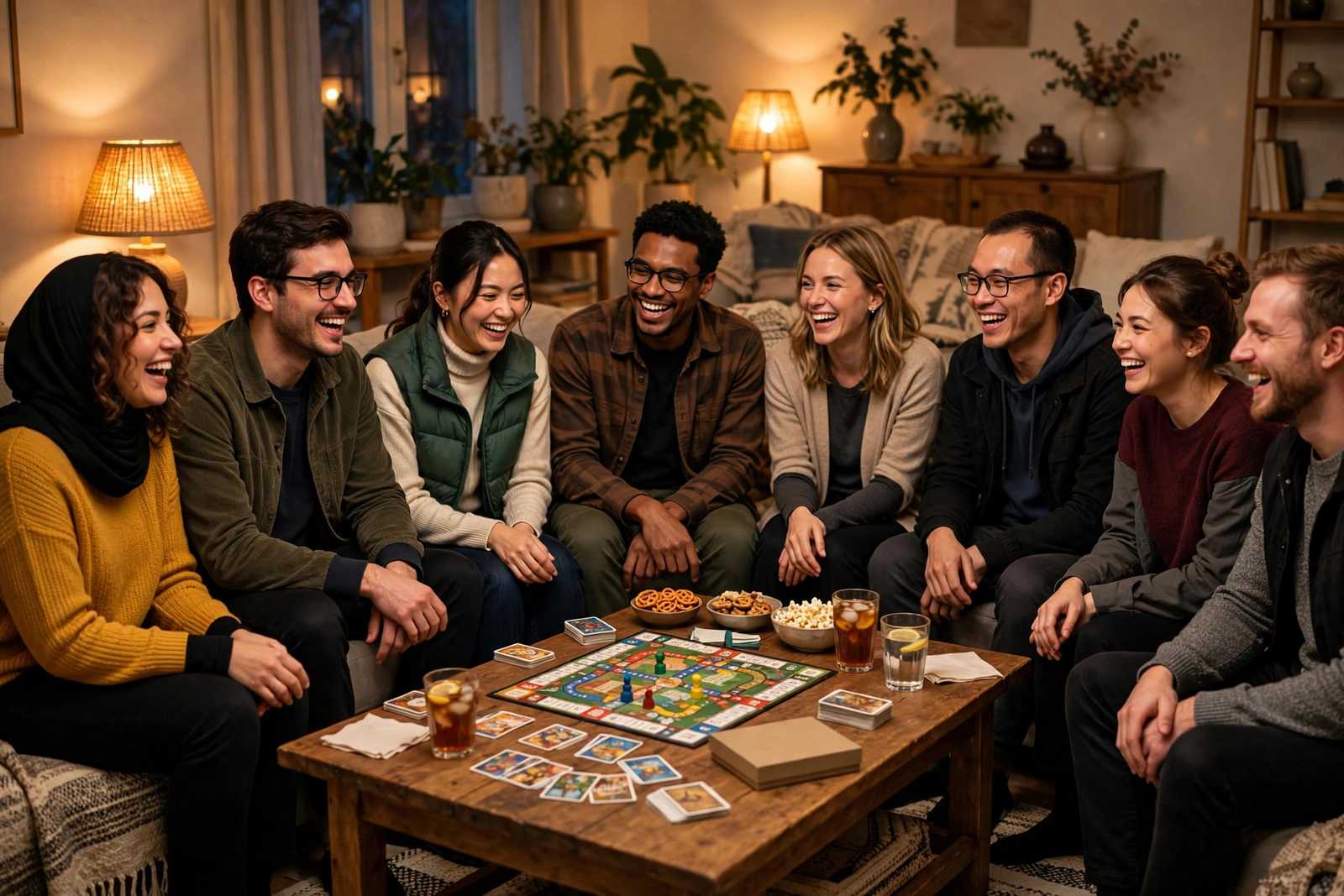
What Counts as a “Large Group”?
For board games, 8 or more players is the line. Below that, most games work fine. Above it, everything changes: turns get long, downtime grows, quiet players disappear, and anyone who gets eliminated early sits bored for an hour.
So for a large group, I filter on four principles:
- 8+ players (or team play that scales there). The box has to say it, or the game has to split naturally into teams.
- No player elimination. Nothing kills a party faster than someone getting knocked out in minute ten and watching everyone else have fun for an hour.
- Short teach. If the rules take longer than five minutes to explain, the group has already lost interest. You want “everyone gets it by round two.”
- Team play or simultaneous play. The more people acting at the same time, the less downtime — and downtime is the enemy.
Every game below passes these filters (with honest notes where a game is at the edge). No licensed tie-ins, no gimmicks — just games that work when the room is full.
1. Codenames — The Safest Pick in Party Gaming
2–8 players · ~15 min per game · ages 10+ · Spiel des Jahres 2016 winner
If you buy one game from this list, make it Codenames. A 5×5 grid of 25 word cards sits on the table. Two teams each have a spymaster who gives one-word clues pointing to multiple cards; the team guesses. First team to identify all its agents wins.
Why it works for crowds: it plays in about 15 minutes, so you can run three or four games in an evening and nobody’s stuck. The rules genuinely teach in three minutes. And it’s best with 4–6 players but handles a full 8 — the sweet spot for a big group is two teams of four, everyone shouting suggestions at once. The box holds 400 codenames (200 double-sided cards), so replayability is enormous.
The honest note: at exactly 8 with two quiet players, the loudest voices can dominate. Fix it by rotating the spymaster every game.
2. Telestrations — Telephone Meets Pictionary
4–8 players · ~30 min · ages 12+
Everyone draws a secret word, passes the sketchbook left, the next person guesses what was drawn, passes it on — and the drawing-guessing chain continues until every book comes home. The reveal round, where you watch “cow” become “cat” become “spaceship,” is the funniest thirty seconds in board gaming.
Verified specs: 4–8 players, about 30 minutes a game, published by The Op. The 2010 Golden Geek Best Party Game winner. What I love for large groups: zero artistic skill required. Bad drawings are funnier than good ones. Nobody is eliminated, everyone plays every round simultaneously, and the whole table is involved the entire time. Perfect for groups that include non-gamers — there’s no strategy to learn, just drawing badly and laughing.
3. Two Rooms and a Boom — The 30-Person Game
6–30 players · 7–20 min per round · ages 8+
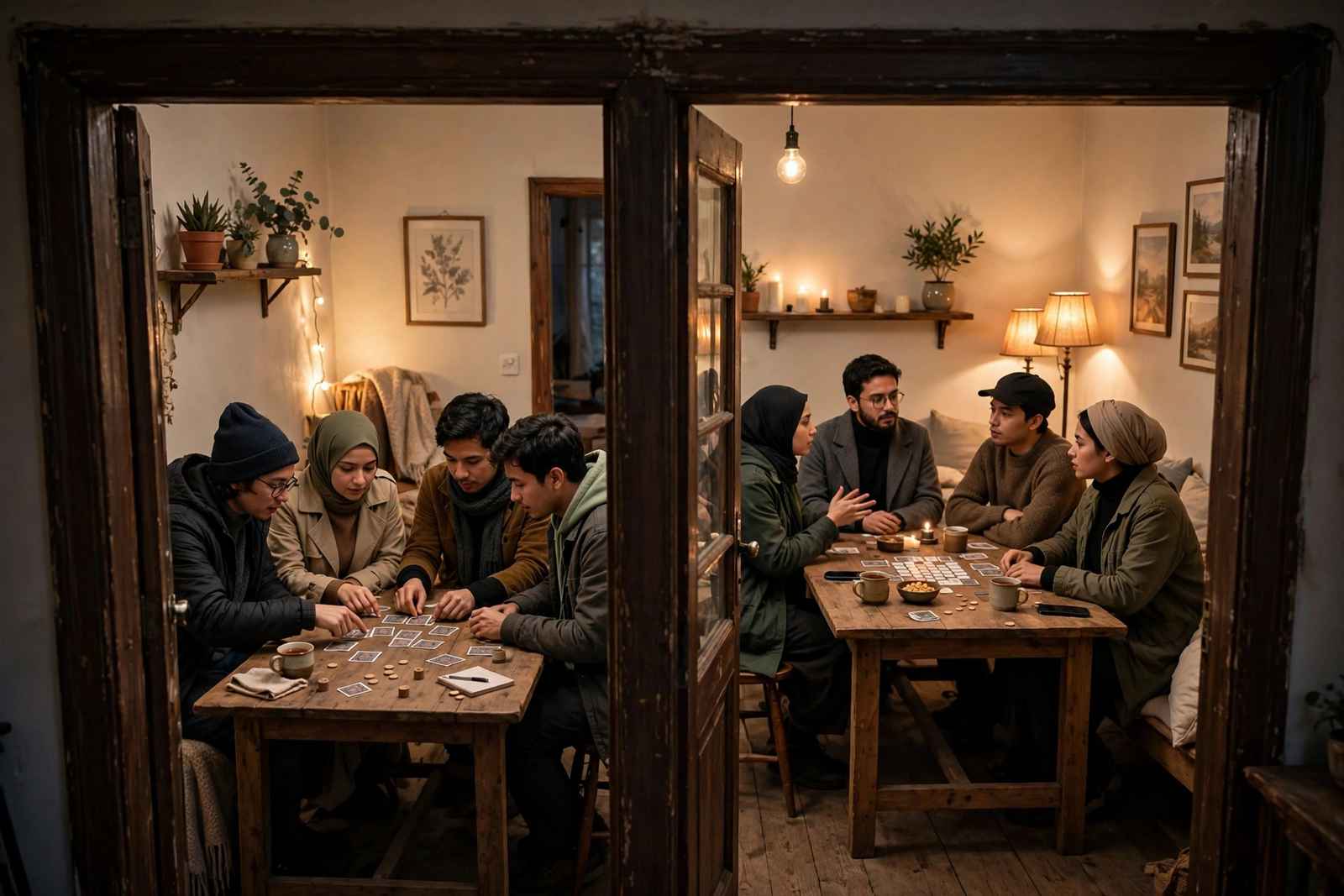
This is the only game on this list built for genuinely huge groups. Two teams — Red and Blue — are split between two rooms. The Blue team has a President; the Red team has a Bomber. Five timed rounds of negotiation, hostage exchanges, and lying. If the Bomber ends up in the same room as the President, Red wins. Otherwise Blue wins.
Verified publisher specs: 6–30 players, 7–20 minutes a game, from Tuesday Knight Games. The setup is genius for parties: no board, no table needed, just role cards and two separate spaces. With 20+ people this is electric — the larger the group, the better the paranoia. Teach time: about two minutes, because the rules are essentially “lie to everyone and don’t let the bomber find the president.”
The honest note: you need two separate rooms or areas, which rules out small apartments. And shy players can hide — assign the loudest person as room leader to pull everyone in.
4. Wavelength — The Argument Generator
2–12 players · 30–45 min · ages 14+
One player (the “Psychic”) knows where a hidden target sits on a dial between two opposites — say, “hot” and “cold” — and gives a clue. The team debates where on the spectrum the target is. That’s the whole game. And it generates the best arguments of any party game I own: is a sauna “hotter” than a jalapeño? Fights will break out. Good fights.
Verified specs: 2–12 players, 30–45 minutes, from CMYK (2019). Team play is built in — split twelve people into two teams of six and both teams are debating simultaneously. The box’s dial device is tactile and fun, setup takes under a minute, and the discussion is the game, so there’s zero downtime: everyone talks at once.
5. Wits & Wagers — Trivia for People Who Hate Trivia
3–7 players or teams · 20–30 min · ages 10+
Here’s the pitch: nobody needs to know anything. Every question has a numerical answer (“How many dimples on a golf ball?”), everyone writes down a guess, and then you bet on which guess is closest without going over. You can win by betting smart on someone else’s answer even if your own guess was garbage.
Verified specs: 3–7 players or teams, 20–30 minutes, North Star Games. The “or teams” is doing heavy lifting — split into 7 teams and you can seat 14–20 people. That’s why it’s on a large-groups list: the team format scales it. Mensa Select winner, 20+ awards. The betting mechanic means even the person who knows nothing stays engaged, because reading the room is a skill too.
6. Just One — Co-op Word Guessing
3–7 players · ~20 min · ages 8+
Everyone cooperates. One player is the guesser; everyone else writes a one-word clue. Duplicate clues get cancelled — so if three people all write “yellow” for “banana,” all three are thrown out. The guesser sees only the unique clues.
Verified specs: 3–7 players, about 20 minutes, Repos Production, Spiel des Jahres 2019 winner. The duplicate-cancellation is the whole genius: it forces creative, lateral clues instead of obvious ones. Fully co-op means nobody loses, nobody’s eliminated, and the table celebrates or groans together. The honest note: at 7 it’s at its ceiling — for groups of 10+, play it as the warm-up while people arrive, then move to something bigger.
7. Deception: Murder in Hong Kong — Social Deduction Done Right
4–12 players · ~20 min · ages 14+
One player is secretly the murderer. One is the forensic scientist, who knows the solution but can only communicate through cryptic clue tiles. Everyone else is an investigator trying to solve the case while the murderer misleads them. Think of it as the thinking person’s party deduction game.
Verified specs: 4–12 players, about 20 minutes, Grey Fox Games. No player elimination — the “murder” already happened; everyone’s investigating. Twenty-minute rounds mean you can play three or four in a row and rotate the secret roles. Best with 6–8+ where the deduction has enough suspects to be interesting. The forensic scientist role is perfect for the quiet analytical friend who hates performing — they communicate in silence.
8. Monikers — Charades, But Actually Good
4–16 players · 30–60 min · ages 17+
Based on the classic parlor game Celebrity: teams take turns getting teammates to guess names on cards. Round one: say anything. Round two: one word only. Round three: silent charades — using the same cards. By round three, the table has built a private language of inside jokes, and watching someone mime “Napoleon” using only the memory of round one’s description is peak party gaming.
Verified specs: 4–16 players, 30–60 minutes. The 17+ rating is real — the cards include adult references, so this is the grown-ups’ table pick, not the family one. For 12–16 people this is arguably the best game on the list: teams of 6–8, everyone involved, and the escalating rounds mean the fun compounds instead of repeating.
Party-Night Playbook: How to Run It
Games are half the battle. Here’s the other half:
- Split into teams early. For anything above 10 people, pre-assign teams before the first game. “Count off by twos” takes ten seconds and prevents the awkward standing-around.
- Start with the fastest teach. Open with Just One or Codenames (~3-minute teach) while latecomers arrive. Save Two Rooms and a Boom or Monikers for when everyone’s seated.
- Budget one game per 30 minutes. A 15-minute game plus setup, snacks, and bathroom breaks is 30 minutes. Plan three games for a two-hour night, not six.
- Rotate roles. Spymaster, psychic, forensic scientist — rotate every game so the same three people don’t run everything.
- Know your duds. For large groups, skip: anything with player elimination (classic Mafia/Werewolf without a moderator is the usual victim), anything with 20-minute individual turns, and any “party game” that caps at 6 players. If the box doesn’t say 8+, believe the box.
For more hosting help, the how-to-host-a-game-night-for-adults guide covers food, timing, and invitations; best-party-games-for-adults has more picks beyond the big-group filter; family-game-night-ideas covers the all-ages side; and best-card-games-for-adults is the card-game companion list.

Frequently Asked Questions
How many players count as a “large group” for board games?
Eight or more. Below that, most games work fine; above it, you need games designed for scale — 8+ players, no elimination, short teaches, and team or simultaneous play.
Is Codenames good with 8 players?
Yes — Codenames supports 2–8 players and is best with 4–6, but a full 8 works well as two teams of four. Games run about 15 minutes, so you can play several in an evening.
What’s the easiest large-group game to teach?
Codenames — the rules teach in about three minutes. Two Rooms and a Boom is also a two-minute teach: lie to everyone and keep the bomber away from the president.
Do any of these games eliminate players early?
No — every pick on this list avoids player elimination. That’s a deliberate filter: nothing kills a party faster than someone sitting out for an hour.
How many games fit in a party night?
Budget about 30 minutes per game including setup and breaks. Codenames runs ~15 minutes a game, Telestrations ~30, Monikers 30–60, and Two Rooms and a Boom 7–20 minutes per round.
Co-op or competitive — which is better for big groups?
Both work if the game scales. Co-op (Just One) keeps everyone celebrating together; team-competitive (Codenames, Wavelength, Monikers) adds energy. Avoid free-for-all competitive games at 10+ players — downtime kills them.