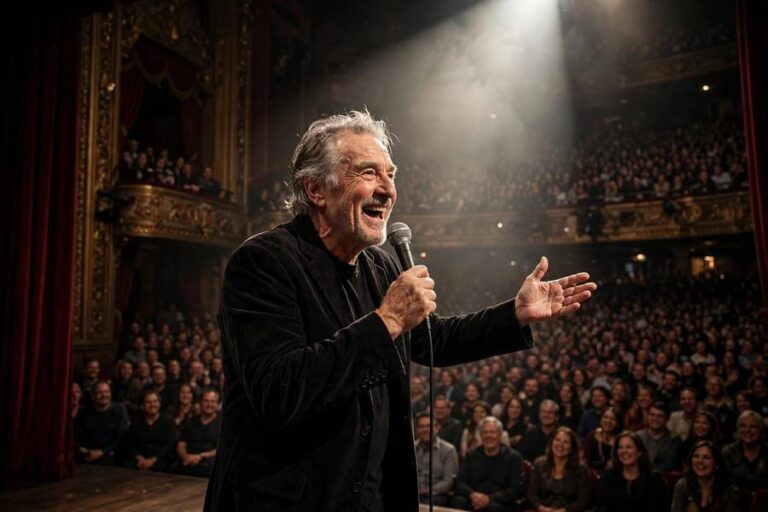
How to Handle Hecklers: Tactics From Working Comics


Every comic dreads the heckler and secretly hopes for one — because nothing proves you belong on stage like handling a drunk stranger trying to derail your set. I’ve watched masters turn hecklers into the highlight of the night, and I’ve watched beginners get destroyed by a single shouted sentence. The difference isn’t talent. It’s preparation and psychology.
Here are the tactics working comics use to handle hecklers — and win the room doing it.
Understand the Heckler: Know Your Opponent
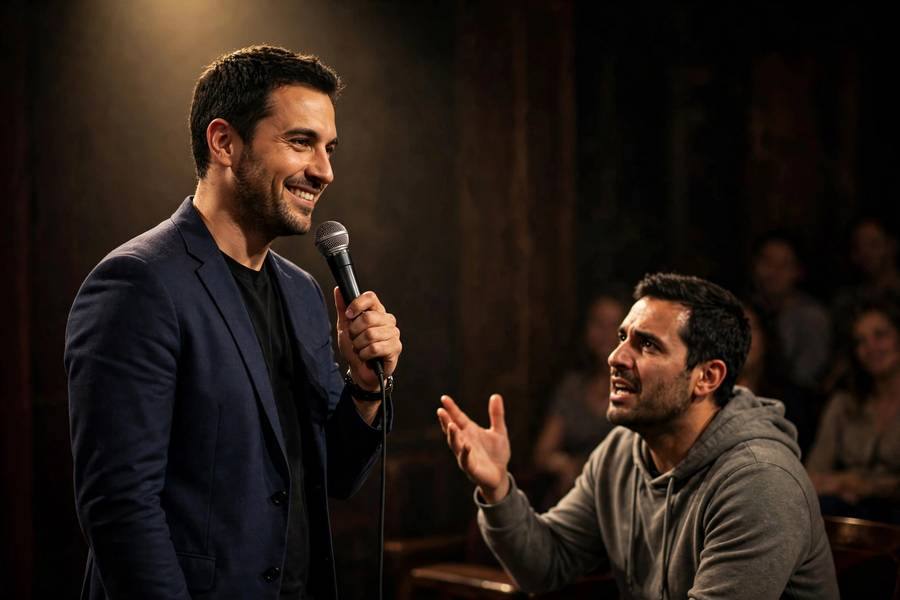
Hecklers aren’t one species. The drunk — the most common — isn’t attacking you; alcohol dissolved their filter and they think they’re helping. The attention-seeker wants the room’s eyes on them, and your set is just the stage they hijacked. The angry heckler took genuine offense at material and wants confrontation. The comedian-wannabe thinks they’re funnier than you and wants to prove it. And the talker isn’t heckling at all — they’re just having a loud conversation, oblivious.
Why this matters: each type needs a different response. The drunk needs gentle steering; the attention-seeker needs to be made uninteresting; the angry one needs de-escalation; the wannabe needs to be out-funnied once, decisively. Misdiagnosing wastes your response — arguing philosophy with a drunk is like debating a foghorn.
The deeper truth: hecklers are almost never about you. They’re about the heckler’s night, their drinking, their ego. Internalizing this is the foundation of handling them well — it’s not personal, so don’t take it personally. The comic who gets rattled has already lost; the comic who stays amused has already won.
The Golden Rule: You’re the Authority
The room granted you authority the moment you took the mic — the audience wants you to be in charge. Hecklers test that authority, and the audience watches to see if you hold it. Everything you do should reinforce: I’m running this show.
Authority is communicated physically before verbally: don’t flinch, don’t look panicked, don’t rush. Pause. Smile (genuinely or professionally). Turn toward the heckler with the relaxed posture of someone unbothered. This physical confidence does half the work — the audience reads it instantly and stays on your side. The heckler, sensing the room’s alignment, often quiets on body language alone.
Never surrender authority by: pleading (“come on, guys”), apologizing for your material, asking the heckler’s permission to continue, or visibly losing your temper. Each one tells the room the heckler is winning. You don’t need to be aggressive — calm confidence is dominance in this context.
The Formula: Acknowledge, Destroy (Lightly), Move On
The professional heckler response has three beats, executed in under thirty seconds. Beat 1 — Acknowledge: show you heard them. Ignoring a loud heckler makes you look scared; a brief acknowledgment (“I hear you, buddy”) proves you’re in control. Beat 2 — Respond with wit: one clean, funny line at their expense — specific to the moment, not cruel. Get the laugh. The laugh is the verdict: the room has chosen you. Beat 3 — Move on: immediately back into your material. Don’t linger, don’t lecture, don’t start a conversation. The show is the show.
The “move on” is where beginners fail. They get the laugh on the heckler and then keep going — five minutes of heckler material, the set forgotten, the heckler now the co-star. That’s losing: you let a stranger rewrite your show. One response, one laugh, back to work. Discipline here is everything.
Example in practice: Heckler: “You’re not funny!” Comic (pause, smile): “And you’re not quiet — we all have our struggles.” (Laugh.) “Anyway —” [back into the bit]. Twenty seconds, room won, show continues. The line isn’t Shakespeare; the structure — calm, witty, brief — is what works.
The Five Types of Hecklers (and Each One’s Kryptonite)
The Drunk: be kind but firm. “I love the enthusiasm — I’m gonna need you to enjoy it quietly, yeah?” Drunks respond to warmth plus clarity. If they persist, get specific: “Buddy, one more and I’m gonna have to ask you to take a break outside.” Never mock a drunk viciously — the room sympathizes with vulnerability.
The Attention-Seeker: make them boring. A flat “okay” and immediate return to material starves them of what they want. Attention-seekers escalate when acknowledged richly and deflate when met with indifference. Your indifference, plus the room’s laughter at your material, is the cure. what a cold open is
The Angry Heckler: de-escalate, don’t debate. “I hear you — this bit isn’t for everyone” acknowledges without surrendering. Never argue the material’s merits mid-set; you’ll never win a debate with someone shouting, and the room didn’t come for discourse. If they’re genuinely disruptive, move to escalation (below). how comedians write jokes
The Wannabe: out-funny them once, kindly. They’re competing, so a single clean win ends it — the room’s laugh is the judge, and they’ll feel the verdict. Then move on before it becomes a duel; duels elevate the heckler to co-headliner.
The Talker: they’re not attacking — address it as logistics, not conflict. “Hey folks, I’m gonna need you to take it outside or keep it down — I can’t compete with a good conversation.” Framing it as a practical request (not a confrontation) usually works, and the room appreciates you protecting their experience.
Lines and Tactics That Actually Work
Prepared lines are training wheels — useful while you develop the riffing skill, but the goal is moment-specific responses. Still, having a few in the pocket beats freezing:
The redirect: “That’s a great point for the Q&A — which is never.” The inclusion: “Sir, this is a show, not a group project.” The honest: “I appreciate it, but I’ve got about forty minutes of material and you’re doing improv — let’s stick with the plan.” The killer question: asking the heckler something specific (“what do you do for a living?”) often defuses through comedy — their answer becomes your material for one line, then you move on. the best comedy movies
The advanced tactic is making the heckler part of the bit — briefly. If someone shouts something usable, weave it into your next joke and get a bigger laugh than the joke alone would earn. This is high-difficulty (it requires real improvisational skill) but it’s the most impressive heckler handling there is: not just surviving the interruption, but profiting from it. The crowd goes wild because they witnessed something unrepeatable.
What to avoid: canned insults that feel rehearsed (the audience can tell), profanity-laden tirades (you look out of control), and anything targeting protected characteristics (you’ll lose the room and possibly your career — the audience’s sympathy has limits, and cruelty toward the vulnerable reads as bullying).
When to Escalate: Security and Ejection
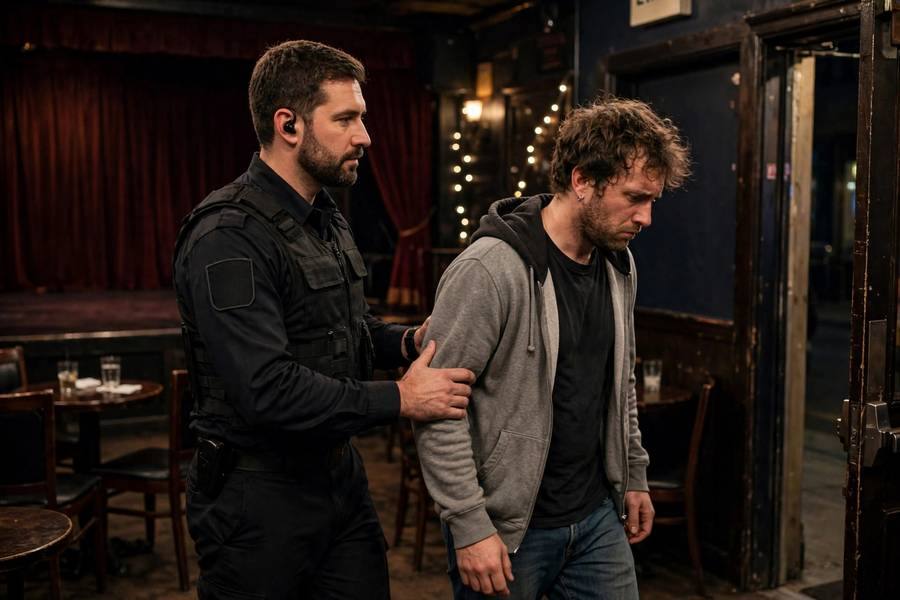
Some hecklers won’t stop, and that’s not your problem to solve alone — it’s the venue’s. The escalation ladder: Level 1: the witty response (above). Level 2: direct and firm — “I need you to stop talking so I can do the show. Seriously.” No smile, no joke — clear authority. Level 3: involve staff — make eye contact with the host/security and say “can we get some help here?” Level 4: stop performing until it’s resolved. Silence is powerful: a comic standing quietly while security handles it tells the room exactly where the problem lies.
Never physically engage — not even a little. No touching, no approaching aggressively, no matter the provocation. The moment a comic gets physical, they’ve lost regardless of who started it: legally, reputationally, and with the room. Your weapons are the mic and the audience’s loyalty; both beat fists.
After an ejection, reset the room. One line acknowledging it (“well, that was exciting”), then straight back into your strongest material. The audience needs to exhale — give them a big laugh quickly and the night is saved. Some comics’ best sets follow ejections, because the room bonds through the shared drama.
The Mistakes That Lose the Room
Losing your temper. The audience came for comedy, not a fight. Anger makes you the villain regardless of provocation. Arguing at length. Every minute spent on the heckler is a minute stolen from the paying audience — and it elevates the heckler. Being cruel. A vicious takedown of a drunk gets a shocked laugh followed by discomfort; the room turns. Ignoring a persistent heckler. Brief heckles can be ignored; sustained disruption can’t — ignoring it looks like fear. Letting it rattle the rest of your set. The show after the heckler matters more than the heckler moment; comics who spiral lose the night, comics who reset win it.
Practicing for Hecklers (Yes, Really)
You can actually prepare. Mental rehearsal: visualize the common scenarios and your calm response — athletes do this because it works; the visualized response becomes available under pressure. Crowd work practice: deliberate, low-stakes audience interaction in friendly rooms builds the improvisational muscle that heckler responses need. Study the masters: watch how great comics handle disruptions — the calm, the brevity, the immediate return to material. It’s a learnable pattern.
And reframe the fear: hecklers are opportunities disguised as threats. A well-handled heckler creates the most memorable moment of the night — the story the audience tells friends. Comics who handle hecklers well get a reputation that precedes them; bookers love a comic who can control any room. The thing you dread is actually a career asset, once you have the tools.
Those tools sit on top of solid writing and stagecraft — the foundations in how comedians write jokes and the delivery skills that make your authority credible. Handle the writing, handle the stage, and the heckler becomes just another part of the show you’re running.

Frequently Asked Questions
Stay calm, stay in control, and respond with wit rather than anger. The proven formula: acknowledge briefly, get a laugh at their expense (without cruelty), then move back to your material immediately. Never let a heckler become the show.
It depends on the heckle. Brief, good-natured interjections can be ignored or played with lightly. Persistent, disruptive heckling must be addressed — ignoring it cedes control of the room. The key is responding on your terms, then moving on.
There isn’t a universal one — the best responses are specific to the moment. Prepared generic comebacks (‘I don’t come to your job and knock the fries out of your hand’) work occasionally but feel canned. The pros riff on the specific heckler, which always hits harder.
Punch, don’t brutalize. The audience wants to see you win, but they’ll turn on cruelty — especially toward drunk, vulnerable, or sympathetic hecklers. The goal is control and comedy, not destruction. A clean, witty shutdown beats a vicious one every time.
Escalate calmly: address them directly and firmly (‘I need you to stop so I can do the show’), involve staff/security if needed, and never physically engage. Your job is the show, not the confrontation — let the venue handle removal.