How to Play Rummy With Two Players: Rules & Tips


Rummy is one of the best two-player card games ever made — but there’s a catch that confuses almost every beginner. “Rummy” is actually a family of games, and two of its members look similar while playing very differently: basic rummy and gin rummy. This guide keeps them completely separate, so you’ll never mix up the rules mid-game.
We’ll start with basic rummy — the simplest version and the best place to learn — and then cover gin rummy, the tighter two-player game, in its own section. Take your time; these rules reward one careful read. If you’re choosing what to play next after this, the list of best two-player card games is a good next stop.
Basic Rummy vs Gin Rummy: Which 2-Player Game to Play
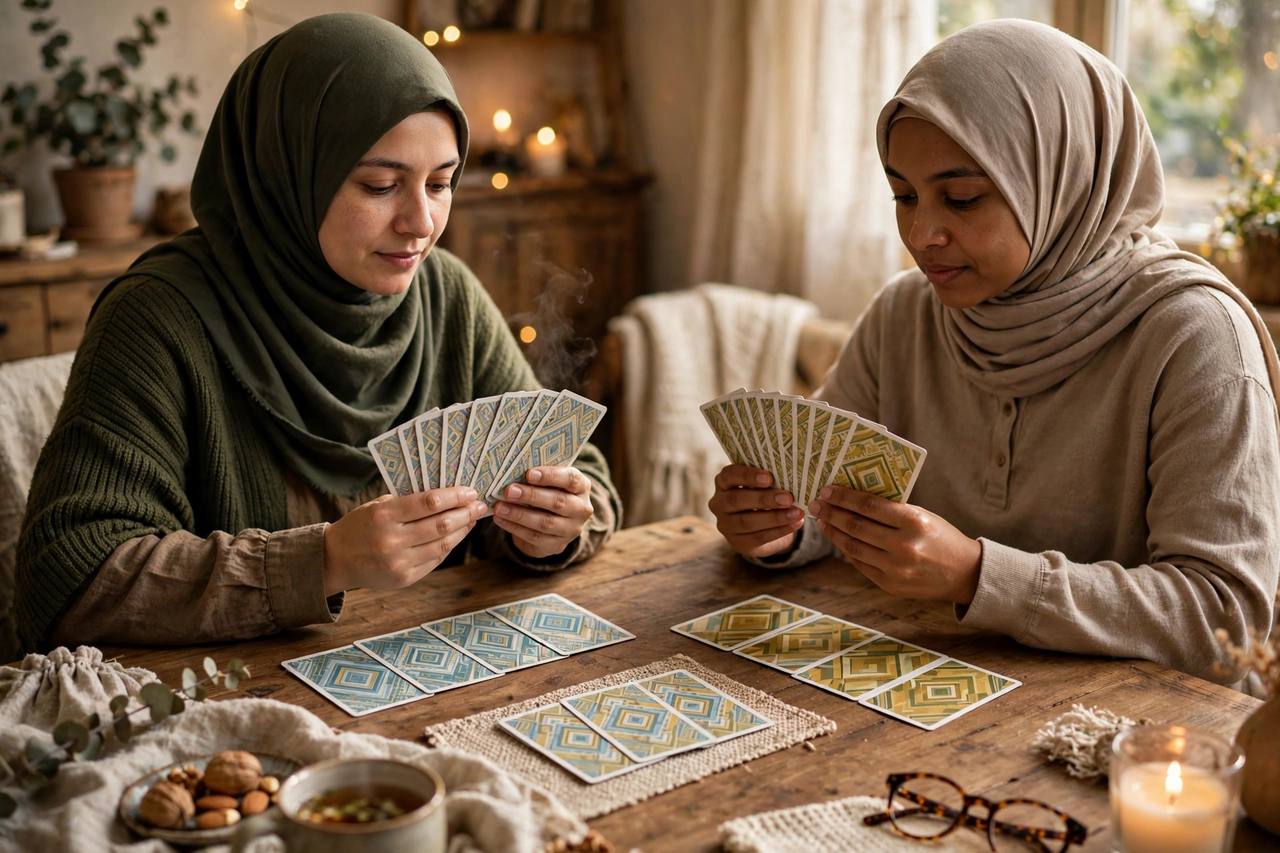
Start here, because picking the right game decides everything else. Basic rummy (sometimes just called “rummy”) is the open, forgiving version: you lay melds on the table as you build them, you can add cards to your opponent’s melds, and the game flows until someone runs out of cards. If you’ve never played, start here — it’s the easiest way to learn how melds work.
Gin rummy is the dedicated two-player game and the deeper one: you keep your melds hidden in your hand, you can end the hand early by “knocking” with a nearly-complete hand, and there’s a scoring system built around deadwood — the unmatched cards you’re stuck holding. Learn basic rummy first, then graduate to gin rummy when the basics feel natural. The two sections below never mix: Sections 2–8 are basic rummy only, Section 9 is gin rummy only.
What You Need to Play
Basic rummy needs almost nothing: one standard 52-card deck and two players. That’s genuinely it — no chips, no board, no scoreboard required (a scrap of paper for scores is handy, but your phone works). Play on any flat surface where both players can see the table.
Decide two things before the first deal: whether you’re playing with wild cards (many beginners skip them — the scoring section covers the 15-point wild rule if you include them), and what target score ends the game. First to 100 points is the standard finish line.
Setup and Dealing (10 Cards Each)
Shuffle the deck well and deal 10 cards to each player, one at a time. (Some players prefer a 7-card deal for a quicker game — agree on 10 or 7 before you start, since it changes the feel of the hand.) Place the rest of the deck face-down in the middle as the stock pile, then turn the top card of the stock face-up beside it to start the discard pile.
Both players pick up their hands and sort them: group cards by rank to spot potential sets, and fan the suits to spot potential runs. A sorted hand is a readable hand, and readability wins games.
The Goal: Runs and Sets Explained
Everything in rummy revolves around melds — matched groups of cards. There are exactly two kinds. A run is 3 or more consecutive cards of the same suit: 4-5-6 of hearts, or 9-10-J-Q of spades. A set is 3 or 4 cards of the same rank: three kings, or four 7s.
One ace rule matters here: aces count high or low, but not both at once. A-2-3 of clubs is a valid run, and Q-K-A of diamonds is a valid run — but K-A-2 is not a run, because the ace can’t wrap around the corner. If you remember nothing else from this section, remember that: aces sit at the ends, never in the middle.
How a Turn Works: Draw, Meld, Discard
A turn has three parts, always in the same order. First, draw: take the top card of the stock pile, or take the top card of the discard pile if you want it. Second, meld (optional): if you have a run or set in your hand, you may lay it face-up on the table. You don’t have to meld the moment you can — holding a meld back is sometimes smarter, as the strategy section explains. Third, discard: end your turn by placing one card from your hand face-up on the discard pile.
That rhythm — draw, meld if you like, discard one — is the entire game engine. Every turn you get slightly closer to an empty hand, and every discard gives your opponent information about what you’re collecting.
Laying Off on Your Opponent’s Melds
Here’s where basic rummy gets interesting. Once a meld is on the table — yours or your opponent’s — anyone can add matching cards to it on their turn. This is called laying off. If your opponent has 4-5-6 of hearts on the table, you can lay off the 3 or 7 of hearts from your hand onto that run.
Laying off is how you shed cards you can’t use yourself, and it’s a big part of two-player strategy: every card you lay off is a card that won’t count against you if your opponent goes out first. But it also reveals information — your opponent now knows you had hearts in that range. Every lay-off is a small trade between getting rid of points and giving away clues.
Going Out and Winning the Hand
The hand ends when a player goes out — plays every card in their hand, either as melds or lay-offs. Going out normally ends with a final discard onto the discard pile — but there’s one exception: if your last turn lays your entire hand down as melds, with no cards left at all, there’s nothing left to discard, so no final discard is needed. So a winning turn looks like this: draw, meld your remaining groups, lay off anything that fits, and discard your final card.
Going out first is what scores you the hand, which brings us to the numbers. Note the edge case: if the stock pile runs out before anyone goes out, shuffle the discard pile and set it up again as a fresh stock — the hand continues — in a two-player game this is rare, but now you know.
Scoring (With a Worked Example)
When someone goes out, both players count the cards left in their hands, and the values are straightforward. Number cards are worth face value — a 7 is 7 points, a 3 is 3 points. Each Jack, Queen, and King is worth 10 points. Each ace is worth 1 point. If you’re playing with wild cards, each wild is worth 15 points.
The player who went out scores the total value of the cards remaining in the opponent’s hand. Here’s a worked example. Say you go out, and your opponent is left holding: King of spades (10), Queen of hearts (10), 7 of clubs (7), two 5s (5 + 5), 3 of hearts (3), and an ace (1). Add it up: 10 + 10 = 20, plus 7 = 27, plus 5 = 32, plus 5 = 37, plus 3 = 40, plus 1 = 41. You score 41 points for the hand.
There’s a bonus worth knowing: “going rummy” — laying down your entire hand in a single turn without any previous melds — doubles your score for the hand. A 41-point hand becomes 82. The first player to reach 100 points wins the game.
Gin Rummy Rules: Knocking and Deadwood
Everything below this line is gin rummy — a separate game with its own rules. Deal 10 cards to each player from a standard 52-card deck, and turn the 21st card face-up to start the discard pile. (That odd detail — the 21st card — is just how the deal works out: 10 cards each, then one card flipped.)
The big difference: you keep your melds hidden. Your goal is to arrange your hand into melds (runs and sets work exactly as in basic rummy) plus deadwood — the unmatched leftover cards. When your deadwood totals 10 points or less, you can knock: end the hand by laying your cards down and declaring it. Knock with zero deadwood — a perfect hand — and that’s gin, which earns a bonus.
Scoring in gin rummy is its own system built around those deadwood totals, and knocking strategy — when to end the hand versus when to keep building — is the heart of the game. Treat this section as the start of a new game, not a continuation of basic rummy.
2-Player Strategy: Reading Your One Opponent
Two-player rummy is a game of information, because there’s only one opponent to read. Watch the discard pile every single turn: the cards your opponent picks up tell you exactly what they’re collecting. If they take your discarded 8 of diamonds, they’re building around diamonds or 8s — so stop discarding cards that feed those groups.
Be equally careful about what you throw away. Discarding a card your opponent just picked up the neighbor of is handing them a meld. When in doubt, discard cards that match nothing on the table and nothing your opponent has taken. Holding a meld back instead of laying it immediately is another useful habit — an unplayed meld can’t be laid off on, and the surprise of a big late meld sometimes wins the hand. If you’re building a regular game night around cards, the guide to hosting a game night for adults covers everything around the table, not just the cards.
Common Beginner Mistakes
Melding too early is the classic one. The moment your run hits the table, your opponent knows your whole plan — and in basic rummy, they can lay off on it too. A meld on the table is information; a meld in your hand is a secret.
Ignoring the discard pile is the second mistake. New players draw from the stock on autopilot and never look at what the opponent took. The discard pile is free intelligence — use it. Third: holding high cards too long. Kings and queens are worth 10 points each against you if your opponent goes out, so unmatched face cards should be the first discards when your hand isn’t coming together. And finally, mixing up the variants — trying to knock in basic rummy, or laying off in gin rummy. They’re different games; play the one you dealt.
New to card games entirely? Go Fish is the gentlest possible starting point for learning card-game thinking, and the best card games for adults list has more options once rummy clicks.
Frequently Asked Questions
How many cards do you deal in 2-player rummy?
Deal 10 cards to each player in both basic rummy and gin rummy. Some players use a quicker 7-card deal for basic rummy — agree on 10 or 7 before the first hand.
What is the difference between rummy and gin rummy?
In basic rummy you lay melds on the table as you build them and can add cards to your opponent’s melds. In gin rummy you keep melds hidden, and you can end the hand early by knocking when your unmatched deadwood totals 10 points or less — knocking with zero deadwood is gin.
Can you play rummy with just 2 players?
Yes — two players is a great way to play. Basic rummy deals 10 cards each, and gin rummy is designed specifically for two players with 10 cards each from a 52-card deck.
How do you win at 2-player rummy?
In basic rummy, go out by playing all your cards, then score the value of the cards left in your opponent’s hand — first to 100 points wins. Watch the discard pile, hold high cards loosely, and don’t meld earlier than you need to.
What is “going rummy”?
Going rummy means laying down your entire hand in a single turn without having melded anything earlier. It doubles your score for the hand — a 41-point hand becomes 82.
What is knocking in gin rummy?
Knocking ends the hand early: when your unmatched cards (deadwood) total 10 points or less, you lay your hand down and declare the knock. Knocking with zero deadwood is called gin and earns a bonus.