How Are Podcasts Recorded and Edited? Full Workflow

How are podcasts recorded and edited? The medium sounds effortless — two people talking, how hard can it be — but professional podcast production is a genuine craft with its own gear, acoustics, software, and editing philosophy. The difference between a podcast people finish and one they abandon after four minutes is almost entirely in the recording quality and the edit. Nobody ever quit a show because the conversation was too well recorded.
I have been on both sides of the microphone, and the unglamorous truth is that great podcasting is 30 percent talking and 70 percent everything around the talking. Here is the full behind-the-scenes workflow, from microphone choice to the final export.
The Recording Space: Acoustics Before Gear
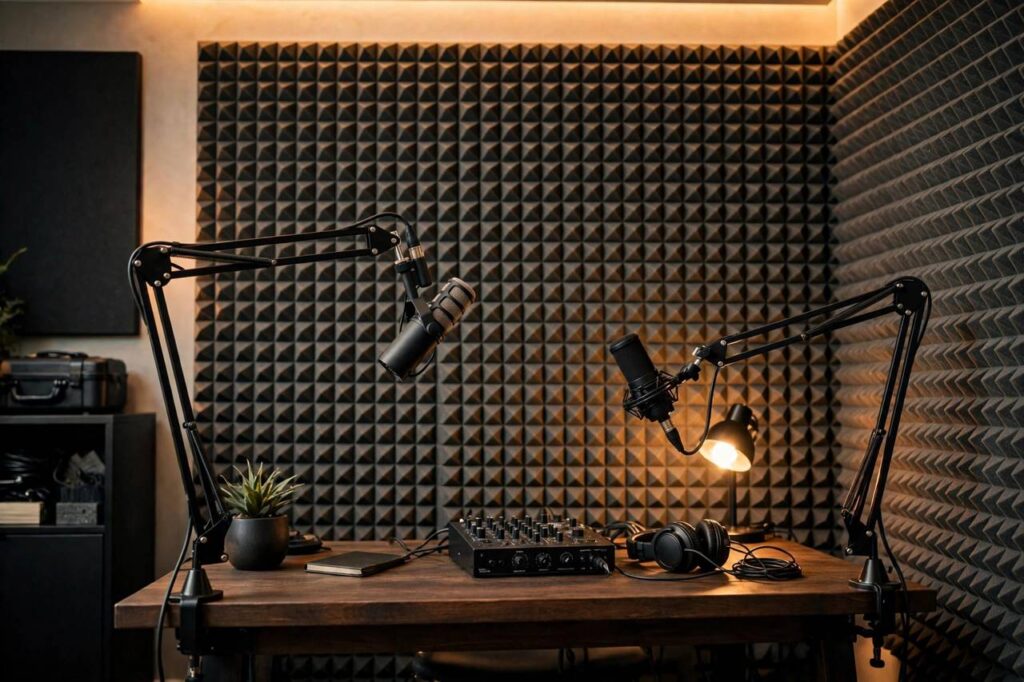
The single biggest upgrade any podcaster can make is not a microphone — it is the room. Hard, empty rooms create echo and reverb that no software fully fixes; soft furnishings absorb it. Professional studios use acoustic treatment — foam panels, bass traps, diffusers — but the home-studio version is simpler: record in the smallest, softest room available, close the curtains, put a rug down, and keep the microphone close to the mouth. A $100 microphone in a good room beats a $1,000 microphone in a tiled bathroom every time.
Background noise is the other room problem. Air conditioners, refrigerators, computer fans, street traffic — the microphone hears all of it, and listeners hear it as amateurism. Pros record with HVAC off, refrigerators unplugged (remember to plug them back in), and phones silenced. The discipline feels excessive until you hear the difference in the edit.
Microphones and Gear: What Actually Matters
Podcast microphones fall into two families. Dynamic microphones (the broadcast standard) are less sensitive, which is a feature: they capture the voice up close and reject room noise, making them forgiving of imperfect spaces. Condenser microphones are more sensitive and detailed, which makes them beautiful in treated studios and punishing everywhere else. Beginners in untreated rooms should almost always choose dynamic.
Beyond the mic: a boom arm or stand (handling noise ruins takes), closed-back headphones for monitoring (so the mic does not pick up the other speakers), a pop filter or windscreen for plosives, and an audio interface or recorder with clean preamps. Portable recorders have made remote and field recording practical — some of the best interview podcasts are recorded on location with a handheld recorder and two lavalier mics.
How Are Podcasts Recorded? The Session Workflow
A professional recording session runs on routine. Levels are set and checked — each speaker records a test passage, peaks hitting around -12dB to leave headroom. Everyone records on separate tracks (multitrack capture), which is non-negotiable for quality editing: it lets the editor adjust one person’s volume, remove their coughs, and fix crosstalk without touching the other voices.
Remote recording — the post-2020 default — adds a layer of technique. Each guest records locally on their own device while the conversation happens over a call (the “double-ender”), because internet call audio is compressed and unreliable. Dedicated remote-recording platforms automate this, capturing studio-quality local tracks and syncing them in the cloud. The rule is simple: never rely on the call audio as your final product.
Session discipline matters as much as gear. Experienced hosts brief guests on mic technique (stay close, stay still), record room tone (thirty seconds of silence for the editor to patch gaps), and clap or count in at the start for sync. The boring rituals are what make the edit possible.
How Are Podcasts Recorded and Edited in Post? From Raw Tape to Finished Episode
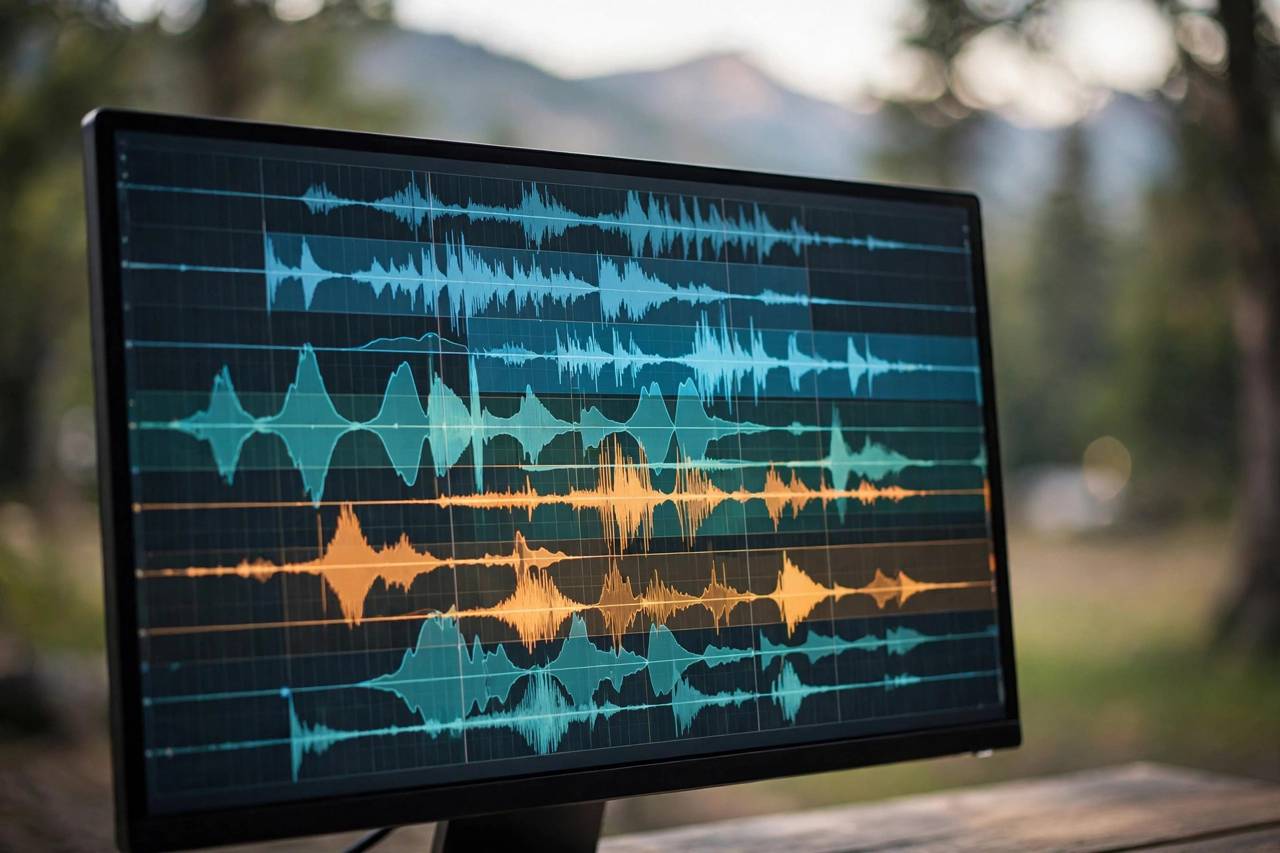
Editing is where podcasts are truly made, and the workflow has a standard shape. First, the assembly: tracks are synced, levels balanced, and the conversation is arranged in order. Then the content edit: removing false starts, long pauses, tangents, and anything that slows the episode’s momentum. Good editors cut ruthlessly — the listener should never hear the work, only the result.
Then the polish: EQ to give each voice clarity and warmth, compression to even out volume differences, de-essing to tame harsh sibilance, and noise reduction applied with restraint (aggressive noise removal creates artifacts worse than the noise). Mouth clicks, ums, and breaths are reduced — not eliminated, because over-editing makes humans sound like robots. The goal is the best version of a natural conversation, not a synthetic one.
Finally, mixing and mastering: music beds and intros are leveled under dialogue, transitions are smoothed, loudness is normalized to podcast standards (around -16 LUFS for stereo), and the episode is exported in its delivery formats. The entire process for a one-hour conversational episode typically takes three to six hours of editing — a ratio that surprises everyone who has not done it.
DAWs and Tools of the Trade
Podcast editors work in digital audio workstations — Audacity (free, capable), Adobe Audition, Logic Pro, Pro Tools, Descript, and newer AI-assisted editors. Descript deserves a mention for changing the workflow: it transcribes the audio and lets editors cut by deleting text, which is intuitive for non-engineers. AI tools now handle first-pass edits — removing filler words, leveling volumes — with the human editor doing the creative judgment the software cannot.
The honest advice for beginners: start free, learn the fundamentals (levels, EQ, compression, loudness), and upgrade tools only when you know what limitation you are hitting. The software has never been the bottleneck — the room, the mic technique, and the editing judgment are.
Publishing: From Edit to Ears
The finished episode goes to a podcast host (the specialized kind — Libsyn, Buzzsprout, Transistor, and their competitors), which generates the RSS feed that directories like Apple Podcasts and Spotify consume. Show notes, chapter markers, transcripts, and episode art are part of the package; transcripts in particular have become standard, serving both accessibility and search discoverability. Then the episode is scheduled, promoted, and the whole cycle begins again.
Consistency beats perfection in publishing cadence. The podcasts that build audiences release on a reliable schedule — weekly, biweekly, whatever the team can sustain — because the subscription relationship depends on it. A show that publishes erratically is a show listeners forget.
Editing Narrative Podcasts: A Different Discipline
Everything above describes conversational podcasting. Narrative podcasts — investigative series, audio documentaries, fiction — are edited more like films. The workflow starts with a paper edit: the producer transcribes all interviews and assembles the story on the page before touching audio, deciding the narrative spine, where each voice appears, and what the host’s narration must bridge. Only then does the audio assembly begin.
The craft differences are substantial. Narrative editing involves scoring (music composed or licensed to carry emotion), sound design (ambient beds that place the listener in a location), and archival tape woven into the story. The editor is a co-author in a way the conversational editor is not — structuring reveals, building cliffhangers, pacing episodes across a season arc. It is the most labor-intensive corner of podcasting, with some prestige series spending weeks of editing per episode, and the results can rival anything in documentary film.
The Video Podcast Shift
Podcasting’s fastest-growing segment is video — full episodes filmed and distributed on video platforms alongside the audio feed. This changes the recording workflow significantly: cameras (usually two or three angles), lighting, and set design join the microphone setup, and the edit becomes a video edit with audio-first priorities. The framing is typically simple — locked-off medium shots — because the content is still conversational, but the production complexity roughly doubles.
The strategic logic is discoverability: video clips distributed as short-form content are now the primary growth engine for many shows, with the full episode as the destination. Podcasters increasingly record with clipping in mind — structuring conversations around quotable moments, keeping cameras rolling for the visual reaction shots that perform well as excerpts. The medium is converging with talk television, and the production craft is converging with it.
Common Recording Mistakes to Avoid
The same errors sink beginners repeatedly: recording too far from the microphone (thin, echoey sound), skipping the headphone check (so nobody notices the buzzing until the edit), recording everyone on one track (making individual fixes impossible), and normalizing loudness as an afterthought. The fix for all four is routine — check distance, check headphones, check tracks, check levels — performed the same way every session until it is automatic. Professionalism in podcasting is mostly just consistency.
Frequently Asked Questions
How are podcasts recorded and edited?
Recording: in an acoustically treated space (or a soft-furnished room), with dynamic or condenser microphones on separate multitrack channels, monitored on headphones, with remote guests recording locally for quality. Editing: assembly, content cuts, EQ/compression/polish, mixing with music, loudness normalization, and export — typically 3-6 hours of editing per hour of finished audio.
What equipment do you need to start a podcast?
The essentials: a decent dynamic USB microphone, closed-back headphones, a quiet soft-furnished room, and free editing software like Audacity or GarageBand. That setup produces genuinely professional results; upgrades (audio interface, XLR mic, acoustic treatment) come later, when you know what you are missing.
What is a double-ender recording?
A technique where each remote participant records their own audio locally while conversing over a call, and the local tracks are combined in editing. It avoids the compressed, glitchy quality of internet call audio and is the standard for professional remote interviews.
How long does it take to edit a podcast episode?
Typically three to six hours of editing per hour of finished conversational audio — more for narrative or heavily produced shows. The ratio surprises beginners, which is why editing is often the first task podcasters outsource.
What is -16 LUFS in podcasting?
The loudness standard for stereo podcast delivery: -16 Loudness Units relative to Full Scale. Normalizing to this target ensures consistent volume across episodes and shows, so listeners are not constantly adjusting their volume.
Do I need a mixer to record a podcast?
Not necessarily. A USB microphone plus software handles solo recording; a small audio interface covers two-person setups. Mixers become useful with three or more local microphones, live streaming, or complex routing — most beginners outgrow their need for one before they ever buy one.
Once the episode exists, the next question is the business around it — see how podcasts make money for the revenue models, and for the synthetic-voice side of audio production, our guide to text-to-speech for podcasts.