
“Wait, podcasts are free — so how does anyone make money doing this?” I get asked this constantly, and it’s a great question, because the answer reveals how the entire attention economy works. Nobody pays to listen, yet podcasting is a multi-billion-dollar industry.
I’ve followed this space for years (and yes, I have opinions about which shows deserve their ad money). Here’s every way podcasts actually make money, with honest numbers about what each one takes.
Table of Contents
- The Short Answer
- 1. Advertising and Sponsorships
- 2. Premium Subscriptions and Paywalls
- 3. Live Shows and Touring
- 4. Merchandise
- 5. Crowdfunding and Donations
- 6. Licensing and Adaptations
- 7. Using the Podcast to Sell Something Else
- How Much Do Podcasters Actually Make
- Why Most Podcasts Make Nothing
- Frequently Asked Questions

The Short Answer
Podcasts make money seven ways: advertising/sponsorships (the big one), premium subscriptions, live shows, merchandise, crowdfunding, licensing deals (TV/film adaptations), and using the show to sell something else (books, courses, services). Most revenue concentrates at the top — the biggest shows make millions while the vast majority make nothing.
1. Advertising and Sponsorships
This is the engine of the industry — the majority of podcast revenue comes from ads. Two main flavors:
Host-read ads. The host personally reads (or riffs on) the sponsor’s message. “This episode is brought to you by…” These command premium rates because listeners trust hosts — host-read ads consistently outperform generic spots. The podcaster’s personality is the ad format.
Programmatic/dynamic ads. Pre-recorded spots inserted automatically, targeted by listener data. Less charming, more scalable. The industry is shifting this way, which purists (me) find depressing and accountants find delightful.
The numbers: Podcast CPM (cost per thousand downloads) typically runs $20-$40 — dramatically higher than most digital advertising. Why? Because podcast listeners actually listen. No skipping (well, less skipping), high trust, niche audiences.
The catch: You need scale. At $25 CPM, 10,000 downloads per episode earns you $250 per ad spot. Two spots per episode, weekly show: ~$2,000/month. Respectable side income, not a living. The real money starts at 100K+ downloads.
2. Premium Subscriptions and Paywalls
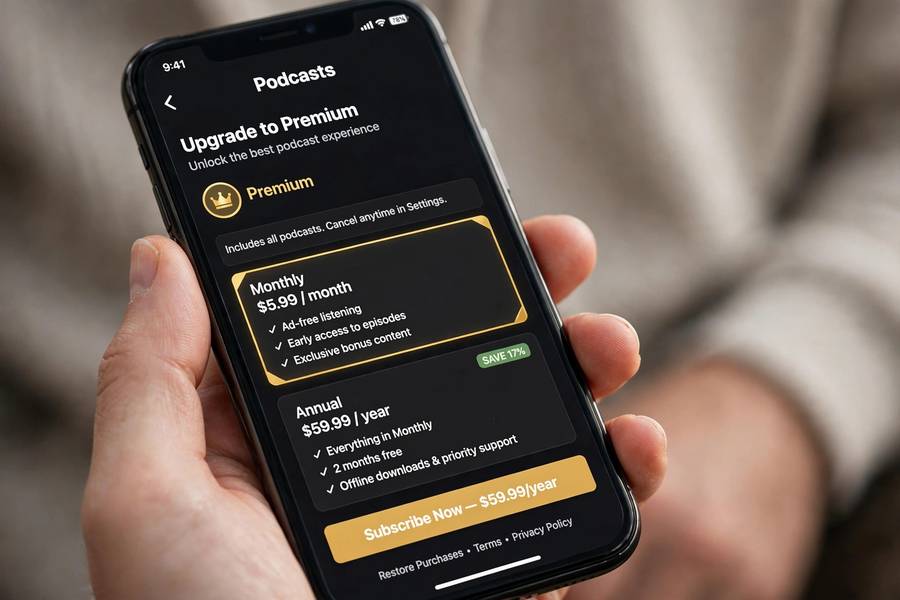
The pitch: pay $5/month for bonus episodes, ad-free listening, early access, or exclusive content. Platforms now make this easy with built-in subscription tools.
Who it works for: Shows with devoted, niche audiences. A true-crime show with 50,000 casual listeners might convert 2%. A specialized industry show with 5,000 die-hards might convert 15%. Passion beats scale here.
The math: 1,000 paying subscribers at $5/month = $5,000/month (minus platform fees ~15-30%). That’s life-changing for an indie podcaster and rounding error for a network.
The risk: Paywalling your best content can strangle growth — the free show is your marketing. The shows that do this well keep the main feed excellent and make the premium tier genuinely extra, not just “the good stuff we held back.”
3. Live Shows and Touring
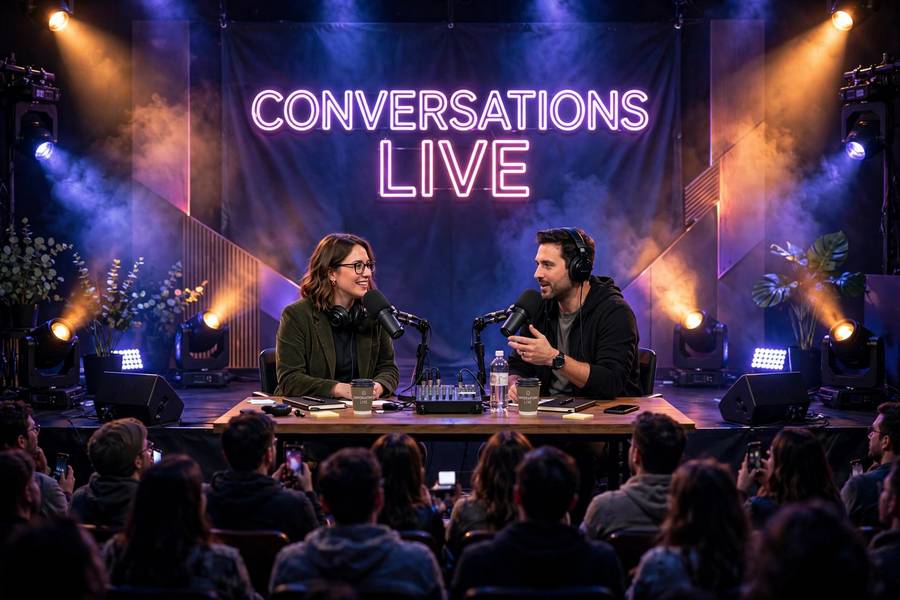
Podcasts have become touring acts. Live recordings — sometimes just the regular show on a stage, sometimes elaborate productions — sell real tickets.
Why it works: Podcast audiences have parasocial relationships with hosts (they feel like friends). Seeing “friends” live is a powerful draw. Plus, live shows create content and revenue simultaneously.
The economics: Mid-tier shows play 500-2,000 seat venues. At $40 average tickets, that’s $20K-$80K gross per night. Costs are lower than music tours (no elaborate staging), so margins can be healthy.
The limitation: Only works for shows with geographic audience density and hosts with stage presence. Your brilliant two-person interview show might be riveting to hear and boring to watch.
4. Merchandise
T-shirts, mugs, posters, stickers — the classic creator revenue stream. Podcast merch works best when the show has catchphrases, inside jokes, or visual identity that fans want to wear.
Reality check: Merch is a loyalty product, not a growth product. Margins are thin (print-on-demand eats 60-70%), and it only moves with a devoted audience. Nobody buys merch for a show they discovered yesterday.
What works: Limited drops, designs fans actually want (not just your logo slapped on a shirt), and integration with the show’s personality.
5. Crowdfunding and Donations
The patronage model: listeners voluntarily pay because they value the show. Platforms built for this let fans pledge monthly amounts.
Who thrives: Independent shows with strong community bonds — especially in genres like actual-play, indie journalism, and niche education. The audience isn’t just listening; they’re members.
Typical numbers: A show with 20,000 regular listeners might get 500-1,000 patrons at $3-5/month. That’s $1,500-$5,000/month — enough to fund production, rarely enough to quit the day job alone.
The psychology: It works when listeners feel ownership. Shows that share behind-the-scenes, name patrons, and genuinely engage convert far better than those that just stick a donate button in the show notes.
6. Licensing and Adaptations
The lottery ticket: your podcast gets optioned for TV, film, or a book deal.
This happens more than you’d think — the industry has discovered that podcasts are cheap IP development. A hit narrative podcast is essentially a proof-of-concept pilot with a built-in audience. Studios option them regularly.
The reality: Options pay modestly (five figures is typical); only a fraction become productions. But when they do — and several have become genuine hits — it’s transformative money.
Documentary and true-crime podcasts are the most optioned, for obvious reasons: they’re pre-structured as screen stories.
It’s the same pipeline as how movies are made — just starting from audio instead of a script.
7. Using the Podcast to Sell Something Else
The most underrated model: the podcast itself loses money (or breaks even) but sells something profitable.
- Consultants and coaches whose show generates client leads
- Authors whose podcast sells books
- Course creators whose free content funnels to paid programs
- Businesses whose show builds brand authority in their industry
The math here is different: You don’t need the podcast to profit directly. If your $200/hour consulting practice gets two new clients a month from the show, the podcast is wildly profitable — it just doesn’t look like it on a P&L.
This is honestly how most “successful” small podcasts work. The show is marketing that people choose to consume. Compare that to ads people choose to skip.
How Much Do Podcasters Actually Make
Let me give you the real distribution, because the headlines lie:
- Top 1%: Millions per year (the mega-shows with exclusive deals)
- Top 10%: Full-time living ($50K-$500K) — usually combining 3-4 revenue streams
- Next 20%: Meaningful side income ($500-$5K/month)
- The rest (70%): Little to nothing. Most podcasts never pass a few hundred listeners.
The uncomfortable truth: podcasting has a brutal power law. The barriers to entry are zero (anyone can start), which means the competition for ears is infinite. Making money requires either scale, devotion, or a business behind the show — ideally two of the three.
Why Most Podcasts Make Nothing
Since we’re being honest:
- No audience strategy. “If I make it, they will come” is not a strategy. It’s a wish.
- Inconsistency. The #1 killer. Shows that publish weekly for three months then vanish.
- No niche. “Two friends chatting” is not a concept. The shows that grow serve a specific audience’s specific need.
- Bad audio. Listeners forgive a lot, but not unlistenable sound. A $70 microphone is the highest-ROI investment in podcasting.
- No monetization plan. Hoping sponsors appear is not a plan. The money comes from deliberate structure, not luck.
The shows making money treat it like a business from day one — which, coincidentally, is also what makes them worth listening to.
The playbook rhymes with film — adaptations, licensing, merch — which is why these filmmaking tips on turning one property into many revenue streams read like a podcast monetization guide with the serial numbers filed off.
Frequently Asked Questions
Through seven main streams: advertising/sponsorships (the biggest), premium subscriptions, live shows, merchandise, crowdfunding, licensing deals for TV/film adaptations, and using the show to sell something else (books, courses, consulting). The listener doesn’t pay; advertisers, fans, and related businesses do.
It varies enormously. With typical $20-$40 CPM ad rates, 10,000 downloads per episode earns roughly $200-$400 per ad spot. Top shows make millions yearly; the top 10% earn a full-time living combining multiple streams; most podcasts make little to nothing due to small audiences.
For ad revenue, meaningful income starts around 10,000+ downloads per episode. But smaller shows can profit through premium subscriptions (devoted niche audiences convert well), crowdfunding, or using the podcast to sell services — where even a few hundred loyal listeners generate real business.
Podcast CPM (cost per thousand downloads) typically runs $20-$40, much higher than most digital ads, because listeners are engaged and trusting. Host-read ads command the premium end. Programmatic dynamically-inserted ads trend lower but scale better.
Yes, through the right models: premium subscriptions from devoted fans, crowdfunding, merchandise for loyal communities, or using the show as marketing for a business (consulting, courses, books). Small-but-devoted beats large-but-casual for every revenue stream except pure advertising.
Spotify doesn’t pay per stream like it does for music. Podcast revenue on Spotify comes from the same sources as elsewhere: ads (including Spotify’s own ad insertion), premium subscriptions through Spotify’s tools, and exclusive licensing deals where Spotify pays shows directly for exclusivity — those deals are where the big money is.