How to Shoot a Three-Pointer: Range, Rhythm and Leg Power

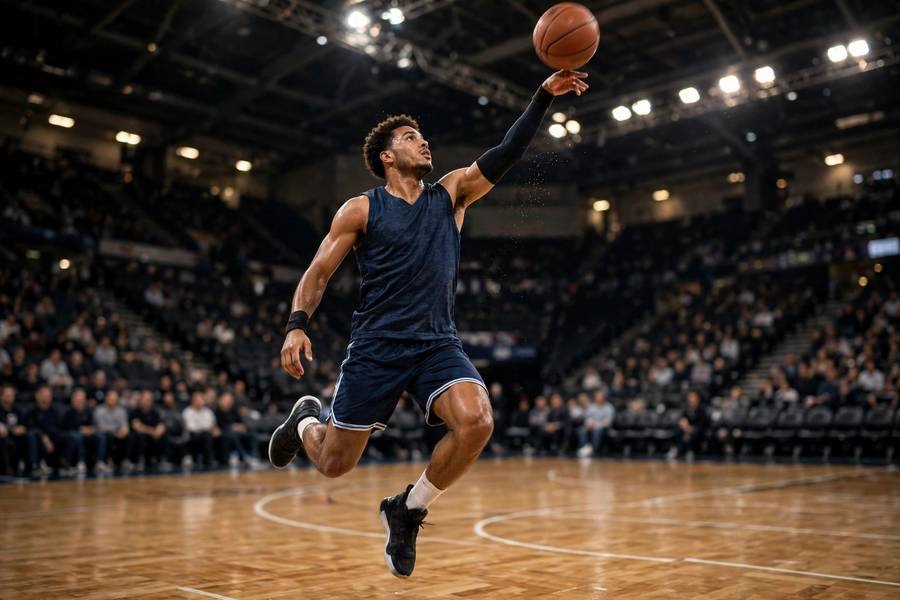
The three-pointer broke basketball. It changed spacing, roster construction, and how every kid in every driveway plays. And it created a generation of shooters with the same disease: they can hit threes in warm-ups and can’t hit them in games, because nobody taught them that the three-point shot is fundamentally a different athletic event than a mid-range jumper wearing a longer dress. It’s not. It’s the same shot with a bigger engine — and most players try to build the engine with their arms.
This guide covers how to shoot a three-pointer properly: the leg-driven mechanics, shot preparation, the catch-and-shoot vs pull-up distinction, and a safe progression for building real range. If you’re learning how to shoot a three pointer, the legs-first approach below is the fastest path. Master the base first with our guide to proper shooting form.
In this guide:
- The Three-Pointer Is a Legs Shot
- Range First: Are You Ready?
- The Mechanics: Same Shot, More Engine
- Shot Preparation: The Half-Second That Matters
- Catch-and-Shoot vs Off the Dribble
- The Mental Game of Deep Shooting
- The 5 Three-Point Killers
- Building Range Safely: The Progression
The Three-Pointer Is a Legs Shot
Say it until it’s reflex: distance comes from the legs, direction comes from the arms. On a three-pointer, your legs do roughly 80% of the power work. The upper-body motion — the release, the follow-through, the touch — should feel identical to your free throw. If your arms feel like they’re working harder on threes, your legs are slacking, and the shot will be flat, short, and inconsistent.
The tell is fatigue: when your threes start falling short in the second half but your mid-range is fine, your legs are gone. That’s not a shooting slump, it’s a conditioning readout. Players with strong, enduring legs — built through work like our strength training for runners programs — keep their range all game long. Skinny-legged gunners lose theirs by halftime.
Range First: Are You Ready?
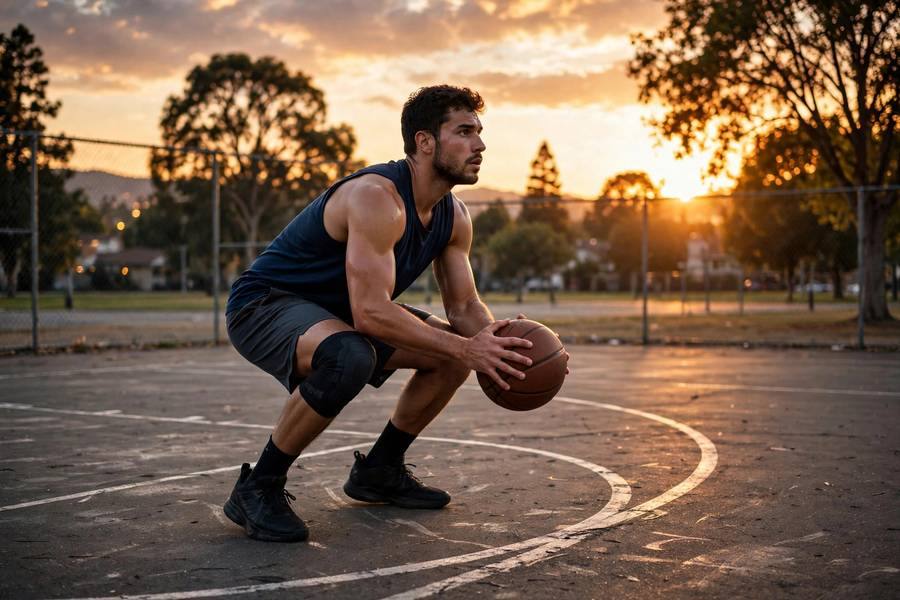
Honest question most players skip: can you shoot a three with proper form? The test is simple — film yourself shooting threes and check: does your release look like your free throw release? Is your arc the same? Is your follow-through held? If you’re heaving, jumping forward wildly, or short-arming, you don’t have three-point range yet — you have three-point ambition, which is different.
There’s no shame in not being ready. Range is built, not wished for. The progression later in this guide gets you there without wrecking your mechanics — because nothing destroys a good mid-range shot faster than forcing threes you’re not strong enough to shoot properly.
The Mechanics: Same Shot, More Engine
- Stance: slightly wider than your mid-range base — you need a bigger platform for a bigger drive. Toes to the rim, as always.
- The dip: deeper and more deliberate than a mid-range dip. This is where the power loads — a shallow dip on a three is like trying to jump high from straight legs.
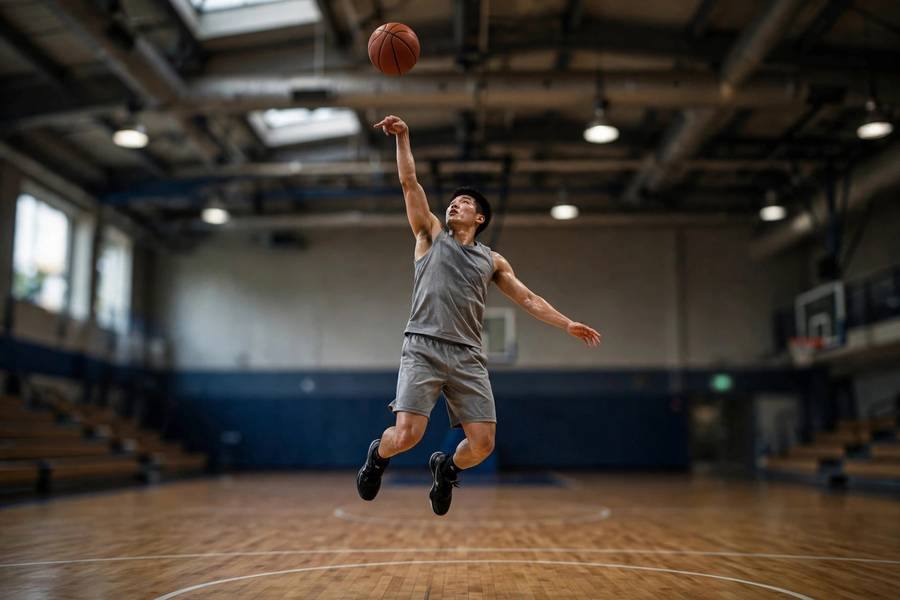
- The lift: explosive triple extension (ankles, knees, hips). Think up, not forward — jumping toward the basket bleeds energy and balance.
- The release: identical to your shorter shot. Same shot line, same wrist snap, same held follow-through. The only thing that changes is what’s below your waist.
- The arc: threes need more arc, not less. The instinct is to flatten it for distance; the physics says a high arc gives the ball the best chance to drop. Rainbow it.
Film the comparison: your free throw and your three, side by side in slow motion, from the waist up. They should be nearly indistinguishable. If they’re not, your arms are doing leg work — fix the dip and drive.
Shot Preparation: The Half-Second That Matters
Elite three-point shooting happens before the catch. Shot preparation is the half-second where you: get your feet set (hop into your stance as the pass travels), get your hands ready (showing a target), square your body, and decide. Players who prepare early shoot 5–10% better on catch-and-shoots than players who catch flat-footed and then get ready — the numbers on this are consistent across levels.
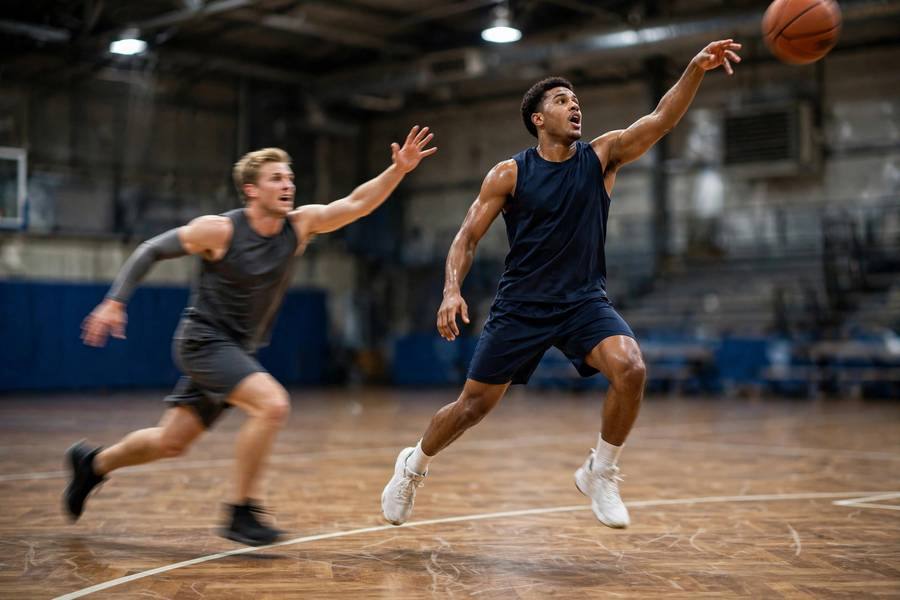
Drill it: have a partner pass while you start facing away or mid-sprint, forcing you to organize your feet during the ball’s flight. The goal is to land ready, so the catch-to-release is one motion, not two. This is the skill that turns “good shooter” into “can’t leave him open.”
Catch-and-Shoot vs Off the Dribble
These are different shots wearing the same jersey:
- Catch-and-shoot: the highest-percentage three. Feet set during the pass, quick dip, rise straight. Rhythm comes from the pass. Master this first — it’s where 70% of game threes come from.
- Off the dribble: harder in every way — you’re generating rhythm yourself, often moving sideways or backward. The key is the 1-2 step into balance: gather, plant, stop your momentum, then shoot up (not drifting). Most players rush these; the best ones actually pause for a heartbeat.
Build in order: standstill catch-and-shoot, then on-the-move catch-and-shoot, then one-dribble pull-ups, then step-backs. Each level demands the previous one’s balance. Our guide to shooting off the dribble goes deep on the pull-up game when you’re ready.
The Mental Game of Deep Shooting
Three-point shooting is uniquely psychological. One miss from deep feels worse than a missed layup, so players tighten up, shorten their motion, and start aiming — which guarantees more misses. The fix is process focus: your job is the routine (feet, dip, lift, hold), not the result. You control the process completely; you control the result only partially. Great deep shooters have short memories and long routines.
Shot selection is the other half: a wide-open rhythm three is a great shot; a contested step-back early in the clock is a gift to the defense. Track your three-point percentage by type (catch-and-shoot vs pull-up, open vs contested) and let the numbers discipline your decisions. Most players discover their “bad three-point shooting” is really “bad three-point selection.”
The 5 Three-Point Killers
- 1. Arming it: pushing with the upper body instead of driving with the legs. Fix: deeper dip, and the cue ‘legs throw, arms aim.’
- 2. Flat arc: line drives from deep never drop consistently. Fix: exaggerate the rainbow until it feels silly.
- 3. Drifting: jumping sideways or fading on every attempt. Fix: landing-spot drill — land where you took off.
- 4. Rushing the prep: catching unprepared and hurrying. Fix: shot-prep drills — feet set before the ball arrives.
- 5. Range ego: shooting NBA threes with high-school legs. Fix: honest range assessment, build outward gradually.
Building Range Safely: The Progression
- Phase 1 (weeks 1–2): perfect your form from 15 feet. 70%+ with textbook mechanics before moving back.
- Phase 2 (weeks 3–4): extend to 18–20 feet (long twos). Same form, slightly deeper dip. Film to verify nothing changed above the waist.
- Phase 3 (weeks 5–6): college three distance. Add leg-strength work twice weekly — this is where the engine gets built.
- Phase 4 (weeks 7–8): full NBA range, catch-and-shoot only. Then on-the-move, then pull-ups.
- Ongoing: every session starts inside the arc (form), works outward, and ends with pressure reps. Range is maintained, not owned permanently — keep feeding it.
One final note from the coaching trenches: track your three-point percentage separately for practice and games. A big gap between the two usually means a preparation or pressure problem, not a mechanics problem — and the fixes for those live in the sections above, not in changing your release for the tenth time.
Build it this way and your three-pointer becomes what it’s supposed to be: the same beautiful shot you own from 15 feet, just with a bigger engine underneath. That’s the whole secret. There never was another one.
Use the same upper-body mechanics as your mid-range shot — the only change is a deeper dip and more explosive leg drive. Distance comes from legs, direction from arms. Keep your arc high, release at the peak, and hold your follow-through exactly as you would closer in.
Underpowered legs, almost always. A shallow dip, weak triple extension, or tired legs all produce short threes. The fix is never ‘push harder with your arms’ — it’s a deeper dip, more explosive drive, and better leg conditioning.
You need more leg drive, but think ‘up explosively’ rather than ‘jump higher.’ Excessive jump height actually hurts timing — what matters is the power of the extension, delivered quickly, with a balanced landing. Elevation is a byproduct, not the goal.
Extend gradually: own 15 feet with perfect form, then long twos, then college range, then NBA range — verifying via film that your upper-body mechanics never change. Add twice-weekly leg strength work. Rushing range by heaving with your arms destroys the mechanics you’re trying to extend.
Catch-and-shoot is significantly higher percentage for almost everyone — feet set during the pass, rhythm from the ball movement. Off-the-dribble threes are a specialist skill; master the catch-and-shoot first, as it accounts for the majority of game threes.