Minimalism Mistakes to Avoid (I Made Most of Them)


I’ve been practicing minimalism for three years, and I want to be honest with you: I did almost everything wrong at first. I purged in a frenzy and rebought half of it. I decluttered my partner’s things without asking (do not recommend — we’re still married, but it was close). I bought matching beige storage boxes, which is the exact opposite of the point. Each mistake taught me something, and I’d rather you learn from my errors than repeat them.
Consider this the troubleshooting guide I wish I’d had: the most common minimalism mistakes, why they happen, what they cost, and exactly how to avoid each one. Some of these will save you money. Some will save your relationships. All of them will save you time.
In this guide:
- Mistake 1: The Purge-and-Regret Cycle
- Mistake 2: Decluttering Other People’s Things
- Mistake 3: Chasing the Aesthetic
- Mistake 4: Buying Organization Before Decluttering
- Mistake 5: Turning It Into a Numbers Game
- Mistake 6: All-or-Nothing Thinking
- Mistake 7: Ignoring the Inflow
- What the Mistakes Taught Me
Mistake 1: The Purge-and-Regret Cycle
The most expensive mistake: decluttering in an emotional frenzy — usually after watching a documentary or scrolling inspiring before-and-afters — tossing things indiscriminately, feeling euphoric for 48 hours, then spending the next two months rebuying the useful things you discarded. I rebought a good kitchen knife, a phone charger, and a winter coat. Total damage: about $200 and a deep sense of foolishness.
Why it happens: purge energy feels productive, and the dramatic transformation is addictive. But frenzy decisions are bad decisions — you’re deciding from emotion, not from knowledge of what you actually use. The fix is speed limits: never declutter a category in the same day you decide to declutter it. Sleep on big decisions. Use the Maybe box liberally — it’s not weakness, it’s wisdom. Slow decluttering produces zero regrets; I’ve never regretted anything I released after the 30-day or 6-month test.
Mistake 2: Decluttering Other People’s Things
Yes, this one is personal. Six months into my journey, riding high on my own success, I “helpfully” decluttered our shared junk drawer and donated three of my partner’s things. The fight that followed was spectacular, and I was completely wrong. Minimalism is a personal practice. (That is what minimalism actually means at its core.) The moment you impose it on someone else, it stops being minimalism and starts being control.
The rule is absolute: your stuff, your rules; their stuff, their rules; shared stuff, discussion. You can declutter your own clothes, your own books, your own zones. You can suggest, invite, and model — “I’m doing the kitchen gadgets this weekend, want to look at yours too?” — but the decision is always theirs. The paradox: people who feel pressured resist; people who see your calm, easy home often come around on their own. My partner now declutters voluntarily. It took two years of me minding my own business.
With kids, it’s trickier but the principle holds: involve them, don’t override them. Help them choose, set limits together (the toy box rule: it holds what it holds), and respect their attachments — even the weird ones. Forcing a child to discard a beloved ratty stuffed animal teaches them nothing about minimalism and everything about powerlessness.
Mistake 3: Chasing the Aesthetic
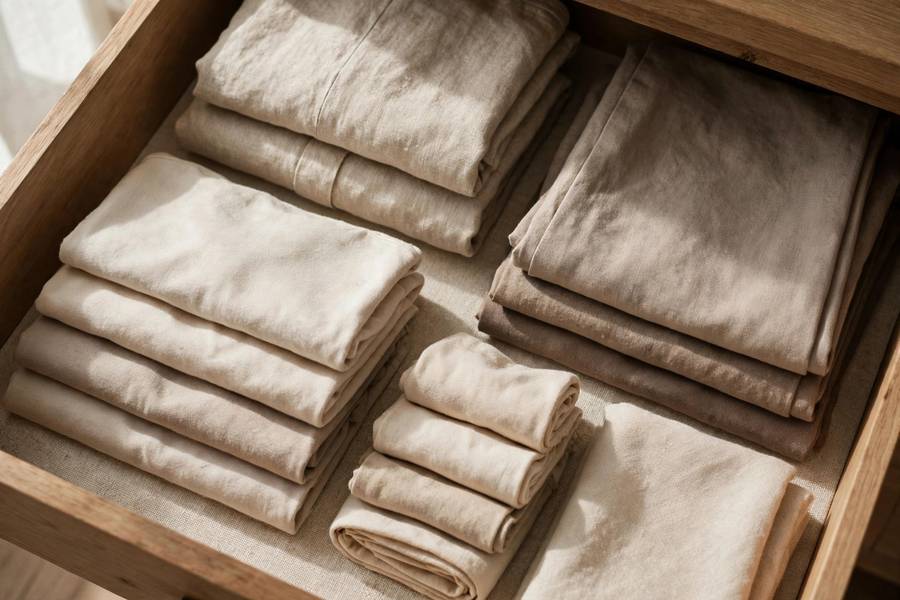
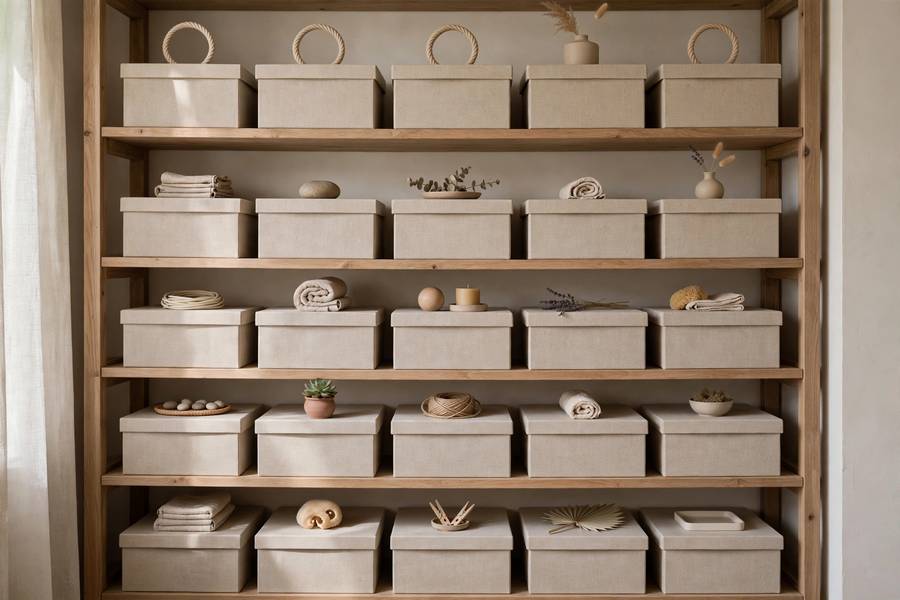
Somewhere along the way, minimalism got confused with a look: white walls, beige everything, a single eucalyptus stem in a vase. I fell for it — I bought matching storage boxes, neutral-toned “capsule” items to replace perfectly good colorful ones, and a very expensive linen throw because it looked minimalist. (A real the capsule wardrobe guide starts from your closet, not a store.) Let me say this clearly: buying new things to look like you own fewer things is the opposite of minimalism.
The aesthetic is marketing. Real minimalism is invisible — it is the absence of excess, not the presence of beige. Warm minimalism — think hygge lifestyle without the clutter — proves cozy and edited can coexist. Your home can be colorful, maximalist-adjacent, full of art and books and personality, and still be minimalist if everything in it earns its place. Judge by function and feeling, not by whether it would photograph well. The question is never “does this look minimalist?” It’s “does this serve my life?”
The influencer comparison trap
Unfollow the extreme accounts, at least while you’re finding your footing. Comparing your lived-in home — with its kids, pets, hobbies, and actual life — to a staged 300-square-foot white box is demoralizing and meaningless. Their minimalism serves their content; yours should serve your life. The only valid before-and-after is your own.

Mistake 4: Buying Organization Before Decluttering
The container store run before the purge: $150 of beautiful bins, baskets, and drawer dividers, all purchased to organize stuff you haven’t decided about yet. I did this. The bins looked great. They were also full of things I later donated — meaning I bought expensive temporary housing for clutter. The organizing industry loves this mistake; it’s their entire business model.
The correct order is absolute: declutter first, then contain what is left. Our how to declutter your house room by room guide follows exactly this order. Only after you know what stays do you know what containers you need — and you’ll need far fewer than you think. Most “organization problems” are actually “too much stuff problems” wearing a disguise. When everything you own fits comfortably in the space you have, the need for organizing products nearly vanishes.
Mistake 5: Turning It Into a Numbers Game
There’s a corner of minimalism culture obsessed with counts: 100 things, 33 items of clothing, the “packing party” where you box everything and only retrieve what you use. I tried counting once. It lasted four days and made me anxious about owning a second spatula. The number is not the point. The number was never the point.
Counting shifts your focus from “does this serve me?” to “how do I get the number down?” — which leads to absurdities like getting rid of useful things to hit an arbitrary target, or keeping useless things because they’re “only” item 87. Ditch the spreadsheet. The metrics that matter: can you find things? Is cleaning easy? Do you feel calm? Those are the only numbers worth tracking, and they’re all qualitative.
Mistake 6: All-or-Nothing Thinking
“I bought something impulsive, so I’ve failed at minimalism.” “My closet isn’t perfect, so why bother.” “I can’t do the full 30-day challenge, so I won’t start.” All-or-nothing thinking kills more minimalist journeys than clutter ever did. Minimalism is a direction, not a purity test. Every item you consciously release, every impulse purchase you skip, every drawer you tame — it all counts, even if the garage is still chaos.
The reframe: you’re not trying to become a minimalist; you’re practicing making intentional choices about stuff. Some weeks you’ll be great at it. Some weeks you’ll buy three things you don’t need because life is hard and shopping is soothing. That’s not failure — that’s being human. Notice it, donate the evidence if appropriate, and continue. Progress, not perfection, permanently.
Mistake 7: Ignoring the Inflow
The mistake that guarantees you’ll declutter forever: clearing things out without addressing how they got there. I decluttered my closet three times in one year before I admitted the problem wasn’t the closet — it was the weekly browsing habit feeding it. Decluttering without fixing inflow is bailing water without plugging the leak.
Fix the sources: unsubscribe from marketing emails (they manufacture wants), delete shopping apps, unfollow shopping influencers, stop “just browsing” stores, and institute the 30-day list for non-essential wants. Also audit the free inflow: conference swag, kids’ party favors, well-meaning gifts, the “great deal” on bulk items you don’t need. Free clutter is still clutter — it just arrives with less guilt and more volume.
And have the gift conversation with family: wish lists, experience gifts, consumables, or donations in your name. Most gift-givers are relieved to have guidance — nobody enjoys shopping blind. Framing it as “here’s what I’d love” beats “please don’t buy me stuff” every time.
What the Mistakes Taught Me
Every mistake on this list taught me the same underlying lesson: minimalism is a practice of attention, not a state of emptiness. The purge taught me to decide slowly. The partner fight taught me it’s personal. The beige boxes taught me to ignore the aesthetic. The bins taught me order of operations. The counting taught me to measure feelings, not items. The all-or-nothing taught me progress over perfection. The inflow taught me to fix sources, not symptoms.
If you’re starting out, you now get to skip my entire error phase — which, honestly, is the best gift I can give you. Go slow, touch only your own stuff, ignore the aesthetic, declutter before you organize, forget the numbers, allow imperfection, and plug the leak. Do that, and you’ll succeed where the frantic purgers fail: you’ll still be doing this in three years, in a home that feels like yours — just lighter.
And when you do make your own mistakes — because you will, everyone does — treat them as tuition, not failure. The goal was never a perfect home. It was a more intentional life. You’re already living it by reading this far.
Purging too fast in an emotional frenzy, then rebuying discarded essentials — the purge-and-regret cycle. It wastes money and teaches the wrong lesson (‘minimalism doesn’t work’). The fix: speed limits, the Maybe box, and never decluttering a category the same day you decide to tackle it.
No — minimalism is strictly personal. Declutter only your own things; for shared spaces, discuss; for others’ things, suggest and model but never impose. Pressured people resist; people who see your calm, functional space often come around on their own within a year or two.
No — that’s the numbers-game mistake. Minimalism is about everything you own earning its place (‘does this serve my life?’), not hitting an arbitrary count. A colorful home full of art and books can be minimalist; a white room full of beige replacements for things you already owned is just shopping with extra steps.
Because you’re addressing outflow without fixing inflow. Audit how things enter: marketing emails, shopping apps, browsing-as-entertainment, free swag, and unexamined gift patterns. Unsubscribe, delete, institute a 30-day want list, and have the gift conversation with family. Plug the leak, then bail the water.
Go slow enough that every decision is deliberate, use the Maybe box for hard calls (sealed, dated six months out — unopened means donated), apply the 20/20 rule (replaceable for under $20 in under 20 minutes = safe to release), and never purge during emotional highs. Slow decluttering produces essentially zero regrets.