Best Books to Improve Reading Comprehension (That You’ll Actually Finish)


Here is the uncomfortable truth about reading comprehension: most 'how to read better' advice tells you to practice, and most practice advice tells you to read more — but nobody tells you what to read. I have coached students whose comprehension transformed in a semester, and the pattern was always the same: they read the right books, at the right difficulty, with a simple technique applied consistently.
This list has two halves: books that teach you how to read better, and books that build comprehension simply by being worth reading carefully. Pick one from each half and you have a complete program.
I will also give you a 30-day plan at the end — because a book list without a plan is just a wish list, and I want you finishing books, not collecting titles.
In this guide:
- Books That Teach You How to Read
- Fiction That Builds Comprehension
- Matching Books to Your Level
- The Technique: How to Read for Comprehension
- Building the Habit
- A 30-Day Reading Plan
Books That Teach You How to Read
'How to Read a Book' by Mortimer Adler and Charles Van Doren is the classic for a reason. Its system — inspectional reading, analytical reading, syntopical reading — sounds academic, but the core idea is practical: adjust your reading depth to your purpose, and interrogate the text as you go. I assign its first hundred pages to every student who says 'I read but don't remember.'
'Reading Like a Writer' by Francine Prose teaches the close attention that comprehension requires. By studying how sentences work in great fiction, you train the exact skill weak readers lack: noticing. Students who work through it start catching implications and tone shifts they previously sailed past. what active recall is and how to use it
For test-takers, the official SAT and ACT reading guides are underrated as comprehension trainers. Their passages come with questions engineered to test precise understanding — main idea, inference, evidence — which makes them perfect deliberate practice. Do not just take the tests; study every wrong answer until you can explain the right one. how to prepare for the SAT
Fiction That Builds Comprehension
The best comprehension training is fiction you have to pay attention to. Short stories are ideal: 'Interpreter of Maladies' by Jhumpa Lahiri, 'Tenth of December' by George Saunders, or classic collections by O. Henry. Each story is short enough to re-read, and re-reading with questions in mind is where comprehension grows.
For sustained practice, choose novels with clear prose and real depth: 'To Kill a Mockingbird,' 'The Great Gatsby,' '1984.' These are school staples because they reward careful reading — themes, symbolism, unreliable narration — without punishing you with impenetrable style. Read with a pencil: mark passages you had to re-read and ask why.
Nonfiction that builds comprehension looks like long-form journalism and popular science: 'The Immortal Life of Henrietta Lacks,' 'Outliers,' 'Thinking, Fast and Slow' (in small doses). These train the skill of following an argument across chapters — exactly what college textbooks demand.
Matching Books to Your Level
The biggest mistake is reading books that are too hard. If you are looking up every third word or re-reading every paragraph, the book is above your current level and building frustration, not skill. Comprehension grows fastest at the level where you understand roughly 95 percent comfortably and stretch on the remaining 5 percent.
For English learners, graded readers — books rewritten at specific vocabulary levels — are not cheating; they are training wheels that work. Move up a level when you can summarize each chapter without looking back. The jump to unadapted books should feel like a small step, not a cliff.
For adults returning to serious reading, start with compelling nonfiction or page-turning fiction rather than the classics. Momentum matters more than prestige. A reader who finishes three engaging books builds more comprehension than one who abandons 'Moby Dick' on page forty.

The Technique: How to Read for Comprehension
Before reading, preview: read the title, headings, first and last paragraphs. Ask yourself what you expect to learn. This thirty-second habit activates background knowledge and gives your brain a framework to hang details on — comprehension researchers consider it one of the highest-impact strategies there is.
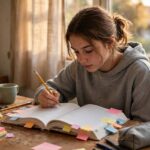
While reading, pause at natural breaks and summarize in one sentence — silently or in a margin note. If you cannot summarize the page you just read, re-read it now, not later. This feels slow at first; it is actually faster than reaching chapter ten with no idea what happened.
After reading, do a two-minute recall: close the book and write down the main points from memory. Then check what you missed. This retrieval practice converts short-term understanding into durable comprehension. Students who do this consistently outperform re-readers by wide margins on every measure I have tracked. tips for studying history exams
Building the Habit
Twenty focused minutes daily beats two hours on Sunday. Comprehension is a skill, and skills grow with frequency. Anchor reading to an existing habit — morning coffee, the commute, before bed — and protect that slot like a class.
Track pages or minutes, not books finished. A simple log — date, pages, one-sentence takeaway — creates accountability and shows progress that motivation alone cannot. When students see their summaries getting sharper over weeks, the habit sustains itself.
Join or form a reading accountability pair. You do not need a formal book club; one friend, one book, one weekly conversation about what you each understood. Explaining a chapter to someone else is the ultimate comprehension test — gaps you did not know you had appear instantly.
A 30-Day Reading Plan
Here is a concrete plan that turns this guide into results. Days 1-3: pick your two books — one technique book ('How to Read a Book' or similar) and one practice book you will genuinely enjoy. Set up your reading log: date, pages, one-sentence takeaway. Twenty minutes daily, anchored to an existing habit.
Days 4-10: technique week. Read the technique book's core chapters and apply each idea immediately to your practice book — preview before chapters, summarize after sections, mark confusions. The first week feels slow; you are installing new machinery, and installation is never fast.
Days 11-20: volume week. Shift the balance toward the practice book — thirty minutes daily if you can — while keeping the techniques running. This is where comprehension visibly improves: summaries get sharper, re-reading drops, and you start noticing author techniques unprompted.
Days 21-30: challenge week. Pick something slightly harder — a denser article, a classic essay — and apply everything. Then re-read something from day one and notice how different it feels. That contrast is your proof of progress, and it is more motivating than any metric.
After day 30, maintain with the habit, not the plan: twenty minutes daily, one technique book per quarter, practice books continuously. Comprehension is a fitness that needs maintenance — but maintenance is pleasant once the habit exists, because reading well is simply more enjoyable than reading poorly.
Track one number monthly: pages per hour at comfortable comprehension, measured on similar material. Expect it to rise for six months, then plateau at your new normal — a faster, deeper normal than where you started.
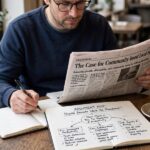
One more book category worth your time: books about how experts read in your field. A historian's guide to reading sources, a scientist's guide to reading papers — these teach the specialized comprehension moves that general books miss. One such book per field you study in pays for itself immediately. how to study for final exams
Do not neglect re-reading as a deliberate technique. Reading a great book twice — once for the story, once for the craft — builds a depth of comprehension single reads never reach. The second read is where you notice structure, and noticing structure is advanced comprehension.
Finally, write about what you read, even briefly. A three-sentence review after each book — what it argued, what convinced you, what did not — forces the precise understanding that passive finishing skips. Readers who write remember; readers who only finish forget.
'How to Read a Book' by Adler and Van Doren for technique, paired with short story collections like Jhumpa Lahiri's 'Interpreter of Maladies' for practice. Technique plus real reading beats either alone.
Yes — fiction requiring close attention builds inference, vocabulary, and sustained focus. Short stories are ideal because you can re-read them and discuss them, which is where comprehension deepens.
With 20 focused minutes daily using preview-summarize-recall techniques, most students notice clear improvement in 6 to 8 weeks. Consistency matters far more than total hours.
Drop down a level — graded readers for English learners, or more accessible fiction for native speakers. Comprehension grows fastest when you understand about 95 percent comfortably and stretch on the rest.
They build vocabulary and listening comprehension, which transfer partially to reading. But visual reading comprehension specifically requires reading text — use audiobooks as a supplement, ideally following along with the text.
There is no magic number — but students who complete three books with active techniques (preview, summarize, recall) consistently show measurable gains. Finish three before judging the method; most people quit during book one.