Japan Itinerary: 10 Days (Tokyo, Kyoto, Hiroshima + More)

Ten days is the classic first Japan trip — enough for the essential triangle (Tokyo, Kyoto, Hiroshima) plus the depth that makes it memorable (the day trips, the ryokan night, the unplanned hours). I’ve done Japan in 7, 10, 14, and 21 days, and 10 is the trip I’d prescribe: it’s the full Japan without the rush, the highlights without the blur.
This itinerary is day-by-day: where to go, how to get there (the trains — the system is the experience), where to stay, and what it costs. It’s built for first-timers but structured so repeat visitors can steal the framework. For the seasonal guides, see best places to visit in Japan.
The 10-Day Framework: Pace and Logic
The structure: Tokyo (4 days — the arrival, the metropolis, the day trip) → Hakone (1 day — the ryokan, Mount Fuji, the transit) → Kyoto (4 days — the temples, Nara, the depth) → Hiroshima/Miyajima (1 day — the history, the floating torii) → back to Tokyo (the departure). The direction (east to west) follows the Shinkansen line — the geography is the itinerary.
The pacing rule: 3–4 days per base (Tokyo, Kyoto), 1 day for the transits (Hakone, Hiroshima). The day trips (Nikko from Tokyo, Nara from Kyoto, Miyajima from Hiroshima) extend the bases without the packing. The unplanned half-days (the Shimokitazawa afternoon, the Philosopher’s Path morning — the wandering) are load-bearing — Japan rewards the unscheduled.
The JR Pass math: the 7-day pass ($280) covers days 3–9 (the long Shinkansen legs — Tokyo→Kyoto→Hiroshima→Tokyo). Activate on day 3 (the Hakone transit), and the Tokyo-local days (1–2, 10) use the IC card (Suica/Pasmo — the tap-to-pay, the convenience stores, the everything). The pass pays off with this routing — the individual tickets would run $400+.
Days 1–2: Tokyo — The Arrival
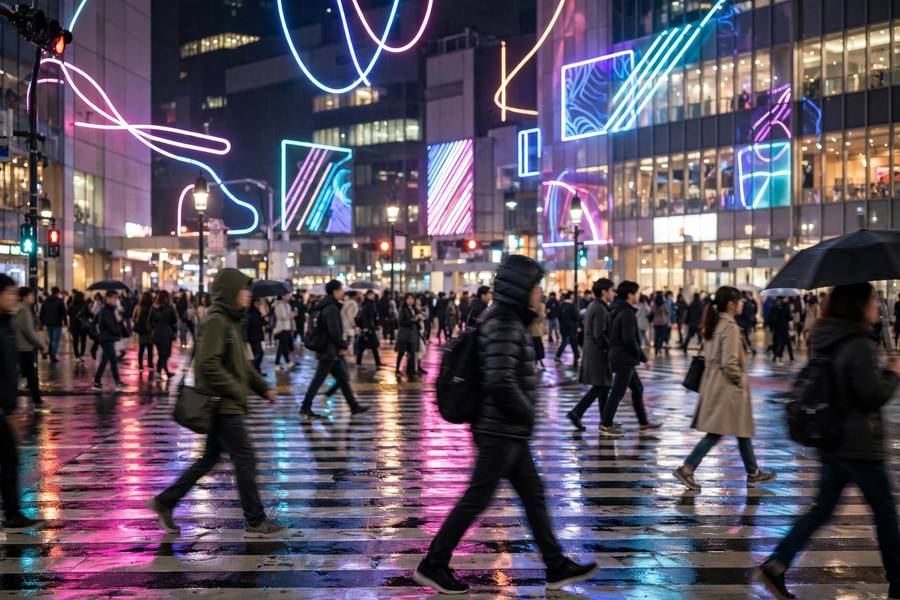
Day 1 (arrival): land at Narita/Haneda (the Narita Express or the monorail — 60/30 minutes, the IC card works), check in (the hotel near a JR station — Shinjuku, Shibuya, or Tokyo Station area), and the evening (Shibuya crossing at night — the scramble, the lights; the izakaya dinner — the first ramen, the arrival). The jet lag rule: stay up until 10 p.m. (the walk, the lights, the push-through — the adaptation).
Day 2 (west Tokyo): Meiji Shrine (the morning — the forest, the calm, the contrast), Harajuku (Takeshita Street — the youth culture, the crepes), Shibuya (the scramble by day, the Hachiko, the shopping), and Shinjuku (the evening — Omoide Yokocho’s yakitori alleys, the Golden Gai’s tiny bars, the neon). The west-side day — the modern Tokyo, the energy.
The Tokyo base: 4 days minimum (the city has the depth — the neighborhoods are the attraction). The IC card (the Suica — the trains, the konbini, the vending machines — the essential). The konbini (the convenience stores — the onigiri, the egg sando, the $5 meals — the traveler’s kitchen).
Day 3: Nikko Day Trip (or Tokyo Deep Dive)
Option A: Nikko — the 2-hour train (the Tobu or JR — the day trip), Toshogu Shrine (the UNESCO, the carvings, the Yomeimon Gate — the most decorated shrine in Japan), the cedar avenue (the 400-year-old trees, the walk), and Lake Chuzenji (the afternoon — the falls, the lake, the mountains). The cultural day — the history outside Tokyo. Back by evening.
Option B: Tokyo deep dive — Asakusa (Senso-ji Temple — the morning, the Nakamise shopping street), Ueno (the museums — the National Museum, the park), Akihabara (the electric town — the arcades, the anime, the culture), and the teamLab (the digital art — book ahead, the immersive, the evening). The choice: the history (Nikko) or the pop culture (Tokyo) — the trip’s personality.
The evening: the Shinkansen prep (the tickets — the reserved seats, the 7 a.m. train tomorrow; the ekiben — the station bento, the train picnic, the ritual). The early night (the 6 a.m. train — the Fuji views from the right-side window, the Shinkansen’s gift).
Day 4: Hakone — The Ryokan Day
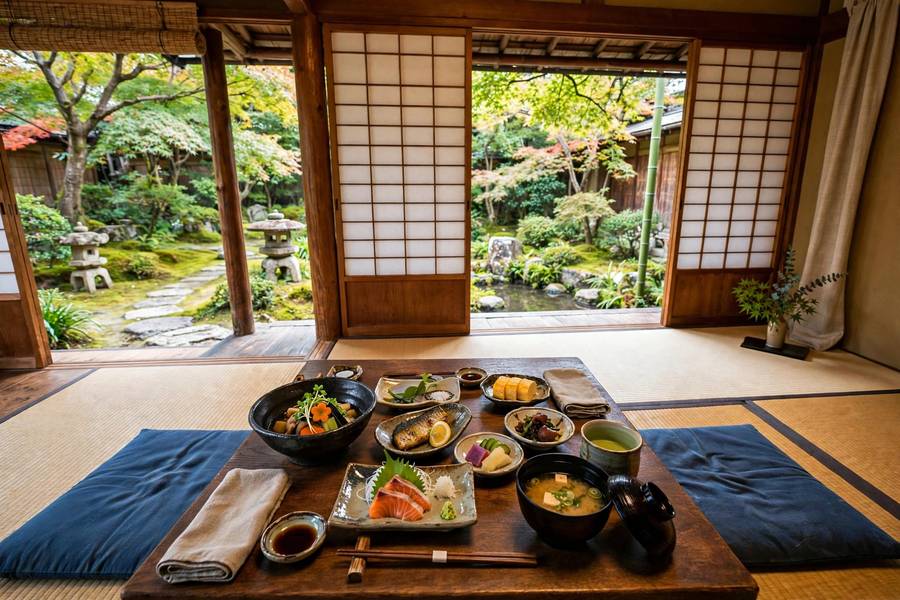
The transit: Tokyo → Hakone (the Romancecar or the Shinkansen + local — 90 minutes), the Hakone Loop (the circuit — the cable car, the pirate ship, the Open-Air Museum — the day’s sightseeing), and the ryokan (the check-in — 3 p.m., the yukata, the kaiseki dinner). The ryokan is the experience — the tatami room, the private onsen (book the room with one — the splurge, the worth-it), the multi-course dinner (the ceremony, the seasons).
Mount Fuji: the views (the loop’s viewpoints — the weather-dependent, the morning best), the Hakone Shrine (the lakeside torii — the photo), and the acceptance (the mountain hides — the 30% visibility, the bonus not the guarantee). The onsen (the outdoor bath — the steam, the cold air, the stars — the quintessential Japan). carry-on vs checked baggage
The cost: the ryokan ($200–400/night for two — the dinner + breakfast included, the experience priced in). The Hakone Free Pass ($60 — the loop’s transport, the 2-day). The packing: the overnight bag (the Shinkansen’s luggage — the forward the big bag to Kyoto, the takkyubin $20 — the light travel).
Days 5–7: Kyoto — The Temples
Day 5 (arrival + east): the Shinkansen (Hakone → Kyoto via Odawara — 2.5 hours), check in (the Higashiyama guesthouse — the machiya, the location), and the afternoon (Kiyomizu-dera — the stage, the city view, the sunset; the Higashiyama walk — the preserved streets, the shops, the evening). The arrival — the old capital, the shift.
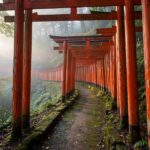
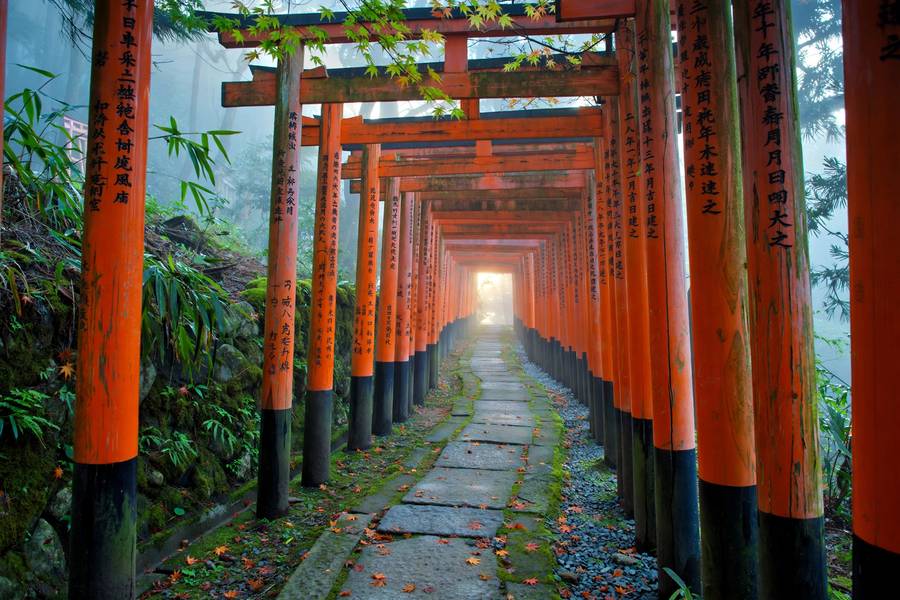
Day 6 (the icons): Fushimi Inari (the dawn — the 10,000 torii gates, the empty, the hike), Arashiyama (the bamboo grove — the early, the light; the Tenryu-ji Temple, the river), and the Golden Pavilion (Kinkaku-ji — the afternoon, the reflection, the gold). The big three — the early starts beat the crowds (the 7 a.m. Fushimi has 20 people; the 10 a.m. has 2,000).
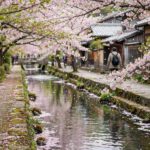
Day 7 (Nara + the depth): Nara (the 45-minute train — Todai-ji’s Great Buddha, the bowing deer, the Kasuga Shrine), back to Kyoto (the Philosopher’s Path — the canal walk, the temples, the quiet), and the Gion evening (the geisha district — the preserved, the glimpse, the dinner). The depth day — the beyond-the-icons, the Kyoto that rewards the slow.
Day 8: Hiroshima + Miyajima
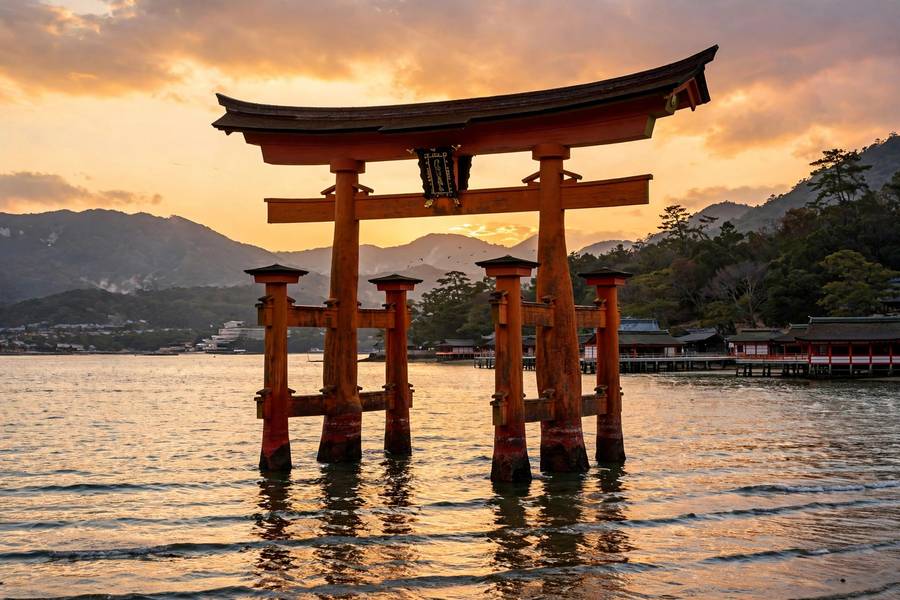
The Shinkansen (Kyoto → Hiroshima — 2 hours), the Peace Memorial Park (the Dome, the museum — the essential, the harrowing, the morning), and Miyajima (the ferry — 45 minutes, the floating torii — the high-tide timing, the Itsukushima Shrine, the deer, the momiji manju). The day trip — the history + the beauty, the contrast.
The okonomiyaki (the Hiroshima style — the layers, the lunch, the local), the sunset torii (the timing — the high tide, the photo, the memory), and the Shinkansen back (the evening train — the day’s completeness). The emotional day — the heaviest morning, the most beautiful afternoon, the trip’s depth.
The alternative: the 2-day Hiroshima (the overnight — the peace park at night, the Miyajima sunrise, the slow). The 10-day constraint makes it a day trip — the 14-day version gives it the night.
Days 9–10: Kyoto Depth + Tokyo Departure
Day 9 (Kyoto’s secrets): the western temples (Ryoan-ji’s rock garden — the contemplation; Ninnaji — the quiet), the Nishiki Market (the kitchen street — the tasting, the lunch), and the farewell (the Philosopher’s Path revisit, the favorite temple, the slow). The Shinkansen to Tokyo (the evening — the 2-hour, the city lights).
Day 10 (departure): the last morning (the Tsukiji outer market — the breakfast, the tuna; the Imperial Palace gardens — the walk, the calm), the Narita Express (the 60 minutes, the buffer — the 3-hour international rule), and the flight (the tax-free — the KitKats, the souvenirs, the last konbini). The trip ends — the planning for the return begins (the Japan effect — the 80% return rate, the real statistic).
Costs, Packing, and Practical Tips
The budget (per person, mid-range): flights ($800–1,200 — the flight timing), hotels ($100–150/night — the business hotels, the guesthouses; the ryokan splurge $150–200), JR Pass ($280), food ($50–70/day — the konbini + the restaurants), attractions ($10–20/day — the temples are cheap, the experiences aren’t). Total: $3,000–4,000. The budget version ($2,000–2,500): hostels, konbini, free sights.
Packing: the packing light system (the 7-day capsule + the laundry — the coin laundries, the hotel machines), the comfortable shoes (the temples = the stairs, the stations = the walking — 20,000 steps/day, the broken-in), and the layers (the season-dependent — spring/fall: the jacket; summer: the heat gear; winter: the coat).
The tips: the IC card (day 1, the airport — the essential), the cash (the Japan is cash-ish — the ATMs at 7-Eleven, the IC for the rest), the etiquette (the quiet trains, the no-tipping, the bowing — the respect), and the language (the 10 phrases — the sumimasen, the arigato — the effort, the smiles). The 10-day Japan trip — the classic, the complete, the start.
Yes — the classic first trip: Tokyo (4 days), Hakone (1), Kyoto (4), Hiroshima/Miyajima (1). It covers the essential triangle plus depth (day trips, ryokan, unplanned time). The 7-day version is the sprint; 14 days adds the Alps, Osaka, or the second-tier cities.
$3,000–4,000 per person mid-range (flights $800–1,200, hotels $100–150/night, 7-day JR Pass $280, food $50–70/day). Budget: $2,000–2,500 (hostels, konbini meals). The ryokan night ($150–200/person) is the splurge worth taking.
The 7-day pass ($280) pays off with the Tokyo → Kyoto → Hiroshima → Tokyo routing (individual tickets run $400+). Activate on day 3 (the long legs); use the IC card (Suica) for Tokyo-local days. For slower trips, regional passes may beat the national one.
Late March–April (cherry blossoms) and November (fall foliage) are the peak seasons — book 4–6 months ahead. May–June and September–October are the sweet spots (good weather, fewer crowds). Summer is hot/humid; winter is clear and uncrowded (plus the snow festivals).
The 7-day capsule + mid-trip laundry (coin laundries everywhere). Comfortable broken-in walking shoes (20,000 steps/day — temples, stations). Layers by season. The IC card covers transport; cash for the small shops (7-Eleven ATMs). Portable wifi or eSIM for navigation.