Wedding Dress Shopping Tips: 20 Things I Tell Every Bride

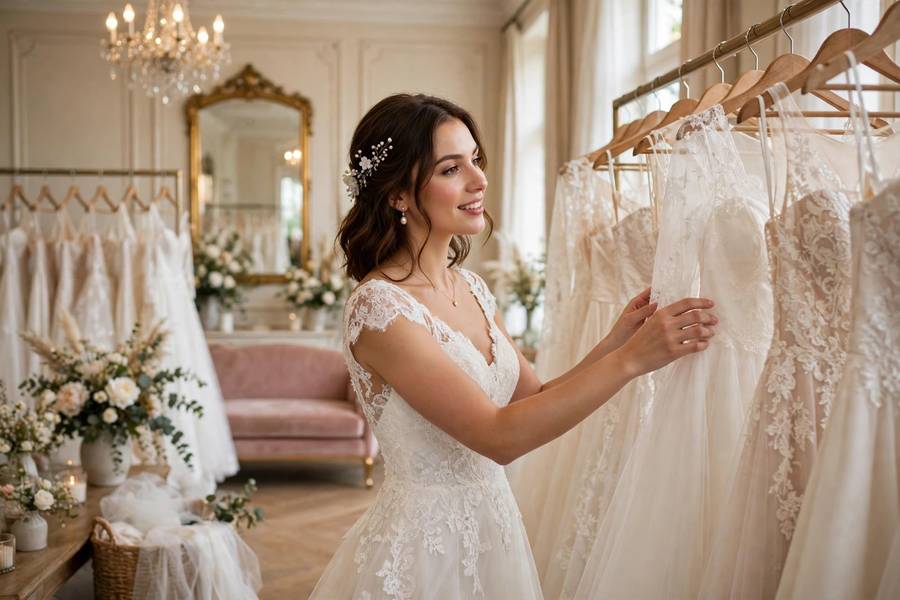
Wedding dress shopping is supposed to be magical — and it can be, if you go in prepared. I’ve accompanied dozens of brides to appointments, and the difference between a joyful experience and a stressful one is almost entirely preparation. Here are 20 tips I tell every bride before she steps into a salon.
Before You Shop
1. Set your budget FIRST — including alterations ($200–600), veil, shoes, and undergarments. The dress budget isn’t the dress price; it’s the total look. 2. Research silhouettes — know the basic shapes (A-line, mermaid, ballgown, sheath) so you can communicate. 3. Save inspiration photos — but stay open; 80% of brides choose something different from their Pinterest board. 4. Know your wedding vibe — venue, formality, and season narrow choices enormously.
For choosing your style, see how to choose a wedding dress — it’s the complete guide to finding your silhouette.
Budget Tips
5. Be honest about budget — tell the consultant your REAL number (including alterations). A good consultant respects it; trying on $5,000 dresses with a $1,500 budget is just heartbreak. 6. Ask about sample sales — 30–70% off, especially January and July. 7. Consider preowned — Stillwhite, Nearly Newlywed: designer dresses at fraction prices. 8. Factor in alterations early — a $800 dress + $400 alterations = $1,200 dress. Budget for the total.
9. Don’t forget the extras: veil ($50–300), shoes ($50–200), undergarments ($50–150), jewelry, alterations. These add $300–800 to the “dress” cost. Brides who budget for the dress alone always get surprised.
Appointment Strategy
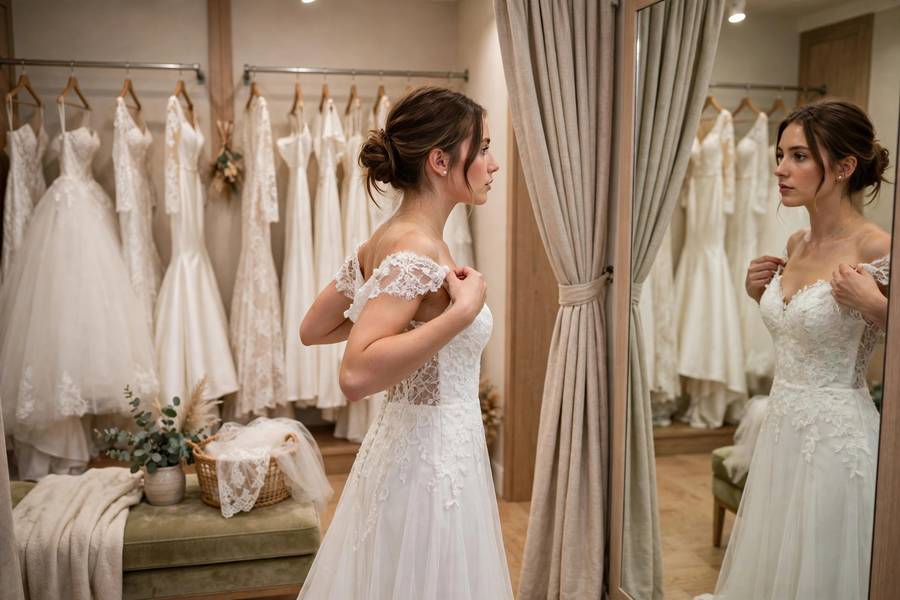
10. Book weekday mornings — quieter salons, more consultant attention, less pressure. 11. Limit appointments — 3–4 salons maximum. More than that causes decision paralysis. 12. Start 9–12 months out — designer dresses take 6–8 months to arrive. 13. Go alone first (optional but powerful) — one solo appointment lets you hear your own voice without opinions.
14. Bring 2–4 people max — people whose taste you trust and who support YOUR vision. Not: the crier (unhelpful), the agenda-haver (your mom’s dream ≠ yours), or a crowd (paralysis). Set expectations: “I want honest feedback on fit, but the decision is mine.”
What to Wear and Bring
15. Wear nude seamless underwear and bring a strapless bra (or plan to buy the salon’s). 16. Bring your wedding shoes (or same height) — hem and proportions depend on it. 17. Light makeup, hair half-done — enough to see the full picture, not so much you can’t change. 18. Bring inspiration photos — on your phone, organized. Show the consultant 5–10 favorites, not 200.
Eat before you go. Seriously — dress shopping while hungry and dehydrated makes everything feel wrong. Bring water and a snack. Your body and mood affect how dresses look more than you’d think.
During the Appointment
Try the wildcards. Let the consultant pull 2–3 dresses you’d never choose — the “just try it” dresses are legendary for a reason. Move in the dress: sit, walk, raise your arms, dance a little. You’ll do all of this on the wedding day. Check the back: guests see your back during the ceremony — make sure you love it. Photograph everything (ask permission) — front, back, side. Review at home without appointment pressure.
Trust the feeling, not the mirror alone. The right dress makes you stand differently — shoulders back, chin up, smiling without trying. That’s data. Listen to it.
The Decision
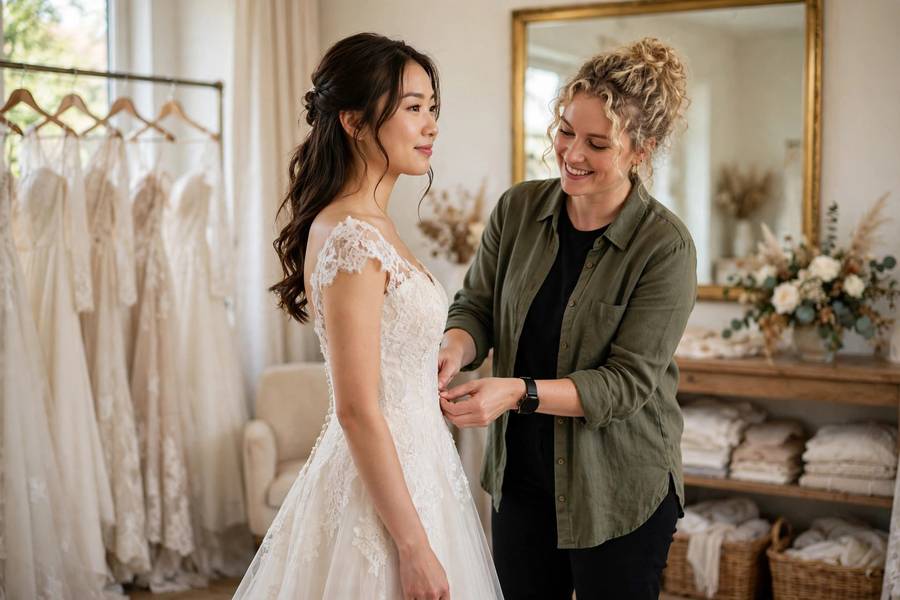
Sleep on it (unless it’s a sample sale — those don’t wait). The dress that still excites you the next morning is the one. Stop shopping after you buy. Seriously — unsubscribe from the emails, stop browsing. Dress regret comes from continued shopping, not from the dress. It’s OK to cry, and OK not to. Not every bride has the “moment” — some just feel calm certainty. Both are valid.
Second-guessing is normal. Almost every bride has a wobble. It passes. The dress you chose with a clear head is the right dress — don’t let 2am doubt override good decision-making.
After You Say Yes
Get everything in writing: designer, style number, size ordered, color, expected arrival date, deposit paid, balance due, cancellation policy. Ask about storage: will the salon store it until alterations? Schedule alterations 2–3 months before the wedding (not earlier — your body may change). Insure it if it’s expensive — wedding insurance or a rider on your policy.
For your wedding morning, our wedding day emergency kit checklist ensures you’re prepared for anything. And for full planning, how to plan a wedding covers every step.
Common Mistakes
Bringing too many people. Shopping without a budget. Buying too early (tastes change; bodies change). Buying too late (rush fees, limited options). Ignoring alterations cost. Choosing for photos over feeling (you’ll wear it 10 hours; you’ll see photos for decades — but you’ll REMEMBER how you felt). Letting someone else decide. It’s your dress. Your body. Your day.
Shopping on a Tight Timeline
Less than 6 months? Here’s the accelerated plan:
Skip made-to-order. Designer production takes 6–8 months — you don’t have it. Focus on: off-the-rack (take it home today), sample sales (buy the store sample), preowned (shipped in days), and rush production (8–12 weeks for a fee). Book ONE weekend of appointments (3–4 salons, back-to-back). Decision fatigue is real, but so is the deadline — concentrated shopping forces clarity.
Alterations on rush: book the seamstress BEFORE you buy (tell them your timeline). Budget extra for rush fees ($100–300). Prioritize fit over details — a well-fitting simple dress beats a poorly-fitting elaborate one. What to skip: custom veils (buy off-the-rack), extensive accessorizing (keep it simple), and second-guessing (you don’t have time — trust your gut).
The mindset: short-timeline shopping is actually liberating. You can’t overthink; you must decide. And brides who decide quickly are often happier — they don’t have months to develop dress regret. Some of the most stunning brides I’ve seen bought off the rack in a single afternoon. The dress matters less than the confidence.
Veil Shopping: The Companion Purchase
The veil is the dress’s partner — shop for it with intention:
When: with the dress or 4–6 months out. Custom veils take 8–12 weeks; off-the-rack is immediate. Lengths: birdcage (vintage, fun), blusher (short, traditional), elbow (versatile), fingertip (most popular — works with everything), waltz (dramatic), chapel (formal), cathedral (the statement — needs a formal dress and venue to match).
Matching: the veil should complement, not compete. Simple dress → elaborate veil (or vice versa). Lace dress → lace-edged veil (matching lace if possible — order together). Beaded dress → simple veil (let the dress shine). Color: match the dress exactly (ivory dress + white veil = clash). Bring a fabric swatch when veil shopping separately.
To veil or not: it’s optional. Alternatives: hair vines, combs, hats, flower crowns, capes, or nothing (your hair is enough). There’s no rule — the veil is tradition, not requirement. Budget: $50–300 (off-the-rack) to $500+ (custom). It’s a 20-minute accessory — don’t overspend unless it truly moves you. And practice wearing it (with your hairstyle) before the wedding — veils shift, and you should know how yours behaves.
Key Takeaways
Set the real budget first. Dress + alterations + veil + shoes + undergarments = the actual number. Book weekday mornings. Quieter salons, better attention, less pressure. Limit to 3–4 salons. More causes paralysis, not clarity. Try the wildcards. The consultant’s “just try it” picks are legendary for a reason. Sleep on it. The dress that still excites you next morning is the one. Then stop shopping — dress regret comes from browsing, not from the dress.
9–12 months before the wedding. Designer dresses take 6–8 months to arrive, plus 2–3 months for alterations. Less than 6 months? Focus on off-the-rack, samples, preowned, and rush production — you have options, just different ones.
3–4 maximum. More causes decision paralysis. Start with one solo appointment if you can (hear your own voice without opinions), then bring 2–4 trusted people. Quality of appointments beats quantity.
Nude seamless underwear, a strapless bra, your wedding shoes (or same height — hem depends on it), inspiration photos (5–10, not 200), and snacks. Eat beforehand — hungry, dehydrated dress shopping makes everything feel wrong.
$200–600 typically; more for complex changes, petite restructuring, or rush work. Budget alterations as part of the dress cost, not an afterthought. A $800 dress + $400 alterations = a $1,200 dress.
Completely normal. Not every bride has ‘the moment’ — many feel calm certainty instead of tears. Trust the feeling of rightness (shoulders back, smiling without trying), whatever form it takes. The movies lied about the crying.
Yes — unsubscribe from emails, stop browsing, avoid bridal social media. Dress regret comes from continued shopping, not from the dress. Trust the decision you made with a clear head; 2am doubt is not data.