First Time in Europe? 12 Best Places to Visit (2026)


Your first trip to Europe is a big deal — the continent that invented the grand tour, and you’re finally doing it. The question isn’t ‘where’ (everywhere is good) but ‘which first’ — because the first trip sets the pattern, and the wrong first trip (too many cities, too little time, the August crowds) is how people come home saying ‘Europe was exhausting.’
This is the starter guide: the twelve destinations that give you the essential Europe, the itineraries that connect them sanely, and the rookie mistakes to avoid. I’ve sent dozens of first-timers with this advice; it works. For the full destination ranking, see our best places to visit in Europe and the planning guide at how to plan a Europe trip.
The Big Three: Paris, Rome, London
Paris: the essential first stop — the Eiffel Tower (the summit, the morning), the Louvre (the strategy — icons first, one wing, out by 1), Montmartre (the golden hour), and the Seine (the walk, the night). 3–4 days. The city that best delivers the ‘I’m in Europe’ feeling — the cafés, the architecture, the light. See our Paris itinerary.
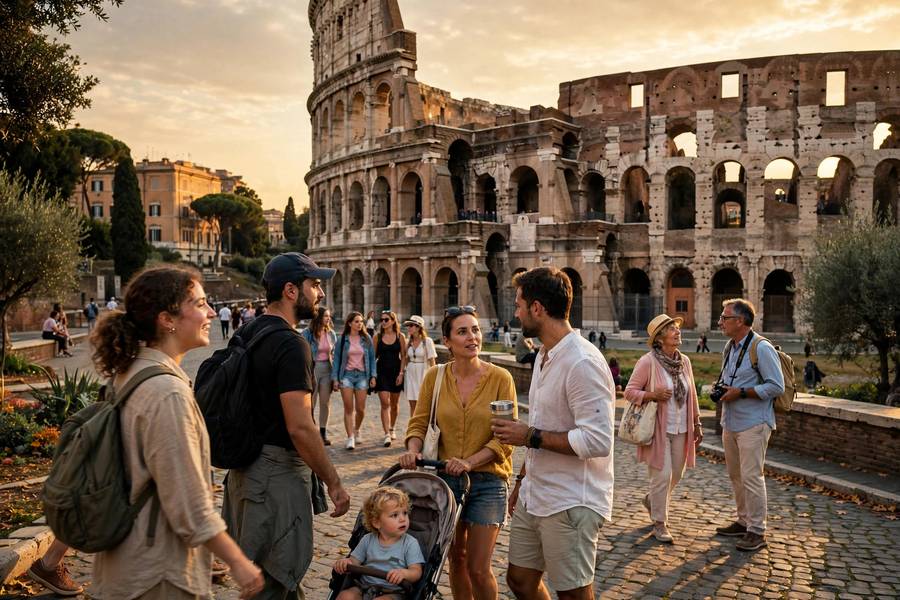
Rome: the open-air museum — the Colosseum (the underground tour — book ahead), the Vatican (the early entry — the Sistine Chapel without the crowds), the Pantheon (the oculus, the free entry), and Trastevere (the evenings — the trattorias, the passeggiata). 3 days. The history is the attraction — 2,000 years, walkable, everywhere. The food (the carbonara, the supplì, the gelato) is the bonus.
London: the easiest — no language barrier, the free museums (British Museum, National Gallery, Natural History — world-class, free), the parks (Hyde, Regent’s), the Thames (the boat, the bridges), and the theater (the West End — book ahead). 3 days. The gentle introduction — Europe with training wheels, and the history (the Tower, Westminster) is real.
The Next Tier: Barcelona, Amsterdam, Prague
Barcelona: Gaudí’s city — the Sagrada Família (book weeks ahead — the light through the stained glass, the morning), Park Güell (the mosaics, the views), the Gothic Quarter (the getting lost), and the beach (the Barceloneta — the city beach, the paella). 2–3 days. The fun Europe — the architecture, the food, the sea. The pickpockets (the Ramblas — the vigilance) are the caveat.
Amsterdam: the canals (the boat tour — the evening, the lights), the Rijksmuseum (the Dutch Masters — 2 hours), the Jordaan (the neighborhood — the cafés, the shops), and the bikes (the rental — the like-a-local, the careful). 2 days. The charming Europe — compact, civilized, unique. The coffee shops (the other kind — the culture, the optional) and the red light (the window, the walk-through) are the education.
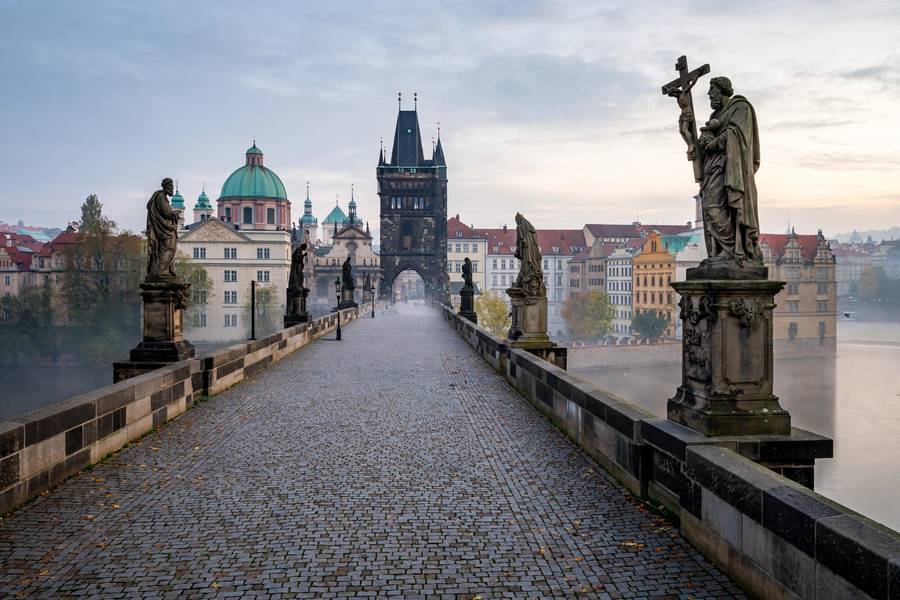
Prague: the fairy tale — the Old Town Square (the astronomical clock, the hour), Charles Bridge (the dawn — the empty, the statues), the Castle (the complex, the views), and the beer (the $2.50 world-class lager — the culture). 2 days. The affordable Europe — the beauty of Vienna at half the price. The stag parties (the weekends — the noise) are the caveat; go midweek.
The Wildcards: Santorini, Swiss Alps, Edinburgh
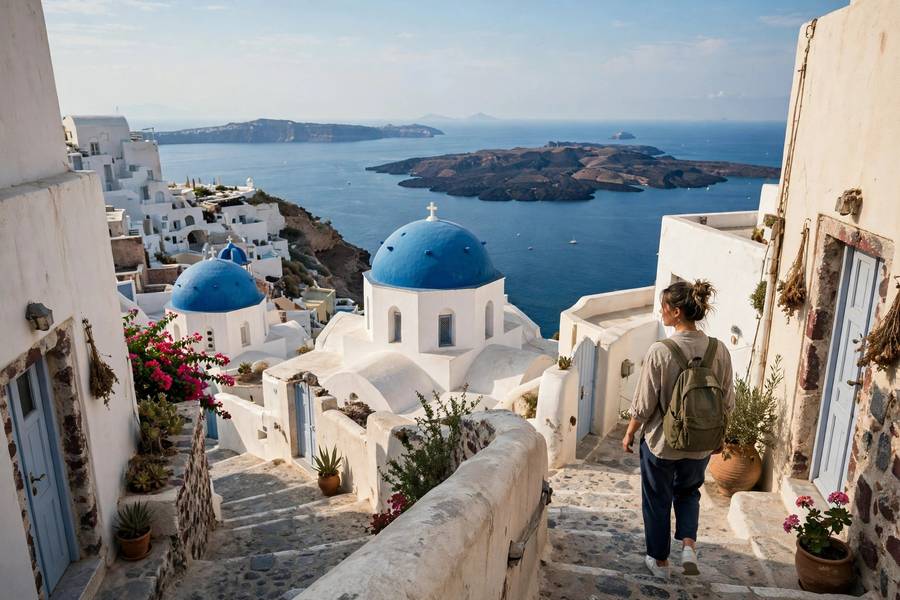
Santorini: the splurge stop — the caldera (Oia’s sunset, the catamaran, the cave hotel). 2–3 days, the honeymooners and the dreamers. The first-timer’s reward — the trip’s ‘wow’ chapter. June or September (the August crush is the mistake).
Swiss Alps: the nature stop — Zermatt (the Matterhorn, the car-free, the trains), Interlaken (the adventure — the paragliding, the lakes), and the trains (the Glacier Express, the scenic — the journey). 2–3 days. The Europe that’s not cities — the mountains, the precision, the chocolate. The expensive (the most expensive — the budget accordingly).
Edinburgh: the atmospheric — the Royal Mile (the castle, the closes), Arthur’s Seat (the hike, the city view), the pubs (the whisky, the live music), and the day trips (Stirling, the Highlands taste). 2 days. The moody Europe — the history, the literature, the weather (the pack-the-shell).
The Itineraries: 7, 10, and 14 Days
7 days (the classic first trip): London (3) → Paris (4) via Eurostar (2 hours, city-center to city-center — the train is the experience). Two cities, two countries, the essential Europe. The mistake to avoid: adding a third city (the travel days eat the trip — 7 days = 2 cities, the rule).
10 days (the grand tour): London (3) → Paris (3) → Rome (4) — the Eurostar + the flight (the budget airlines, $50–80). Three capitals, three cultures, the classic. The pace: 3–4 days per city (the minimum for the feel — the 2-day city is the drive-by).
14 days (the deep dive): London (3) → Paris (4) → Barcelona or Amsterdam (3) → Rome (4). Four cities, the trains + the flight, the comprehensive. The alternative: the slow 14 (Paris 5 + Rome 5 + one wildcard 4 — the depth over the breadth, the local’s trip). The first-timer’s choice: the 10-day grand tour (the coverage, the sanity).
Rookie Mistakes to Avoid
The city-a-day sprint: 7 cities in 10 days (the Instagram itinerary — the exhaustion, the blur). The rule: 3 nights minimum per city (the 2-night stay = 1 full day — the math of disappointment). The travel days (the packing, the transit, the checking in — half a day each, the hidden cost).
The August trip: Europe’s vacation month (the closures — the Parisian bistros, the Roman shops; the crowds — the everywhere; the heat — the south). The first-timer’s months: May–June and September (the weather, the crowds, the prices — the sweet spot). The winter alternative (December’s markets — the different trip, the magical).
The money mistakes: the airport exchange (the worst rates — the ATM on arrival, the no-fee card), the dynamic currency conversion (the ‘pay in dollars?’ — always pay in local, the 3–5% scam), and the cash over-carry (the cards work everywhere — the $100 backup, not the $1,000 belt). The flight timing for the fare strategy.
Practical First-Timer Tips
The documents: passport (6+ months validity — the rule), ETIAS (the EU’s travel authorization — launching, the $8, the online — check the status), travel insurance (the medical — the $100, the non-negotiable), and the copies (the digital + the paper — the backup).
The connectivity: the eSIM (the Airalo/Holafly — the $20, the data, the arrival-ready) or the local SIM (the airport kiosk — the cheaper, the hassle). The offline maps (the download — the no-signal, the essential). The translation app (the camera — the menus, the signs, the magic).
The etiquette: the greeting (the bonjour/buongiorno — the attempt, the respect), the tipping (the 5–10% — not the 20%, the included service), the volume (the Americans — the quiet, the awareness), and the pace (the Europeans — the slow lunch, the passeggiata, the join). The first trip’s lesson: Europe rewards the unhurried — the schedule is the enemy, the wandering is the point.
What I’d Tell My First-Timer Self
Go in May or September (the weather, the crowds, the prices — the beginner’s advantage). Take the trains (the Eurostar, the high-speeds — the city-center, the views, the romance — the Europe planning guide has the rail details). Learn 10 words (the bonjour, the grazie, the effort — the doors it opens).
Eat the local (the menu du jour, the trattoria, the market — the $15 lunch beats the $50 dinner). Stay central (the location over the luxury — the 3-star in the Marais beats the 5-star in the suburbs). And the one: the trip is the start, not the once — Europe rewards the return (the second trip is the deep one, the first is the hello).
Paris, Rome, and London are the essential first three — the icons, the history, the ease. A 10-day grand tour (London 3 → Paris 3 → Rome 4) is the classic first trip. Add Barcelona, Amsterdam, or Prague if you have 14 days.
10 days (3 cities) is the sweet spot; 7 days (2 cities) is the minimum; 14 days (4 cities) is the deep dive. The rule: 3 nights minimum per city — the 2-night stay is one full day, and the travel days eat half-days.
May–June and September — good weather, manageable crowds, fair prices. Avoid August (closures, crowds, heat). December is the alternative (Christmas markets, the different trip).
$2,500–4,000 per person for 10 days mid-range (flights $600–900, hotels $120–180/night, food $60–80/day, attractions/transport $30–50/day). The budget version ($1,500–2,000): hostels, markets, free sights. The splurge ($5,000+): the nice hotels, the restaurants.
Too many cities (the sprint — 3 nights minimum per city), August travel (closures, crowds, heat), airport currency exchange (worst rates — use ATMs), dynamic currency conversion (always pay in local currency), and over-scheduling (the wandering is the point — leave unplanned hours).