Three days in Paris is both plenty and nowhere near enough. Plenty, because the city’s great hits are compact and the metro is excellent. Nowhere near enough, because Paris rewards wandering, and wandering takes time.
I’ve done the Paris long weekend four times — twice as a rushed correspondent squeezing sightseeing between assignments, twice properly. This itinerary is the best version: the icons without the exhaustion, the neighborhoods without the tourist traps, and enough unscheduled time that Paris can do what Paris does — surprise you.
Table of Contents
- Before You Go: Paris Basics
- Day 1: Icons and the Seine
- Day 2: Neighborhoods and Art
- Day 3: Choose Your Paris
- Where to Eat (Without Overthinking It)
- Practical Tips
Before You Go: Paris Basics
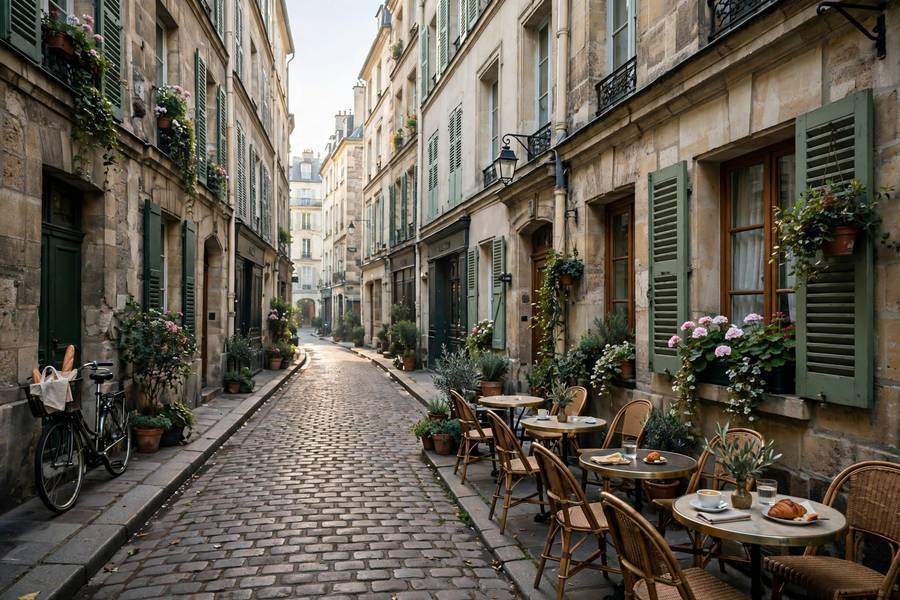
Getting around: The metro is fast, cheap, and comprehensive. Buy a Navigo Easy card or use contactless payment at the gates. Paris is also wonderfully walkable — the center is compact, and some of the best moments happen between metro stops.
Tickets: Book the Eiffel Tower summit and the Louvre online in advance — the lines without reservations are brutal. Most other sights are manageable.
When to go: April–June and September–October are ideal. August means closures (many small shops and restaurants shut for holidays) and heat.
Documents: Non-EU visitors need a valid passport; check visa requirements for your nationality well ahead. If you’re starting from scratch, how to apply for a passport walks through the whole process.
Day 1: Icons and the Seine
This is the greatest-hits day. Start early and move with purpose — you’ll earn the slow afternoons later.
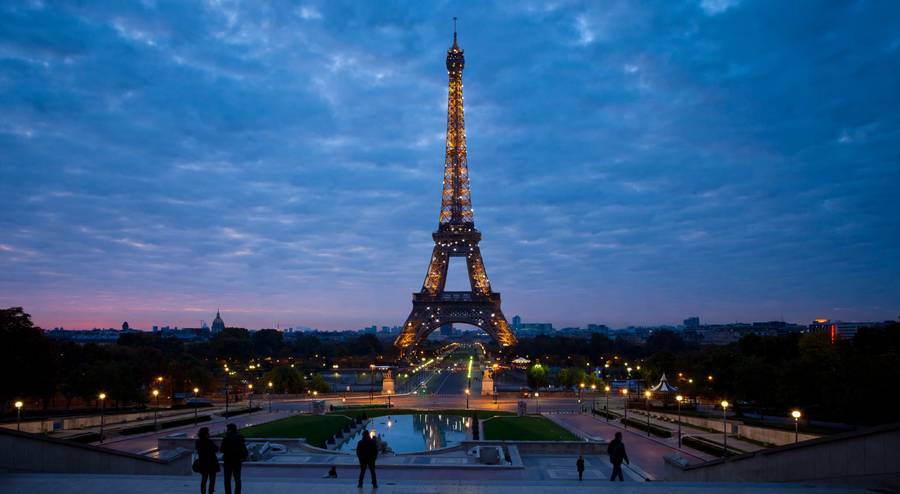
Morning: The Eiffel Tower and Trocadéro. Arrive at opening (9:30 a.m.) with pre-booked summit tickets. Go all the way up — the second floor is great, the summit is the memory. Then walk across the Pont d’Iéna to the Trocadéro for the classic photo angle, and keep walking into the Palais de Chaillot gardens.
Midday: Champs-Élysées to the Arc de Triomphe. Walk the avenue (it’s more impressive as a stroll than a destination), then climb the Arc for one of Paris’s best panoramas — the twelve avenues radiating out below you, the Eiffel Tower in the distance. It’s cheaper and less crowded than the Tower, and honestly the better view.
Afternoon: Tuileries and Place de la Concorde. Walk down through the Tuileries Garden — grab a green metal chair by the fountain, do as the Parisians do, and just sit. This is your first deliberate slow moment. The garden is free and it’s one of the city’s great pleasures.
Evening: Seine cruise and dinner. Take a one-hour Seine cruise at sunset (book ahead, the Vedettes du Pont Neuf boats are smaller and nicer than the big Bateaux-Mouches). Then dinner in Saint-Germain-des-Prés — pick a bistro with a crowded terrace, which is the only review system you need in Paris.
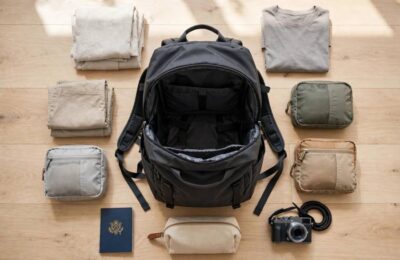
Day 1 walking total: A lot. Wear your broken-in shoes — what to pack for international travel has my full footwear sermon.
Day 2: Neighborhoods and Art
Today is about depth over breadth: one museum done right, and two neighborhoods explored on foot.
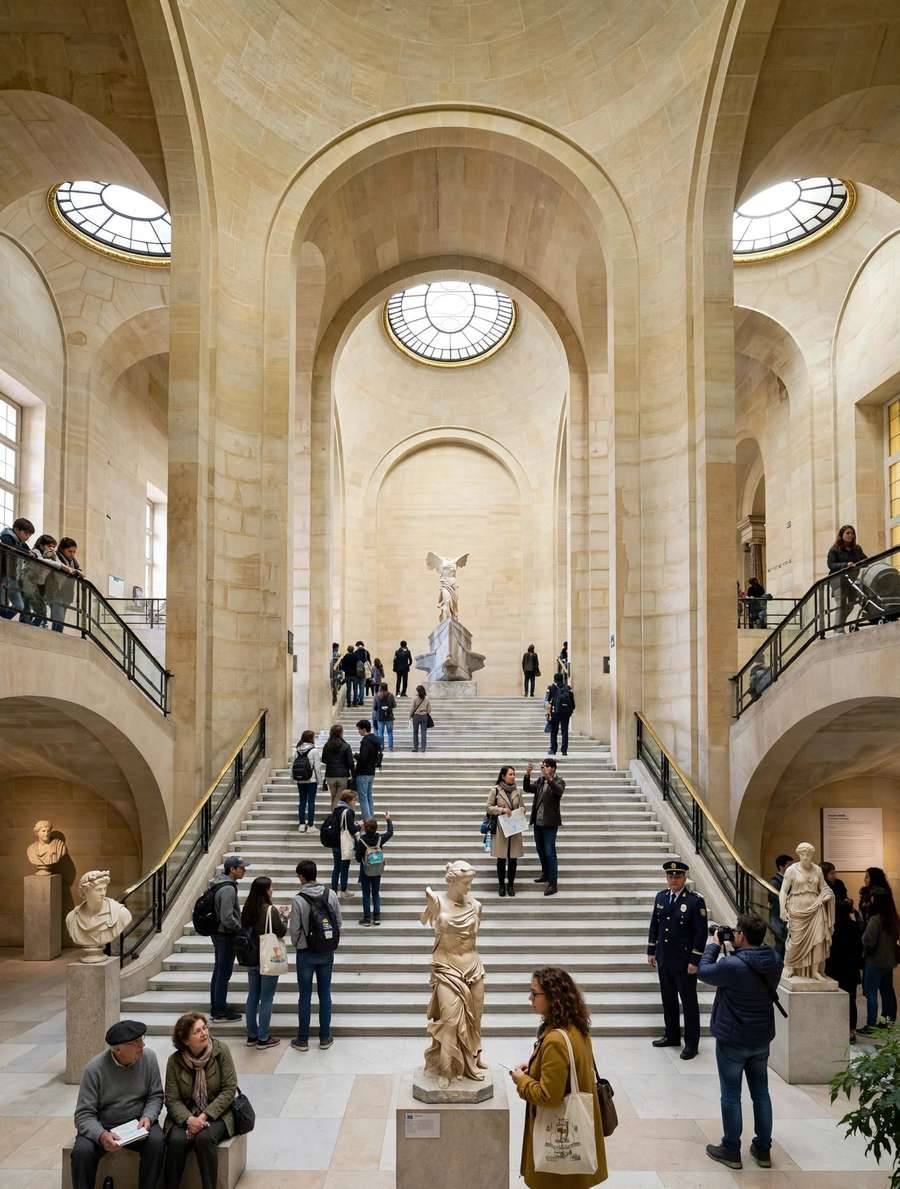
Morning: The Louvre (strategically). Arrive at the 9 a.m. opening with a timed ticket. Here’s the secret: don’t try to “do” the Louvre. Pick three things — the Mona Lisa (go first, it’s a 30-second viewing), the Winged Victory of Samothrace, and the Denon wing’s Italian paintings — then leave after two hours. The Louvre punishes completists and rewards the focused.
Alternative: If classical art isn’t your thing, swap in the Musée d’Orsay (Impressionists in a converted railway station — my personal favorite) or the Centre Pompidou (modern art + the rooftop view).
Afternoon: Le Marais. Cross to the Right Bank and get lost in the Marais — medieval streets, art galleries, the Place des Vosges (Paris’s oldest square, perfect for a sit-down). This is falafel and boutique territory. The Musée Carnavalet (free, history of Paris) is an underrated gem here.
Evening: Montmartre. Take the metro north as the light goes golden. Walk up through the winding streets (skip the pushy portrait artists at the base), see Sacré-Cœur’s white domes glowing, and watch the sunset over the city from the steps. Then dinner in the neighborhood — Montmartre’s side streets hide excellent bistros away from the Place du Tertre tourist crush.
Day 3: Choose Your Paris
By day three, you’ve earned the icons. Today, pick the Paris that speaks to you.
Option A: Palace day. Morning at Versailles — go at opening, head straight for the Hall of Mirrors before the tour buses, then spend the afternoon in the gardens (bigger and better than the palace itself, in my opinion). Back in Paris for a farewell dinner.
Option B: Left Bank wandering. The Latin Quarter, the Panthéon, Shakespeare and Company bookstore, the Luxembourg Gardens. This is the Paris of writers and students — bookshops, cafés, and the loveliest park in the city. Slow, literary, perfect.
Option C: Modern Paris. The Marais’s contemporary galleries, the Coulée Verte (Paris’s original elevated park, older than New York’s High Line), street art in Belleville, and dinner in the canal-side restaurants of Saint-Martin. For repeat visitors or the design-minded.
My recommendation for first-timers: Option B. Versailles is magnificent but eats a full day and it’s a palace — the Luxembourg Gardens on a sunny afternoon, with a picnic from a nearby boulangerie, is the more Parisian memory. There’s a philosophy to this: slow travel beats checklist travel, especially in Paris.
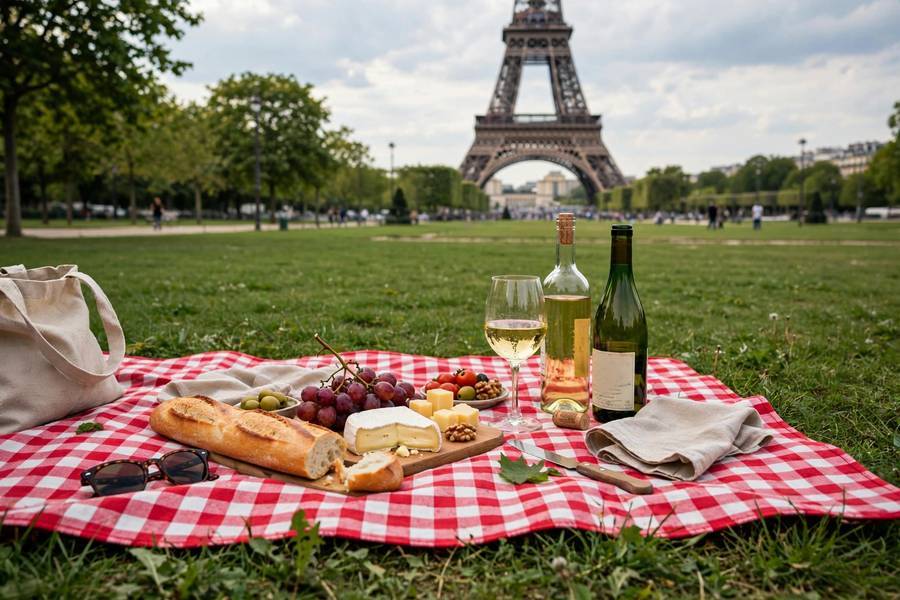
Farewell evening: End where Paris ends best — with a picnic on the Champ de Mars as the Eiffel Tower sparkles (it glitters for five minutes every hour after dark). Baguette, cheese, something from the fromagerie, and the best free show in Europe.
Where to Eat (Without Overthinking It)
Paris dining anxiety is real and unnecessary. A few principles:
- Eat where locals eat: crowded terraces at lunch, chalkboard menus, no one hawking outside.
- Boulangeries are a food group: a jambon-beurre (ham butter baguette) from a good bakery beats most restaurant lunches.
- The €20-25 lunch formula: many bistros offer a starter+main or main+dessert lunch menu — the best value in French dining.
- Markets: Marché d’Aligre or Marché des Enfants Rouges for picnic supplies and grazing.
- One splurge: pick one memorable dinner — a classic bistro or a modern tasting menu — and book it before you fly.
Practical Tips
- Tipping: Service is included (service compris). Rounding up or leaving small change is polite but not obligatory.
- Language: A bonjour on entering any shop is non-negotiable socially. Learn it, use it, watch faces warm up.
- Pickpockets: The metro and major sights have them. Front pockets, crossbody bags, basic awareness — that’s all it takes.
- Sunday closures: Many shops close Sunday; museums and restaurants are open. Plan shopping for other days.
- The Paris Pass question: Skip the big sightseeing passes for three days — you won’t hit enough sights to break even. Pay as you go.
- Museum closing days: Many Paris museums close one day a week (often Monday or Tuesday) — check before planning your museum day around them.
- Free first Sundays: Several major museums offer free entry on the first Sunday of each month — wonderful if the budget is tight, but expect bigger crowds.
Three days won’t make you a Parisian, but done right, they’ll make you someone who understands why people fall for this city. Go early, walk everywhere, sit in gardens, eat the bread. Paris does the rest.
Frequently Asked Questions
Three days covers the essential icons (Eiffel Tower, Louvre, Arc de Triomphe, key neighborhoods) at a comfortable pace if you plan well. You won’t see everything, but you’ll leave with a real feel for the city. Four to five days allows a day trip to Versailles without rushing.
Skip trying to see the entire Louvre (pick highlights), the Moulin Rouge area beyond a walk-through, and over-scheduled days. Paris rewards unscheduled time — leave gaps for wandering, garden-sitting, and long café stops.
Yes — summit tickets frequently sell out days or weeks ahead in peak season. Book timed-entry tickets on the official website as early as possible. Without reservations, expect very long lines or no availability at all.
The 1st-7th arrondissements (Louvre, Saint-Germain, Le Marais, Latin Quarter) put you within walking distance or a short metro ride of everything. Saint-Germain-des-Prés and Le Marais offer the best mix of centrality, dining, and atmosphere for first-timers.
Mid-range: roughly €150-250 per person per day including a central hotel, meals, metro, and sights (excluding shopping). Budget travelers can manage on €80-120 with hostels and bakery meals; luxury trips run €400+ daily.
Very — the historic center is compact, and most major sights are 20-40 minutes apart on foot. The metro fills the gaps efficiently. Expect 15,000-25,000 steps on a full sightseeing day, so broken-in walking shoes are essential.