How to Pack Light for a Week: The Complete System (Carry-On Only)

Here’s the math that changed how I travel: a week’s worth of outfits weighs about 4 kg. The average checked bag weighs 18 kg. That means 14 kg of every checked bag is stuff you won’t wear — ‘just in case’ items, duplicates, and the three pairs of shoes. I know because I used to be that packer, and I weighed everything during my conversion.
Packing light for a week isn’t about deprivation or wearing the same shirt seven days. It’s a system — a formula for what to bring, how to choose it, and how to make it fit. I’ve used this exact system on 40+ trips, from tropical beaches to Scandinavian winters, and it has never failed me.
For the philosophy behind it all, read our how to pack light guide. This is the tactical manual: the week-long version with every detail.
The 5-4-3-2-1 Formula
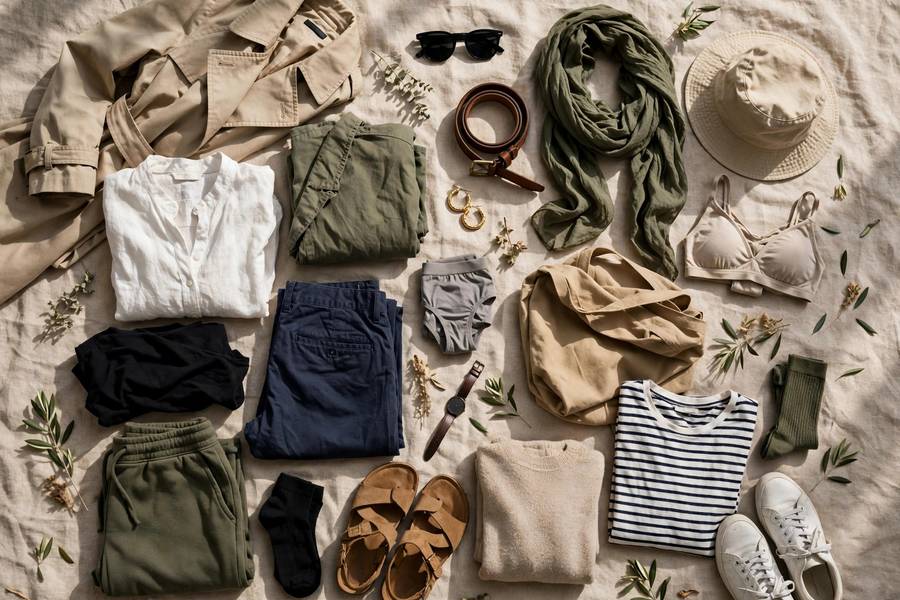
This is the entire system in five numbers. For one week: 5 tops, 4 bottoms, 3 pairs of shoes (wearing one), 2 layers, 1 hat. That’s it. Everything else — underwear, socks, toiletries, tech — fits around this core.
5 tops: 3 casual (t-shirts or blouses), 2 dressy (one collared shirt or nice blouse, one ‘evening’ top). All in a coordinated color palette — navy, white, gray, plus one accent. If every top matches every bottom, 5 tops × 4 bottoms = 20 outfit combinations. The math of a capsule wardrobe is why this works.
4 bottoms: 2 trousers/jeans, 1 shorts or skirt, 1 ‘nice’ option (chinos or a dress). Choose fabrics that resist wrinkles — merino wool, synthetic blends, or treated cotton. Jeans are the heaviest item; wear them on the plane, don’t pack them.
3 pairs of shoes: one on your feet (the bulkiest — sneakers or boots), one packed flat (sandals or flats), one for specific use (running shoes or dress shoes). Shoes are the volume killer — every pair beyond three costs you a full packing cube of space.
2 layers: a mid-layer (fleece or light sweater) and an outer shell (packable rain jacket). This covers everything from air-conditioned museums to unexpected cold snaps. 1 hat: a packable sun hat or beanie depending on destination.
The Capsule Wardrobe: Choosing What Goes In
The formula tells you how many; the capsule tells you which. The rule: every item must match at least 3 other items. Lay everything on the bed before packing — if a top only works with one specific bottom, it doesn’t go. This one test eliminates 80% of overpacking.
Color palette: pick 2 neutrals + 1 accent. My travel palette is navy, white/gray, plus olive or burgundy. Every combination works, everything looks intentional, and photos look coordinated without trying. Black is the classic travel neutral but shows lint and looks harsh in sunny destinations; navy is more forgiving.
Fabric is the secret weapon. Merino wool tops ($60–100) sound expensive until you realize one merino shirt replaces three cotton ones — it doesn’t smell, regulates temperature, and dries overnight. For a week, 2 merino tops + 3 regular is the sweet spot. Synthetic hiking shirts work similarly for outdoor trips.
The ‘wear test’: everything you pack should be something you’ve worn in the last month. New clothes, ‘maybe’ outfits, and aspirational items (the dress for the fancy dinner that won’t happen) stay home. Pack your favorites — the clothes you reach for automatically — because you’ll reach for them on the trip too.
Packing Techniques That Actually Work
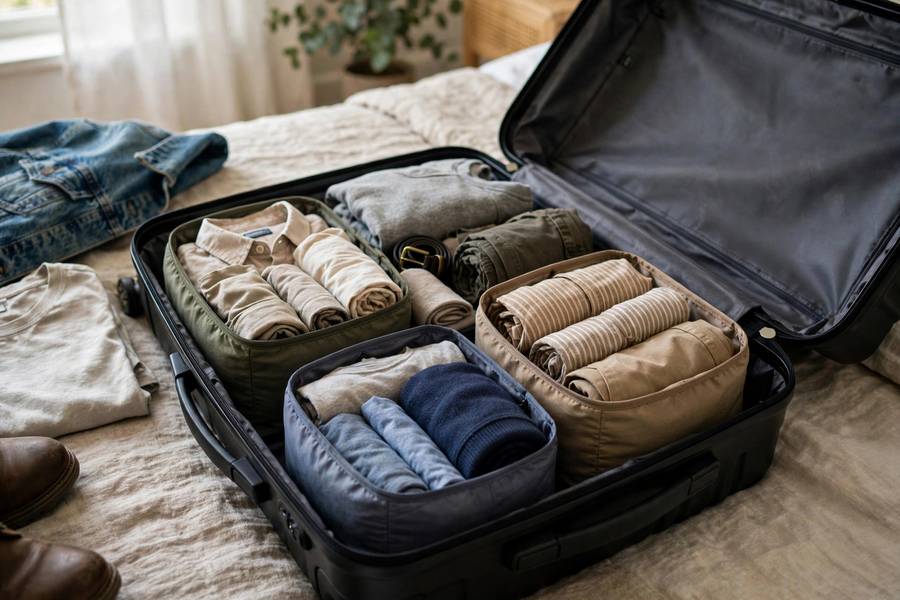
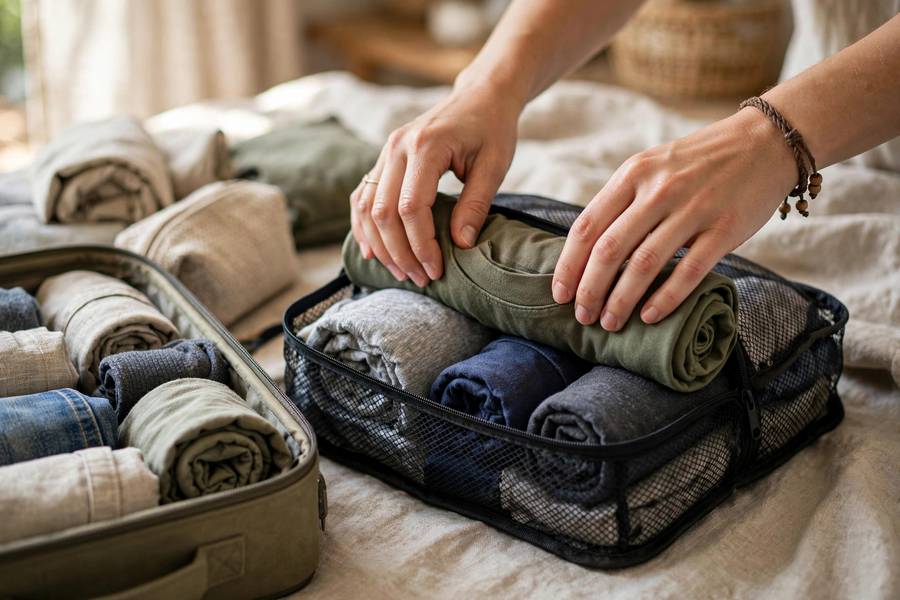
Rolling vs. folding: rolling wins for casual clothes (t-shirts, jeans, knitwear) — fewer wrinkles, better space use. Folding wins for structured items (collared shirts, blazers). I do both: roll the casual, fold the dressy, and use the bundle method for the one nice outfit (wrap everything around a core — it arrives nearly wrinkle-free).
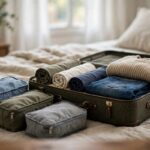
Packing cubes are the real practical upgrade, not for space but for sanity. One cube for tops, one for bottoms, one for underwear/socks. You can pull out the tops cube without exploding the whole bag. Compression cubes (with the extra zipper) genuinely save 20–30% volume — worth it for the savings in space. one bag travel packing list
The bottom-of-bag layer: shoes heel-to-toe along the bottom, stuffed with socks and chargers (dead space is the enemy). Heavy items at the wheel end of a rolling bag (stability) or against your back in a backpack (weight distribution). Toiletries in the outside pocket for security screening.
The 24-hour test: pack everything, then live out of the bag for a day at home. You’ll immediately find the problems — the cube that doesn’t fit, the ‘essential’ you never touch, the shoes that hurt. Fix it now, not at the airport.
Toiletries and Tech: The Minimalist Kit
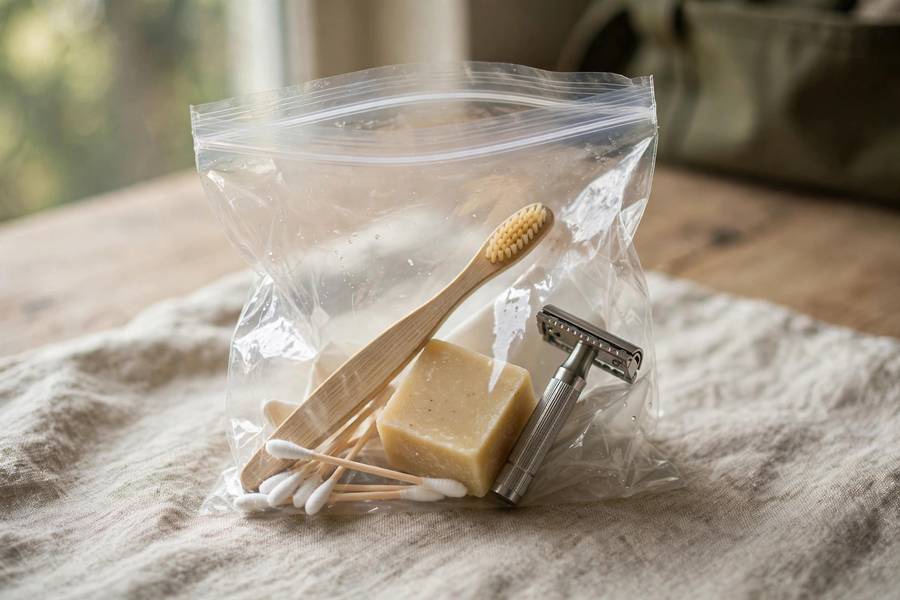
Toiletries: the 3-1-1 rule (3.4 oz containers, 1 quart bag, 1 per passenger) is the constraint — embrace it. Decant into small bottles; you need far less than you think for a week. Bar shampoo and conditioner (no liquid limit, lasts months, zero spill risk) are the single best toiletry hack. Toothpaste tabs replace the tube.
The ‘buy there’ list: sunscreen (bulky, often cheaper at destination), full-size anything, and anything you can get at the hotel (most mid-range hotels have decent shampoo). The ‘bring’ list: prescription meds (in original bottles, with a copy of the prescription), contact solution (small bottle), and your specific skincare actives.
Tech: phone, charger, and a multi-port USB charger (one plug, three devices). A universal adapter if international — see our travel adapter guide. Earbuds, not bulky headphones. A power bank (10,000 mAh — enough for 2–3 phone charges). That’s the complete kit for most travelers; add a laptop only if you’re actually working.
The Laundry Strategy (Why a Week Is Easy)
Here’s the liberating truth: you don’t need 7 days of clothes for 7 days. You need 4–5 days of clothes plus one laundry session. Every hotel has laundry (expensive) or a sink (free). The sink wash takes 10 minutes: warm water, a dab of shampoo or travel soap, agitate, rinse, roll in a towel to squeeze, hang overnight. Merino and synthetics dry by morning; cotton takes longer.
Plan the laundry day for day 4 — the midpoint. It becomes a ritual: wash in the evening, dry overnight, fresh clothes for the second half. Some travelers prefer the laundromat experience (common in Asia and Latin America — cheap, fast, and culturally interesting). Others use hotel laundry for the ‘I deserve this’ splurge mid-trip.
This is also why the formula works for 2 weeks (see our full guide) — you just do laundry twice. The system scales; the bag doesn’t need to.
Carry-On Bags: What Fits This System
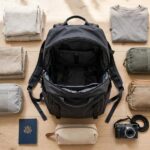
The bag matters less than the system, but the right bag helps. For this formula: a 35–40L carry-on backpack or a 20-inch rolling suitcase. Both fit airline carry-on limits (though budget airlines are stricter — check carry-on vs checked rules before you fly).
Backpack vs. roller: backpacks win for multi-city trips (stairs, cobblestones, no checked-bag risk), rollers win for single-destination business travel (wrinkle-free clothes, easy airports). I use a 40L backpack for 90% of trips — the freedom of never visiting baggage claim is worth the shoulder workout.
The personal item is your overflow valve: a tote or daypack that holds the ‘flight kit’ (book, snacks, headphones, jacket) plus anything that didn’t fit in the main bag. Airlines rarely weigh personal items. Use this strategically, not as an excuse to overpack.
Common Mistakes and How to Fix Them
Mistake 1: ‘just in case’ items. The umbrella, the extra sweater, the third pair of ‘nice’ shoes. Rule: if you haven’t used it in the last 3 trips, you won’t use it on this one. The ‘just in case’ scenario almost never happens, and if it does, you buy the thing there — a $10 umbrella in Rome is a souvenir, not a failure.
Mistake 2: packing for the trip you wish you were taking. The hiking boots for the hike you won’t do, the cocktail dress for the gala that isn’t happening. Pack for your actual itinerary — the museums, restaurants, and walks you’ve actually planned.
Mistake 3: full-size everything. Decant. Every full-size bottle is 200g of dead weight. The week-long supply of shampoo is 100ml, not 400ml. This alone saves a kilogram.
Mistake 4: no color coordination. Five tops in five unrelated colors = five outfits. Five tops in a palette = twenty outfits. The palette is the highest-ROI packing decision you make.
Yes — the 5-4-3-2-1 formula (5 tops, 4 bottoms, 3 shoes, 2 layers, 1 hat) plus one mid-trip laundry session covers a week in a 35–40L bag. The keys: a coordinated color palette, wrinkle-resistant fabrics, and packing cubes. I’ve done it 40+ times.
5 tops and 4 bottoms in matching colors = 20 combinations. You don’t need 7 of everything — you need 4–5 days of clothes plus one sink laundry session on day 4. Merino wool tops extend this further since they don’t smell.
Roll casual clothes (t-shirts, jeans, knitwear) for fewer wrinkles and better space use. Fold structured items (collared shirts, blazers). Use the bundle method for your one nice outfit. Packing cubes matter more than the technique — they keep everything organized.
35–40 liters for a backpack, or a standard 20-inch carry-on suitcase. Both fit the 5-4-3-2-1 system with room to spare. Check your airline’s specific limits — budget carriers are stricter than legacy airlines.
Sink wash on day 4: warm water, dab of shampoo, 10 minutes, hang overnight. Merino and synthetics dry by morning. Alternatively, use a local laundromat (cheap and fast in most countries) or hotel laundry as a mid-trip splurge.