2 Days in Paris Itinerary: The Essential 48 Hours

Two days in Paris is a sprint, not a stroll — and that’s okay. I’ve done the 48-hour Paris trip twice (once for work, once because the flight was cheap and my willpower was weaker), and both times I came home feeling like I’d actually seen Paris, not just photographed it. The secret is ruthlessness: with two days, you don’t see Paris. You see the essential Paris, and you see it well.
This itinerary makes hard choices so you don’t have to. It covers the three non-negotiables (Eiffel Tower, Louvre, Montmartre), the neighborhoods that give you the Paris feeling, and enough café time that you remember you’re on vacation. No Versailles, no day trips, no regrets.
If you can stretch to three days, our 3 days in Paris itinerary adds breathing room. But if 48 hours is what you’ve got, this is how to spend them.
The Strategy: How to Do 48 Hours Right
With two days, every hour is budgeted. The rules: (1) Book everything in advance — Eiffel Tower, Louvre, any restaurant you care about. Queuing is the enemy; reservations are the weapon. (2) Cluster by neighborhood — never cross the city twice in one day. (3) One major sight per half-day, max. Two in a morning means you enjoyed neither. (4) Protect one long meal per day — it’s Paris, and the meal IS the sightseeing.
Day 1: Right Bank icons (Eiffel Tower morning, Louvre afternoon, Seine evening). Day 2: Left Bank + Montmartre (Saint-Germain morning, Latin Quarter/Marais midday, Montmartre sunset). This splits the city geographically and thematically — monumental Paris, then intimate Paris.
Start both days at 9 a.m. sharp. Paris rewards early risers disproportionately — the 9 a.m. Eiffel Tower slot has no line; the 11 a.m. slot has a 90-minute line. Same sight, different trip. Set the alarm. how to plan a Europe trip
Day 1 Morning: Eiffel Tower + Champ de Mars
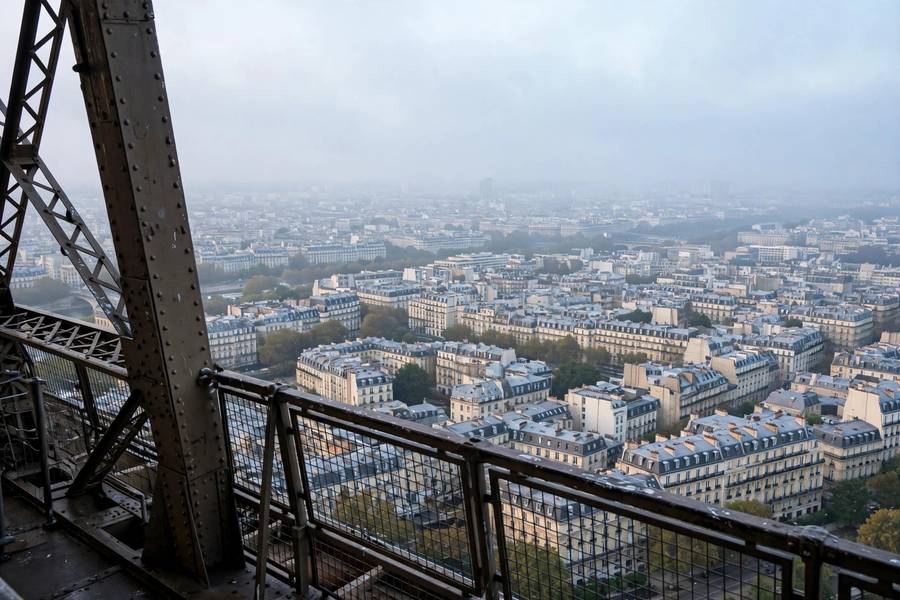
Book the summit for the first slot (9:00–9:30 a.m.). Arrive at 8:45, walk onto the elevator, and spend 90 minutes at the top and second floor. The morning light on the Seine is the best photography of the trip, and the city is quiet in a way it never is later. Budget: €29.40 for summit access, 2 hours total.
After descending, walk the Champ de Mars gardens toward École Militaire, then cut east along the river. This 30-minute walk is your orientation — the Seine, the bridges, the houseboats, Paris laying itself out. Stop at a boulangerie for a jambon-beurre (€5) and eat it on a bench. You’ve been in Paris three hours and already done it right.
By 12:30, metro to the Louvre area for lunch. Eat BEFORE the museum — a proper lunch (not a museum café sandwich) fuels the afternoon. The streets around Palais Royal have excellent bistros; the gardens themselves are a perfect pre-Louvre stroll.
Day 1 Afternoon: The Louvre (Strategically)
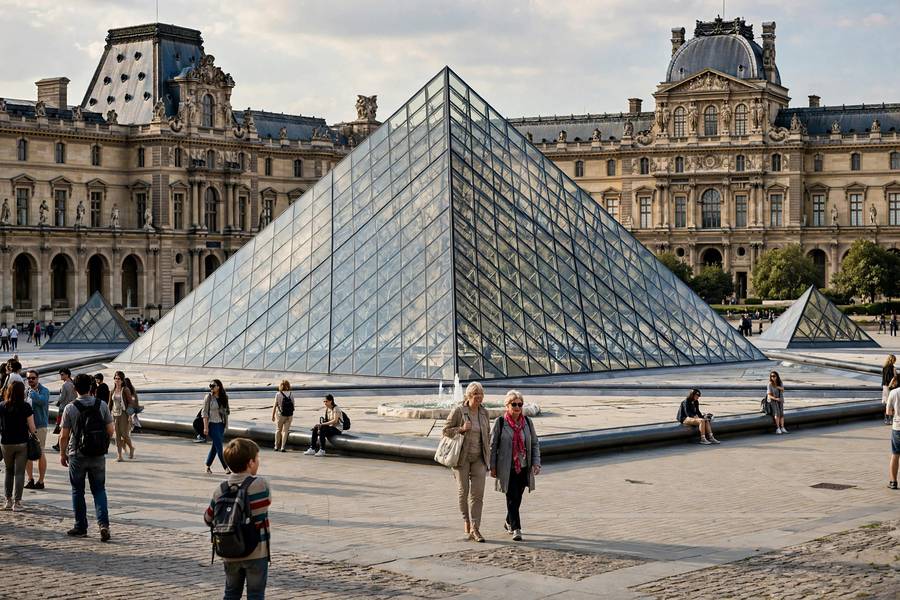
Timed entry at 2 p.m. — enter via the Carrousel du Louvre (the underground mall entrance) to skip the pyramid line entirely. You have three hours; here’s the plan: first 45 minutes, the icons (Mona Lisa, Winged Victory, Venus de Milo) — get them done while your energy is high. Next 90 minutes, pick ONE wing that interests you (Egyptian antiquities, Napoleon III apartments, or the Italian masters). Final 45 minutes, wander — the best Louvre moments are accidental.
Leave by 5:30. Museum fatigue is real and it ruins evenings. Walk out through the Tuileries as the light goes golden, cross the Pont des Arts to the Left Bank, and find yourself in Saint-Germain as the cafés fill up. This transition — from the world’s biggest museum to a quiet Left Bank street — is the emotional core of day one.
Dinner in the 6th arrondissement. Book ahead — even a simple bistro. Then the evening walk: from Saint-Germain to the Pont Neuf, along the Seine, with Notre-Dame ahead of you. The city at night, on foot, with no agenda — this is the hour that makes the sprint worthwhile.
Day 2 Morning: Saint-Germain + Latin Quarter
Start at Café de Flore or Les Deux Magots — yes, they’re touristy; yes, the hot chocolate is worth it once. Then wander: the church of Saint-Germain-des-Prés (Paris’s oldest church, 6th century), the bookshops along Rue de l’Odéon (Shakespeare and Company is across the river, but the Left Bank shops are the real ones), and the Luxembourg Gardens — 25 hectares of the most civilized park in Europe.
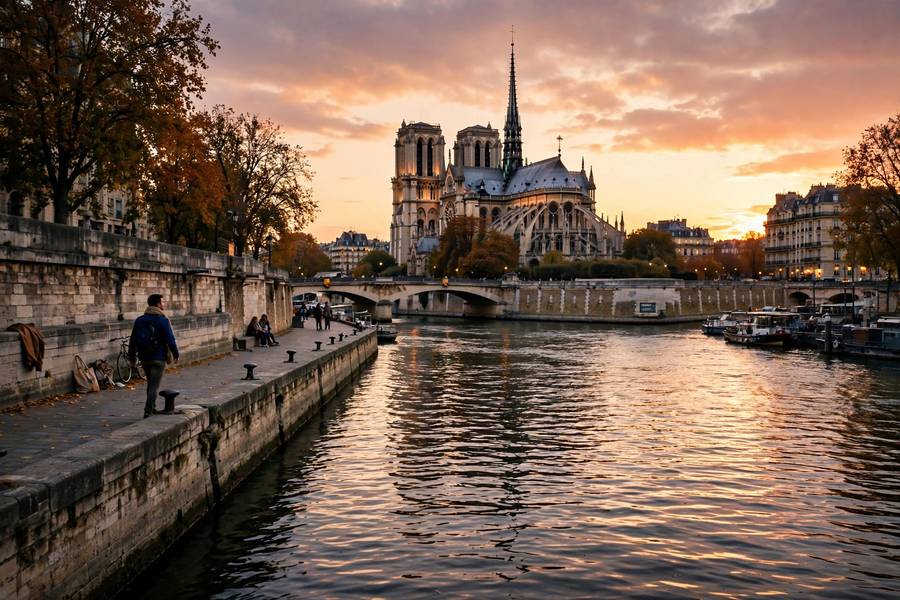
Cross to the Île de la Cité by 11. Notre-Dame’s exterior and the restoration work are worth seeing; the real gem is Sainte-Chapelle — the 13th-century chapel with 15 meters of stained glass. On a sunny morning, it’s the most beautiful room in Paris. Allow 45 minutes. It’s a 5-minute walk from Notre-Dame and 90% of tourists miss it.
Lunch in the Marais — falafel on Rue des Rosiers or a proper bistro. The Marais is medieval Paris: narrow streets, hidden squares (Place des Vosges), the Jewish quarter, the gay quarter, all layered together. Give it the early afternoon; it’s made for wandering.
Day 2 Afternoon: Montmartre at Golden Hour
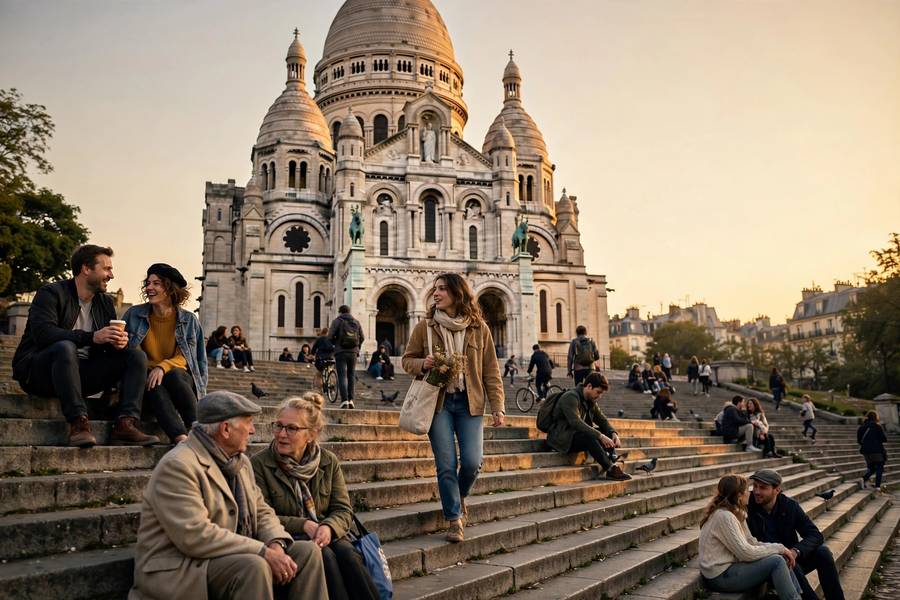
Metro to Anvers by 3:30 p.m. Walk up through the streets (not the funicular — the climb is the experience), arriving at Sacré-Cœur around 4:30. The basilica is free; the dome (€7) has the best view in Paris. But the real show is the steps in front at golden hour — buskers, the city spreading out below, the light turning everything amber.
Explore downhill: Place du Tertre (the artists’ square), the vineyard, the Lapin Agile, the Musée de Montmartre’s garden. This is the Paris of the movies, and unlike most movie places, it delivers. Have a crêpe from a street stand — the Nutella-banana one, obviously.
Sunset from the Sacré-Cœur steps is the definitive end to 48 hours in Paris. Stay until the sky goes pink. Then dinner in Montmartre (Rue des Abbesses has the best local spots) or head back to the Grands Boulevards for a final Parisian evening. The Eiffel Tower sparkles on the hour after dark — if you’re still out at 10 or 11, find a viewpoint.
Where to Stay and How to Get Around
For 48 hours, location is everything. Stay in the 1st–7th arrondissements — the Marais (3rd/4th), Saint-Germain (6th), or near the Louvre (1st). You’ll pay more, but you’ll save an hour daily in transit, and with only 48 hours, time is the currency. Any hotel within 5 minutes of a metro station works; Paris’s metro goes everywhere.
Transport: buy a carnet of 10 metro tickets on the RATP app (€2.15/ride) — you’ll use 6–8 in two days. The metro runs 5:30 a.m.–1:15 a.m. Walk between sights in the same area (the center is compact); metro between areas. From CDG airport: RER B train (€11.80, 45 minutes) — never a taxi (traffic, €60+).
The two things to book in advance: Eiffel Tower summit (2–4 weeks ahead in peak season) and the Louvre (timed entry, 1–2 weeks). Everything else — restaurants aside — can be spontaneous. And read when to book flights if you’re still planning — the fare you pay determines the trip you take.
The Two Mistakes That Ruin 48 Hours
The first mistake is the Champs-Élysées trap: it’s a wide shopping street, not a Paris experience, and it eats two hours you’ll never get back. The second is the ‘one more museum’ impulse on day two — the Musée d’Orsay is magnificent, but adding it to this itinerary means cutting Montmartre or the Marais, and the itinerary is balanced as written. Two days means choosing; choose the plan.
And the golden rule of the 48-hour trip: never eat a bad meal in Paris. With only four or five meals, each one counts. Skip the tourist-trap crêpe stand by the Eiffel Tower; walk five minutes in any direction and the food doubles in quality while the price halves. Your future self, remembering this trip, will remember the meals as much as the monuments.
Enough for the essentials — Eiffel Tower, Louvre, Montmartre, Notre-Dame area, and two great neighborhoods — if you’re disciplined. You’ll need advance bookings, early starts, and a clustered plan. It’s a highlight reel, not the full film, but it’s a great reel.
Versailles (full day minimum), day trips, more than one big museum, and any restaurant with a 2-hour lunch. Also skip: the Champs-Élysées (it’s a shopping street), and trying to ‘do’ neighborhoods you can’t reach — pick two and do them well.
Yes, with planning: Eiffel Tower at 9 a.m. (2 hours), lunch, Louvre at 2 p.m. (3 hours). It’s a full day but very doable — they’re 25 minutes apart by metro. Book both in advance; the time slots make the schedule work.
The Marais (3rd/4th), Saint-Germain (6th), or near the Louvre (1st) — central, walkable, metro-connected. With only 48 hours, a central location saves an hour daily. Avoid the Gare du Nord area (convenient but sketchy at night).
Budget €300–450 total per person for mid-range: hotel €120–180/night, food €50–80/day, attractions ~€70 (Eiffel Tower + Louvre + Sainte-Chapelle), metro ~€15. The free sights (Sacré-Cœur, gardens, Seine walks) keep costs reasonable.