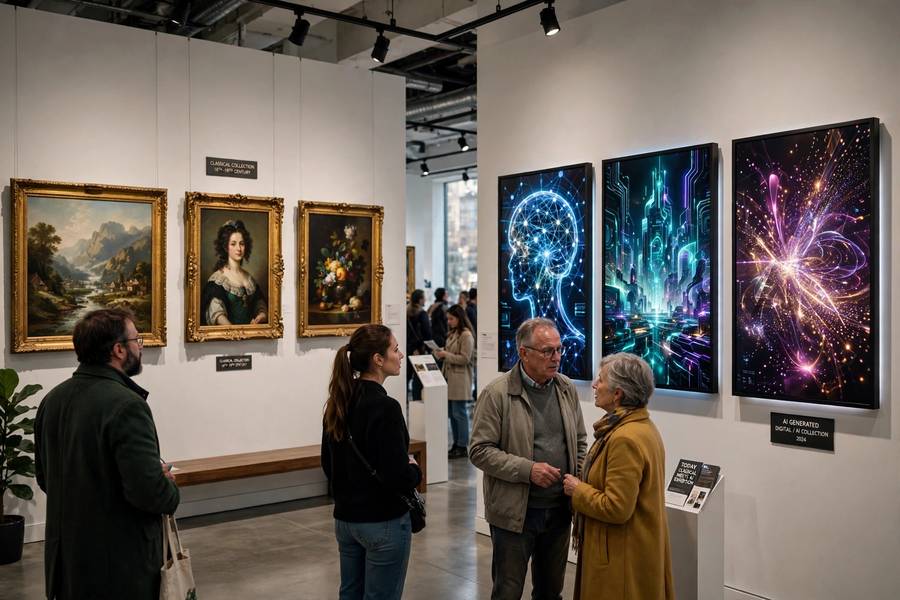
I have watched this argument eat entire comment sections alive, and I’ve noticed something: most people arguing it have already decided, and they’re arguing past each other. The painter says “no skill, no art.” The AI artist says “but look at it.” They’re not even disagreeing about the same thing — one is talking about process, the other about the object. This piece tries something rarer: steelmanning both sides, then asking what art history actually says about fights like this one. Spoiler: we’ve had this fight before, several times. For the technical question underneath it, see can AI make art.
Table of Contents
- Why This Question Is Harder Than It Looks
- The Case Against: “It’s Not Real Art”
- The Case For: “Of Course It’s Art”
- What Counts as “Skill” Anyway?
- Art History Has Seen This Fight Before
- The Intentionality Problem
- Where I Land (and Why It Might Not Matter)
- What the Debate Gets Wrong
- Frequently Asked Questions
Why This Question Is Harder Than It Looks
“Is AI art real art?” sounds like a yes-or-no question. It’s actually three questions wearing a trench coat:
- Is the image an artwork? (a question about the object)
- Is the prompter an artist? (a question about the person)
- Is the process artistic creation? (a question about the act)
You can answer yes to one and no to another without contradicting yourself. A beautiful AI image might be an artwork whose “artist” is really a curator, made through a process that’s more like direction than creation. Most debates collapse all three into one shout, which is why they go nowhere.
There’s also a hidden fourth question: “does calling it art threaten my identity/livelihood?” — which is the emotional engine of the whole debate but rarely the stated topic. Keep it in mind; it explains the heat.
The Case Against: “It’s Not Real Art”
The strongest version of “no” goes like this, and it deserves respect:
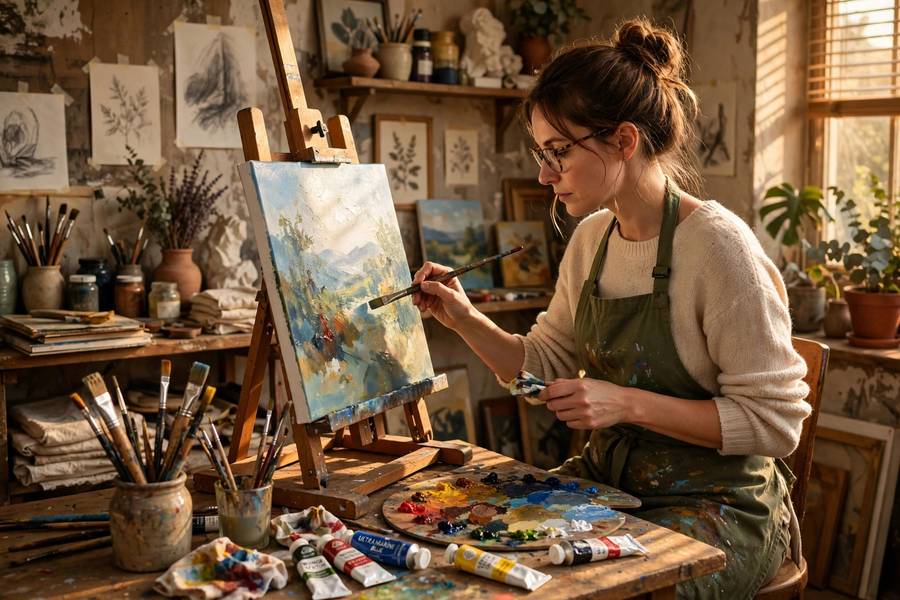
Art requires skill, and prompting isn’t skill. Years of drawing practice build hand-eye coordination, color theory intuition, anatomical knowledge. Typing “beautiful portrait, cinematic lighting” in thirty seconds doesn’t. If the barrier to entry is a sentence, the achievement is a sentence deep.
Art requires intention, and the model has none. A painter decides every brushstroke; the diffusion model samples from probability distributions. The “decisions” in an AI image aren’t decisions — they’re statistics. There’s no mind behind the choices, so there’s no artistic intent in the work, only in the prompt.
Art requires struggle, and there’s no struggle. The resistance of the medium — paint that won’t blend, stone that won’t yield — shapes the artist and the art. AI removes all resistance. Press button, receive image. Without struggle, the argument goes, you get decoration, not art.
It’s derivative by construction. Models learn by ingesting millions of human artworks. Every AI image is a statistical remix of human creativity. Calling the remix “art” while the training data’s creators go uncredited feels, to many artists, like laundering.
It devalues human craft economically. When clients can generate “good enough” illustrations for pennies, working artists lose commissions. The “not real art” claim is partly a defensive line around livelihoods — and livelihoods are worth defending.
That’s the steelman. It’s coherent, it’s felt deeply by serious people, and dismissing it as “old people fearing technology” misses the point entirely.
The Case For: “Of Course It’s Art”
Now the other side, at its strongest:
Art is judged by the work, not the process. Nobody disqualifies a photograph because the camera did the optical work, or a print because the press did the pressing. If an image moves you, holds your attention, rewards looking — it’s functioning as art regardless of how it was made. The “look at it” argument is simple and hard to fully dismiss.
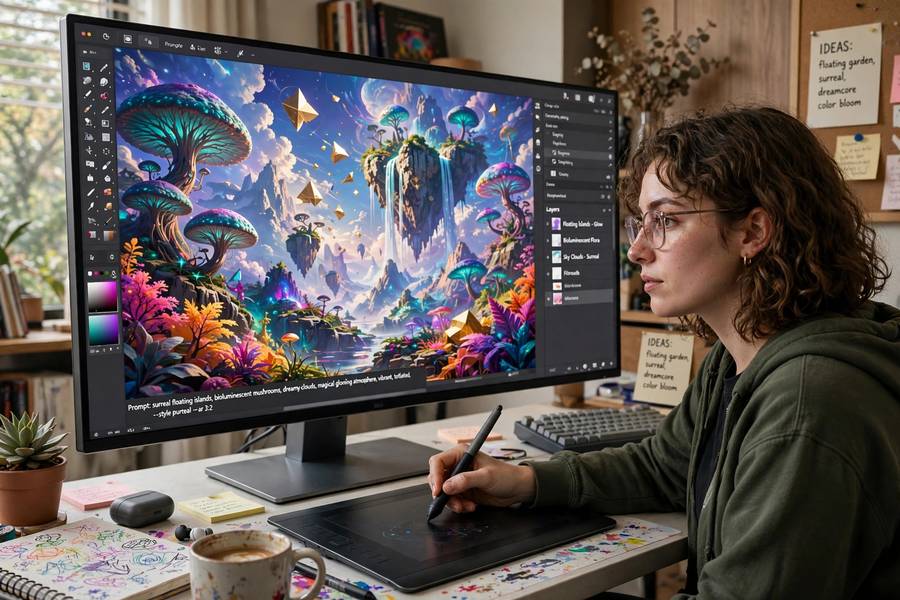
Curation is a creative act. Prompting at a high level isn’t typing one sentence — it’s hundreds of iterations, aesthetic judgment, selection, rejection, refinement. Museum curators don’t paint the paintings, yet curating is recognized as a creative, meaning-making practice. The AI artist as curator-director is a real role.
New tools always looked like cheating. Photography, synthesizers, Photoshop, sampling — every one was denounced as the death of real art by practitioners of the previous medium. Every one became a medium. “It’s too easy” is the eternal complaint about the new thing, and it has a perfect losing record.
Intent exists — it’s just located differently. The prompter’s intent lives in the concept, the iteration, the selection. A film director doesn’t operate the camera; nobody says directing isn’t creative. Intent distributed across human direction and machine execution is still intent.
Democratization is good. Millions of people with visual imaginations and no drawing ability can now externalize what they see in their heads. A kid who could never draw can now storyboard her stories. Calling that “not art” sounds a lot like gatekeeping a club that was always smaller than it needed to be.
Also coherent. Also felt deeply. Also not dismissible.
What Counts as “Skill” Anyway?
The skill argument is the load-bearing wall of the “no” case, so let’s stress-test it.
First: prompting is a skill, just a new and unfamiliar one. Anyone who’s watched a novice (“a dog”) versus an expert (“weathered border collie portrait, Rembrandt lighting, shallow depth of field, –ar 4:5 –stylize 250”) knows the outputs differ enormously. Taste, vocabulary, iteration strategy, parameter knowledge — these are learnable, improvable, unequally distributed. That’s what a skill looks like.
But — honesty requires this — it’s a shallower skill than draftsmanship. Months of prompting practice versus years of drawing practice isn’t a fair fight, and pretending otherwise insults painters. The fair statement: AI art involves real but different and generally less demanding skills than traditional media. Both halves of that sentence matter.
Second: much of what we call “skill” in traditional art is actually taste plus execution. AI automates execution and leaves taste. That’s why experienced artists often make the best AI artists — their taste, trained over years, transfers directly. The tool didn’t eliminate their advantage; it relocated it. Watch a trained illustrator art-direct Midjourney sometime (how Midjourney works explains the mechanics) and you’ll see expertise expressing itself fluently through an unfamiliar interface.
Art History Has Seen This Fight Before
Every new art technology gets the same reception. The pattern is almost boring in its consistency:
- Photography (1800s): Painters called it mechanical, soulless, cheating — “photography cannot be art because a machine makes it.” It took decades, but photography became fine art, and painting survived by becoming more itself (hello, Impressionism — arguably a response to the camera).
- Readymades (1917): Duchamp signed a urinal and called it art. The establishment was apoplectic. Now it’s one of the most important artworks of the 20th century, because the idea and the selection were the art.
- Synthesizers (1970s-80s): “Real musicians play real instruments.” Then entire genres were born from machines, and nobody seriously argues electronic music isn’t music anymore.
- Photoshop/digital art (1990s-2000s): “Real artists use physical media.” Digital painting is now utterly mainstream, including in fine-art contexts.
- Sampling (1980s-90s): Built from others’ recordings, legally fraught, denounced as theft — and the foundation of hip-hop, now studied in conservatories.
AI art is the next verse of the same song. That doesn’t prove it’s art — history rhymes, it doesn’t rule — but anyone confident that “this time the skeptics are right” should know the skeptics’ track record. It’s 0 for 5.
The Intentionality Problem
The subtlest objection is about intention: art, the argument goes, is communication from one mind to another, and a statistical model has no mind, so AI images can’t be art — they’re art-like objects without the essential communicative core.
I think this is the strongest philosophical objection, and it deserves a careful answer rather than a dismissal.
The reply: intention doesn’t have to live in the brush. When a prompter iterates fifty times toward a vision — rejecting, refining, steering — intention is thoroughly present in the process, just upstream of the pixels. The final image embod this the accumulated intention the way a photograph embodies the photographer’s intention despite the camera’s automation. Nobody claims the camera’s lack of intention disqualifies photography.
The harder sub-case: a single lazy prompt, first result, posted as “my art.” Here the intention is thin — roughly “I thought this would look cool.” Is thin intention enough? Maybe not for great art, but plenty of accepted art runs on thin intention. A snapshot can be art. A doodle can be art. We don’t usually demand thick intention as the price of admission; we demand it for admiration.
Where I Land (and Why It Might Not Matter)
My position, for what it’s worth: some AI art is art, most of it isn’t, and the same is true of every medium.
The determining factors aren’t “AI or not” — they’re the factors that have always separated art from non-art: intention, judgment, iteration, taste, and whether the thing rewards sustained attention. A carefully art-directed AI series with a vision behind it clears the bar. A hundred uncurated generations dumped on social media doesn’t — but then, neither does a hundred thoughtless snapshots, and we don’t hold a referendum on photography every time someone posts a blurry lunch photo.
The binary question — real or not — is the wrong shape. Art isn’t a binary; it’s a spectrum with masterpieces at one end and noise at the other, and AI output distributes across the whole spectrum exactly like human output does. Most human art isn’t “real art” either, by any demanding standard. We just don’t notice because nobody generates ten thousand human paintings a day.
What the Debate Gets Wrong
A few parting observations on the debate itself:
It confuses the image with the artist. You can admire an AI image as an artwork while reserving judgment about whether its prompter is “an artist.” These are separable claims, and the debate would cool by half if people argued them separately.
It treats “art” as a prize. Much of the heat comes from “art” functioning as status — calling something art honors it. But art isn’t an award; it’s a category, and a big tent. Elevator music is music. Kitsch is art. Inclusion in the category was never the compliment people think it is.
It ignores the economic question hiding inside. A lot of “not real art” energy is really “this threatens my income” energy — which is legitimate and deserves its own honest discussion about labor markets, not laundering through aesthetics.
It will look quaint in a decade. Not because one side “wins,” but because the categories will blur beyond recognition. Human-AI collaborative workflows are already the norm in concept art and illustration; in ten years, asking “but was it AI?” will sound like asking “but was it Photoshop?” — a question about tools, not about art.
Make things with care, judge things by what they do to you, and let the comment sections burn themselves out.
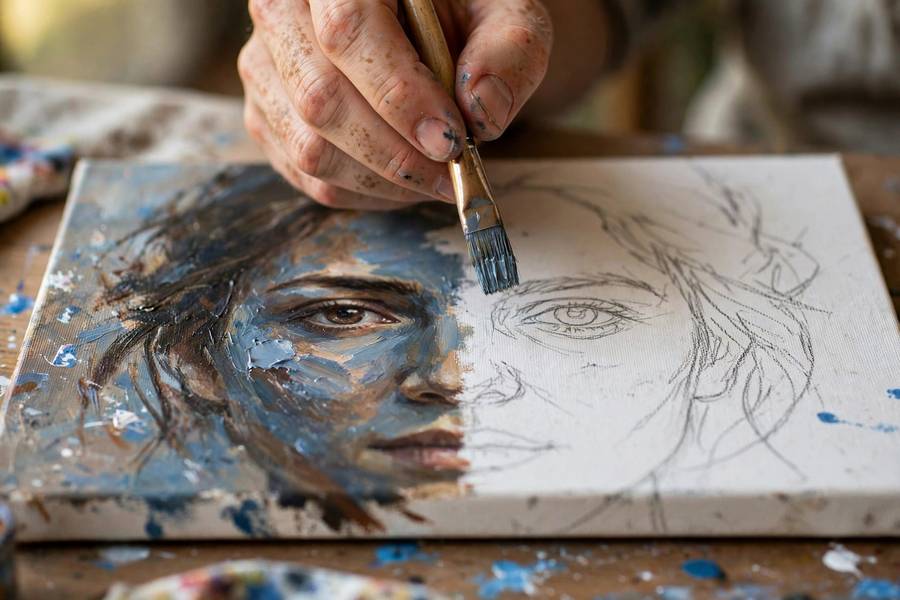
Frequently Asked Questions
There’s no consensus. Supporters argue art should be judged by the work and that curation and iteration are creative acts; critics argue AI art lacks skill, intention, and human struggle. Art history suggests new mediums are always initially rejected, then accepted.
The main arguments are that prompting requires little skill compared to traditional craft, the model has no artistic intention, the process lacks creative struggle, outputs are derivative of training data, and cheap generation undercuts working artists economically.
Supporters argue art should be judged by the resulting work, that curation and iteration are genuine creative acts, that every new art technology (photography, synthesizers, Photoshop) faced identical criticism before acceptance, and that AI democratizes visual creativity.
Yes, but it’s a different and generally less demanding skill than traditional draftsmanship. Expert prompting involves aesthetic vocabulary, iteration strategy, and parameter knowledge — and experienced artists’ trained taste transfers directly to AI tools.
Yes, repeatedly. Photography, Duchamp’s readymades, synthesizers, digital art, and music sampling were each denounced as cheating or not-real-art before becoming accepted mediums. Skeptics of new art technology have a consistent losing record.