How to Start a Preschool From Home: License, Setup, and Launch

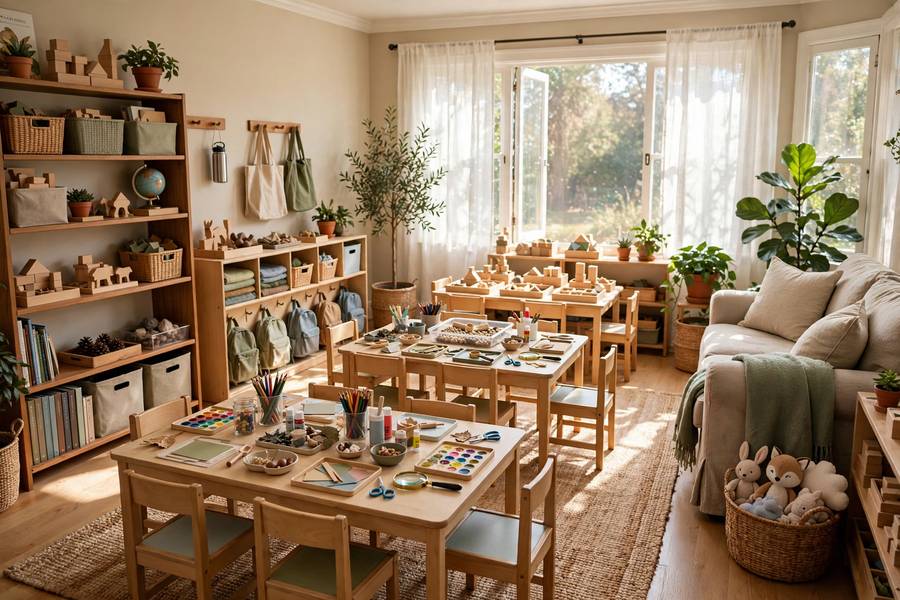
A home preschool is one of the best small businesses nobody talks about. Lower startup costs than a daycare center, premium pricing because parents pay for education (not just supervision), school-hours schedule instead of 6 AM to 6 PM, and summers off if you want them. But it’s also widely misunderstood — including the legal line between “preschool” and “daycare,” which varies by state and determines everything about your licensing. Here’s how to start a preschool from home the right way: legal, profitable, and built to fill.
The broader childcare startup framework is in my guide on how to start a daycare — read that for licensing timelines and cost ranges, then come back here for the preschool-specific playbook.

Preschool Versus Daycare the Legal Line
Here’s what trips people up: “preschool” is an educational label, but legally, most states regulate you as childcare if you’re caring for children under school age for compensation. The label on your door doesn’t change the law.
How states typically draw the line: – ** Licensed as family child care: if you care for young children (usually under 5) for more than a few hours a day, most states require a family child care license regardless of whether you call it preschool, playschool, or early learning academy. The hours and ages trigger licensing, not the curriculum. – Exemptions exist but are narrow: some states exempt programs operating under 3-4 hours per day, or programs run by religious organizations, or pure “enrichment” classes where parents stay on-site. Read your state’s exemption list carefully — it’s short, and misreading it is the most common legal mistake in this business. – Preschool-specific licenses:** a few states have a distinct preschool or pre-K license category with its own requirements (often stricter on teacher qualifications — some require early childhood education credentials). Check whether your state is one of them.
The practical rule: assume you need a family child care license, then verify whether your state’s exemptions apply to your specific hours and model. Call your licensing agency and describe your exact plan — “I’ll care for 8 children ages 3-5, 8:30 AM to 12:30 PM, Monday through Thursday” — and ask directly. Get the answer in writing or note the date, name, and reference number of the call. Verbal “I think you’re fine” from a friend is not a legal defense.
Why this matters for marketing: calling it a “preschool” lets you charge 20-40% more than “daycare” for the same hours, because parents pay a premium for education. But the premium has to be real — actual curriculum, learning outcomes, school-readiness results. Charge preschool prices with daycare-level programming and your reviews will punish you.
Licensing for Home Preschools
Assuming the standard path (family child care license with a preschool program), here’s the sequence:
- Pre-licensing orientation. Most states require an orientation session before you can even apply. Schedule it first — it’s often the longest-lead item nobody expects.
- Application and background checks. FBI fingerprinting for you and every adult in the household. Start this early; results take weeks.
- Training requirements. CPR/first aid plus state-mandated hours (typically 15-40 pre-licensing). If your state has preschool-specific credential requirements, factor in the time and cost of those courses now.
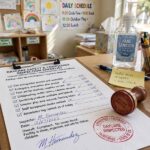
- Home inspection. Fire safety, sanitation, safe sleep areas (if you take under-2s), fenced outdoor space, outlet covers, locked storage for cleaning supplies and medications. The inspector’s checklist is public — download it and pre-inspect yourself ruthlessly.
- Zoning and HOA. Home occupation permit from your city/county; check HOA rules if applicable. Some HOAs prohibit home businesses outright — discover this before you invest, not after.
- Insurance. Liability coverage ($1M/$2M is standard); some states mandate minimums. Get the certificate before opening.
Timeline: 3-6 months in most states. Start the process before buying equipment — a failed inspection on a fully furnished space is money burned.
The preschool edge in licensing: inspectors see a lot of daycares. A clean, organized, curriculum-visible home preschool makes an impression — labeled learning stations, posted daily schedule, documented lesson plans. It signals professionalism that carries through the entire licensing relationship.
Startup Costs the Real Numbers
Home preschools cost less than daycares to start because the hours are shorter and the group is smaller — but the learning materials cost more. Honest budget:
Essential ($4,000-$10,000): – Safety modifications (gates, outlet covers, cabinet locks, fencing repairs): $800-$2,500 – Child-size furniture (tables, chairs, shelves, cubbies): $1,000-$3,000 — buy used from closing centers; this stuff is indestructible – Learning materials (manipulatives, books, art supplies, sensory materials): $1,000-$2,500 – Licensing, background checks, training, CPR: $400-$1,200 – Insurance (first year): $500-$1,200
Professional polish ($2,000-$5,000 more): – Fresh paint, flooring repair, dedicated entrance signage: $1,000-$2,500 – Outdoor play equipment (climber, sandbox, tricycles): $500-$1,500 – Curriculum package (purchased, year one): $300-$800 – Website and initial marketing: $300-$800
Total realistic startup: $6,000-$15,000. Compare that to $100,000+ for a center. This is why home preschool is the best risk-adjusted entry into early childhood business — you can test the model, build reputation, and expand later with profits, not debt.
Where not to economize: safety items (buy new, buy certified), your own training (credentials justify premium pricing), and the first impression — entrance, signage, and the main learning room. Parents decide in the first 90 seconds of a tour.
Setting Up the Learning Space
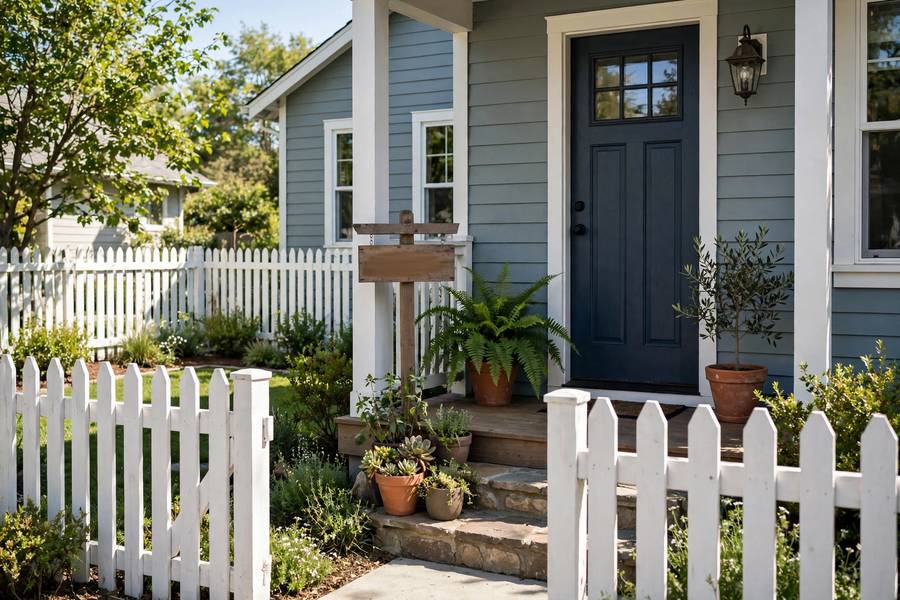
Your home has to function as a school from 8:30 to 12:30 and a home the rest of the time. The setup that works:
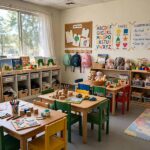
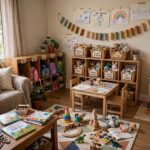
Learning stations, not one big room. Divide your main space into 4-6 defined areas: reading corner, art table, building/block area, dramatic play, sensory table, and a circle-time rug. Low shelves as dividers — they define zones while keeping sightlines open for supervision. This is the single biggest visual difference between “babysitting at someone’s house” and “preschool.” Parents see stations and think education.
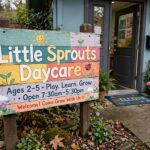
The entrance matters disproportionately. A dedicated entrance (even just a side door with a small sign), cubbies labeled with each child’s name, and a parent information board. The cubby with their child’s name on it is the moment a parent thinks “this is a real school.” Cost: under $200. Impact: enormous.
Storage is the make-or-break. You need everything put away by 1 PM when school ends and home resumes. Rolling carts, labeled bins, a closet converted to supply storage. If setup/teardown takes more than 30 minutes, your schedule is broken — redesign it.
Outdoor space: doesn’t need to be fancy. A fenced yard with a sandbox, a climber, tricycles, and a garden bed you plant together covers it. The garden is secretly curriculum — measuring growth, life cycles, responsibility. Parents love it.
What to skip: expensive themed decor (it dates fast and impresses no one after week two), too many toys (rotating 30% of materials monthly keeps engagement higher than owning everything at once), and anything you can’t sanitize quickly.
Curriculum Without Overcomplicating It
Parents paying preschool prices expect a curriculum. That doesn’t mean you need a PhD-designed program — it means you need visible, intentional learning with outcomes you can describe.
The framework that works: – Pick one established approach and learn it properly: Montessori-inspired, Reggio-inspired, or a solid purchased curriculum (Creative Curriculum, Mother Goose Time, etc.). Depth in one philosophy beats a shallow mix of five. For background on the most respected approach, read the Montessori method explained — its principles adapt beautifully to home settings. – Weekly themes (apples, community helpers, dinosaurs) give structure without rigidity. Each theme touches literacy, math, art, science, and motor skills. Parents can see and describe what their child learned — that’s what they’re paying for. – Document learning visibly. A simple daily sheet: “Today we practiced counting to 20, read two books about farms, and painted with sponges.” Plus photos. This documentation IS the product differentiation — it’s what turns “my kid goes to someone’s house” into “my kid’s preschool.” – School-readiness outcomes. By graduation, children should recognize letters and numbers, hold a pencil correctly, follow multi-step directions, and manage basic social conflict. Track these per child. When a parent asks “is my child ready for kindergarten?” you answer with specifics, not vibes.
Time investment: 2-3 hours of prep per week once you’re running. The first month takes longer as you build your material library. Purchased curricula cut this dramatically — worth the $300-$800 in year one.
Enrollment Filling Eight to Twelve Seats
Your capacity is small (typically 6-12 depending on state), which is an advantage — you need fewer families, and scarcity works in your favor.
The enrollment sequence: 1. Start marketing 90 days before opening. Website, Google Business Profile, local parent Facebook groups. “Now enrolling for fall — 10 spots” creates urgency that “we’re open whenever” never will. 2. Open houses, not private tours (at first). Two open-house events before opening let 20 families see the space in one afternoon. It’s efficient and the social proof of other interested parents accelerates decisions. 3. Price at a premium to daycare. If local daycare is $250/week full-time, your half-day preschool at $600-$800/month is positioned correctly — parents compare it to preschool programs ($800-$1,200/month), not to daycare. You’re competing in the education category, which commands higher prices. 4. Require deposits. $200-$300 non-refundable enrollment deposit. It converts “interested” to “committed” and funds your final setup purchases. 5. Build the waitlist from day one. Even with 2 names on it, “we have a waitlist” changes the dynamic. Scarcity is honest when your capacity is genuinely 10.
Retention is the real game: with only 10 seats, losing 2 families is a 20% revenue hit. Daily photo updates, quarterly parent-teacher conferences (15 minutes, structured), and genuine relationships keep families through the full 2-3 year preschool run. Your branding here is personal — you ARE the brand, and that’s your moat against every center in town.
The Money Math
Let’s run the actual numbers for a typical home preschool:
Revenue: 10 children × $700/month × 9 months (school year) = $63,000. Add a 6-week summer camp session at $200/week × 10 kids = $12,000. Total: ~$75,000/year gross.
Costs: insurance $1,000, supplies/materials $3,000, food (if you provide snacks) $2,500, curriculum $500, marketing $800, utilities increment $1,200, miscellaneous $1,500. Total: ~$10,500.
Net before your labor: ~$64,500 for roughly 25-30 hours/week of contact time plus 5-8 hours of prep/admin — and summers mostly off.
Compare: a home daycare with 8 children at $250/week × 52 weeks = $104,000 gross, but 50-55 hour weeks, year-round, with infants (hardest work). The preschool earns less gross but dramatically more per hour, with a better lifestyle.
Scaling path: fill the morning session, add an afternoon session (12:30-3:30) for younger 3s, or hire an assistant and expand to 12-16 children. The afternoon session roughly doubles revenue on the same fixed costs — it’s the highest-margin growth move in the business. Beyond that, the next step is a center — and you’ll open it with a waitlist, a reputation, and cash reserves. That’s how you de-risk the big leap.

Frequently Asked Questions
In most states, yes — if you care for young children for compensation beyond a few hours daily, you need a family child care license regardless of whether you call it a preschool. Some states exempt very short programs. Call your licensing agency with your exact hours and get the answer in writing.
Realistic startup is $6,000-$15,000: safety modifications, child-size furniture, learning materials, licensing and training, insurance, and professional polish like signage. Buy furniture used from closing centers to save thousands.
A typical 10-child home preschool at $700/month over a 9-month school year grosses about $63,000, plus summer sessions. After ~$10,500 in costs, net is around $60,000+ for roughly 30 hours a week with summers mostly off.
Legally, often nothing — most states license both as family child care. Operationally: preschools run shorter school-like hours (e.g., 8:30-12:30), serve ages 3-5, follow a curriculum, and charge premium education pricing 20-40% above daycare rates for comparable hours.
Pick one established approach and learn it well — Montessori-inspired, Reggio-inspired, or a purchased curriculum. Use weekly themes touching literacy, math, art, and science, and document daily learning with photos. Visible, intentional learning is what justifies premium pricing.