How to Make Hummus: 10-Minute Creamy Recipe

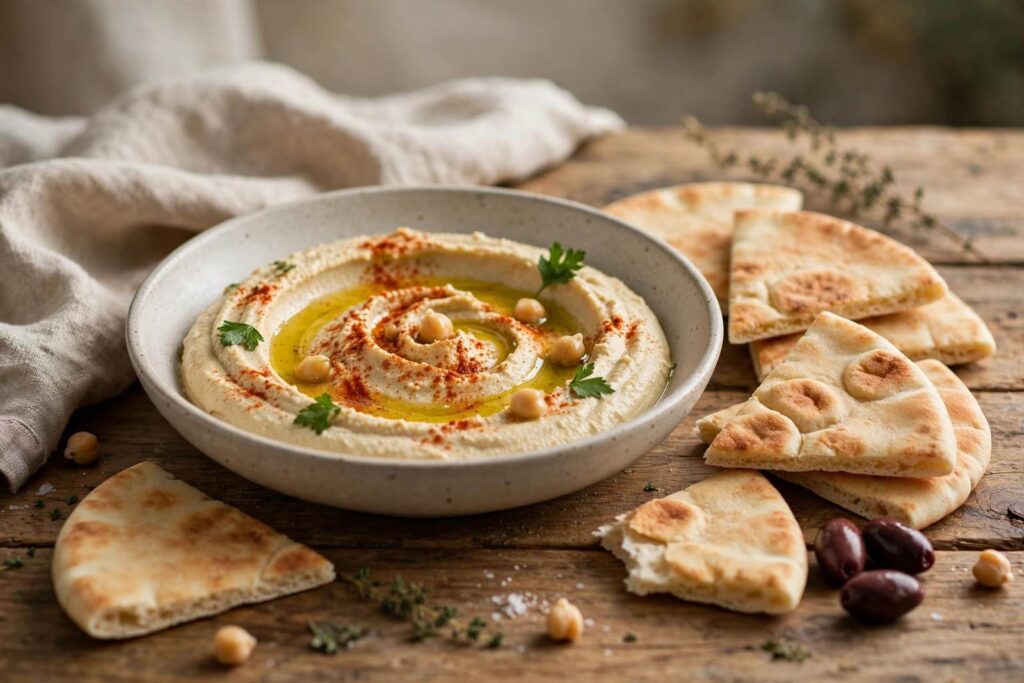
Store-bought hummus is fine. Homemade hummus — actually creamy, warm from the blender, with good olive oil on top — is a different food entirely. And it takes 10 minutes with a can of chickpeas. There’s no reason to keep buying the tub.
But “creamy” is where homemade hummus usually fails. Grainy, thick, bland — I’ve made all three. So I tested the three creaminess methods everyone argues about: the long blend, the baking-soda boil, and peeling the chickpeas. One clear winner, two situational backups. Here’s the recipe and the verdict.
Quick Answer — 10-Minute Hummus With Canned Chickpeas
The base recipe (tested, ~10 minutes total, yields 2 cups):
- ⅓ cup tahini (well-stirred)
- 2 tablespoons olive oil, plus more for serving
- 3 tablespoons lemon juice
- 1 garlic clove
- Salt and cumin to taste
- 1 (15-oz) can chickpeas, drained (reserve a little of the canning liquid)
That’s it. Six ingredients, one food processor, ten minutes. The method below turns these into the creamiest hummus you’ve made — and then the creaminess section explains why it works.
Maria’s Step-by-Step Method
- Blend the tahini first. Tahini, lemon juice, garlic, salt, and cumin into the food processor — blend about 1 minute until whipped and creamy. This step matters more than people think: tahini blended alone gets fluffy; tahini blended with chickpeas just gets lost.
- Add the chickpeas. In they go, with 2 tablespoons of olive oil.
- Puree 3–4 minutes. Not 30 seconds — three to four full minutes. Scrape down the sides halfway. The hummus will look done well before the time is up. It’s not done.
- Thin as needed. If it’s too thick, add cold water, 1 tablespoon at a time, blending between additions. (Some methods use the reserved canning liquid — about ⅓ cup — same idea.)
- Taste and adjust. More lemon? More salt? More garlic? This is cooking, not chemistry — adjust to your mouth.
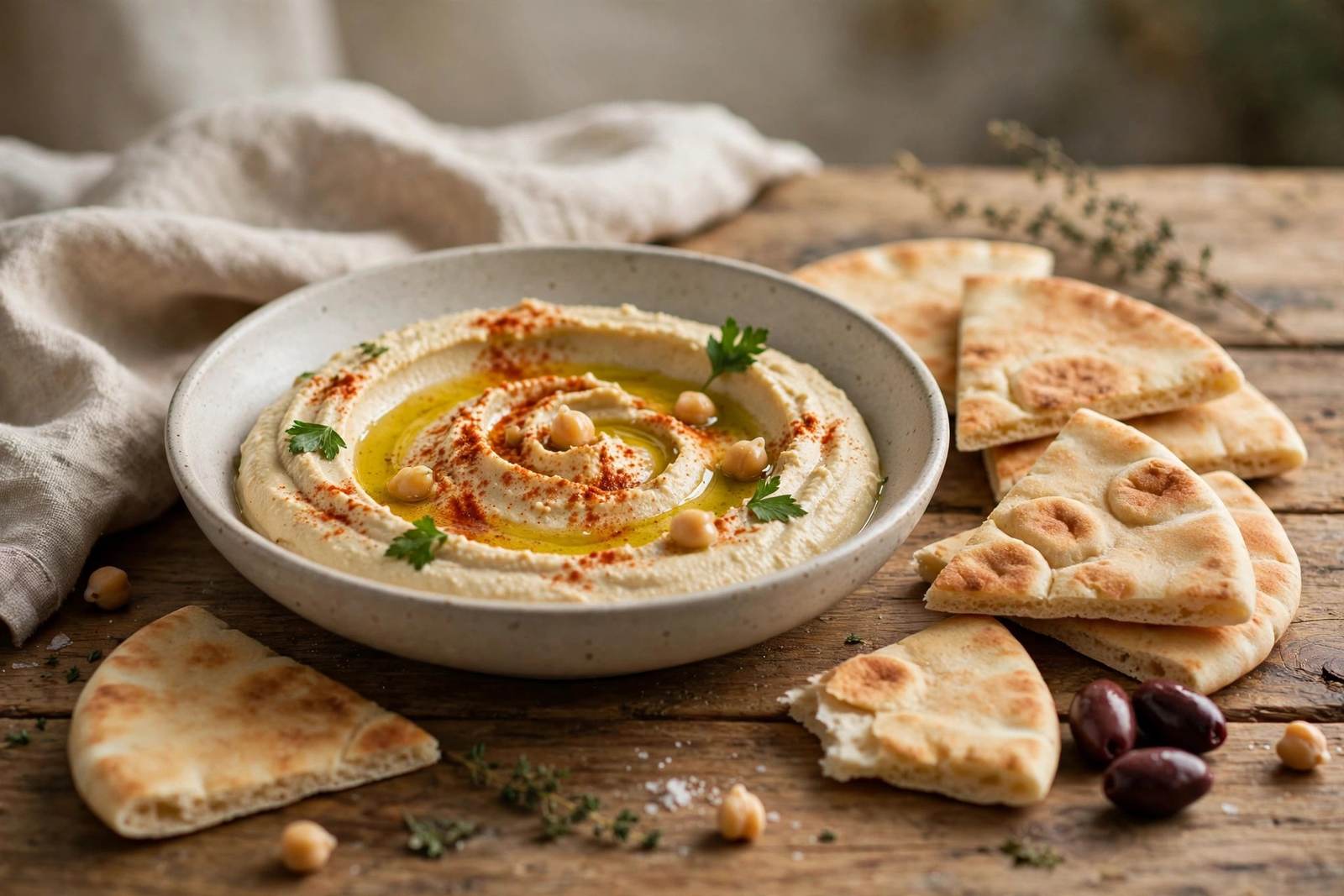
Serve in a shallow bowl, swirl the top with the back of a spoon, drizzle olive oil, dust with paprika, scatter parsley. Warm pita alongside. Done in ten minutes, gone in five.
Creaminess Secret #1 — Blend Time (The Winner)
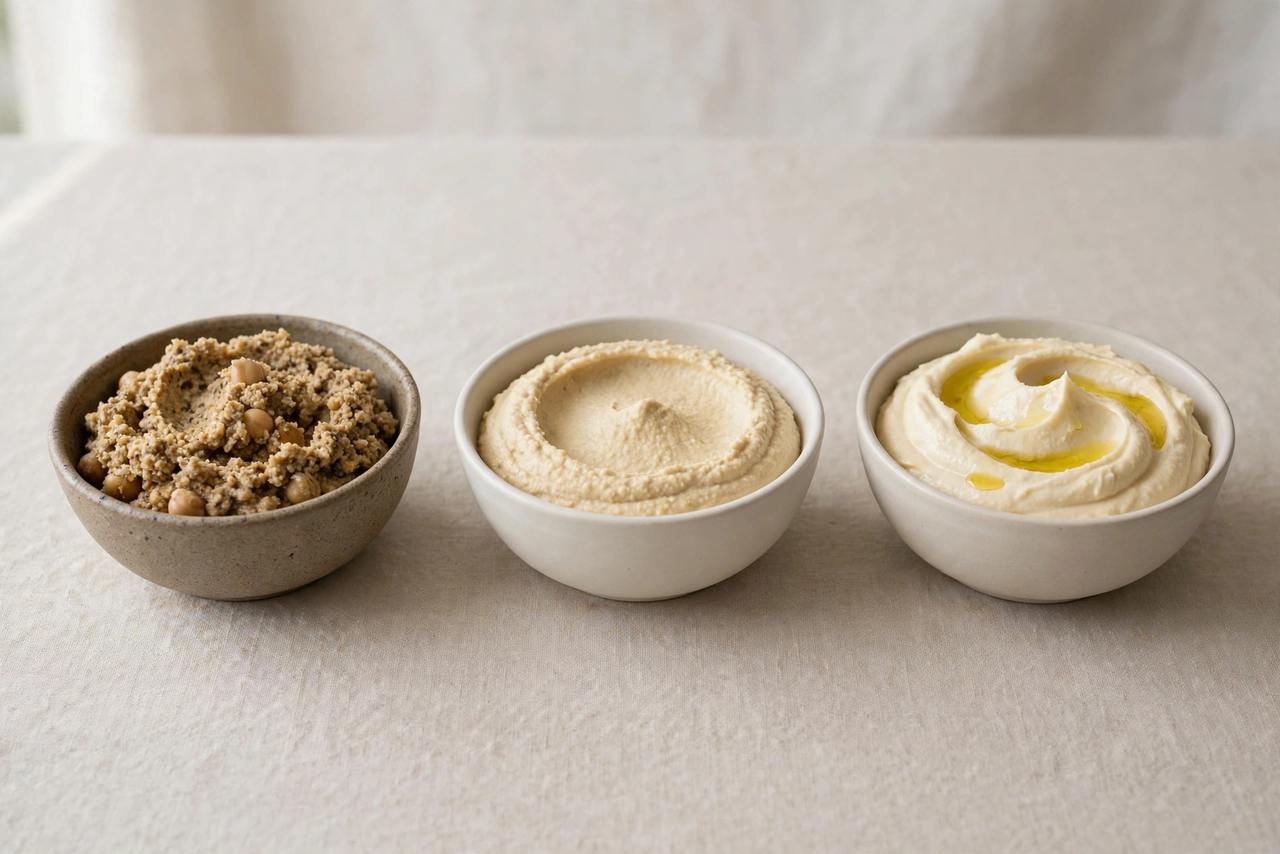
Here’s the verdict from my testing: the long blend wins. It’s the simplest method, it needs no extra ingredients or prep, and it produces genuinely silky hummus.
The rule: puree for several minutes — and when it looks done, puree for another minute. The extended blending breaks down the chickpea skins and fully emulsifies the tahini, which is where the silkiness comes from. The Ottolenghi method pushes this further: a full 5 minutes of processing with ice water added during the blend — the ice water keeps the mixture cool and helps the emulsion.
Why it wins: zero extra steps, zero extra shopping, works with plain canned chickpeas, and the texture difference between a 1-minute blend and a 4-minute blend is night and day. If you do one thing from this article, blend longer than feels reasonable.
Creaminess Method #2 — Boil With Baking Soda
The science-fair method: boil the canned chickpeas with ½ teaspoon of bicarbonate of soda (baking soda) for 20 minutes, until the chickpeas are bloated and the skins fall off. Drain, then blend.
Why it works: the alkaline water breaks down the chickpea skins — the main source of graininess — so the blender has less work to do. The result is very smooth.
Why it’s #2 and not #1: it adds 20+ minutes and a pot to wash, which defeats the 10-minute promise. Worth it when you’re making hummus for guests and want the absolute silkiest result, or when your food processor is underpowered. For weeknight hummus, the long blend gets you 90% of the way with 10% of the effort.
Creaminess Method #3 — Peeling the Skins (Optional)
The manual method: rub the chickpeas between your fingers (or between two towels) to slip the skins off before blending. Tedious. Effective — the skins are the graininess, so removing them removes the problem.
Honest assessment: this is the optional tip for a reason. It works, but the time-to-texture payoff is the worst of the three methods. Try it once to understand what the skins do, then go back to the long blend and never peel again. Life’s too short.
Tahini Choice Matters
The tahini is half the recipe and most people buy it wrong. What matters:
- Well-stirred, quality paste. Tahini separates — the oil rises, the solids sink. Stir it thoroughly (or buy the kind that pours). Unstirred tahini gives you oily hummus with dry pockets.
- Be generous. Hummus should taste rich in tahini — it’s not a chickpea delivery system with a rumor of sesame. If your hummus tastes flat, the answer is usually more tahini, not more garlic.
- Taste your tahini. Bitter tahini makes bitter hummus. If the jar tastes off, the hummus will too.
Troubleshooting — Too Thick, Too Thin, Grainy, Bitter
My kitchen-tested fixes:
| Problem | Fix |
|---|---|
| Too thick | Cold water, 1 tablespoon at a time, blending between |
| Too thin | More chickpeas (or let it sit — hummus thickens as it rests) |
| Grainy | Blend longer (the #1 fix); next time, try the baking-soda boil |
| Bitter | Usually the tahini — taste it; more lemon and salt can balance mild bitterness |
| Bland | More salt first, then lemon, then garlic — in that order |
The order matters on blandness: salt wakes everything up, lemon brightens, garlic adds punch. Most “bland” hummus is just under-salted.
Flavor Variations
The base takes direction beautifully. Tested variations:
- Roasted garlic — roast a whole head, squeeze in the cloves; mellower and sweeter than raw
- Cumin-forward — double the cumin for warmth
- Cayenne or paprika — heat, in the blend or on top
- Roasted red pepper — blend in 2–3 roasted peppers; sweet and gorgeous
- Basil or cilantro — fresh herbs blended in; bright and green
- Curry paste — a spoonful for the fusion crowd
Add-ins go in with the chickpeas (step 2). Start conservative — you can always blend in more.
Storage and Make-Ahead
- Refrigerator, airtight: up to 5 days (some sources say up to a week — I go with 5 for best texture)
- Freezer: hummus is not freezer friendly — the texture breaks on thawing. Make fresh; it takes 10 minutes.
- Make-ahead: it actually improves overnight as the flavors meld. Make it Sunday, eat it through Thursday.
What to Serve With Hummus
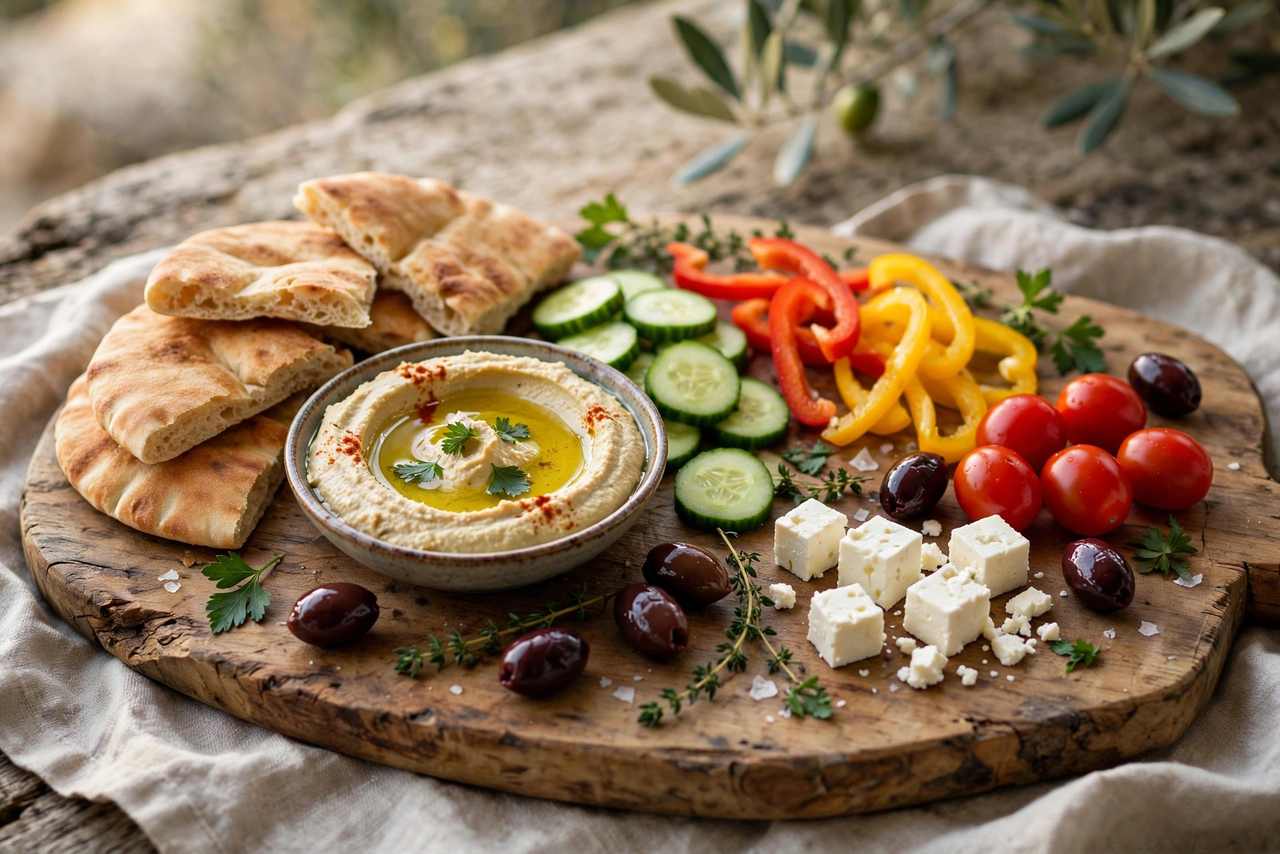
The classics, because they’re classic: warm pita (warmed, not cold — it matters), pita chips, carrot sticks, cucumber, bell pepper strips. Beyond dipping: spread it in sandwiches and wraps, dollop it on grain bowls. Finish every serving with a drizzle of olive oil, a dusting of paprika, and fresh parsley — the holy trinity of hummus presentation.
From-Scratch Option — Dried Chickpeas
Canned is the weeknight answer. Dried is the weekend project:
- Quick-soak: cover 1 cup of dried chickpeas with water, boil 1 minute, then rest 1 hour off the heat
- Simmer 45 minutes to 1 hour, until completely tender — they should practically fall apart
- ¼ teaspoon baking soda in the simmering water is optional but helps tenderness
- Yield: 1 cup dry makes about 2 cups cooked
From-scratch hummus has a slightly nuttier, deeper flavor. Whether it’s worth the hour is a personal question — for most weeks, the can wins.
For the kitchen companions: how-to-keep-guacamole-from-turning-brown is the other dip essential, how-to-store-leftovers-safely-in-fridge keeps the batch safe, and easy-weeknight-dinner-ideas puts the hummus on a plate with dinner.
Frequently Asked Questions
How do you make hummus extra creamy and not grainy?
Blend longer than feels reasonable — 3–4 minutes minimum, plus another minute after it looks done. The Ottolenghi method: 5 full minutes with ice water. The baking-soda boil (20 min) is the backup for the silkiest result.
Do I need to peel chickpeas to make smooth hummus?
No — peeling is optional. The long blend achieves nearly the same smoothness with far less effort. Peel once to understand the difference, then blend longer instead.
Can I make hummus without tahini?
You can, but it won’t taste like hummus — tahini is half the flavor. In a pinch, another nut or seed butter works mechanically, but the classic taste needs tahini. (Substitution note from experience, not a sourced claim.)
How long does homemade hummus last in the fridge?
Up to 5 days in an airtight container (some sources say a week). It’s not freezer friendly — the texture breaks on thawing. It actually improves overnight as flavors meld.
Are canned or dried chickpeas better for hummus?
Dried have a slightly nuttier, deeper flavor; canned win on convenience with 90% of the result. For weeknight hummus, canned. For the weekend project, dried (1 cup dry = ~2 cups cooked).
Why is my hummus bitter or too thick — how do I fix it?
Bitter: usually the tahini — taste the jar; balance with more lemon and salt. Too thick: cold water, 1 tablespoon at a time. Bland: more salt first, then lemon, then garlic — in that order.