How to Make French Press Coffee Like a Real Barista

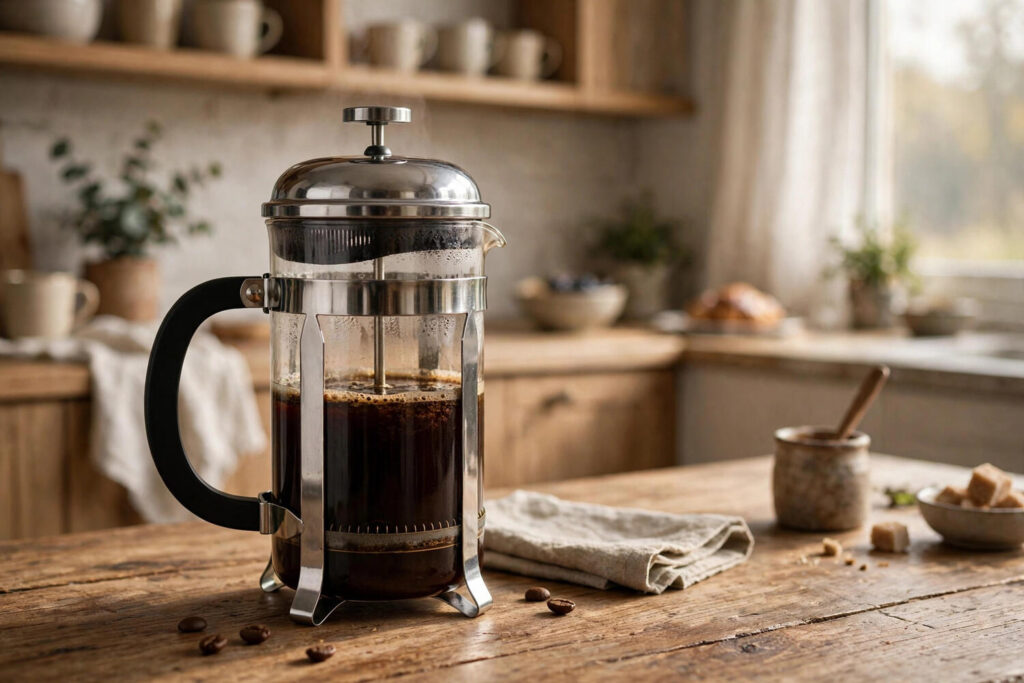
I learned how to make french press coffee the hard way: by making terrible french press coffee for an entire year. Muddy, bitter, gritty — I produced every possible failure, and I blamed the beans, the water, and eventually the press itself. Then a barista friend watched me make a cup, winced, and changed exactly three things: my grind, my ratio, and my timing. The next cup was so good I actually laughed out loud. A french press is the simplest, cheapest path to genuinely excellent coffee at home, but only if you respect what it needs. Here is everything that matters and nothing that does not.
What You Actually Need (It Is a Short List)
A french press, coarsely ground coffee, hot water, and a way to measure. That is the whole equipment list. You do not need a gooseneck kettle, a scale accurate to the gram, or beans that cost more than your electricity bill — though a kitchen scale genuinely helps and costs less than two bags of coffee. The press itself can be a twenty-dollar glass model; expensive presses are mostly about looks and durability, not taste.
The one non-negotiable is the grind. French press coffee demands a coarse grind — think breadcrumbs or coarse sea salt, visibly chunky. Too fine and the grounds slip through the mesh filter into your cup, giving you sludge, and the extra surface area over-extracts and turns the coffee bitter. If you buy pre-ground coffee, look for bags labeled coarse or french press. If you grind at home, a burr grinder beats a blade grinder every time, because blade grinders make dust and chunks together, and the dust is what makes your cup muddy.
The Golden Ratio: 1 to 15
The ratio that coffee professionals land on for french press is roughly one part coffee to fifteen parts water by weight. In kitchen terms: for a standard 34-ounce (one-liter) press, use about 65 to 70 grams of coffee — roughly nine to ten tablespoons — and fill with hot water just off the boil. For a smaller 12-ounce press, use about 25 grams, or four tablespoons.
Do not panic if you do not own a scale. Tablespoons work fine; just be consistent so you can adjust. If your coffee tastes weak and watery, add a tablespoon of grounds next time. If it tastes bitter and harsh, pull one back. Your palate is the final judge, and it gets smarter with every cup. Write your winning ratio on a sticky note on the fridge — future you, half-asleep at 6 a.m., will be grateful.
Water Temperature: The Detail Everyone Skips
Boiling water — a full rolling 212 degrees — scorches coffee grounds and extracts bitter compounds you do not want. The sweet spot is between 195 and 205 degrees Fahrenheit, which you reach by boiling the kettle and then waiting about 30 to 45 seconds. If you want to be precise, an inexpensive thermometer works, but the wait-after-boiling method is what most home brewers actually do, and it works.
Water quality matters more than gadget people admit and less than purists claim. If your tap water tastes fine to drink, it will make fine coffee. If your tap water tastes like a swimming pool, use filtered water — chlorine and heavy mineral flavors absolutely show up in the cup.
How to Make French Press Coffee, Step by Step
Step 1 — Warm the press. Pour hot water into the empty press, swirl, and dump it. This keeps your brew temperature stable instead of losing heat to cold glass. It takes ten seconds and noticeably improves the cup.
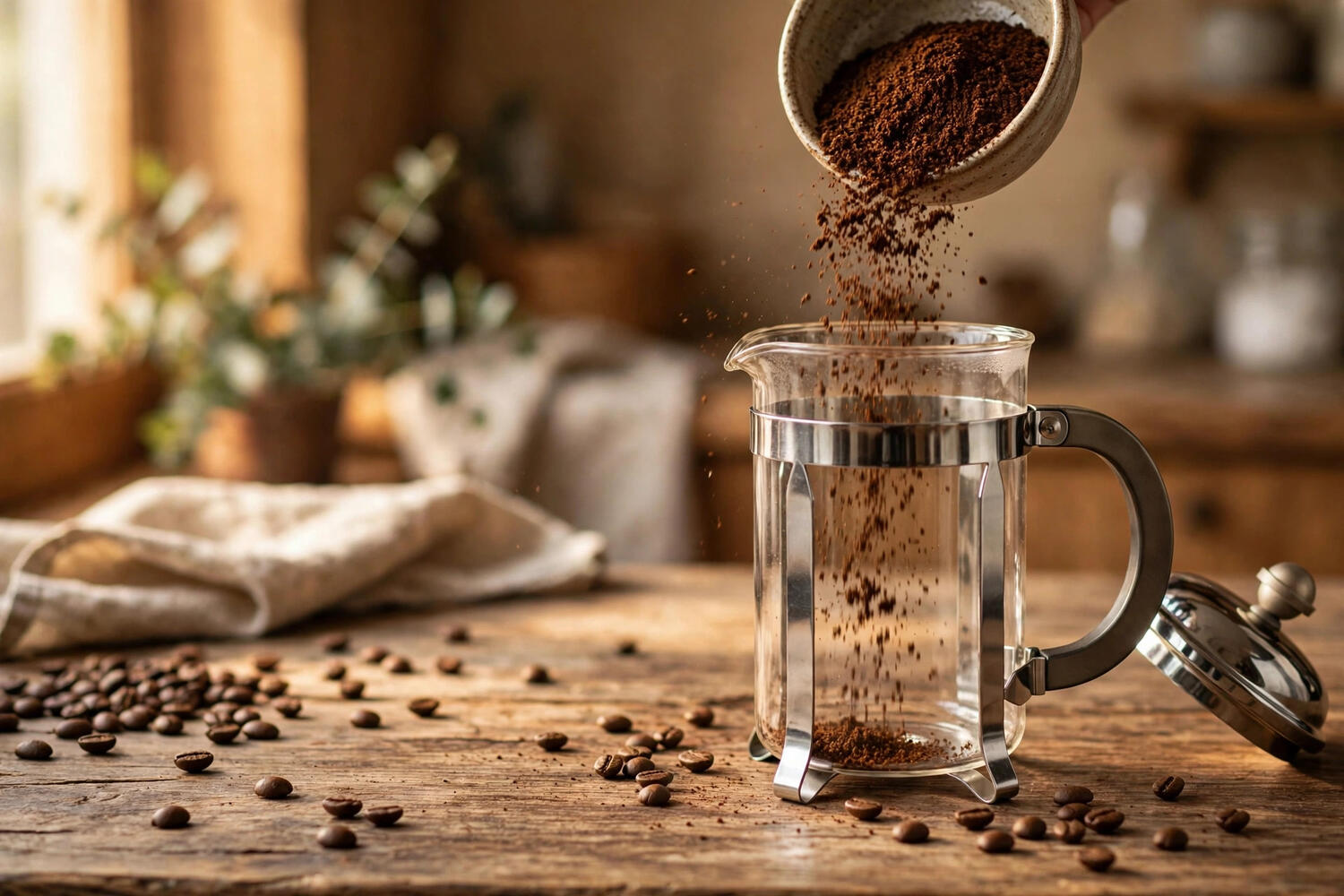
Step 2 — Add the grounds. Add your coarse coffee to the warmed, empty press. Give it a gentle shake to level the bed.
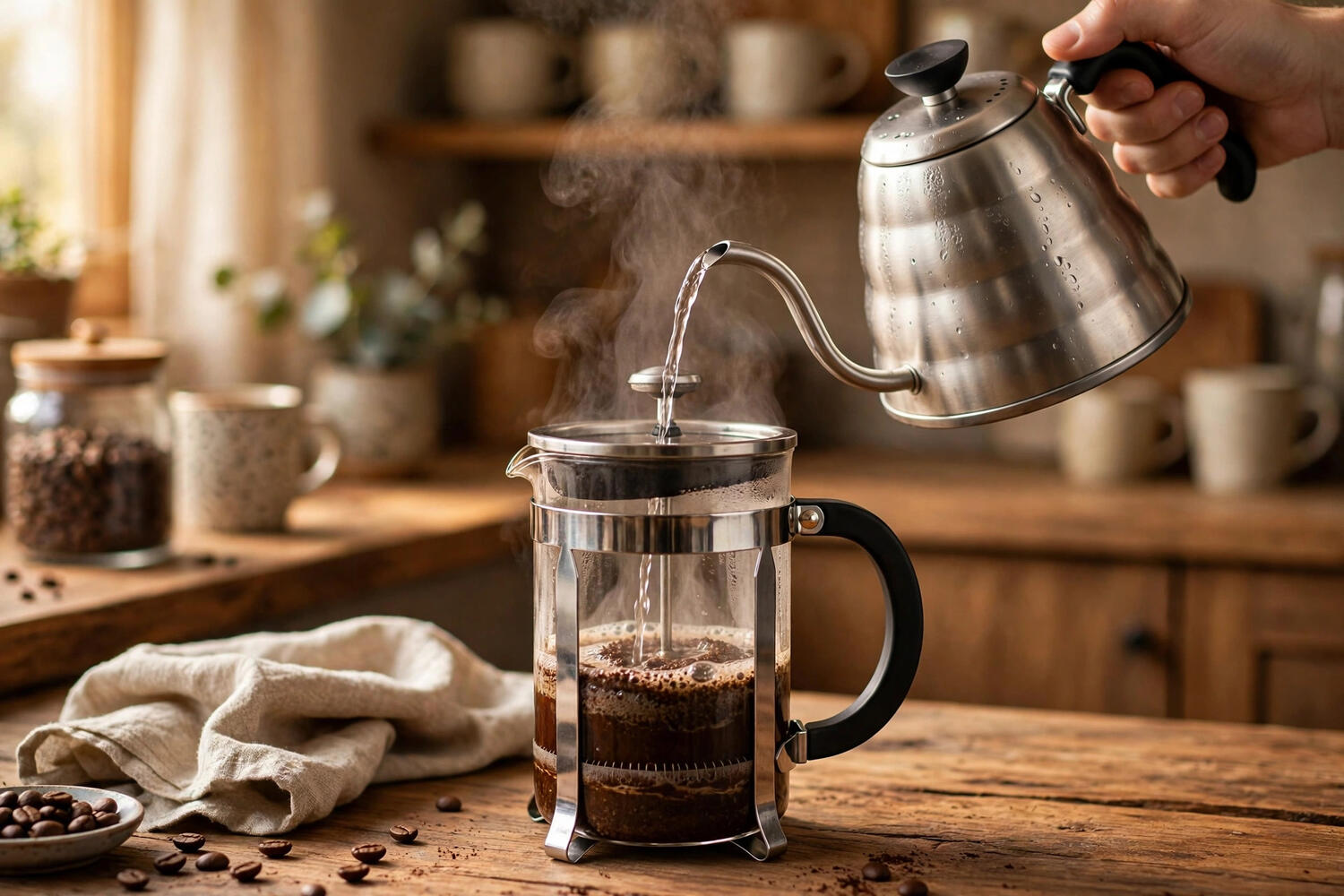
Step 3 — Bloom. Pour in just enough hot water to saturate all the grounds — about twice the coffee’s weight — and wait 30 seconds. The coffee will bubble and swell as trapped gases escape. This step smells incredible and it genuinely improves extraction, especially with fresh beans.
Step 4 — Fill and stir. Pour in the rest of the water, filling to your target. Give it one gentle stir with a wooden or plastic spoon — never metal, which can crack glass presses — to make sure no dry clumps are floating.
Step 5 — Steep for four minutes. Place the lid on with the plunger pulled all the way up. Set a timer for four minutes. This is the standard that produces a balanced cup; go shorter for a lighter cup, longer for stronger — but past five minutes, bitterness starts winning.
Step 6 — Break the crust and skim. Here is the barista trick my friend taught me, and it is the single biggest upgrade in this whole article. After four minutes, lift the lid and you will see a crust of grounds floating on top. Gently break it with a spoon and skim off the foam and floating bits. This removes the fine particles that cause bitterness and silt. Most home brewers skip this. Most home brewers also wonder why their press coffee tastes harsh.
Step 7 — Plunge slowly and serve immediately. Replace the lid and press the plunger down slowly and evenly, stopping just above the grounds — do not smash it into the coffee bed, which squeezes out bitter compounds. Then pour every cup right away. Coffee left sitting in the press keeps extracting and turns bitter within minutes. If you made more than you will drink immediately, decant the rest into a thermos or mug.
Troubleshooting: Fix Your Cup
Bitter coffee? The usual suspects in order: water too hot, steeped too long, grind too fine, or you pressed the plunger too hard. Fix one variable at a time.
Sour or weak coffee? Under-extraction. Your grind is probably too coarse, your steep too short, or your water too cool. Grind a touch finer or add a minute.
Gritty sludge at the bottom? Grind finer inconsistencies — a blade grinder is the usual culprit — or you poured the last bit, which contains the sediment the filter held back. Leave the final half-inch in the press.
Flat, lifeless coffee? Stale beans. Coffee goes stale fast after grinding — within hours, honestly — and whole beans fade within a few weeks of roasting. Buy beans with a roast date, not just a best-by date, and grind right before brewing.
Cleaning: The Part Nobody Talks About
A french press is easy to love and annoying to clean if you do it wrong. Never dump grounds down the sink — they clump and clog drains over time. Scoop or rinse them into the trash or compost (coffee grounds are excellent for gardens). Then disassemble the plunger — the mesh screen, the cross plate, the spring — and wash everything with hot soapy water. Oils build up on the mesh and turn rancid, which is the mysterious “my press coffee tastes off” problem that strikes around month three of ownership. A deep clean every week or two, including taking the screen assembly fully apart, keeps every cup tasting like the first good one.
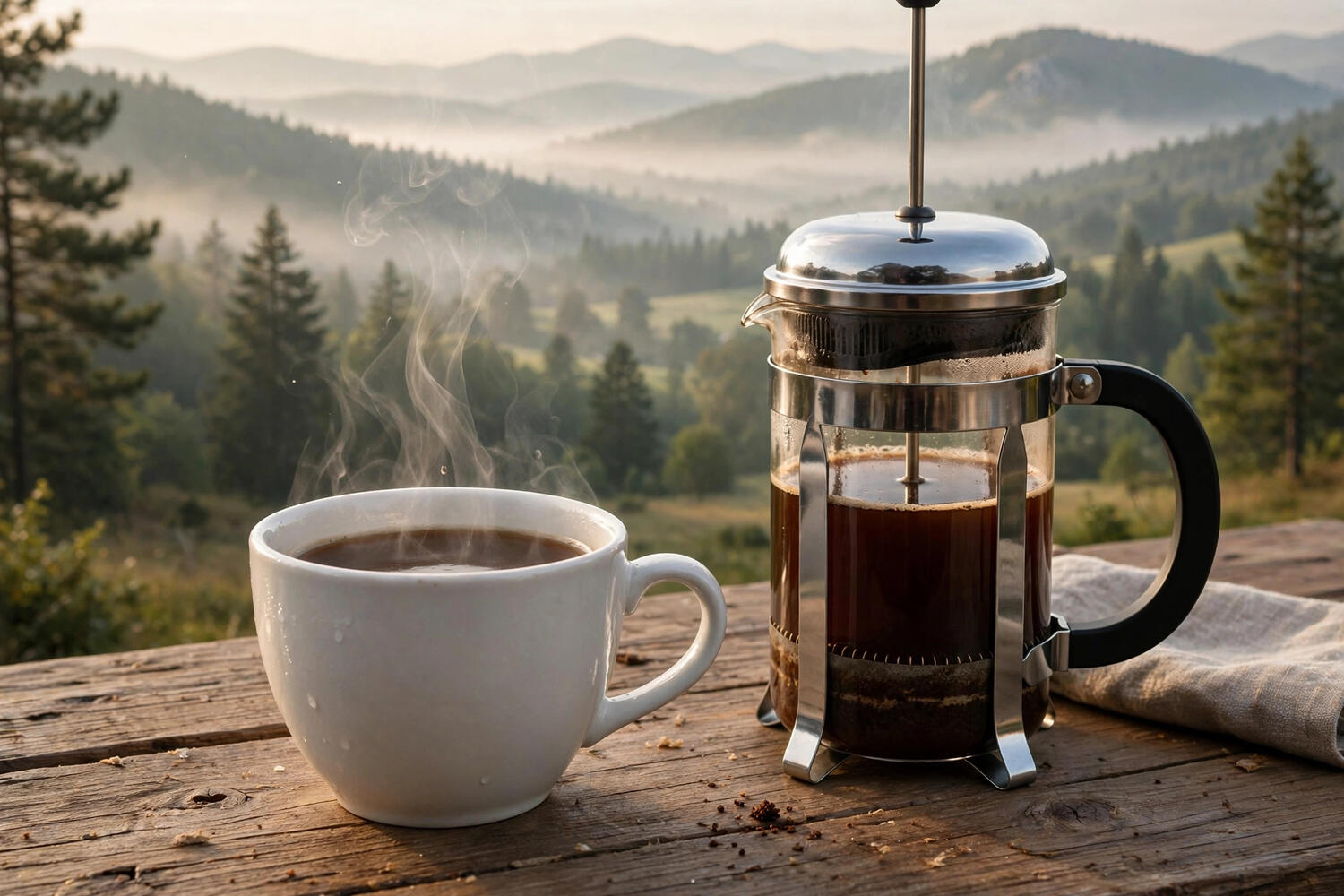
French Press vs. The Alternatives
Compared to drip machines, french press gives you a fuller, heavier body because the metal mesh lets through the coffee’s natural oils that paper filters trap. Compared to pour-over, it is more forgiving and produces a rounder, less bright cup. Compared to espresso, it is not even the same sport — no pressure, no crema, just clean immersion brewing. If you ever dream of turning this obsession into something bigger, people do build entire businesses around coffee craft — here is what it takes to start a coffee shop — but for most of us, a great home cup is the whole point, and the press delivers it for the price of a few café visits.
Choosing Beans Worthy of the Method
A french press is honest equipment — it hides nothing, which means your beans matter more here than in a drip machine with a paper filter muting everything. You do not need expensive beans, but you do need fresh ones. Coffee peaks in the two to four weeks after roasting, then fades; beans that have sat in a warehouse for six months will taste flat no matter how perfect your technique. Look for a roast date on the bag, not just a best-by date, and buy whole beans to grind yourself if you can — pre-ground coffee starts losing aroma within hours.
Roast level is personal, but medium roasts are the sweet spot for french press: enough development for body and sweetness, not so dark that bitterness dominates. Very light roasts can taste sour in immersion brewing if your technique is off, and very dark roasts turn ashy. If you are buying from a local roaster, tell them it is for french press — they will point you to the right bag, and roasters love this question. Store beans in an airtight container away from light and heat, never in the freezer for daily use (the freeze-thaw cycle creates moisture), and buy in quantities you will finish in two to three weeks.
One more thing worth knowing: the press rewards experimentation. Once your technique is solid, try the same beans at different ratios and steep times and taste the difference side by side. Four minutes versus five, coarse versus slightly-less-coarse — you will start to taste extraction the way musicians hear pitch. That is when coffee stops being a habit and becomes a hobby, and the french press is the cheapest possible instrument to learn on.
Frequently Asked Questions
How much coffee do I put in a french press?
Use a 1:15 coffee-to-water ratio: about 65 to 70 grams (9 to 10 tablespoons) for a 34-ounce press, or 25 grams (4 tablespoons) for a 12-ounce press. Adjust to taste from there.
How long should french press coffee steep?
Four minutes is the standard for a balanced cup. Shorter gives a lighter cup; longer than five minutes starts pulling bitter compounds out of the grounds.
Why is my french press coffee bitter?
Usually water that is too hot, a steep that is too long, or a grind that is too fine. Let boiling water rest 30 to 45 seconds, stick to four minutes, and use a coarse breadcrumb-like grind.
Can I use regular ground coffee in a french press?
Standard drip grind is too fine — it will slip through the mesh and over-extract. Look for coffee labeled coarse or french press grind, or grind whole beans coarsely at home.
Should I stir french press coffee?
One gentle stir after filling is enough to wet all the grounds. Over-stirring agitates fine particles and can make the cup muddy.
Is french press coffee stronger than drip?
It tastes stronger and fuller because the mesh filter lets flavorful oils through, but the caffeine per cup is similar when you use the same amount of coffee. Perceived strength is about body, not just caffeine.