International Travel Checklist: The No-Panic Version

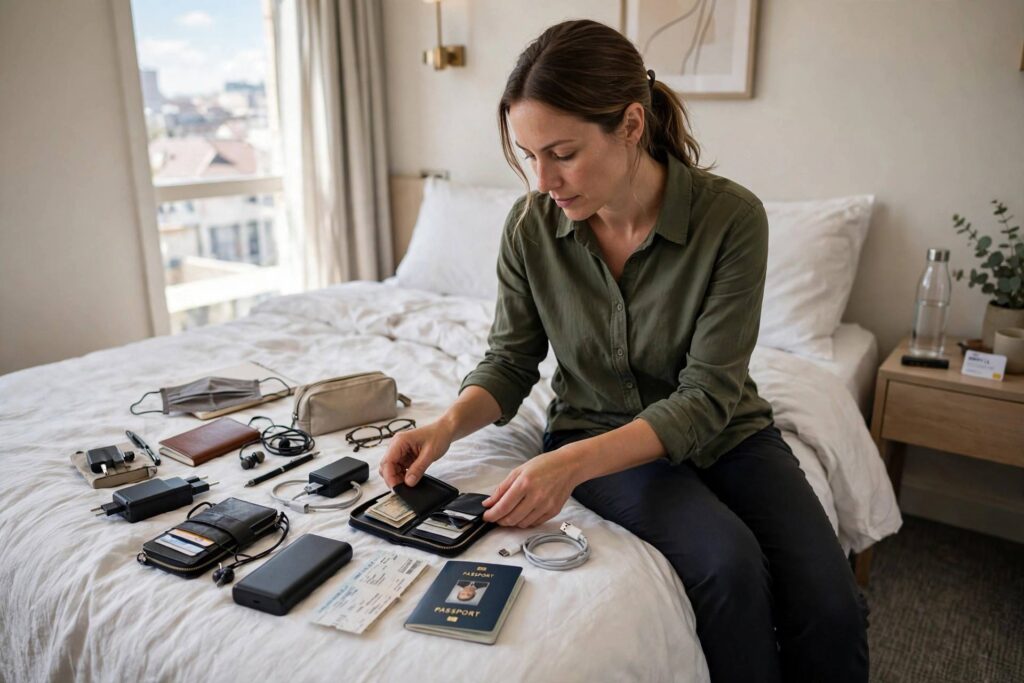
The week before an international trip has a particular flavor of panic — the 2 a.m. “did I renew my passport?” kind. An international travel checklist exists to kill that panic, and after years of flying internationally (including one trip where I forgot my passport and had to sprint home), I’ve refined mine into the list below. Print it, work through it, and board the plane actually relaxed.
I’ve organized this in the order things actually need doing — documents first (they take the longest to fix), money and health next, then packing and home prep in the final days.
Documents: 6–8 Weeks Before Departure
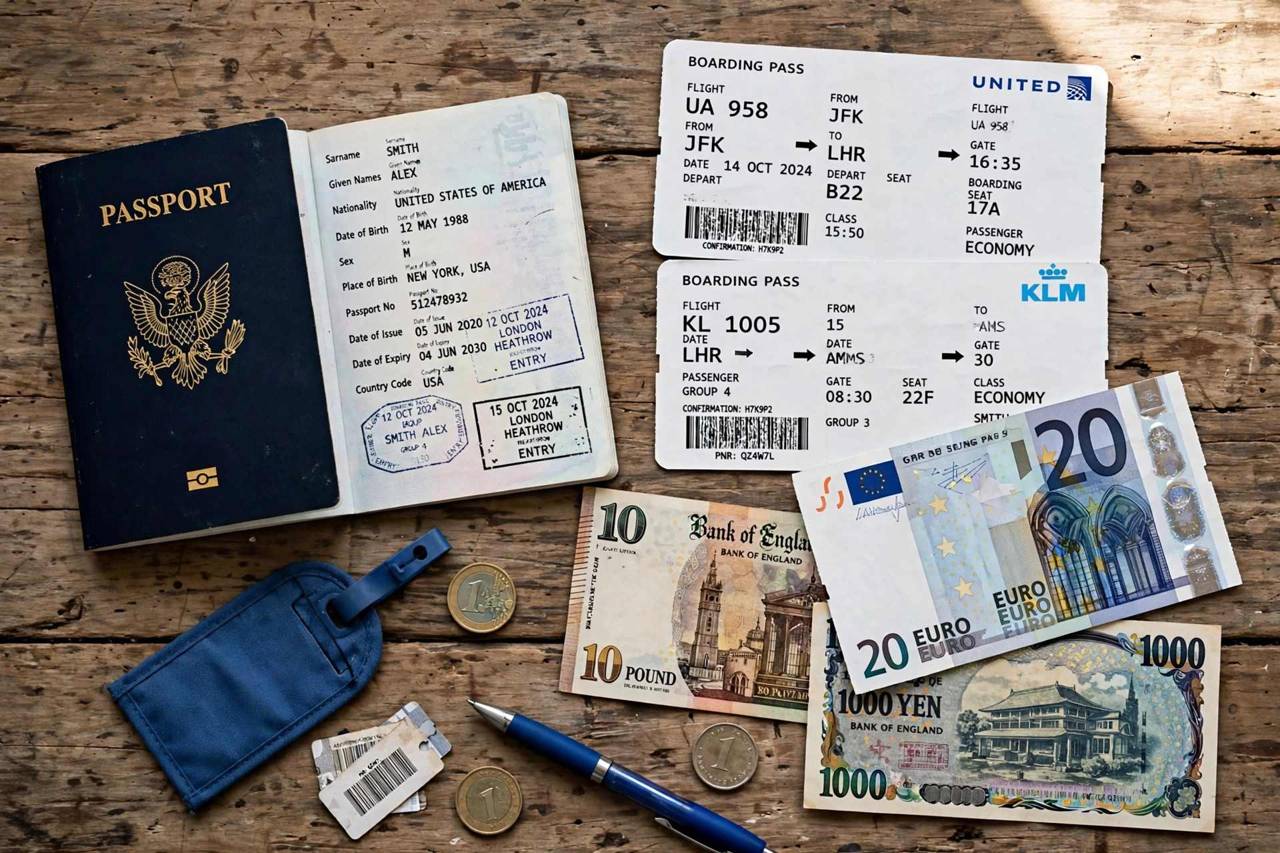
- Passport validity: many countries require your passport to be valid for 6 months beyond your travel dates. Check now — renewals take weeks.
- Visas: check requirements for every country on your itinerary, including layovers. Some “transit” stops need transit visas. E-visas and ESTA-type authorizations can take days to approve — don’t leave them to the final week.
- Travel insurance: buy it when you book, not the night before. Medical coverage abroad is the non-negotiable part; trip cancellation is the nice-to-have.
- Copies of everything: photograph your passport, visa, insurance policy, and bookings. Keep copies in your email/cloud and a paper copy separate from the originals.
- International driving permit: if you plan to drive, check whether your destination requires one — many do, and you get it from your home country’s automobile association before you leave.
Money: 2–4 Weeks Before
- Notify your bank: tell your bank and card issuers your travel dates and destinations so foreign transactions don’t trigger fraud blocks. (Some banks now handle this automatically via app travel notices — check.)
- Get a no-foreign-fee card: if you don’t have one, apply now. Foreign transaction fees of 2–3% add up fast on a long trip.
- Carry two cards from different networks: one Visa, one Mastercard ideally, kept in separate places. If one is lost or blocked, you’re not stranded.
- Small amount of local currency: get some before you go for arrival-day taxis and tips. Airport exchange counters have the worst rates — a little advance cash avoids them.
- Emergency cash stash: $100–200 USD in a separate spot. US dollars are exchangeable almost everywhere in a pinch.
Health: 3–6 Weeks Before
- Vaccinations: check your destination’s requirements and recommendations with a travel clinic. Some vaccines need multiple doses spaced weeks apart — this is why you start early.
- Prescriptions: get refills to cover the whole trip plus a buffer week. Carry medications in original labeled containers with a copy of the prescription — and check your meds are legal at your destination (some common prescriptions are controlled substances abroad).
- First-aid basics: pain relievers, antihistamines, anti-diarrhea medication, rehydration salts, motion sickness tablets, and any personal essentials. Pharmacies abroad may not stock your brands.
- Glasses/contacts: pack a spare pair and your prescription. Losing your only pair of glasses in week one of three is a trip-ruiner.
Phone and Tech: 1–2 Weeks Before
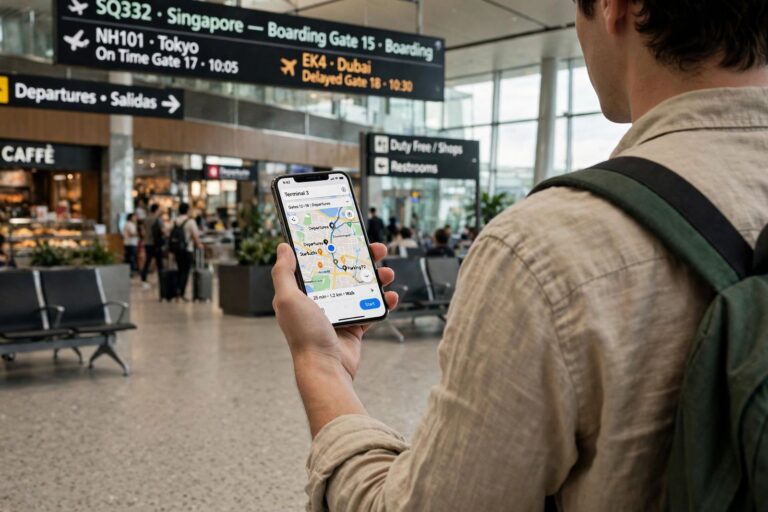
- Roaming plan or eSIM: decide now. International roaming from your home carrier is usually the most expensive option; travel eSIMs or local SIMs on arrival are far cheaper. Download offline maps for your destinations either way.
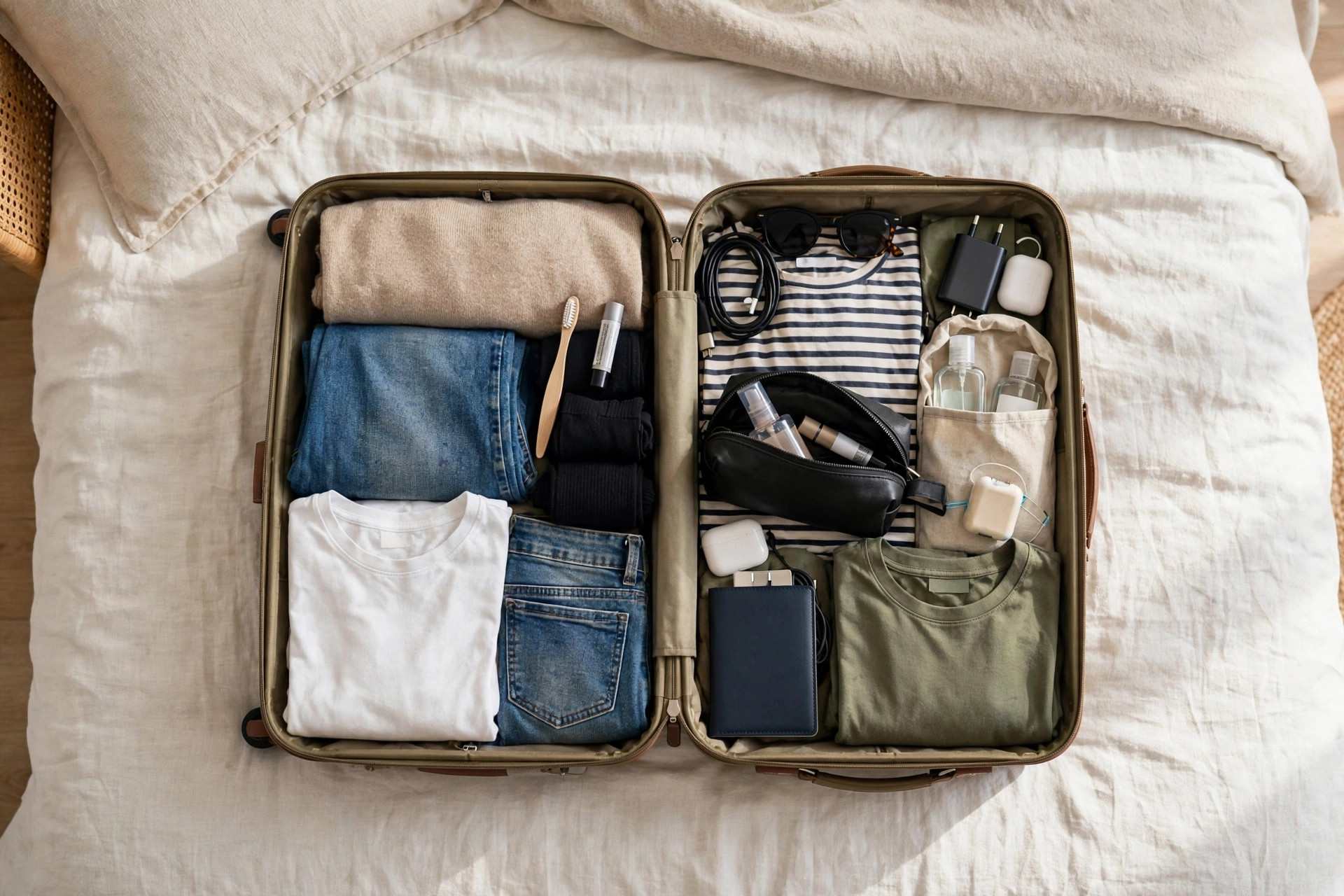
- Power: check whether you need a a travel adapter. Most of the world isn’t your plug shape.
- Download entertainment: movies, playlists, podcasts, and ebooks for long flights — airplane Wi-Fi is unreliable and pricey.
- Key apps: airline app (mobile boarding passes), maps with offline areas saved, translation app with offline language packs, ride-hailing apps that work at your destination, and your bank’s app.
- Back up your phone: back up your phone — if it’s lost or stolen abroad, a fresh backup is the difference between an inconvenience and a catastrophe.
Packing: The Final Week
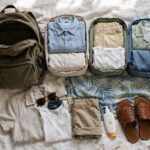
The full packing breakdown lives in our full packing guide, but the checklist version:
- Documents pouch: passport, visas, insurance, bookings, emergency contacts — in your personal item, never checked luggage.
- Medications and valuables in carry-on. Always.
- Clothing for the actual climate plus one layer warmer than you expect — airports, temples, and air-conditioned everything run cold.
- Toiletries in travel sizes; check what’s provided at your accommodation first.
- A daypack or foldable tote for daily exploring.
- Laundry plan for trips over a week — pack for 7 days max and wash, rather than hauling 14 days of clothes.
Home Prep: The Day Before
- Unplug non-essential electronics; turn off water supply if you’ll be gone long.
- Empty the fridge of perishables and take out the trash.
- Set lights on timers; tell a trusted neighbor you’re away.
- Pause mail or arrange collection — a stuffed mailbox advertises absence.
- Pay any bills due while you’re gone, or set autopay.
- Charge everything: phone, power bank, laptop, headphones, camera.
- Weigh your checked bag. Airline overweight fees are brutal and entirely avoidable.
International Travel Checklist for Families
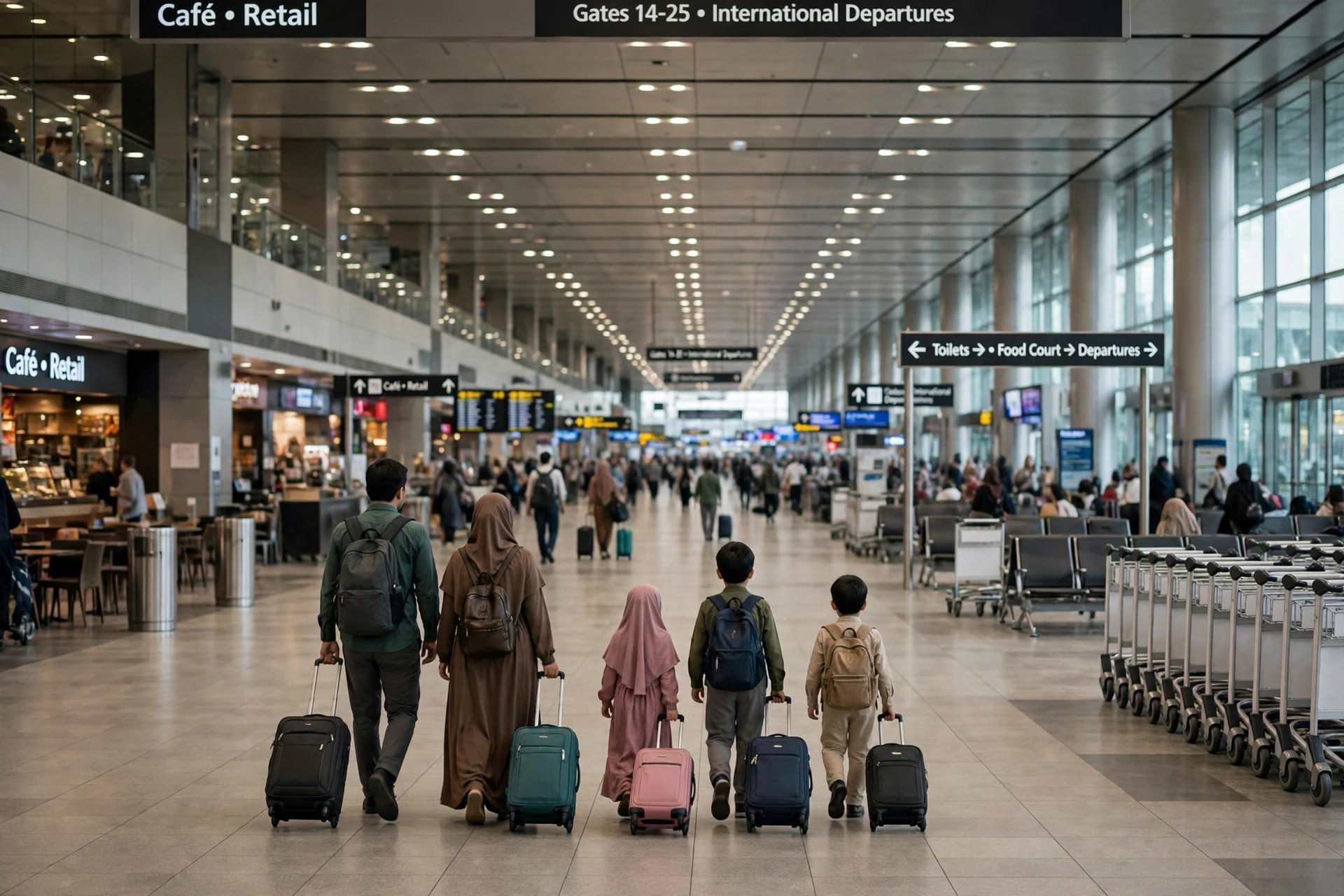
Kids multiply the checklist. Add these to the main list above:
- Child passports: children’s passports often have shorter validity (5 years in many countries) and both parents may need to be present for issuance or renewal — start this process months ahead, not weeks.
- Consent letters: if one parent is traveling alone with the kids, many countries require a notarized consent letter from the other parent. Check your destination’s rules; being denied boarding over this is heartbreaking and avoidable.
- Birth certificates: carry copies — some border agents ask for proof of relationship, especially with different surnames.
- Snacks and entertainment: the plane’s meal schedule won’t match your toddler’s. Pack more snacks than seems reasonable, plus new small toys or activity books revealed strategically through the flight.
- Comfort items: the specific blanket, stuffed animal, or pillow — non-negotiable, in the carry-on, never checked.
- Kids’ medications: children’s doses of everything in the adult kit, plus thermometer, and any prescription with a doctor’s note.
- Car seat strategy: decide before you go — bring your own, rent at the destination, or arrange transfers with provided seats. Don’t improvise this at midnight in a foreign airport.
our picks for the best places to travel with kids has destination ideas once the logistics are sorted.
Last-Minute Mistakes That Ruin International Trips
- Not checking passport expiry until the airport: the single most common trip-killer. Check it the day you book, not the day you fly.
- Assuming your phone will “just work”: it will — at roaming rates that can exceed the cost of your hotel. Sort the eSIM or local SIM before departure.
- Booking tight connections internationally: you may need to clear immigration, collect bags, and re-check at the connection point. Two hours minimum for international-to-international; three if it involves the US.
- Forgetting outlet adapters: discovered at 11 p.m. in a hotel with 4% battery. Pack two — one always goes missing.
- No offline maps: download them before you leave. You’ll need navigation most in the first hour after landing, exactly when you have no data.
- Ignoring the return: check re-entry requirements too — some destinations need proof of onward travel, and your home country may have its own arrival procedures. The checklist works in both directions.
Screenshots Worth Taking Before You Fly
Your phone is your backup brain — load it before departure. Screenshot or save offline: your passport photo page and visa approvals (in case the cloud copies are unreachable), hotel addresses in the local language (show a taxi driver), your travel insurance policy number and emergency hotline, the local emergency number for your destination (it’s not 911 everywhere), your bank’s international collect-call number, and your full itinerary with confirmation codes. Save offline map areas for your first two destinations. Then — and this is the part people skip — make sure someone at home has your itinerary too. If your phone dies, gets stolen, or takes an unplanned swim, a person who knows where you’re supposed to be is worth more than any screenshot.
The “Did I Forget Anything?” Final Sweep
Do this walkthrough the night before, room by room: chargers still plugged into walls (the number-one forgotten item), medications in the carry-on (not the bathroom counter), passport in the documents pouch (not the desk drawer), house keys with the neighbor or hidden, thermostat set, and one last fridge check. Then put your passport, wallet, and phone in the bag you’ll carry tomorrow — tonight, not in the morning rush. Every seasoned traveler has a story about the thing they almost left behind; the sweep is how you make sure it stays a story about “almost.”
Frequently Asked Questions
What documents do I need for international travel?
At minimum: a passport valid 6+ months beyond your trip, visas or electronic authorizations for each destination (including layover countries), travel insurance documents, and copies of everything stored separately from the originals. Add an international driving permit if you’ll drive.
How early should I start preparing for an international trip?
Start documents 6–8 weeks out (passport renewals and some visas take weeks), health prep 3–6 weeks out (vaccines may need multiple doses), money and tech 1–2 weeks out, and packing in the final week. Home prep is a day-before job.
Should I get travel insurance for international trips?
Yes — at minimum, medical coverage. A hospital visit abroad without insurance can cost tens of thousands; a decent policy costs a fraction of your trip. Buy it when you book your trip, since cancellation coverage usually only applies to bookings made after purchase.
How much cash should I bring internationally?
Bring a small amount of local currency for arrival (taxi, tips, snacks) plus $100–200 USD as an emergency stash. For the rest, rely on a no-foreign-transaction-fee card — it’s safer and usually a better rate than exchanging large sums of cash.
What should I pack in my carry-on for an international flight?
Passport and documents, medications, valuables, electronics and chargers, a change of clothes, basic toiletries (under 100ml), snacks, entertainment, and anything you’d need to survive 24 hours if your checked bag goes missing. Never put medications or documents in checked luggage.
Do I need a power adapter for international travel?
Almost certainly, unless you’re traveling between countries with the same plug standard. Check your destination’s plug type and voltage before you go — most modern phone and laptop chargers handle dual voltage, but the plug shape still needs an adapter.