How to Pack Shoes in a Suitcase: 5 Space-Saving Methods

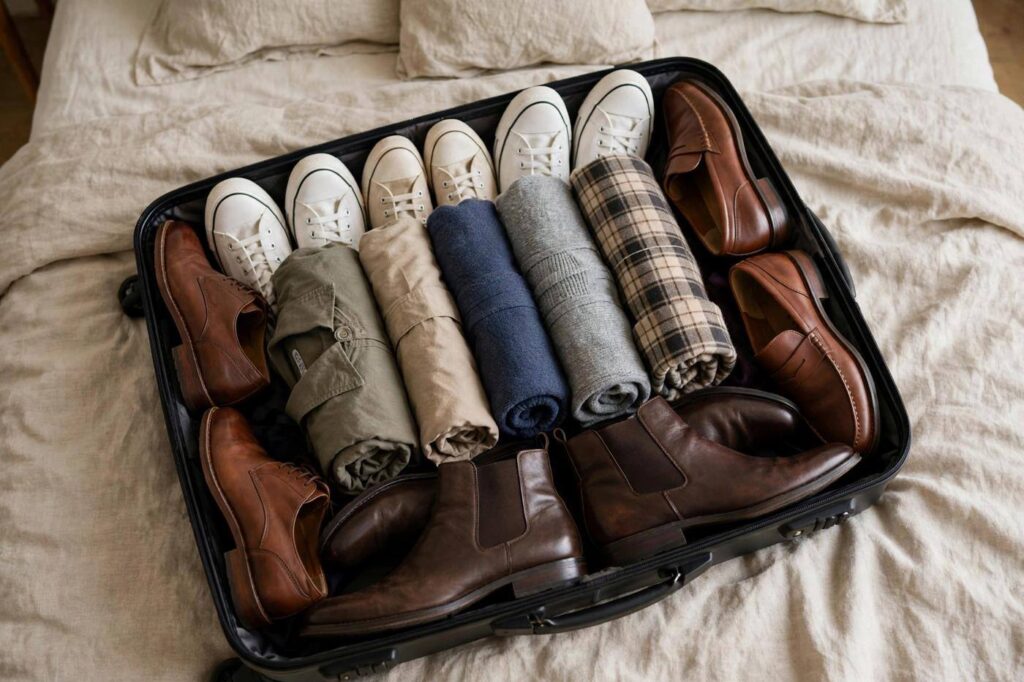
Here is how to pack shoes in a suitcase without surrendering half your bag to footwear: it is a geometry problem, and like most geometry problems, it has an elegant answer once you see it. Shoes are the bulkiest, dirtiest, most awkwardly shaped things most of us pack, and the default approach — tossing each pair in whole, side by side — wastes an astonishing amount of space. I believe curiosity is a superpower, and I have applied mine to the strange little physics of luggage: the methods below work because they exploit how shoes actually nest, how soles can face outward to protect clothes, and how the dead space inside every shoe is free storage you are currently not using.
Five methods, matched to shoe type, plus the stuffing hacks and the honest answer to how many pairs you really need.
How to Pack Shoes in a Suitcase: The Core Principles
Before the methods, three principles that make all of them work. First, soles face out — the dirty bottom of the shoe should never touch your clothes; orient soles toward the suitcase walls or into shoe bags. Second, use the hollow — the inside of every shoe is empty volume, so stuff it with socks, underwear, chargers, or rolled belts. Third, edges are for shoes — shoes go around the perimeter of the suitcase where the shape is awkward for clothes, and soft clothes fill the center. Pack shoes first, clothes around them, and everything fits better.
Also: always pack shoes in bags. Even clean-looking shoes pick up grime, and shoe bags (or shower caps in a pinch — the elastic fits perfectly around a shoe) keep the dirt contained. This is non-negotiable if you are packing light and every item touches every other item.
Method 1: Heel-to-Toe Pairing (Best All-Rounder)
The single highest-value technique. Instead of placing shoes side by side, flip one shoe so its toe points the opposite direction from its mate, then nest them heel-to-toe — the toe of one shoe tucks into the arch curve of the other. This interlocking cuts a pair’s footprint nearly in half for most shoe shapes.
Then lay the nested pair flat along the suitcase edge, soles facing the wall. This works beautifully for sneakers, flats, loafers, and most casual shoes — anything without a tall heel or shaft. If you learn only one method from this guide, make it this one; it is the 80/20 of shoe packing.
Method 2: The Split Pair (Maximum Space Saving)
For tight packing — carry-on only, or three pairs in a small bag — split each pair up. Place one shoe at each bottom corner of the suitcase (or each end, for larger cases), toe-first into the corners, with the hollow stuffed. Splitting lets each shoe occupy dead corner space independently instead of demanding a pair-sized block.
This pairs naturally with the perimeter principle: four corners, four shoes, two pairs, and the entire center of the case stays free for clothes. It feels wrong the first time — pairs belong together! — and then you close a carry-on that should not have closed, and you are converted forever. Speaking of which, if the carry-on-versus-checked decision is part of your trip math, our comparison of carry-on vs checked baggage breaks down when each choice wins.
Method 3: Heels and Dress Shoes (Protect the Shape)
Heels and structured dress shoes need protection, not just compression. Stuff the toe box firmly — socks work, but crumpled tissue or a shoe tree is better for leather — to hold the shape. Place heels facing each other, heel-to-toe, with the stiletto or block heel tucked into the arch of the opposite shoe so it cannot snag or snap.
Wrap each shoe individually (shoe bags, or a soft cloth) because heels scratch each other and everything else. Position them along the suitcase’s rigid edges where they are least likely to get crushed, and never stack heavy items on top of unstructured heels. One more tip: wear your bulkiest dress shoes on the plane. The pair on your feet is the pair that costs zero luggage space.
Method 4: Boots (The Space Hogs)
Boots are the final boss of shoe packing. Ankle boots can usually be heel-to-toed like sneakers if the shaft is short and flexible. Tall boots need a different strategy: wear them in transit — seriously, this is the move — or, if you must pack them, stand them upright along the suitcase edge and fill the shafts with rolled clothes, which both saves space and keeps the leather from creasing.
Never fold tall boots flat unless they are designed for it; creased shafts never quite recover. And if you are choosing between bringing the boots and bringing two other pairs, do the honest math on how many times you will actually wear them. Boots are wonderful and enormous. Plan accordingly.
Method 5: The Stuff-Everything Hack (Free Space Inside Every Shoe)
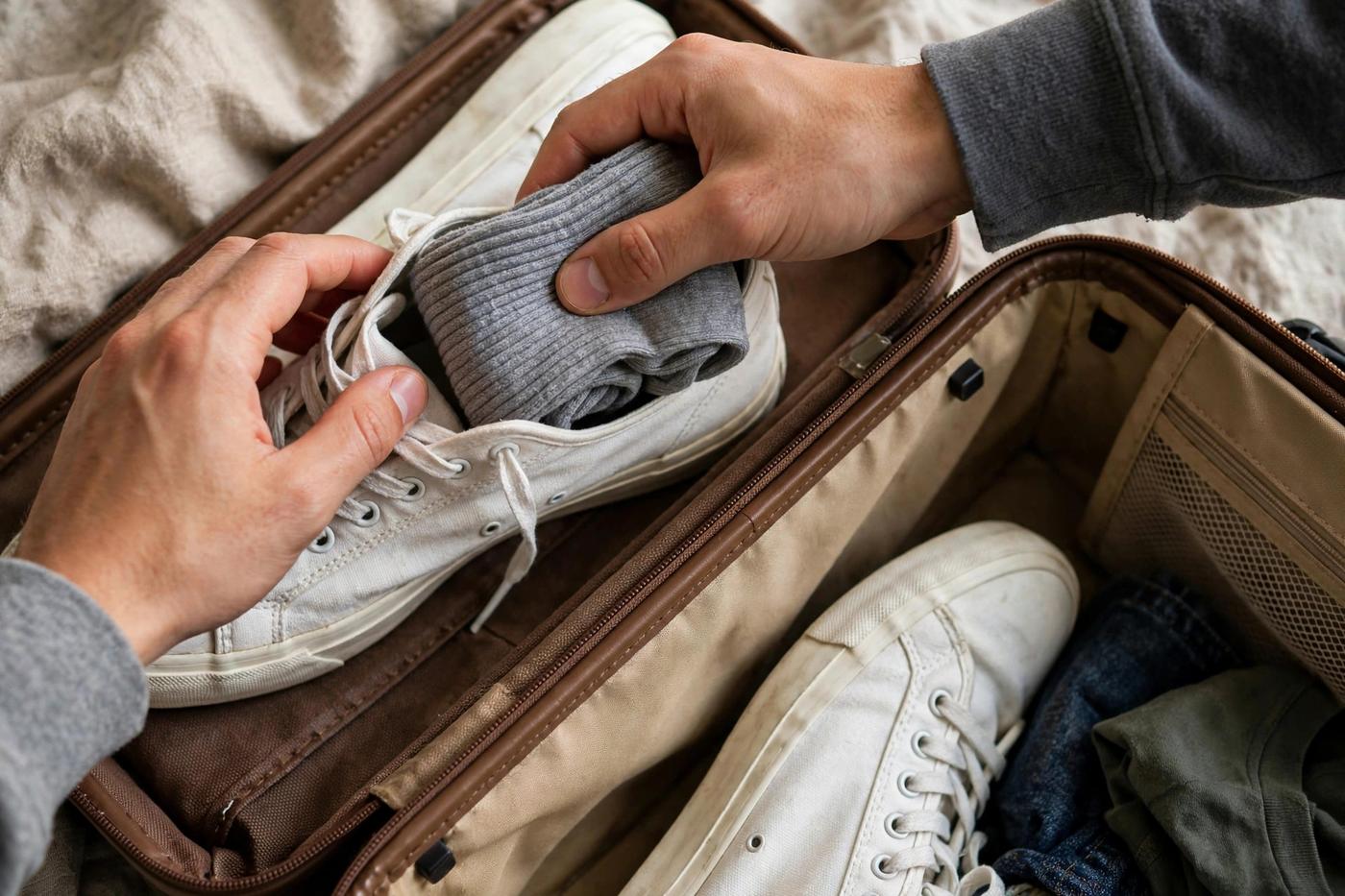
This is less a method than a multiplier applied to all the others: every shoe interior is packable volume. Rolled socks and underwear are the classics — they fill the toe perfectly. But also consider: chargers and cables coiled into sneakers, sunglasses in a hard case slipped into a boot, rolled ties or belts curled into dress shoes, small toiletries in sealed bags inside roomy sneakers.
The rule: soft, clean, and nothing that will deform the shoe. Done right, the “shoe zone” of your suitcase carries a surprising amount of your small-item packing, which is exactly the stuff that otherwise rattles around loose. Minimalist packers take note — this trick is central to packing light generally: every hollow is storage, every gap is an opportunity.
How Many Pairs Should You Actually Bring?
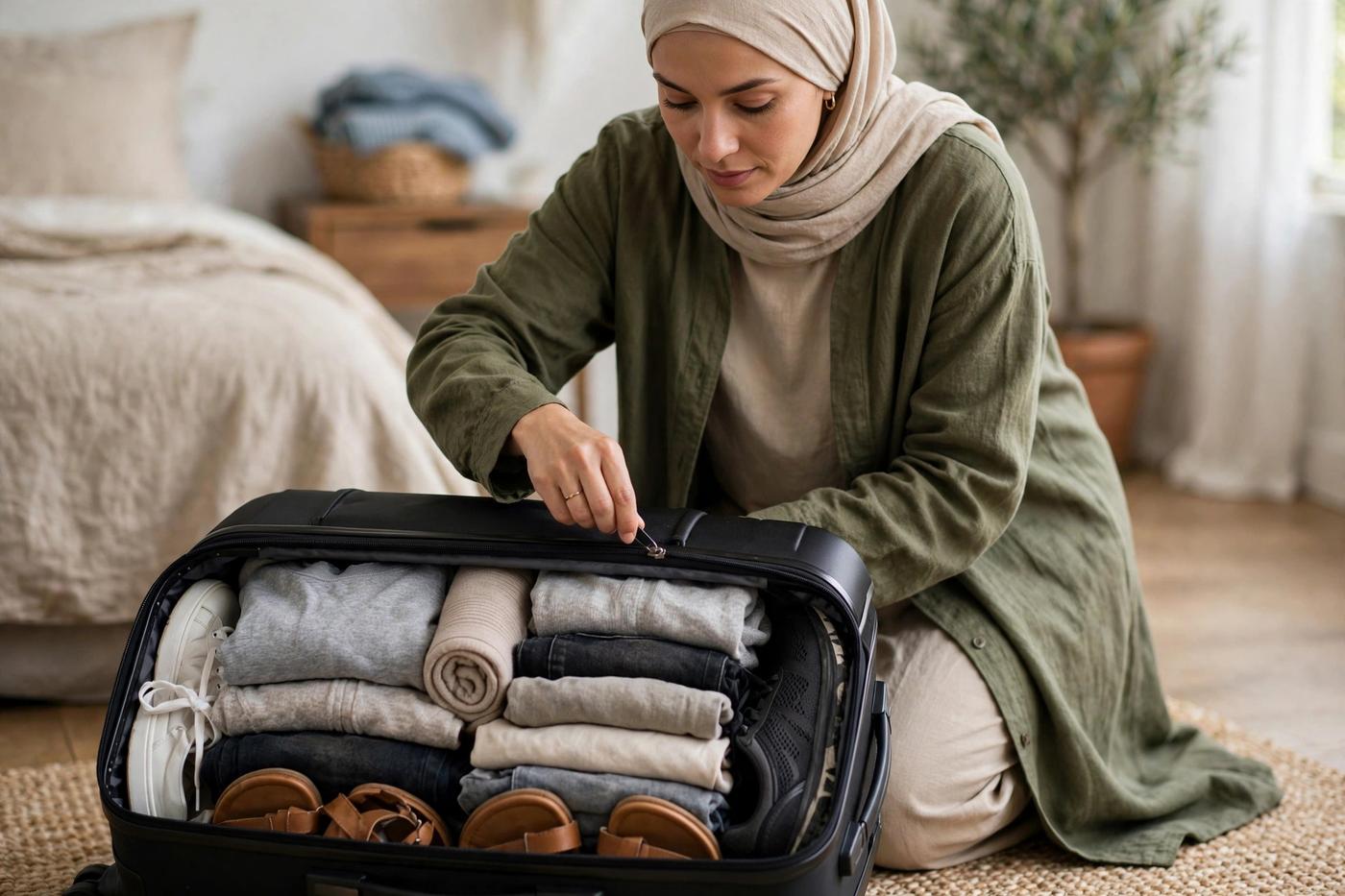
The honest answer, and the one that saves the most space: fewer than you think. The classic travel formula is three — one comfortable walking pair (worn in transit), one dressier pair, one activity-specific pair (running, hiking, beach). Every pair beyond three should have to argue for its place: will you wear it at least twice? Does it work with multiple outfits? If a pair only matches one outfit, the outfit is the problem, not the packing.
Choose versatile colors — shoes that work with everything you packed — and wear the bulkiest pair on travel days. These two decisions alone eliminate most shoe-packing pain before it starts.
Quick Packing Checklist
Shoe bags or shower caps for every pair. Stuffing (socks, underwear, small items) loaded into each shoe. Pairs nested heel-to-toe or split into corners. Soles facing outward, shoes on the perimeter. Bulkiest pair worn in transit. And a final shake test: close the case, lift it, and listen — silence means everything is snug; rattling means something needs stuffing.
Packing Shoes for Specific Trips
The methods above are universal, but trip type changes the calculus. Business trips usually mean two pairs: the dress shoes you wear in transit and one backup or casual pair packed heel-to-toe. Keep the dress pair in individual bags — scuffed leather before a meeting is a bad look — and stuff them to hold their shape.
Beach vacations are the easy mode: sandals and flip-flops nest flat and weigh nothing, so the real question is whether the “nice dinner” pair earns its space. It usually does not — one versatile sandal handles both. Hiking or active trips flip the script: the boots or trail shoes are non-negotiable and bulky, so wear them on travel days without exception, and let everything else be packable and light.
Winter trips are the hardest, because winter boots are enormous and everything is layered. This is where the wear-in-transit rule becomes law rather than advice: boots on your feet, one versatile indoor pair packed, and nothing else. If you are checking a bag anyway, boots ride better in checked luggage where weight limits are generous — just bag them well, because checked bags are not gentle.
The Night-Before Packing Routine
Shoe packing goes wrong most often when it is rushed, so make it a ritual the night before. Lay out every pair you are considering and apply the two-pair test: does each pair earn its place with at least two wears and multiple outfit matches? Bag each keeper, stuff each hollow, and nest or split them into the suitcase first — before a single item of clothing. Then pack clothes around the shoes, filling every gap. Close the case, lift it, shake gently. Silence means you did it right. In the morning, put on the bulkiest pair and walk out the door. It is a small ceremony, but like all good rituals, it prevents the most common failure mode: standing over an open suitcase at midnight, holding a fourth pair of shoes and lying to yourself.
Frequently Asked Questions
Should you pack shoes heel to toe or side by side?
Heel to toe. Flipping one shoe so its toe points the opposite direction and nesting the pair heel-to-toe cuts the pair’s footprint nearly in half compared to side-by-side placement. It is the single most effective shoe-packing technique for sneakers, flats, and loafers.
How do you keep shoes from dirtying clothes in a suitcase?
Pack every pair in a shoe bag (or a shower cap, whose elastic fits neatly around a shoe), orient soles outward toward the suitcase walls, and place shoes around the perimeter with clothes in the center. Wipe soles before packing if they are visibly dirty — thirty seconds with a damp cloth saves your white shirts.
What can you stuff inside shoes when packing?
Rolled socks and underwear are the classics, but also consider coiled chargers, sunglasses in hard cases, rolled belts or ties, and small sealed toiletries. The rule is soft, clean, and nothing that will deform the shoe — and never anything liquid that could leak.
How do you pack boots in a suitcase?
Wear tall boots in transit if possible — it is the only method that costs zero luggage space. If you must pack them, stand them upright along the suitcase edge and fill the shafts with rolled clothes to save space and prevent creasing. Never fold tall boots flat unless designed for it.
How many pairs of shoes should I pack for a week trip?
Three is the sweet spot for most week-long trips: a comfortable walking pair (worn in transit), a dressier pair, and one activity-specific pair. Each additional pair should earn its place by being wearable at least twice and matching multiple outfits. Versatile colors multiply every pair’s usefulness.