How to Clean a Dishwasher Filter: Diagnosis-First Guide + Frequency Table

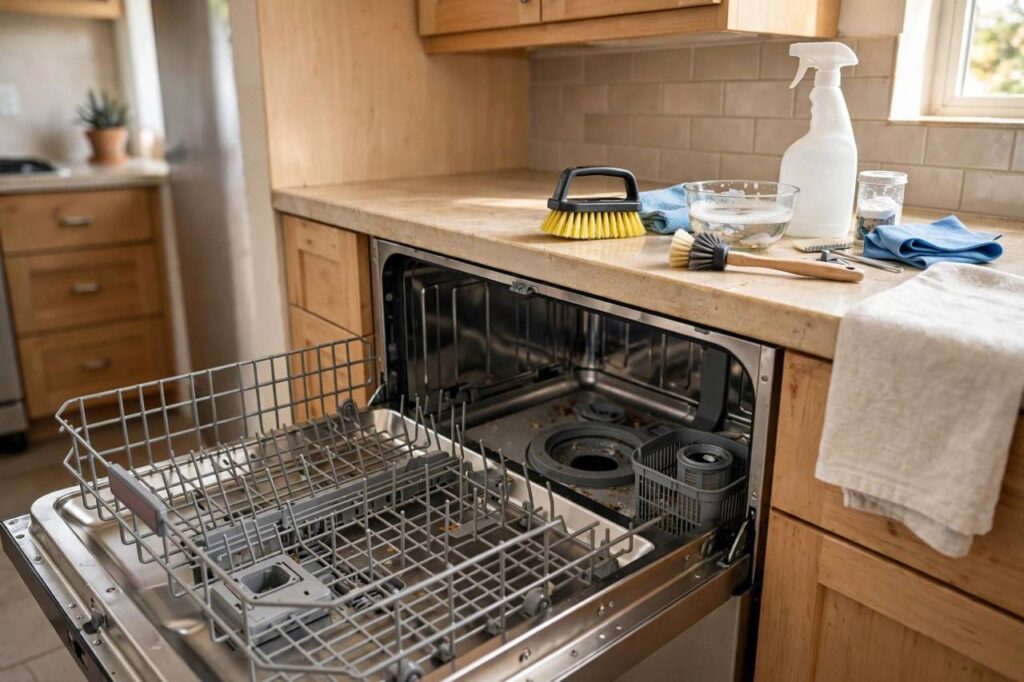
If your dishwasher smells funky, leaves grit on your glasses, or is not cleaning like it used to, the filter is suspect number one. I have fixed dozens of “broken” dishwashers that just needed ten minutes of filter maintenance, so before you call a repair tech or buy a new machine, learn how to clean a dishwasher filter. It is one of the easiest DIY maintenance jobs in your home, and most people have never done it because nobody told them the filter exists.
This guide is diagnosis-first: I will help you figure out whether the filter is actually your problem, walk you through cleaning it step by step, and give you a frequency table so you know how often to do it. No tools required beyond what is in your kitchen.
Does Your Dishwasher Even Have a Filter? (Yes, Probably)
Nearly all modern dishwashers have a filter assembly at the bottom of the tub, under the lower spray arm. Older machines (roughly pre-2000s) often used a self-cleaning grinder instead, which is louder but needs no maintenance. If your dishwasher is relatively quiet and was made in the last 20 years, it has a manual-clean filter. It is usually a cylindrical or flat mesh assembly that twists out by hand.
Check your manual if you have it; if not, the manufacturer’s website has manuals for nearly every model by model number (found on a sticker on the door edge or tub). Five minutes with the manual beats twenty minutes of guessing.
Diagnosis: Is the Filter Your Problem?
Different symptoms point to different causes. Match yours:
Bad smell, dishes still come out clean: Almost certainly the filter. Food particles trapped in the filter decompose and stink, especially in the warm, moist tub. Cleaning the filter usually fixes this immediately.
Gritty residue or food bits on “clean” dishes: Very likely the filter. A clogged filter cannot trap debris properly, so dirty water recirculates onto your dishes. Also check that you are scraping (not necessarily rinsing) plates before loading.
Dishes not getting clean generally: Possibly the filter, but also check the spray arms. Pull out the lower rack and spin the spray arms by hand; if they do not spin freely, or if the spray holes are clogged with mineral deposits, clean those too (a toothpick clears the holes).
Water not draining / standing water in the bottom: Could be the filter, but also check the drain hose for kinks and the garbage disposal connection (if your dishwasher drains through the disposal, a clogged disposal backs up the dishwasher). If the filter is clean and water still stands, you may have a drain pump issue, which is repair-tech territory.
White film on dishes: Usually hard water mineral deposits, not the filter. Try a dishwasher cleaner or vinegar cycle and consider rinse aid before blaming the filter.
How to Clean a Dishwasher Filter: Step by Step
1. Empty the dishwasher and remove the bottom rack. You need clear access to the tub floor. Pull the lower rack straight out and set it aside.
2. Locate the filter. Look at the very bottom of the tub, usually toward the back or center, under where the lower spray arm sits. You will see a cylindrical mesh piece, sometimes with a flat filter panel around it. If there is standing water, soak it up with towels or a cup first.
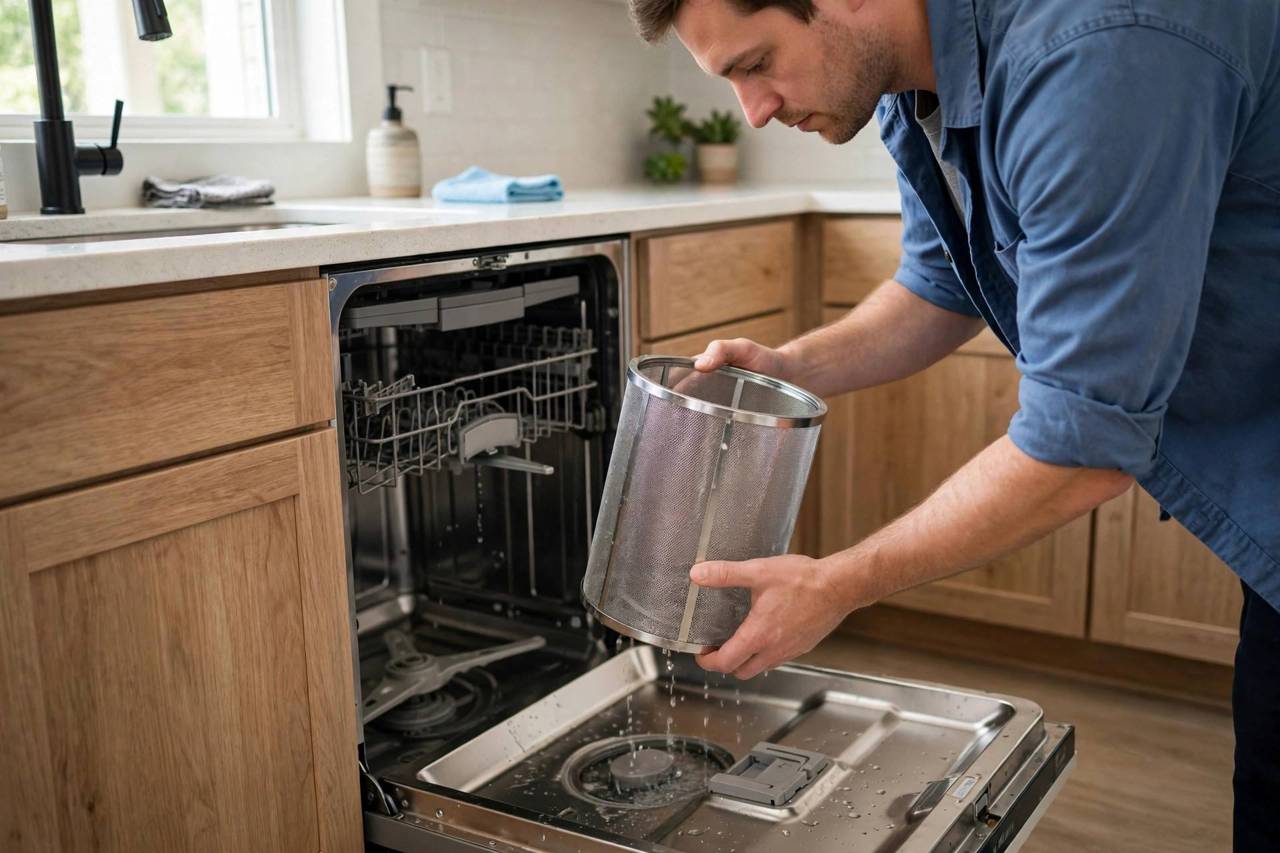
3. Remove the filter assembly. Most filters twist counterclockwise and lift straight out; some have a simple lift-out design. Do not force it; if it resists, check for a locking tab. The assembly often comes apart into two or three pieces (cylindrical filter, flat mesh filter, sometimes a coarse filter). Note how they fit together for reassembly.
4. Rinse and scrub. Take the pieces to the sink. Rinse under warm running water and scrub gently with a soft brush or old toothbrush and a drop of dish soap. Get into the mesh; trapped food and grease are what you are removing. For stubborn grease or mineral buildup, soak the filter in warm water with a cup of white vinegar for 15-20 minutes, then scrub again. Never use abrasive scouring pads or harsh chemicals; they damage the fine mesh.
5. Clean the filter housing. While the filter is out, wipe the cavity it sits in with a damp cloth. Food collects around the edges too.
6. Reinstall. Drop the pieces back in the reverse order and twist clockwise to lock. Make sure it seats fully and locks; a loose filter lets debris bypass it and can rattle during cycles. Replace the bottom rack.
7. Run an empty hot cycle. Run the dishwasher empty on its hottest cycle with a cup of white vinegar on the top rack (or a commercial dishwasher cleaner). This flushes the system and deodorizes the tub. Your dishwasher should smell neutral and clean afterward.
How Often to Clean It: The Frequency Table
Frequency depends on how you use the dishwasher:
Heavy use (daily loads, minimal pre-scraping): clean the filter every 2-4 weeks. If you load plates with visible food on them, you are asking the filter to do heavy lifting; clean it often.
Normal use (most days, plates scraped): every 1-2 months. This is the sweet spot for most households.
Light use (a few loads per week, well-scraped dishes): every 2-3 months.
Signs you are overdue regardless of schedule: any odor, visible debris in the filter when you peek, or declining cleaning performance. The schedule is a guideline; your nose and your dishes are the real indicators.
Note: you do not need to pre-rinse dishes before loading (modern dishwashers and detergents are designed for dirty dishes, and most manufacturers say scraping is enough), but scraping off large food chunks dramatically extends the time between filter cleanings.
What NOT to Do
Do not run the dishwasher without the filter. Debris will go straight into the pump, which turns a maintenance job into a repair bill.
Do not use bleach to clean the filter or tub. Bleach can damage stainless steel interiors and rubber seals. Vinegar or a purpose-made dishwasher cleaner is safer and effective.
Do not ignore a damaged filter. If the mesh is torn or the plastic is cracked, replace it. A damaged filter is worse than a dirty one because it looks like it is working. Replacement filters are inexpensive and model-specific; order by your dishwasher’s model number.
Do not assume the filter is the problem for every symptom. As the diagnosis section shows, drainage issues and white film have other common causes. Fix the right thing.
Dishwasher Maintenance Beyond the Filter
The filter is the highest-impact job, but three companion habits keep the whole machine healthy. First, clean the spray arms twice a year: pull out the racks, spin each arm by hand, and clear clogged holes with a toothpick or soft brush, since mineral deposits narrow the jets over time and silently degrade cleaning. Second, wipe the door gasket and seals monthly with a damp cloth; the rubber folds trap food and grow mildew, which is a common hidden source of dishwasher odor that a clean filter will not fix. Third, run an empty hot cycle with a dishwasher cleaner or two cups of vinegar on the top rack every month or two to dissolve grease and scale from the tub, racks, and internal plumbing.
Two more things worth knowing. If your home has hard water, use a rinse aid and consider a water softener; mineral film on dishes is a water problem, not a dishwasher problem, and no amount of filter cleaning solves it. And scrape, do not pre-rinse: modern detergents are formulated to cling to food soils, and squeaky-clean dishes actually wash worse because the enzymes have nothing to grip. Plates should go in dirty-ish, with large chunks scraped off, and the filter and spray arms handle the rest. Check your detergent too: pods and powders outperform gels in most independent tests, and using too much detergent leaves residue while too little leaves food behind, so measure rather than eyeball.
Frequently Asked Questions
Where is the dishwasher filter located?
At the bottom of the dishwasher tub, under the lower spray arm, usually toward the back or center. Remove the bottom rack for access. It is typically a cylindrical mesh assembly that twists out by hand.
How often should you clean a dishwasher filter?
Every 1-2 months for normal use, every 2-4 weeks for heavy use with minimal pre-scraping, and every 2-3 months for light use. Odor or declining cleaning performance means clean it now regardless of schedule.
Can you clean a dishwasher filter with vinegar?
Yes. Soak the removed filter in warm water with a cup of white vinegar for 15-20 minutes to dissolve grease and mineral buildup, then scrub with a soft brush and rinse. You can also run an empty hot cycle with vinegar on the top rack to freshen the whole machine.
Why does my dishwasher smell bad even after cleaning the filter?
Check the door gasket and seals for trapped gunk, clean the spray arms, and run an empty hot cycle with a dishwasher cleaner. Persistent odor after all that can indicate a drain hose issue or buildup in areas you cannot reach, which may need a technician.
Do all dishwashers have filters?
Nearly all modern dishwashers (last ~20 years) have manual-clean filters. Older models often used self-cleaning grinders instead, which are louder but maintenance-free. Check your manual if you are unsure.
Can a dirty dishwasher filter cause dishes to not dry?
Indirectly. A clogged filter impairs overall wash performance, and poor washing leaves residues that interfere with drying. Rinse aid levels and the heated-dry setting matter more for drying specifically, but a clean filter is the foundation.
Final Thoughts
The dishwasher filter is the most neglected ten-minute maintenance job in the house. Clean it on a schedule, scrape your plates, run a vinegar cycle occasionally, and your dishwasher will clean better, smell better, and last longer. The repair tech you do not have to call will never know what they missed.