What Is a Pyroclastic Flow? The Fastest, Hottest Killer a Volcano Makes

Ask volcanologists which volcanic hazard frightens them most and the answer comes back with unusual unanimity. Not lava — lava is slow enough to walk away from, most of the time. Not ash, though ash ruins engines and roofs and lungs. The answer is the pyroclastic flow: a ground-hugging avalanche of hot rock, ash, and gas that moves at highway speed, at temperatures that ignite what they touch, and destroys nearly everything in its path. This article explains what one is, how it is put together, the three ways it can be born, and — with complete honesty — what your chances are if one is coming toward you.
The Short Answer
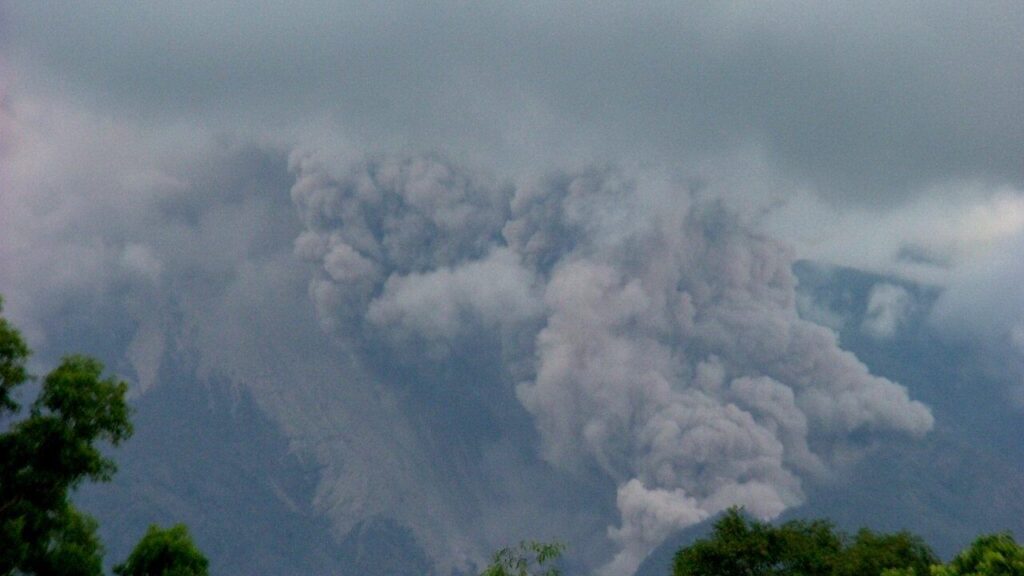
A pyroclastic flow is a hot — typically more than 800°C (over 1,500°F) — chaotic mixture of rock fragments, gas, and ash that travels rapidly away from a volcanic vent or a collapsing flow front, at speeds the USGS describes as tens of meters per second. It contains a high-density mix of hot lava blocks, pumice, ash, and volcanic gas, and it moves down volcanic slopes, typically following valleys.
Hold three facts together and you have the definition that matters: it is ground-hugging (it follows the land, unlike an ash plume that rises), it is fast (tens of meters per second converts to highway speed and beyond), and it is hot through and through — this is not dust warmed by the sun, it is rock at volcanic temperature, in motion. Everything else in this article is those three facts unfolding.
Inside a Flow: Two Parts
Most pyroclastic flows consist of two parts, and the distinction explains both their reach and their deposits. Below is the basal flow: a lower layer of coarse fragments that moves along the ground — the dense, heavy body of the flow, carrying blocks that range from ash-sized particles to boulders. Above it rises a turbulent cloud of ash, lighter and more mobile, which billows over the basal flow and can shed falling ash over a wide area downwind. When you see photographs of a pyroclastic flow, you are usually looking at the ash cloud; the basal flow, the part doing the demolishing, is underneath it.
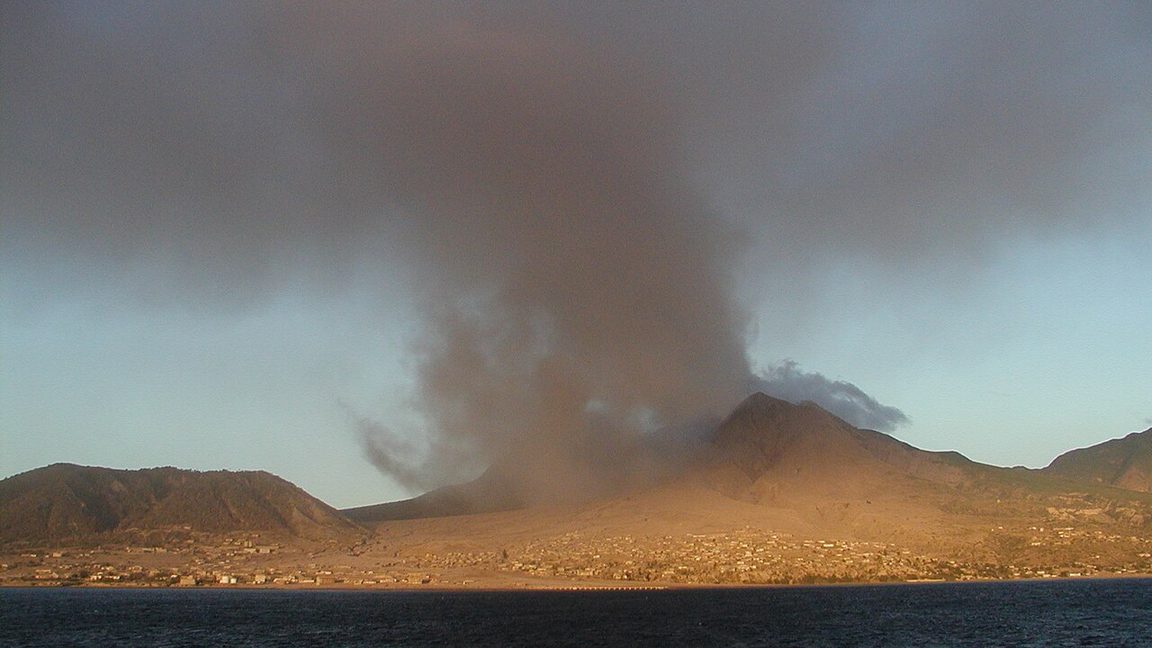
One precision, because this article’s sources give two temperature figures and they are both correct — in context. The USGS’s FAQ describes the flow itself as typically >800°C. Its hazards pages, describing the rocks and gas inside flows, give a general range of 200°C to 700°C. These are not a contradiction to be averaged into a fake compromise number; they are two statements about a phenomenon whose temperature varies — by flow, and by position within a flow.
What neither figure permits is comfort: even the low end of the interior range ignites fires, and the margins of flows can kill by burns and by inhalation of hot ash and gases.
Three Ways a Flow Is Born
Pyroclastic flows form in three distinct ways, and knowing them explains why flows can appear in eruptions that look quite different from one another.
1. Collapse of the eruption column. In a highly explosive eruption, the column of material ejected upward into the atmosphere can cool and become too cool and dense to maintain its upward momentum. What can no longer rise, falls — and falls as a flow, racing down the slopes under gravity.
2. “Boiling over” from the vent. In some explosive eruptions, material is erupted without forming a high plume at all; it spills directly from the vent and moves rapidly downslope, a flow from the first second.
3. Collapse of a lava dome or flow front. The fronts of lava flows and the flanks of growing lava domes can become so steep that they collapse under gravity. No explosion is required: a dome that simply gives way produces a pyroclastic flow out of its own debris. Domes deserve a word of their own here, because they are built from the lavas least able to flow away — viscous, silica-rich material that piles up around the vent instead of travelling. A growing dome is, in effect, a store of hot fragments stacked at an angle, and gravity is always auditing the stack.
Notice what the third route implies. A volcano does not have to be in a dramatic explosive phase to produce the most dangerous phenomenon in volcanology; a quiet dome, steepening day by day, carries the same potential energy. This is also where the flow connects to what happens when magma reaches the surface in different eruption styles — the same volcano can produce several of these routes in a single eruptive episode.
How Fast, How Far, How Deep
Speed first, with the honest framing: flows vary considerably in size and speed, but rock fragments travel across the ground at speeds typically greater than 80 km per hour (50 mph). At that pace, on the slopes where flows occur, there is no outrunning one on foot — a point the survival section will not soften. Distance and terrain next: flows generally follow valleys or other low-lying areas, which channels them — mercifully predictable in direction, merciless within the channel. And depth: depending on the volume of debris carried, a flow can deposit layers of loose rock fragments from less than one meter to more than 200 meters deep.
Scale that against the smallest case, because the small case is the sobering one: even relatively small flows, moving less than 5 km from the volcano, can destroy buildings, forests, and farmland. You do not need a giant flow. A modest one, in the wrong valley, is a complete event for everything in it. (The fragments themselves, from ash to bombs, are catalogued in our guide to a volcano’s parts and its tephra; this article stays with the flow they form together.)
Why Nothing Outruns It: Mont Pelée, 1902
The case that taught the world this phenomenon has a name of its own. During the 1902 eruption of Mont Pelée, in Martinique, a pyroclastic flow — also known by the French term nuée ardente, “glowing cloud” — demolished the coastal city of St. Pierre, killing nearly 30,000 inhabitants; the USGS’s deadliest-eruptions table records the toll as 29,025, by pyroclastic flows. A city, erased by one flow, in the time it takes to read this paragraph aloud. That is why flows make some volcanoes so dangerous: not because they are the largest hazard a volcano produces, but because they combine the three properties of the short answer — speed, heat, and ground-hugging reach — in the one combination that leaves no reaction time.
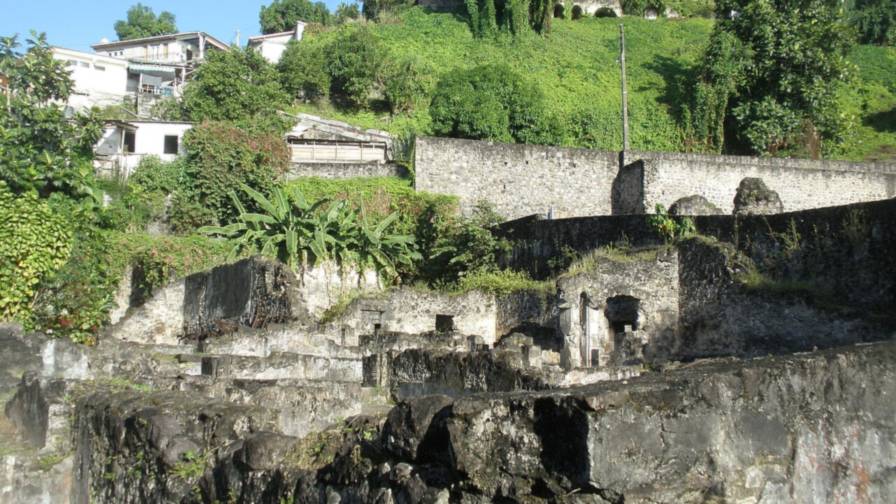
The phenomenon is not confined to land slopes, either: in 1883, a pyroclastic flow from Krakatau crossed the Sunda Strait itself at speeds of 100 km/h, killing everyone in its path. Water, which stops lava and slows almost everything else in geology, did not stop that.
The Danger After the Flow
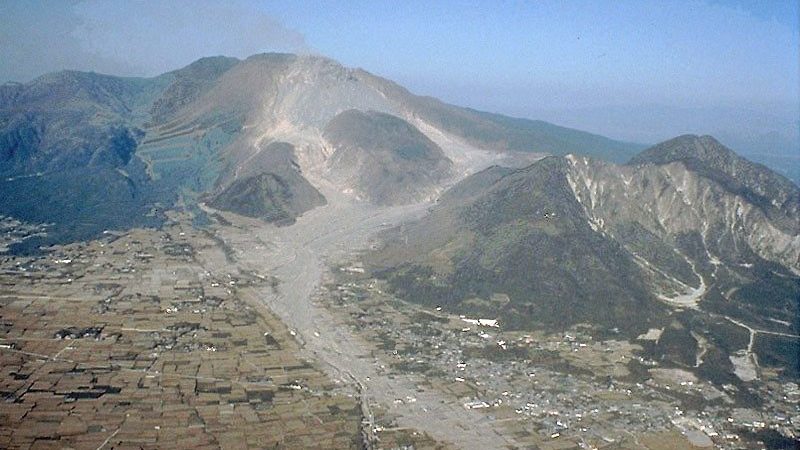
A pyroclastic flow’s own passage is not the end of its hazards. The USGS lists the secondary dangers plainly. Flows erode, melt, and mix with snow and ice, sending sudden torrents downstream — a flow on a snow-capped volcano manufactures a flood as a side effect. They dam or block streams in volcanic valleys, creating lakes behind the blockage that eventually overtop and erode it, producing a rush of water and volcanic material downstream — a second disaster scheduled by the first. And by stripping vegetation and leaving an easily eroded landscape, they increase runoff and erosion during rainstorms long afterward. The practical translation: the valley a flow has passed through remains a hazardous address through the following rains, not just during the eruption.
Can You Survive One?
Here is the honest answer, and this article will not decorate it. There is no technique for surviving a direct hit from a pyroclastic flow; the temperatures and speeds in the sections above see to that. Survival in flow country is a matter of not being there — which is why the USGS’s own guidance, printed at the top of its hazards page, is an instruction about timing rather than heroics: heed evacuation warnings if a volcano is known to be active. And if you witness a pyroclastic flow, run in the opposite direction as quickly as possible. That is the whole protocol.
The margin that saves lives in these events is measured in hours of warning respected, not in seconds of sprinting; the people who study these flows for a living put evacuation, not escape, at the center of their advice, and so does this article.
Frequently Asked Questions
The USGS FAQ describes flows as typically hotter than 800°C (over 1,500°F); its hazards pages give the rocks and gas inside flows a general range of 200–700°C. Both figures appear in this article with their contexts, because a flow’s temperature varies — and every value in either range is lethal: fires ignite, and flow margins kill by burns and inhalation.
Typically faster than 80 km/h (50 mph) — the USGS’s FAQ frames the same speeds as tens of meters per second, and the two statements agree. Krakatau’s 1883 flow crossed the Sunda Strait at 100 km/h. At such speeds, outrunning a flow on foot is not a realistic option, which is why evacuation warnings exist.
Lava is molten rock flowing as a liquid stream — usually slow enough to evacuate ahead of. A pyroclastic flow is a chaotic, gas-driven mixture of hot rock fragments, ash, and gas that hugs the ground at highway speeds and far higher effective danger. Lava destroys property; pyroclastic flows are among the deadliest phenomena in volcanology, as St. Pierre’s 29,025 dead in 1902 attest.
A deposit of loose rock fragments, laid down in the valley the flow followed, at depths from less than one meter to more than 200 meters depending on the volume of debris carried. The deposit is also a lingering hazard: stripped, easily eroded ground raises runoff and erosion in later rainstorms, and blocked streams can release sudden floods when their dams give way.
Yes — it has happened. In 1883, a flow from Krakatau crossed the Sunda Strait at 100 km/h, killing everyone in its path. Flows travel on a cushion of their own gas and momentum; a strait is an obstacle to many volcanic hazards, but it is not a guaranteed barrier to this one.