How to Store Fresh Herbs So They Last Weeks, Not Days

There’s a special kind of heartbreak in opening the fridge to find yesterday’s beautiful fresh basil turned into black slime. We’ve all been there, friend. Fresh herbs are one of the most wasted foods in home kitchens — not because we don’t love them, but because nobody taught us how to store fresh herbs properly.
Well, today’s the day that changes. I’m going to show you exactly how I keep basil perky for two weeks, cilantro crisp for ten days, and hardy herbs going for nearly a month. These are the methods I actually use in my kitchen — no fancy equipment, just smart techniques.
How to Store Fresh Herbs: The Golden Rule
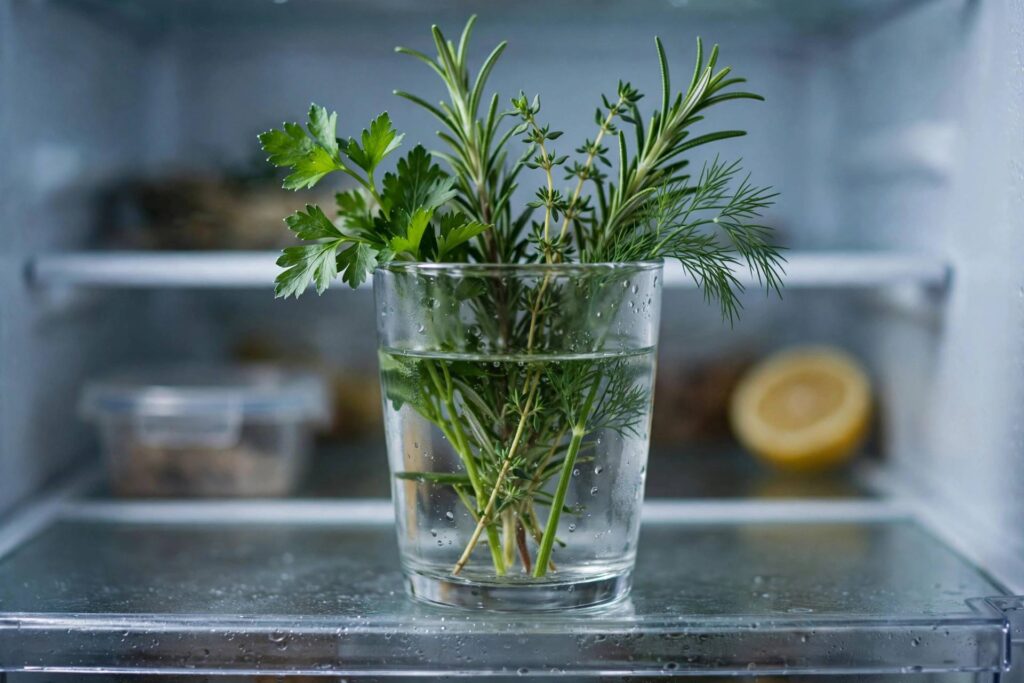
Here’s the mindset shift that changes everything: most fresh herbs are still alive when you buy them. They’ve been cut from their roots, but the stems can still drink water. So the single best thing you can do for soft, leafy herbs is exactly what you’d do for a bouquet of flowers — trim the stems and stand them in water.
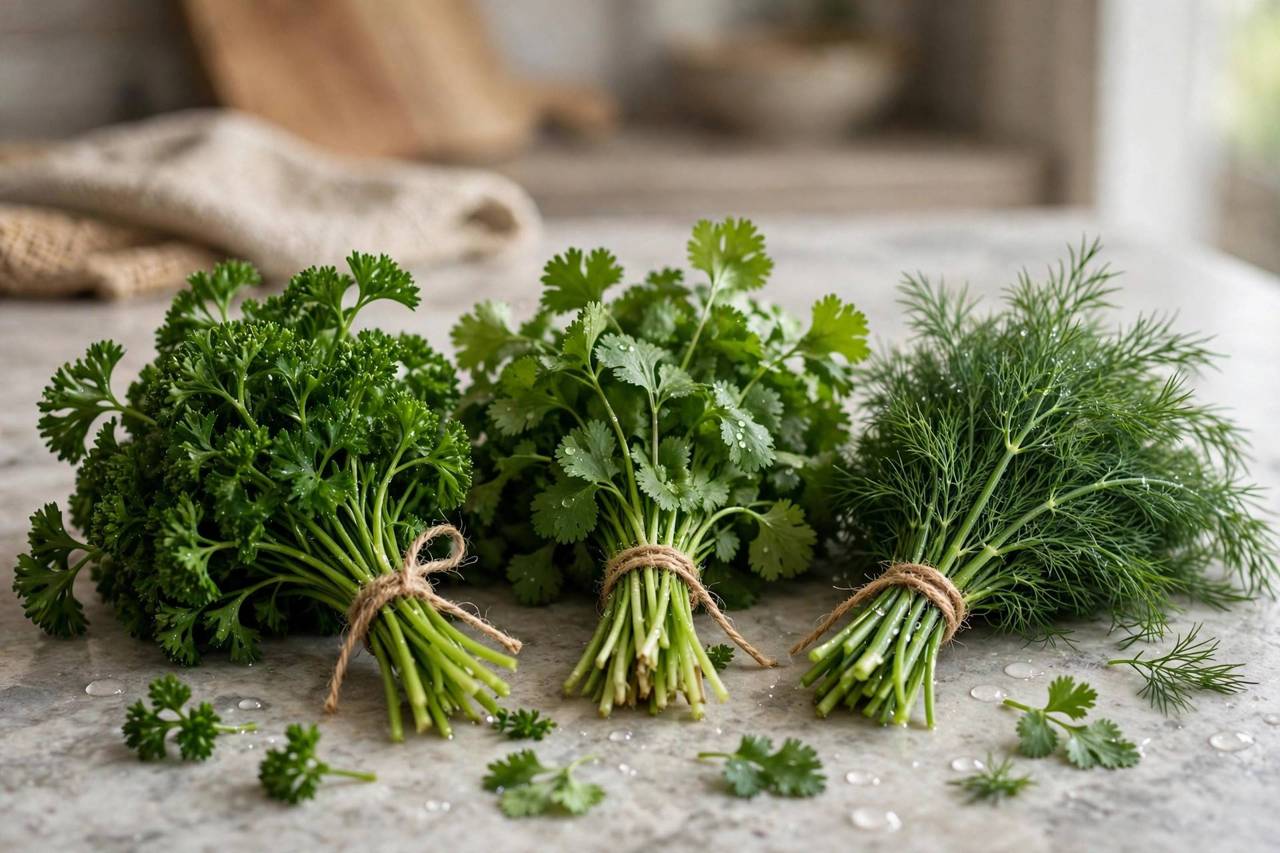
This “flower method” works beautifully for: parsley, cilantro, dill, mint, tarragon, and chives. Basil is the one exception — it hates the cold, so it stays on the counter (more on that below).
The flower method, step by step:
- Trim the stems. Cut about half an inch off the bottom of the stems at an angle — just like flowers. This opens up the stem for water absorption.
- Remove lower leaves. Strip off any leaves that would sit below the waterline. Submerged leaves rot and foul the water.
- Place in a jar with an inch or two of water. A mason jar, a glass, even a mug — whatever holds them upright.
- Cover loosely with a plastic bag. Tent a produce bag or plastic bag over the top like a little greenhouse. This holds in humidity without trapping the herbs airtight.
- Refrigerate (except basil). Change the water every 2-3 days when it looks cloudy.
Done right, parsley and cilantro stay vibrant for 2-3 weeks. I’ve had dill last nearly a month. It’s honestly a little magical the first time you see it work.
Basil: The Diva of Herbs
Basil deserves its own section because basil plays by different rules. Put basil in the fridge and the leaves turn black — it’s cold-sensitive and resents anything below about 50°F.
Store basil on the counter using the flower method: trimmed stems in a jar of water, loosely covered or uncovered, kept at room temperature away from direct sun. Change the water every couple of days. Counter-stored basil stays happy for 7-10 days, sometimes two weeks.
If your basil came in one of those little plastic clamshells, get it out of there immediately — trapped moisture is what turns it to slime. And never wash basil before storing; wash just before using. Water on the leaves accelerates decay.
Hardy Herbs: A Different Approach
Woody, sturdy herbs — rosemary, thyme, oregano, sage, marjoram — have lower water content and tougher leaves. They don’t need the flower treatment. Instead:
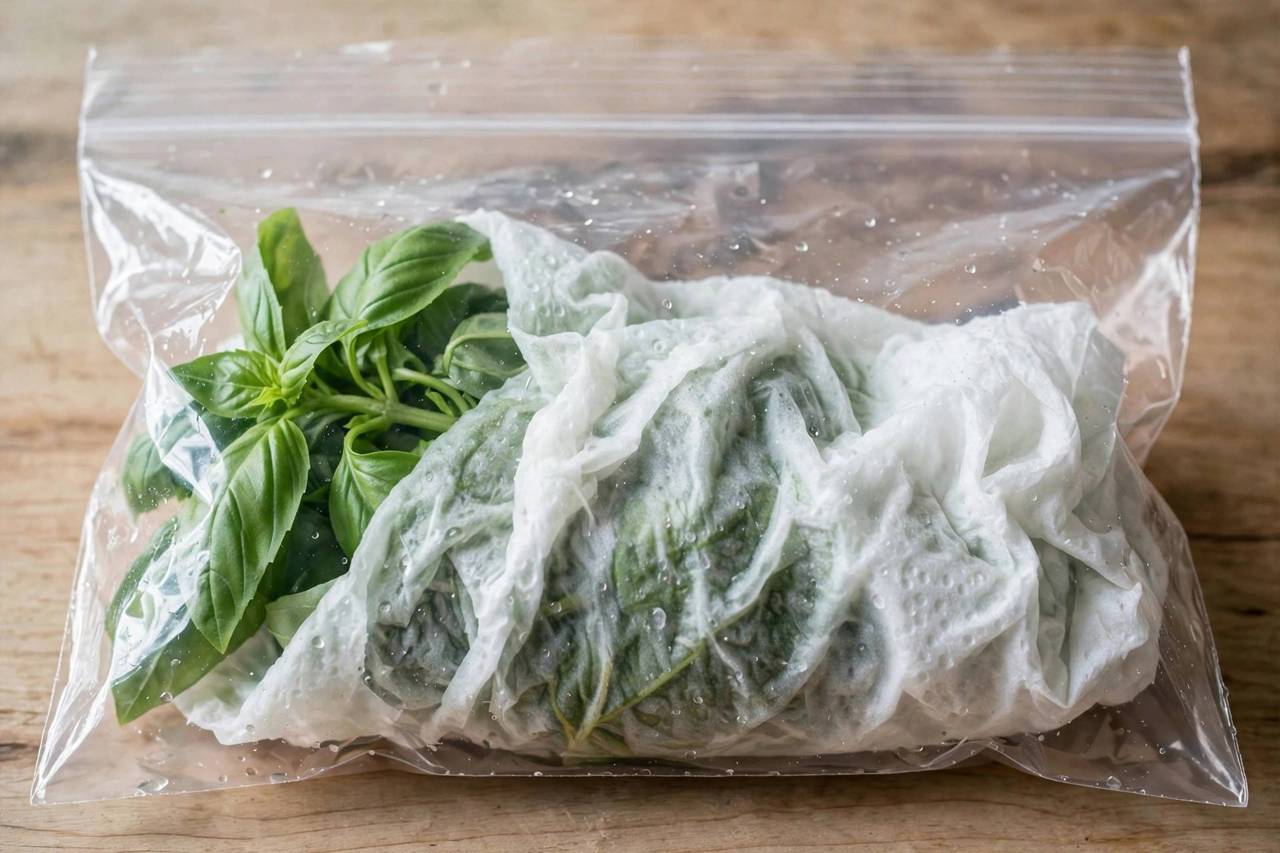
- Wrap loosely in a slightly damp paper towel. Damp, not wet — wring it out well. You’re creating gentle humidity, not a swamp.
- Place in a resealable bag or container. Don’t seal it bone-tight; leave a little air or poke a small hole for circulation.
- Refrigerate in the crisper drawer. The crisper’s humidity control is ideal.
- Check the towel every few days. If it’s dried out, re-dampen. If it’s slimy, replace it.
Hardy herbs stored this way easily last 2-3 weeks, and rosemary — that tough old survivor — can go a month or more. These are the herbs that forgive a little neglect, which is why I always keep rosemary and thyme on hand.
What About Those Plastic Clamshells?
Herbs sold in rigid plastic containers are convenient but they’re not great long-term homes. The sealed environment traps ethylene gas and moisture — the twin engines of decay. If you’re using the herbs within 2-3 days, the clamshell is fine. Any longer, transfer them to one of the methods above.
One exception: if the clamshell herbs look truly fresh and dry, you can extend their life by placing a folded dry paper towel inside to absorb excess moisture. It’s a small improvement, but it buys you a few extra days.
Long-Term Storage: Freezing Herbs
Sometimes you have more herbs than you can use fresh — the garden exploded, or the bunch was huge. Freezing is your friend, with the right technique:
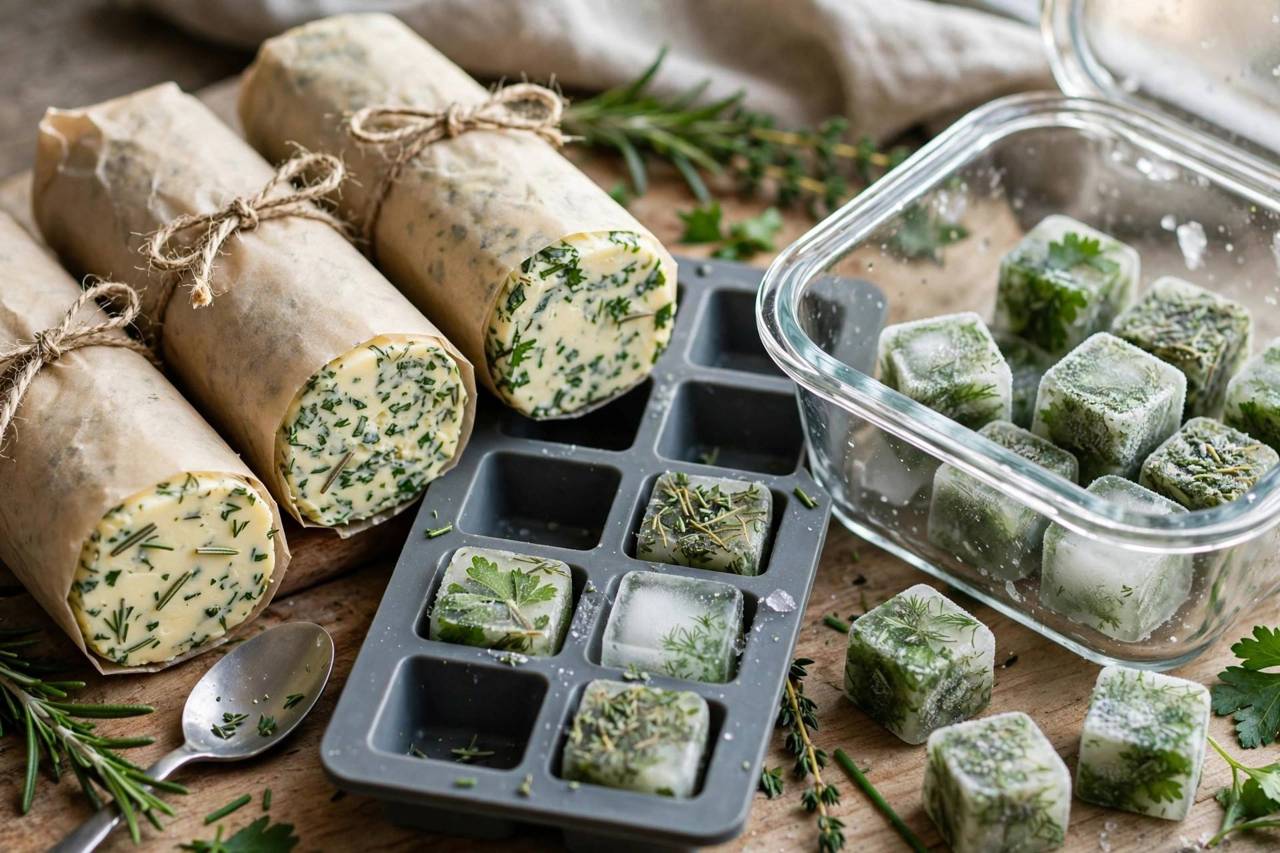
- Herb oil cubes: Chop soft herbs (basil, parsley, cilantro), pack into ice cube trays, cover with olive oil, and freeze. Pop out a cube whenever a recipe needs fresh herb flavor — perfect for sautés, soups, and sauces.
- Herb butter logs: Mix chopped herbs into softened butter with a pinch of salt, roll into a log in parchment paper, and freeze. Slice off rounds for steak, vegetables, bread, or pasta. This is restaurant-level luxury from leftover herbs.
- Flat-freeze hardy herbs: Rosemary, thyme, and oregano freeze well as whole sprigs in freezer bags — no blanching needed. They’ll be soft when thawed (no good as garnish), but perfect for cooking.
- Skip freezing delicate garnishes: Frozen herbs lose their fresh texture. They’re for cooked dishes, not for topping a finished plate.
Frozen herbs keep well for 3-6 months. Label everything with the herb name and date — frozen green cubes all look the same, and future you will not remember which is which. Trust me on this one.
Drying Herbs: The Oldest Method
For hardy herbs, air-drying is beautifully simple: tie small bundles with string, hang upside down in a dry, dark, well-ventilated spot for 1-2 weeks until crumbly. Then strip the leaves into jars. Dried rosemary, thyme, oregano, and sage are pantry staples.
Soft herbs (basil, parsley, cilantro) don’t air-dry well — they lose too much flavor and can mold. For those, freezing preserves flavor far better than drying.
Grow Your Own: The Ultimate Fresh Herb Storage
Here’s my favorite “storage” method of all: don’t store them — grow them. A small pot of basil, mint, or parsley on a sunny windowsill gives you cut-as-you-need freshness with zero storage worries. Mint is nearly indestructible (keep it in its own pot — it invades everything). Basil loves sun and regular pinching. Parsley is slower but steady.
You don’t need a garden or even a balcony. If you’re curious about growing in small spaces, here’s what container gardening is — it’s the perfect starting point for a windowsill herb garden that pays for itself in weeks.
Quick Reference: Herb-by-Herb Cheat Sheet
- Basil: Counter, in water, room temperature. 7-14 days. Never refrigerate.
- Cilantro & parsley: Fridge, in water, bag tent. 2-3 weeks.
- Dill & mint: Fridge, in water, bag tent. 2-3 weeks.
- Chives & tarragon: Fridge, in water, bag tent. 1-2 weeks.
- Rosemary & thyme: Fridge, damp towel in bag. 3-4 weeks.
- Oregano & sage: Fridge, damp towel in bag. 2-3 weeks.
- Marjoram: Fridge, damp towel in bag. 2 weeks.
Print that list and stick it on the fridge, friend. Your herbs — and your grocery budget — will thank you.
Reviving Wilted Herbs: Don’t Throw Them Out Yet
Before you toss that sad, droopy bunch, try the revival trick: trim the stems and plunge the herbs into ice water for 15-30 minutes. Just like cut flowers, wilted herbs often perk right back up as their stems rehydrate. This works wonders for parsley, cilantro, and mint that have merely wilted — not for herbs that have gone slimy or black, which are past saving.
For slightly tired basil, the same ice-water bath can work miracles. And herbs that are too far gone for fresh use but not yet spoiled? Chop and freeze them into oil cubes — they’ll be perfect in cooked dishes where texture doesn’t matter.
Using Up Herbs Before They Go Bad
The best storage method is no storage at all — just use them! When you see herbs starting to fade, deploy one of these use-them-up moves:
- Pesto (or any herb sauce): Basil pesto is classic, but parsley, cilantro, mint, and even dill make wonderful pestos. Blend with nuts, garlic, parmesan, and olive oil. It freezes beautifully too.
- Chimichurri: Parsley, oregano, garlic, olive oil, vinegar — a bright sauce that elevates grilled everything and uses up a whole bunch of parsley at once.
- Herb salads: In many cuisines, parsley, mint, and cilantro are salad greens, not garnishes. A big handful transforms a simple salad.
- Compound butter: As described above — mix into butter, roll, freeze. Weeks of instant flavor.
- Garnish everything: When in doubt, chop and sprinkle. Soups, eggs, roasted vegetables, grain bowls — almost everything is better with fresh herbs on top.
Buy herbs with a plan, store them right, and use the extras creatively — and you’ll never again feel that pang of guilt over a slimy bag in the crisper drawer.
FAQ
How to store fresh herbs to make them last the longest?
For soft herbs (parsley, cilantro, dill, mint): trim stems, stand in water, tent with a bag, refrigerate — lasts 2-3 weeks. For basil: same method but on the counter, never in the fridge. For hardy herbs (rosemary, thyme, oregano): wrap in a damp paper towel in a bag in the crisper — lasts 3-4 weeks.
Why do my fresh herbs go slimy so fast?
Excess moisture is the culprit — usually from sealed packaging trapping humidity, washing before storing, or leaves sitting in water. Transfer herbs out of sealed clamshells, don’t wash until use, strip submerged leaves, and change jar water every few days.
Should you wash herbs before storing them?
No — wash just before using. Surface moisture accelerates decay dramatically. The one exception: if herbs are visibly gritty, rinse and then dry them thoroughly (salad spinner plus paper towels) before storing.
Can you freeze fresh herbs?
Yes. Chop soft herbs into ice cube trays, cover with olive oil or water, and freeze — perfect for cooking (not garnishing). Hardy herbs like rosemary and thyme freeze well as whole sprigs in freezer bags. Use within 3-6 months and label everything.
How long do fresh herbs last in the fridge?
With proper storage: soft herbs 2-3 weeks (flower method), hardy herbs 3-4 weeks (damp towel method). Basil is the exception — it lasts 7-14 days on the counter but turns black in the fridge. Without proper storage, most herbs decline within 3-5 days.