Why Do People Collect Stamps? 9 Surprising Reasons

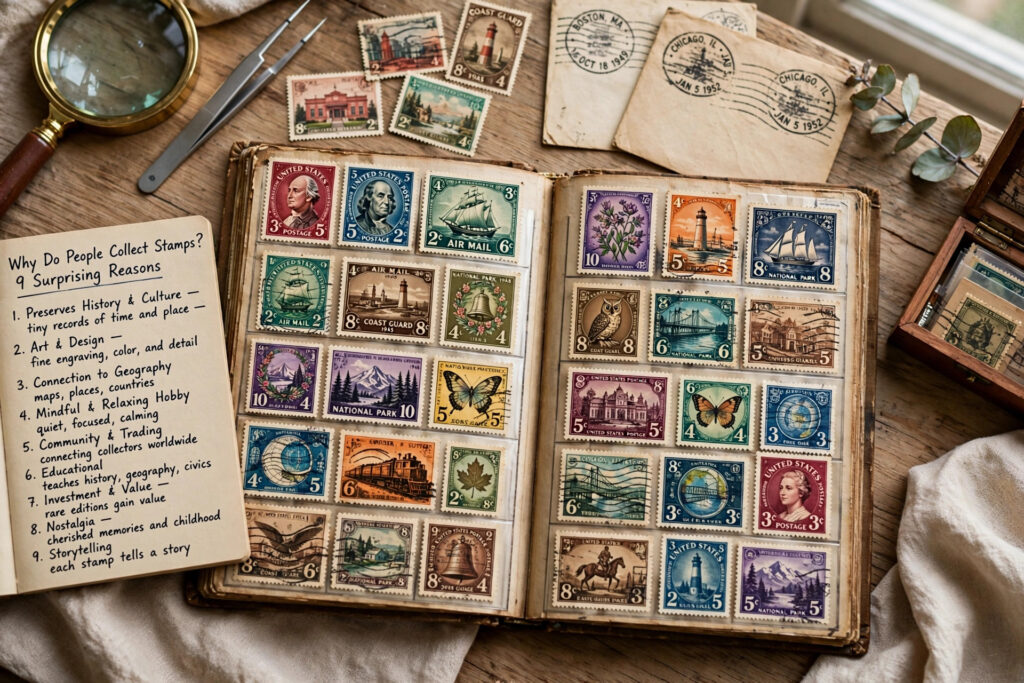
At first glance, stamp collecting looks like a hobby the internet should have killed. Stamps are tiny, paper, and tied to a postal system most of us barely use. Yet ask around and you will find millions of people worldwide who still hunt, trade, and carefully mount little rectangles of paper in albums — and many of them are under forty. So why do people collect stamps? The answer is richer than nostalgia. Philately, as collectors call it, mixes history, art, treasure-hunting, and community in a way few hobbies manage, and it rewards patience in a world that rarely does. Here is an honest look at the real reasons people collect, from the romance of it to the very practical joys.
Stamps Are Tiny Windows Into History
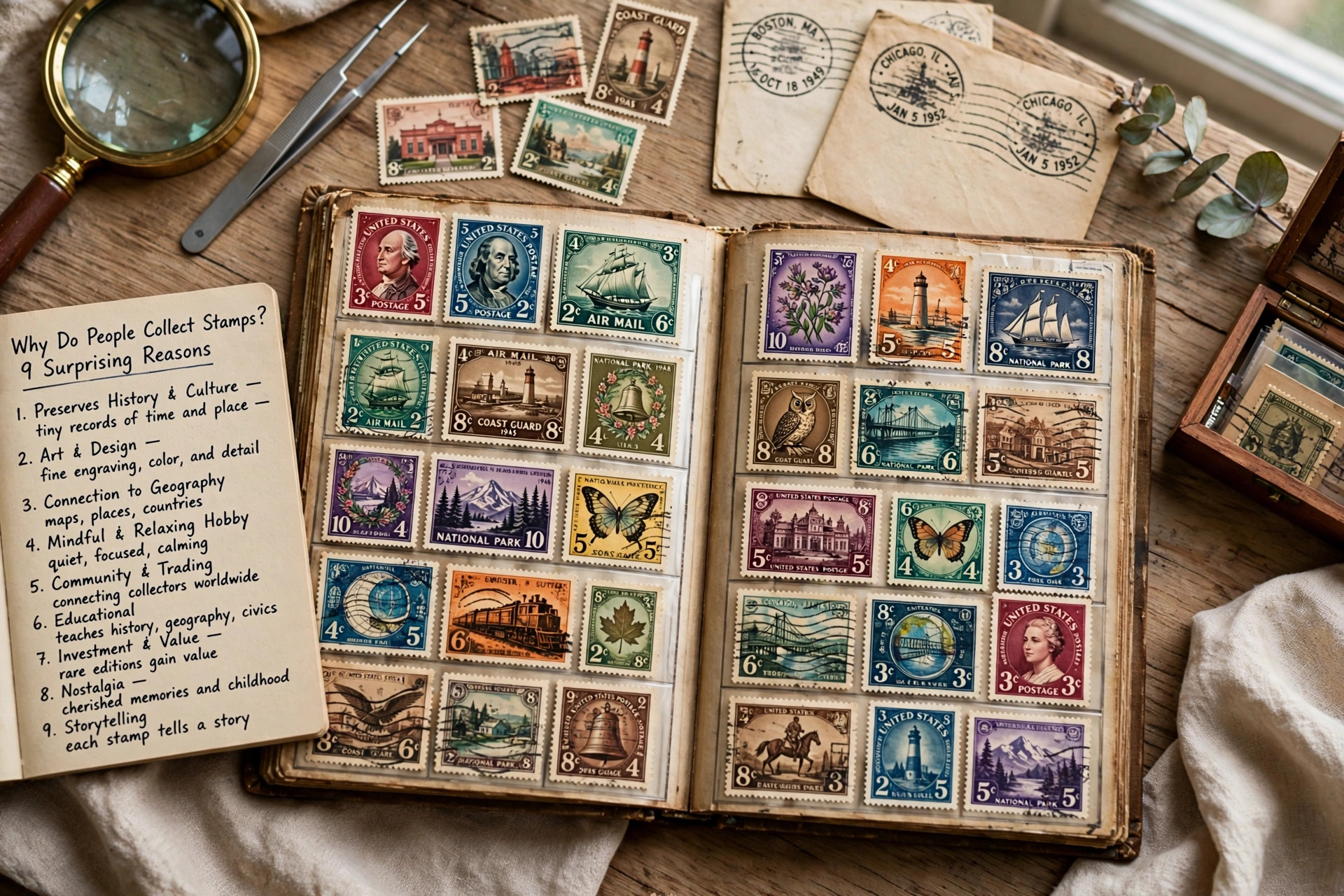
Every stamp is a government-issued snapshot of what a country wanted to say about itself at a particular moment. A 1960s stamp might celebrate a space launch, a royal wedding, or independence from colonial rule. Holding one is holding a primary source — the kind of artifact historians study — and many collectors describe the hobby as a hands-on history lesson. You learn which countries existed and vanished, which leaders were celebrated and later erased, and how design tastes shifted across decades. For people who love history but find textbooks dry, an album page does the teaching without them noticing. A single page can carry you from the British Empire to the fall of the Berlin Wall before your tea cools.
The Artistry Is Genuinely Beautiful
Strip away the postal function and stamps are miniature works of art. Engravers spent careers perfecting the fine lines of classic issues, and modern stamps use photography, illustration, and even holograms. Countries like Switzerland, Japan, and Liechtenstein are famous among collectors for designs so refined they belong in galleries. Many collectors specialize purely by visual theme — birds, trains, ships, art reproductions — building collections that are really curated art galleries in album form. If you have ever lost an hour scrolling through beautiful images, you already understand the pull. The difference is that these images are physical, scarce in the older issues, and yours to keep.
The Thrill of the Hunt Never Gets Old
Ask any collector about their favorite stamp and you will get a story, not a description. The rare find at a flea market, the misprint spotted in a mixed lot, the elusive final stamp that completed a ten-year set — philately runs on treasure-hunting dopamine. Unlike many hobbies, the hunt scales to any budget. A child can chase modern commemoratives from pocket money; a serious investor can bid at international auctions. Online marketplaces have made the hunt easier in some ways, but the real magic still happens in person: estate sales, stamp fairs, and dealers’ bargain boxes where knowledge and luck collide. Every collector remembers the day they found something special for almost nothing.
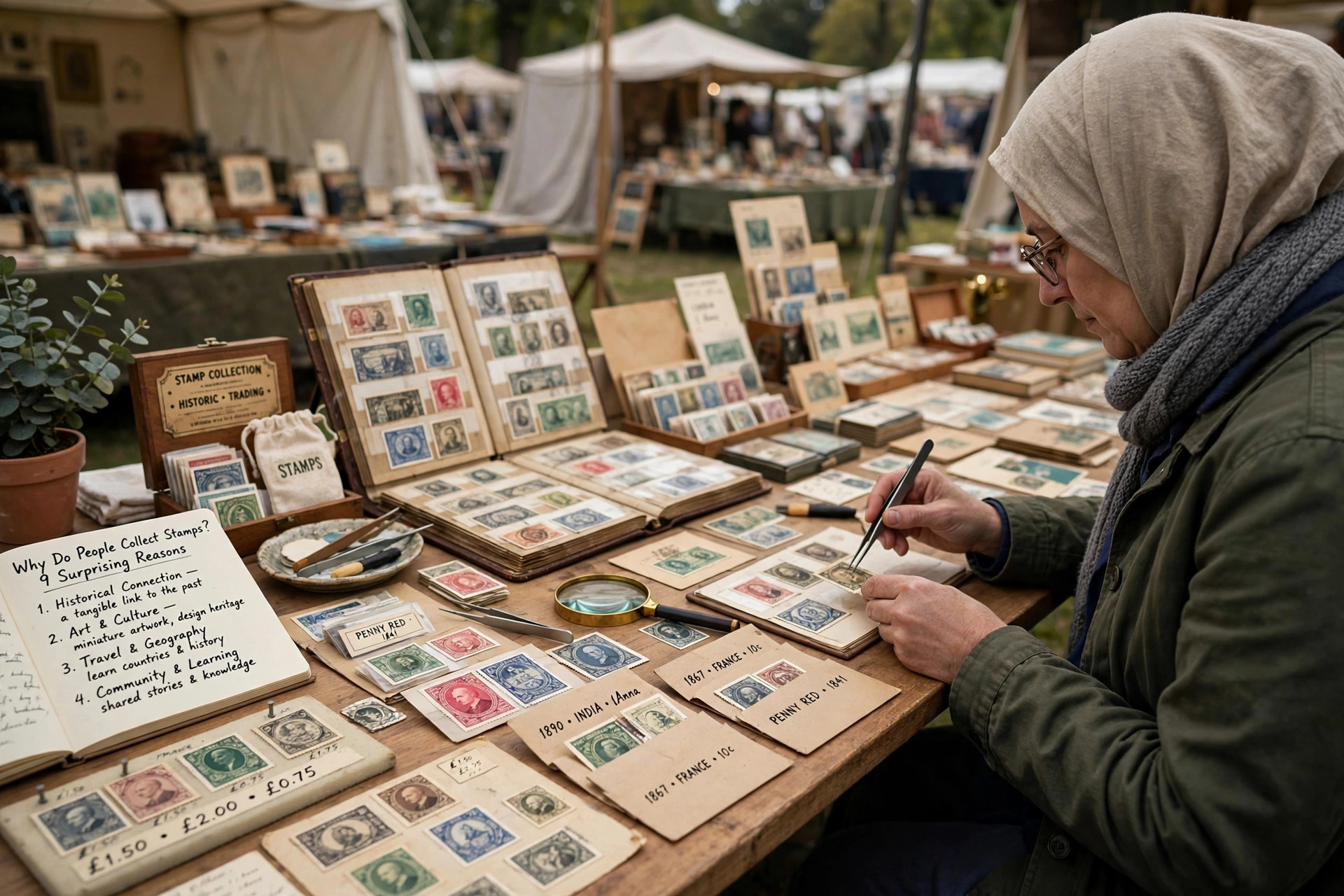
It Is a Hobby That Rewards Patience and Care
There is something deeply calming about working with stamps. You use tongs, not fingers, to avoid transferring skin oils. You soak used stamps off envelopes, dry them flat, and mount them precisely. The ritual is slow, tactile, and methodical — a genuine antidote to doom-scrolling. Many collectors describe their evening album sessions the way others describe meditation or gardening. The hobby also teaches real skills: research, organization, condition grading, and careful record-keeping. Parents often introduce children to stamps partly for this reason. In an age of instant everything, a hobby that cannot be rushed is quietly radical.
Some Stamps Are Worth Serious Money
Let us be honest: money is part of the appeal. Most stamps will never make you rich, and anyone who tells you otherwise is selling something. But genuinely rare stamps — early classics, famous errors like inverted prints, and pristine high-value issues — have sold for sums that make headlines, and a well-built collection of quality material tends to hold value. The smarter way to think about it is that philately is one of the few hobbies where your collection can appreciate rather than depreciate. Even modest collectors enjoy the knowledge that their albums represent real stored value. The key, experienced collectors say, is to buy the best condition you can afford and to collect what you love first — the investment angle works best as a bonus, not the motive.
The Community Is Warm and Surprisingly Active
Stamp collectors have been organizing clubs since the 1800s, and the community remains one of the hobby’s best features. Local societies run meetings, auctions, and youth programs. National federations organize exhibitions where collections are displayed like museum shows and judged by experts. Online, forums and social media groups buzz with identification help, trading, and show-and-tell. Because the hobby skews older in some countries, newcomers — especially younger collectors — are welcomed with unusual enthusiasm. Mentorship is the norm: experienced philatelists love guiding beginners, often giving away starter material to get them hooked. If you have ever wanted a hobby with built-in friends, this is one.
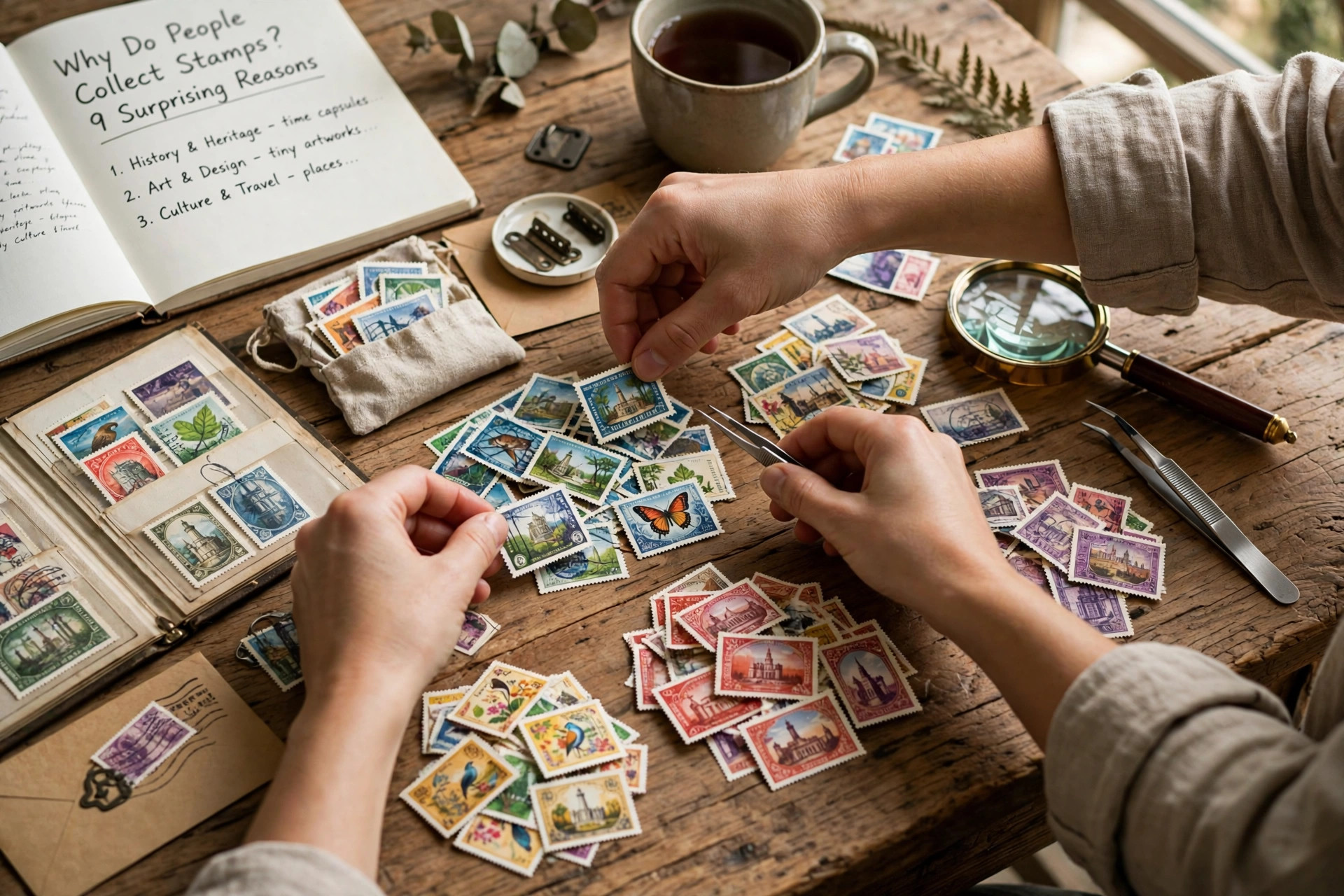
It Connects You to the Whole World
A stamp collection is a geography lesson you build yourself. Collectors routinely correspond with dealers and pen pals across continents, and many plan travel around stamp fairs and exhibitions. Thematic collectors — those who collect by topic rather than country — end up knowing more about, say, lighthouses or space exploration than most specialists. There is also a lovely correspondence tradition: many collectors still mail covers to each other, chasing interesting postmarks. In a hobby about the postal system, actually using the post feels like part of the fun. Your album becomes a map of places you have been, places you dream of, and people you have met along the way.
Starting Is Easier Than You Think
You do not need rare stamps to begin. Start with what arrives in your own mailbox, ask friends and family to save envelopes, and buy an inexpensive packet of mixed world stamps to sort through. Basic supplies — tongs, a stockbook, and a magnifier — cost less than a takeaway dinner. Pick a direction that excites you: your own country, a theme like animals, or simply “beautiful stamps I like.” Join a local club early; members will steer you away from overpaying and toward the good dealers. The only real rule is to handle everything with tongs and keep stamps away from damp and direct sunlight. Everything else you learn as you go, which is half the pleasure.
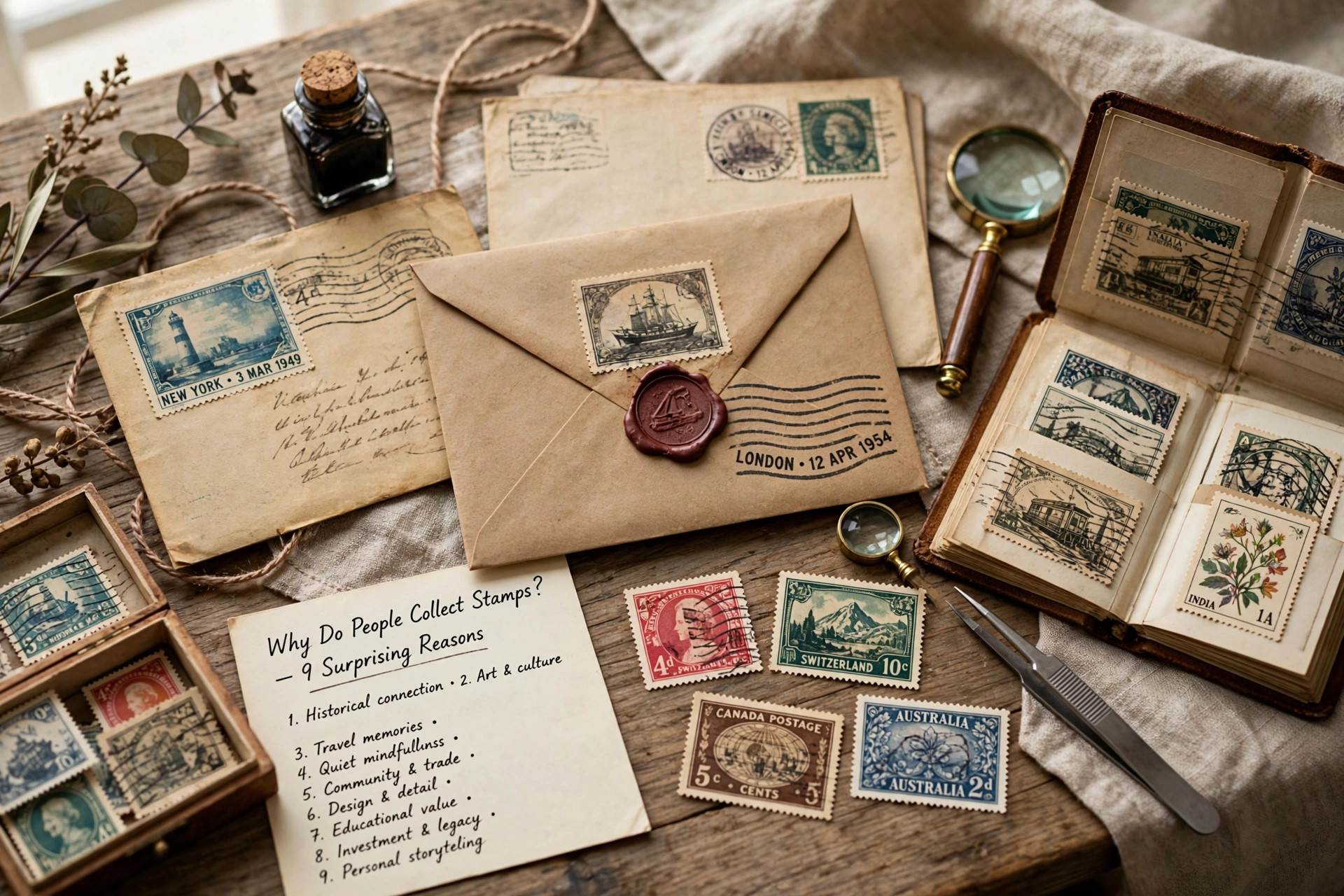
Why Do People Collect Stamps? In Their Own Words
Ask collectors directly and their answers cluster into a few heartfelt themes. “It is the cheapest time machine ever built,” one longtime collector told me — a dollar’s worth of old stamps can carry you across a century. Another described the meditative quality: “My mind cannot race when my hands are using tongs.” A younger collector put it differently: “I like that it is mine. Nobody can hack it, update it, or take it away with a terms-of-service change.” Parents mention the stealth education — children absorbing geography, history, and art while “just” sorting stamps. Investors talk about portable, tangible assets. What unites them is a sense of stewardship: each collector is a temporary caretaker of small pieces of history, keeping them safe for the next pair of hands. That feeling of quiet responsibility, collectors say, is something no digital collection has ever given them.
The Future of Stamp Collecting
Reports of philately’s death have been exaggerated for decades, but the hobby is genuinely changing shape. Online marketplaces have replaced many local dealers, making rare material easier to find and pricing more transparent — good for buyers, harder for casual sellers. Social media groups have become the new club meetings for younger collectors, with live “unboxing” of auction lots drawing real audiences. Postal services now issue stamps aimed squarely at collectors, from augmented-reality issues to scented ones, keeping the pipeline of new material interesting. Youth programs run by national federations introduce thousands of children to the hobby each year. The physical album is not going anywhere, but it is increasingly supplemented by digital catalogs and collection-management apps. The core appeal — history you can hold — turns out to be remarkably durable.
Stamp Collecting on a Budget: Buying Smart
You do not need deep pockets to build a satisfying collection — you need patience and a few street smarts. Buy mixed “kiloware” (stamps sold by weight, still on paper) for the pure joy of sorting; it is the cheapest entertainment in the hobby. Learn the difference between catalogue value and actual market value before you pay a premium — catalogues list ideal retail, while real-world prices for common material run far lower. Focus on condition: a clean, well-centered common stamp beats a damaged rarity every time, because condition drives both beauty and resale. Build relationships with one or two reputable dealers rather than chasing every bargain; good dealers steer beginners toward fair lots and away from overpriced “investment” packets. Set a monthly budget and stick to it — the hunt is more fun with limits. And never buy as an investment until you have collected for love for at least a couple of years; knowledge is the only edge that pays.
Frequently Asked Questions
Why do people collect stamps in the digital age?
Because the appeal was never really about mail. Collectors are drawn to the history, artwork, treasure-hunting, and community — none of which email replaced. If anything, the decline of everyday mail has made surviving stamps feel more special.
Is stamp collecting still popular?
Yes. Millions collect worldwide, with active clubs, major exhibitions, and a lively online market. Interest has stabilized after a dip, and thematic collecting has brought in younger hobbyists.
Can you make money collecting stamps?
Rare, high-quality stamps can be valuable, and good collections tend to hold value. But most collectors treat any financial return as a bonus. Collect what interests you, buy the best condition you can afford, and be wary of anyone promising guaranteed profits.
How do I start collecting stamps cheaply?
Save stamps from your own mail, ask others to save theirs, and buy mixed world packets from a reputable dealer. Basic tools — tongs, a stockbook, a magnifier — are inexpensive, and local stamp clubs welcome beginners.
What is the difference between philately and stamp collecting?
Stamp collecting usually means accumulating stamps; philately is the broader study of stamps and postal history, including postmarks, covers, and the stories behind them. Most hobbyists do a bit of both without worrying about the label.