

The DJ vs. band debate is one of the few wedding decisions with a genuinely right answer — for you. Not universally, but specifically. I’ve worked with hundreds of both, from $800 DJs to $15,000 bands, and the couples who are happiest are the ones who matched the choice to their priorities, not to trends or pressure.
Here’s the honest breakdown: what each does well, what each costs, and the decision framework that actually works.
Table of Contents
- The Core Difference
- The Case for a DJ
- The Case for a Band
- Cost Comparison
- The Decision Framework
- How to Vet Either One
- Hybrid Options
The Core Difference
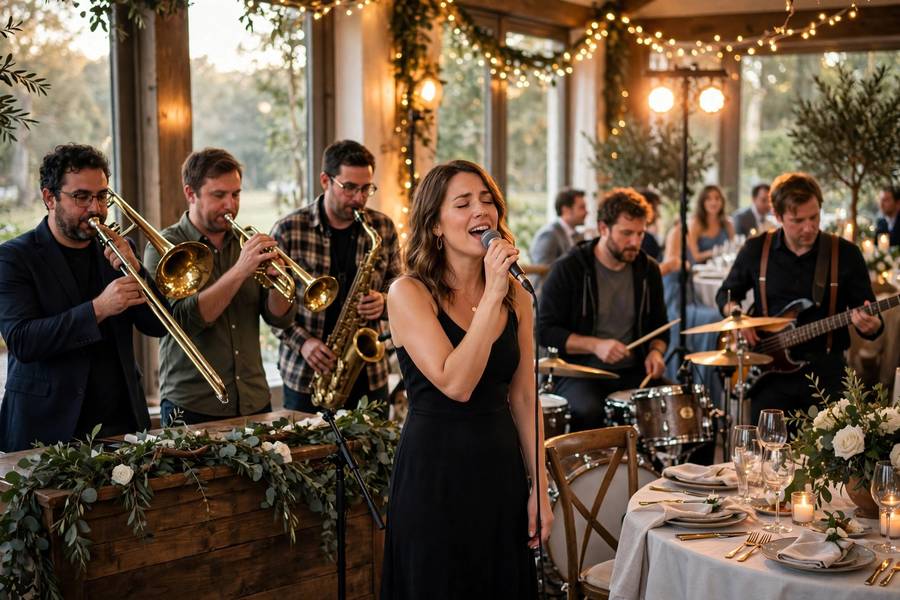
Strip away everything else and it’s this: a DJ plays the exact songs you love; a band creates an energy no recording can match.
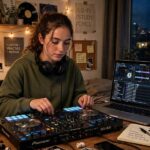
A great DJ gives you infinite variety — every genre, every era, the original artists, seamless mixing, and your must-play list executed perfectly. A great band gives you presence — live musicians feeding off the crowd, building energy in real time, creating moments that feel unrepeatable because they are.
Neither is better. They’re different experiences. The question is which experience you want.
The Case for a DJ
Variety is unlimited. Want Motown into Bad Bunny into classic rock into Bollywood? A DJ does it without blinking. Bands have repertoires — good ones are wide, but they’re finite, and every song is their interpretation, not the original.
Your exact songs. First dance to the original recording. The father-daughter song exactly as you remember it. For couples with specific, meaningful song choices, only a DJ delivers the real thing.
Space and logistics. A DJ needs a table. A band needs a stage, green room space, meals for 5–10 people, and serious power. For small venues, this alone can decide it.
Continuous music. DJs don’t take breaks. Bands do — typically 15–20 minutes per set — and those gaps need covering (recorded music, or awkward silence).
MC duties. Most wedding DJs are experienced MCs — they run the timeline announcements smoothly. Some bands include an MC; many don’t, or do it less naturally.
Budget. DJs cost significantly less (see below), freeing money for elsewhere.
The honest downside: A mediocre DJ is the worst wedding vendor in existence — cheesy patter, wrong reads of the room, the Chicken Dance when you said no Chicken Dance. The variance in DJ quality is enormous, which makes vetting critical.
The Case for a Band
Energy. This is the whole argument, and it’s a strong one. Live music creates a physical, collective euphoria that recordings don’t. When a great band hits its stride and the dance floor is packed, it’s electric in a way that transcends the song list.
Presence and spectacle. A band is visual entertainment — horns flashing, a singer working the crowd, the sheer theater of live performance. It elevates the room’s energy before a note that matters.
Prestige factor. Let’s be honest — a great band impresses guests in a way a DJ setup doesn’t. For couples who want the “wow,” bands deliver it.
Adaptability. Great bandleaders read rooms like DJs do — extending a hot set, switching genres, pulling people up. The best bands are as responsive as the best DJs.
The honest downsides: Limited repertoire (ask for the full song list before booking — if your must-plays aren’t on it, that’s your answer), higher cost, bigger logistical footprint, breaks that need covering, and volume — bands are LOUD, which matters for conversation-heavy crowds and noise-restricted venues.
Cost Comparison
Realistic ranges (vary hugely by market):
| DJ | Band | |
|---|---|---|
| Budget | $800–1,500 | $3,000–5,000 (small) |
| Mid-range | $1,500–3,000 | $5,000–10,000 |
| Premium | $3,000–6,000+ | $10,000–20,000+ |
What’s driving band cost: headcount (each musician gets paid, fed, and transported), equipment, and the premium that live performance commands. A 10-piece show band costs what it costs because ten professionals showed up.
Hidden costs for both: overtime rates (decide in advance — the “one more hour?” moment at midnight is expensive), travel/lodging for non-local acts, and meals for band members (standard hospitality, budget it).
The Decision Framework
Answer these five questions honestly:
- What’s your budget reality? If music budget is under $2,500, the answer is DJ — a great DJ beats a cheap band every time. A bad band is worse than a bad DJ.
- How important is the exact song? If your first dance must be that recording, or your must-play list is sacred — DJ.
- How big is your venue? Small space, low ceilings, noise restrictions — DJ. Grand ballroom with a stage — band territory.
- What’s your crowd? A dancing-heavy crowd of music lovers justifies a band’s energy. A mixed crowd with varied tastes favors a DJ’s range.
- What gives you chills? Close your eyes and picture the reception at its peak. Do you see a bandstand or a DJ booth? Trust that image.
My rule of thumb: If budget allows either, choose the band for energy-first weddings (the party IS the point) and the DJ for music-first weddings (the songs ARE the point).
How to Vet Either One
For DJs: – Listen to full demo mixes, not highlight clips — you want to hear transitions and programming – Ask about their MC style and hear them talk – Discuss do-not-play lists seriously — and get it in the contract – Ask how they read a dying dance floor (the answer reveals everything) – Check: backup equipment? Liability insurance? Plan if they’re ill?
For bands: – See them live or watch full-set videos — not the sizzle reel – Get the complete repertoire list and mark your must-plays – Ask about breaks: how many, how long, what plays during them – Clarify the exact lineup — the demo might feature musicians who won’t be at your wedding – Discuss volume management and noise restrictions with the venue
For both: Recent references you can actually call. A contract covering hours, overtime, setup/breakdown, meals, and cancellation. And trust your gut in the meeting — you’re hiring someone who’ll shape the emotional peak of your wedding.
Hybrid Options
Can’t decide? The middle paths are increasingly popular:
- DJ + live elements: A DJ with a live saxophonist, percussionist, or vocalist for key sets. The variety of a DJ with live energy injections — often the best of both at a moderate premium.
- Band for cocktail hour/dinner, DJ for dancing: Jazz trio during cocktails, DJ for the party. Elegant and practical.
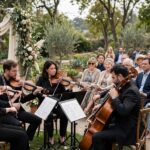
- Ceremony musicians + reception DJ: String quartet or soloist for the ceremony, DJ for the reception. The classic combo.
The hybrid is honestly where I’d steer most undecided couples with the budget for it. You get the live magic where it matters most and the DJ’s range where it counts most.
Whatever you choose, remember what the music is for: not the playlist, but the people dancing to it. Music decided? The wedding day emergency kit checklist handles the practical side, and wedding seating chart ideas sort where everyone sits when the dancing starts. The best wedding music decision is the one that gets your favorite people on the floor and keeps them there. Everything else is details — and the right choice is the one you’ll never have to think about again once the first song plays.
Frequently Asked Questions
Neither is universally better. DJs offer unlimited variety, exact recordings, lower cost, and smaller logistics. Bands deliver unmatched live energy and spectacle at higher cost with more logistics. Choose based on budget, venue size, and whether songs or energy matter more to you.
DJs typically run $800-3,000 (up to $6,000+ premium). Bands run $3,000-10,000+ depending on size and market, with premium show bands reaching $15,000-20,000. A great DJ beats a cheap band every time — never hire a band below your budget’s quality line.
Yes — typically 15-20 minutes per set, several times per evening. Plan coverage: recorded music during breaks (your DJ, a playlist, or the band’s own system). Discuss break timing in advance so they don’t fall during peak dancing.
Only if they’re in the band’s repertoire — always get the full song list before booking. Bands play interpretations, not original recordings. If specific original recordings are non-negotiable (first dance, parent dances), a DJ guarantees them.
A popular hybrid: a DJ plus live saxophone, percussion, or vocals layered over the DJ’s sets. You get the DJ’s unlimited repertoire with live performance energy at a moderate premium over DJ-only — often the best of both worlds.
Book 9-12 months out for peak dates — the best DJs and bands fill fast, especially for Saturdays in spring and fall. At minimum, secure your music 6 months ahead. Last-minute bookings severely limit quality options.