Solo Female Travel Tips: 25 Things I Wish I Knew (2026)

I’ve been traveling solo for ten years — 50+ countries, the blissful and the hairy, the lessons earned the hard way so you don’t have to. Solo female travel is the most rewarding way to see the world (the freedom, the growth, the stories), and it’s safer than the headlines suggest — with the right habits. These are the 25 tips I give every woman planning her first solo trip.
They’re organized: the mindset, the safety system, the logistics, the social life, and the hard-earned specifics. For destination ideas, see our best solo female destinations.
Mindset: The Foundation (Tips 1–5)
1. The fear is the tax, not the verdict. Every solo woman feels it before the first trip — the what-ifs, the headlines, the well-meaning warnings. The fear fades on day three (the competence arrives, the routine forms). The women who’ve done it all felt it; the ones who haven’t let it decide. Book the ticket; the courage comes after, not before.
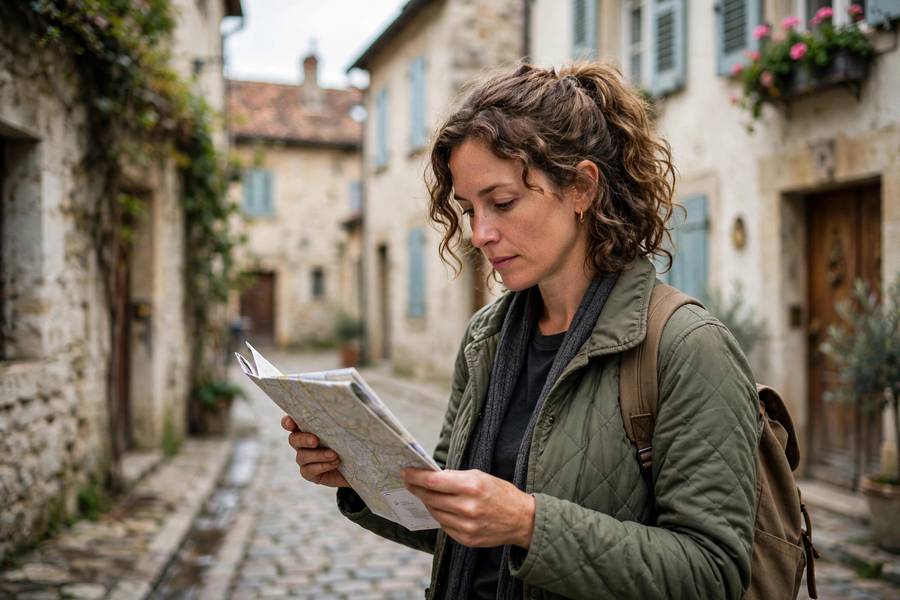
2. Confidence is a skill, not a trait. The walk (the purposeful stride, the head up — the body language that says ‘local’), the map check (the café, not the street corner — the ducking in, the orienting), and the asking (the shopkeepers, the hotel staff — the directions, the help). Each trip builds it; the tenth trip’s confidence was the first trip’s terror.
3. Solo doesn’t mean alone. The paradox: solo travelers meet more people than coupled ones (the openness, the hostel common rooms, the group tours). The ‘solo’ is the freedom (the itinerary, the pace, the choices) — the company is abundant (the friends, the fellow travelers, the locals). The loneliness (the occasional evening — the video call home, the journal, the early night) passes.
4. Trust your gut — it’s data. The unease (the street, the person, the situation — the instinct) is your brain processing signals faster than your conscious mind. The rule: the polite exit (the excuse, the smile, the leave — no justification needed). The gut has saved me three times (the taxi, the bar, the beach — the stories for another post). It’s never wrong enough to ignore.
5. The first trip shapes everything. Make it easy (the safe destination, the good infrastructure — Thailand, Portugal, Japan — the training wheels). The first trip’s success (the confidence, the joy) determines the second trip’s ambition. The hard destination first (the frustration, the overwhelm) is how solo travel ends before it starts.
Safety: The System (Tips 6–12)
6. The accommodation rules: female dorms or private rooms (the hostels with the good solo-woman reviews — read them, not the stars), 24-hour reception (the late arrival, the safety), and the location (the well-lit, the central — the 10-minute walk from the station, the researched). The first-night pre-booking (the arrival — the known bed, the no-searching-in-the-dark).
7. The transport rules: pre-booked airport pickups (the late arrivals — the hostel’s, the official taxi, the Grab), the rideshare over the street hail (the tracked, the rated — the Grab/Uber/Bolt, the Asia/Europe/LatAm), and the night-train compartments (the female-only where available — the India, the Japan’s, the request). The rule: the arrival plan (the researched, the pre-arranged — the 2 a.m. landing is the vulnerability).
8. The going-out rules: the drink watch (the hand over, the buddy system, the universal), the exit plan (the address saved, the taxi app ready, the early leave — the no-obligation), and the nightlife (the hostel bars, the group tours — the social, the safer). The solo bar (the counter seat, the book, the confidence — the pleasure, the do-it).
9. The valuables system: the split (the cash — the day’s in the wallet, the reserve in the money belt; the cards — the one carried, the one secured), the copies (the passport — the photo, the cloud, the hotel safe for the original), and the decoy (the old wallet — the mugging, the handover, the real one’s hidden). The theft (the pickpockets — the Barcelona, the Paris metro — the vigilance, the front pockets, the zippers).
10. The communication: the check-ins (the person at home — the itinerary, the regular message, the ‘arrived safe’), the local SIM (the data — the maps, the translation, the emergency, the $10–20), and the emergency numbers (the country’s — the saved, the 112 in Europe, the researched). The phone (the charged — the power bank, the lifeline).
11. The dress code: the cultural respect (the temples — the covered; the rural — the modest; the South Asia — the practical), the blending (the less touristy, the safer — the local norms, the observed), and the comfort (the confidence — the clothes you move in, the shoes you run in). The rule: the research (the destination’s norms — the packing, the prepared).
12. The insurance: the non-negotiable (the medical evacuation — the $100–200, the remote, the essential), the activities (the scooter, the diving, the hiking — the covered, the checked), and the claims (the receipts, the reports, the process). The story: the appendicitis in Vietnam ($15,000 — the insured, the flown home, the lesson). carry-on vs checked baggage
Logistics: The Smooth Trip (Tips 13–18)
13. The packing: the packing light system (the carry-on — the mobility, the stairs, the freedom), the doorstop (the $10 rubber — the hotel room, the solo sleeper, the peace), and the essentials (the medications, the copies, the backup). The light bag (the solo woman’s advantage — the independence, the no-help-needed).
14. The planning balance: the first nights booked (the arrival — the known), the rest flexible (the freedom — the solo’s gift, the extended stay, the changed plan). The over-planning (the rigidity — the missed magic); the under-planning (the stress — the 11 p.m. search). The sweet spot: the skeleton (the anchors, the freedom).
15. The money: the no-fee cards (the Charles Schwab, the Revolut — the ATMs, the rates), the cash strategy (the local currency — the small bills, the markets, the tips), and the budget (the daily — the tracked, the $50–100, the region-dependent). The splurge (the solo — the nice dinner, the experience, the deserved).
16. The health: the water (the region — the bottled, the filtered, the researched), the food (the street — the busy stalls, the cooked-fresh, the joy), and the rest (the pace — the solo’s temptation, the burnout, the rest days). The pharmacy (the local — the excellent, the cheap, the Asia/LatAm).
17. The connectivity: the eSIM (the Airalo — the landing-connected, the $15), the offline maps (the downloaded — the no-signal, the essential), and the translation (the camera — the menus, the magic). The digital nomad (the cafés — the wifi, the work, the community).
18. The documentation: the journal (the trip — the memories, the processing, the keepsake), the photos (the tripod — the self-timer, the solo portraits, the strangers’ help), and the sharing (the selective — the real-time, the delayed, the safety).
Social Life: The People (Tips 19–22)
19. The hostels: the social engine (the common rooms, the bar crawls, the family dinners — the instant friends), the female dorms (the comfort, the community), and the activities (the walking tours, the pub quizzes — the organized, the easy). The hostel (the 25–35, the social; the 35+ — the boutique hostels, the private rooms, the same scene).
20. The group experiences: the cooking classes (the market tour, the meal, the friends), the walking tours (the free — the tip, the orientation, the people), the day trips (the shared van, the conversations), and the courses (the surf, the dive, the yoga — the week-long, the deep). The activity (the interest — the people who share it).
21. The apps: the Hostelworld chat (the fellow guests — the pre-arrival, the plans), Backpackr/Tourlina (the women-only — the travel buddies, the meetups), and the Couchsurfing hangouts (the locals — the coffee, the city, the vetted). The digital (the connection — the safety, the public first meetings).
22. The locals: the language (the 10 phrases — the doors, the smiles), the respect (the customs — the observed, the honored), and the invitations (the discernment — the public, the daylight, the gut). The homestay (the family — the culture, the depth, the vetted platforms).

The Hard-Earned Specifics (Tips 23–25)
23. The period prep: the products (the familiar — the packed, the destination’s different), the painkillers (the known — the carried), and the plan (the heavy days — the rest, the accommodation, the grace). The unspoken (the solo — the self-care, the unashamed).
24. The romance: the discernment (the fellow travelers — the holiday, the honesty; the locals — the caution, the culture), the protection (the carried, the non-negotiable), and the stories (the kept, the told, the learned). The solo woman’s love life (the freedom — the choices, the own).
25. The return: the reverse culture shock (the real — the growth, the alienation, the processing), the integration (the lessons — the confidence, the independence, the kept), and the next trip (the planning — the addiction, the healthy, the life). The solo travel (the transformation — the woman who left, the woman who returned, the different).
The Starter Kit: Your First Solo Trip
The destination (the easy): Thailand, Portugal, Japan, or Ireland (the infrastructure, the safety, the English — the training wheels). The duration (the 10–14 days — the enough, the not-overwhelming). The budget ($1,500–3,000 — the region, the style).
The booking (the anchors): the flight (the timing), the first 3 nights (the arrival — the known), the insurance (the non-negotiable). The packing (the carry-on — the light, the free).
The mantra: the booked ticket (the commitment), the open plan (the freedom), the trusted gut (the guide). The first solo trip (the fear, the flight, the arrival — the woman who does it, the life that follows).
With the right habits — yes. The system: secure accommodation (female dorms, 24-hour reception), pre-booked late-night transport, the valuables split, regular check-ins, local SIM, travel insurance, and trusting your gut. Millions of women travel solo annually; the incidents make headlines because they’re rare, not common.
Thailand, Portugal, Japan, or Ireland — safe, good infrastructure, English-friendly, social backpacker scenes. 10–14 days, first 3 nights pre-booked, the rest flexible. The easy first trip builds the confidence for the ambitious second one.
Hostels (the social engine), group activities (cooking classes, walking tours, surf/dive courses), travel apps (Hostelworld chat, Tourlina for women), and the backpacker trail (Southeast Asia’s is the most social on earth). Solo travelers meet more people than couples — the openness is the mechanism.
Carry-on light (the mobility), doorstop ($10 — hotel room security), copies of documents (cloud + paper), medications, portable charger, and the confidence outfit (the clothes you move in). The packing light system is the solo woman’s advantage — independence in a bag.
It’s occasional, not constant — the busy days crowd it out. The tools: hostel common rooms (instant company), video calls home (the connection), the journal (the processing), and the early night (the rest). Most solo travelers report less loneliness than expected — the freedom compensates.