How to Do Squats Correctly: Form, Mistakes, and Progression

The squat is the king of exercises — and the king of exercises people do wrong. I’ve watched hundreds of people squat, and the pattern is always the same: knees caving in, heels lifting off the floor, back rounding like a question mark, and then wondering why their knees hurt. Learning how to do squats correctly isn’t complicated, but it does require you to slow down and nail the fundamentals before you chase heavy weight. Do that, and the squat will build your legs, glutes, and core like nothing else. Skip it, and you’re just practicing bad habits under a barbell.
This guide covers the setup, the movement step by step, the mistakes I see every week, and how to progress safely. Whether you’re doing bodyweight squats in your living room or loading a barbell, the mechanics are the same.
Why Squat Form Matters More Than Weight
Here’s the truth most beginners don’t want to hear: the weight on the bar is irrelevant if your form is off. Bad squat form doesn’t just limit your gains — it loads your knees, lower back, and hips in ways they aren’t built to handle. Knee pain, lower back tweaks, and hip tightness almost always trace back to mechanics, not to squatting itself.
Good form, on the other hand, distributes the load across your quads, glutes, hamstrings, and core working together. That’s what makes the squat a full lower-body builder instead of a knee destroyer. So park your ego, start light, and earn the right to add weight by moving well first. If you’re training at home, setting up a proper home gym helps you set up a safe space to practice.
How to Do Squats Correctly: Step-by-Step Setup
1. Stance. Stand with your feet about shoulder-width apart, toes turned out slightly — around 15 to 30 degrees. This isn’t one-size-fits-all: taller lifters and people with longer femurs often do better a bit wider. Your stance should feel stable and athletic, like you’re about to jump.
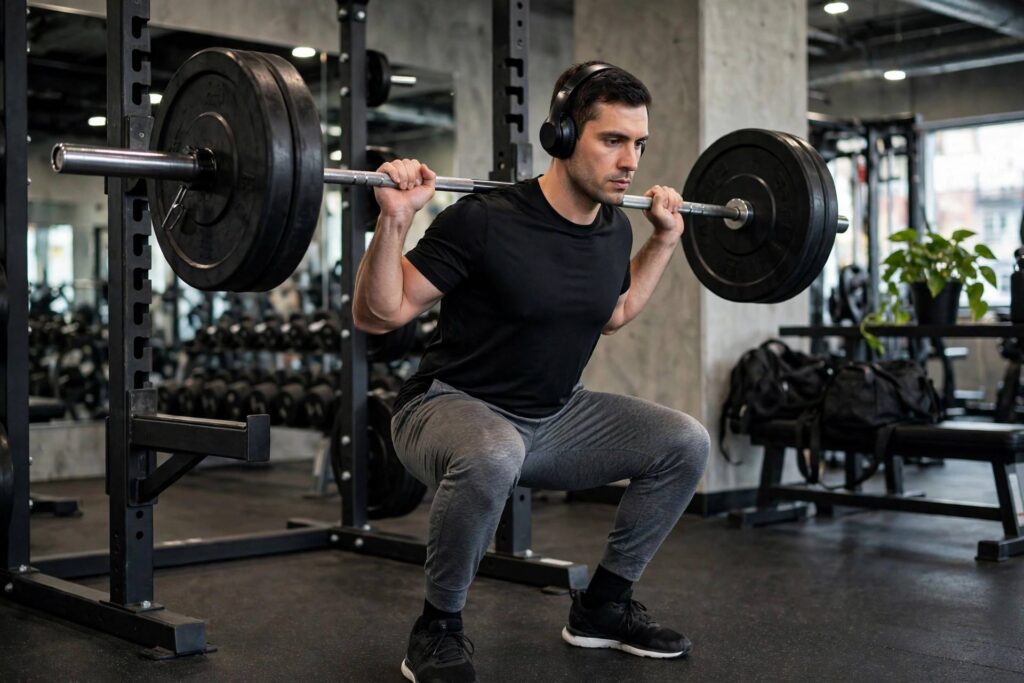
2. Grip and brace (for barbell). Get under the bar, squeeze your shoulder blades together, and rest the bar on your upper back — not on your neck. Take a big breath into your belly, brace your core like someone’s about to punch your stomach, and unrack.
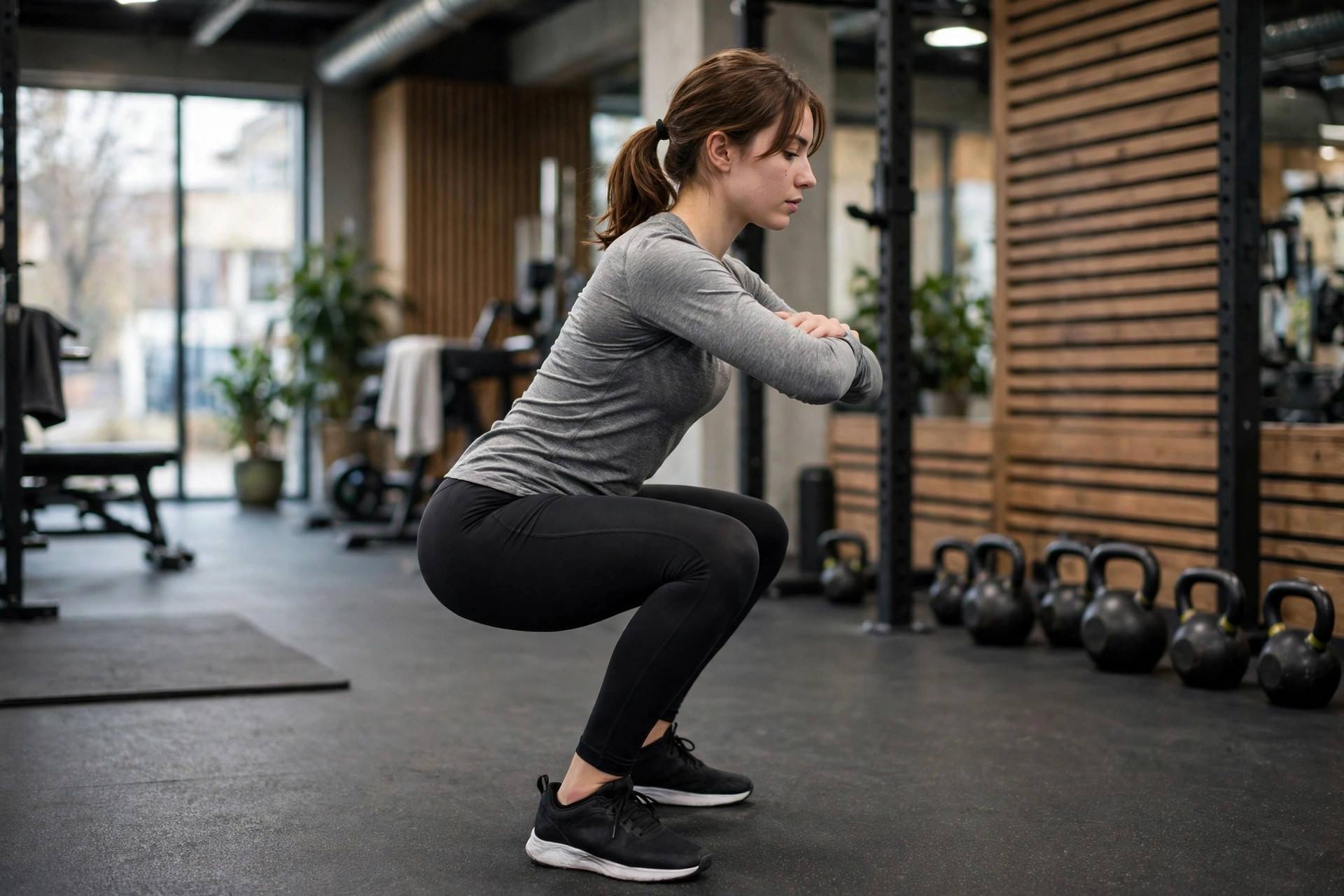
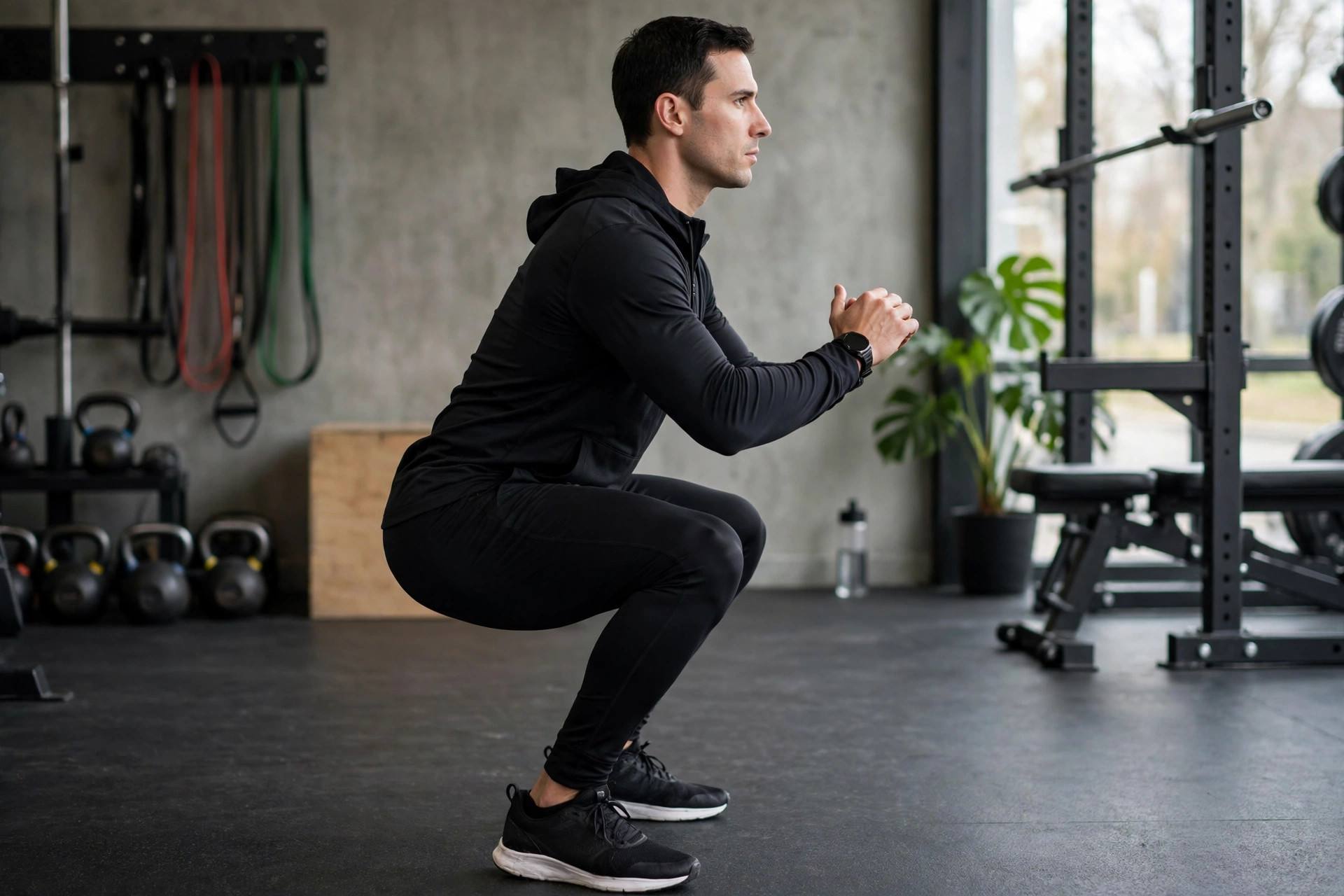
3. Initiate the descent. Break at the hips and knees at the same time — think about sitting back and down between your heels. Keep your chest up and your back flat. Your knees should track over your toes, not cave inward.
4. Hit depth. Go down until your hip crease is at or below your knees (thighs parallel to the floor, or a bit below). Half squats build half results — but only go as deep as you can while keeping your back flat and heels down.
5. Drive up. Push the floor away through your whole foot — big toe, little toe, heel all pressing. Keep your chest up, knees tracking out, and exhale as you stand. Don’t let your hips shoot up faster than your chest; rise as one unit.
The 5 Mistakes I See Every Week
Knees caving in. The most common fault. Fix it by thinking “knees out” and pushing them toward your pinky toes. If they still cave, the weight is too heavy or your glutes need strengthening — back and posterior-chain training programs often include the accessory work that fixes this.
Heels lifting off the floor. Usually tight ankles. Elevate your heels slightly (weightlifting shoes or a small plate under each heel) while you work on ankle mobility separately. Never squat heavy on your toes.
Rounding the lower back (“butt wink”). Your pelvis tucks under at the bottom. Fix: don’t force depth past what your mobility allows, brace harder, and work on hip mobility. Depth you can’t control isn’t depth — it’s a liability.
Chest collapsing forward. The bar drifts forward and your back takes over. Cue: “chest up, elbows down.” Front squats and goblet squats are great teachers for staying upright.
Bouncing out of the bottom. A slight stretch reflex is fine; crashing down and bouncing off your knees is not. Control the descent — two to three seconds down — then drive up with intent.
Breathing and Bracing: The Part Everyone Skips
Your core is your built-in weight belt, but only if you use it. Before each rep, take a deep breath into your belly (not your chest), brace your abs hard in all directions, and hold that pressure through the hardest part of the rep. Exhale at the top. This bracing is what keeps your spine stable under load.
If you’re doing high-rep bodyweight squats, you don’t need a full breath hold — just keep your core engaged and breathe rhythmically. But the moment there’s meaningful weight on your back, bracing is non-negotiable. A lifter who braces properly can handle weight that would fold an unbraced lifter in half.
How to Progress Your Squats Safely
Start with bodyweight or goblet squats until you can do 3 sets of 15 with clean form. Then move to the barbell: start with just the bar, add small increments (5 lbs per session is plenty for beginners), and only add weight when all your reps look the same — first rep and last rep.
Train squats 2-3 times per week with at least a day of rest between heavy sessions. Film yourself from the side every few weeks; what you feel and what you’re actually doing are often different things. And remember that squats are one piece of a balanced program — compound vs. isolation exercises explains how they fit alongside other big lifts, and workout splits helps you structure the week around them.
Bodyweight, Goblet, or Barbell: Which Squat Should You Do?
Bodyweight squats are perfect for learning the pattern, warming up, and high-rep conditioning. Goblet squats (holding a dumbbell or kettlebell at your chest) are the best teaching tool ever invented — the front load forces you upright and the counterbalance helps depth. Barbell back squats are the heavy artillery for building serious strength once your form is dialed in.
My recommendation for beginners: master bodyweight, graduate to goblet squats for a few weeks, then start barbell work. There’s no prize for rushing to the barbell and every penalty for arriving with bad habits.
A Quick Warm-Up Routine Before Heavy Squats
Never walk in cold and load a barbell. This ten-minute routine gets your hips, ankles, and core ready:
- 3 minutes of light cardio. Bike, rower, or brisk walk — just raise your body temperature.
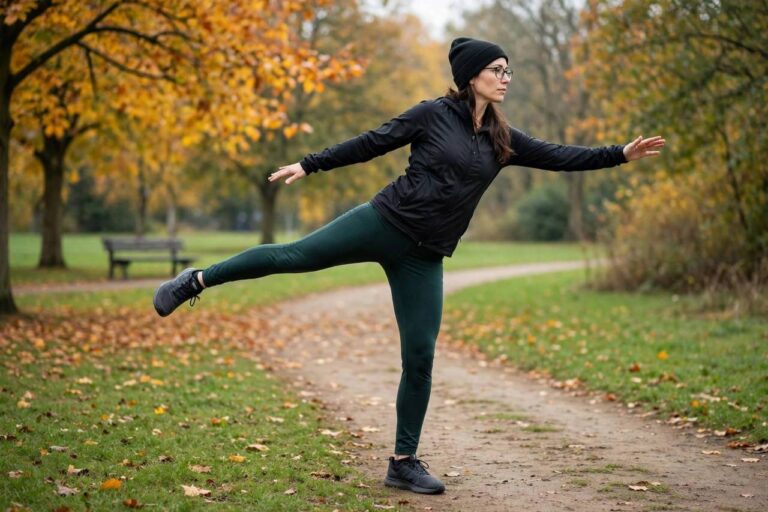
- Leg swings: 10 front-to-back and 10 side-to-side per leg to open the hips.
- Deep bodyweight squats: 2 sets of 10, slow and controlled, sitting into your full depth.
- Glute bridges: 2 sets of 12 to wake up the glutes so they actually fire during squats.
- Bar-only warm-up sets: 2 sets of 8-10 with just the bar, then ramp up in small jumps.
The whole thing takes ten minutes and pays for itself in better movement and fewer tweaks. Lifters who warm up properly don’t just get hurt less — they lift better from the first working set, because the pattern is already grooved. Treat the warm-up as part of the workout, not an optional extra.
5 Squat Variations Once the Basics Are Solid
When your basic squat looks clean for 3 sets of 12-15, these variations keep progress coming and fix weak points:
1. Goblet squat. Hold a dumbbell or kettlebell at your chest. The front load is self-correcting — it punishes leaning forward — making this the best variation for cementing upright form. Go heavier here before touching a barbell.
2. Front squat. Bar rests on the front of your shoulders. Brutal on the quads and core, and it demands serious upper-back strength to stay upright. Start light; the rack position alone takes practice.
3. Box squat. Squat to a box or bench set at parallel, pause briefly, then stand. It teaches you to sit back, eliminates the bounce, and builds explosive power out of the bottom. Great for people who dive-bomb their reps.
4. Pause squat. Pause 2-3 seconds at the bottom of each rep. This kills momentum and builds strength in your weakest position. Your weights will drop — that’s the point. It’s a feature, not a bug.
5. Bulgarian split squat. Rear foot elevated on a bench, squat on one leg. Unilateral work exposes left-right imbalances that bilateral squats hide, and it hammers the glutes. Expect to be humbled by light weight.
Add one variation at a time, keep the basic squat as your foundation, and don’t collect variations like trading cards. Two or three squat patterns trained consistently beat six done sloppily.
How Squats Fit Into a Full Program
Squats are a lower-body cornerstone, but they’re not a whole program. Pair them with a hip-hinge movement (deadlift or Romanian deadlift), an upper-body push, an upper-body pull, and some single-leg work, and you’ve covered the fundamentals. Train the full body 2-4 times per week, progress the weights gradually, eat enough protein, and sleep — the unglamorous stuff is what actually builds the body. The squat just gets the glory.
FAQ
How deep should I squat?
Aim for your hip crease at or below knee level (thighs parallel or slightly below). Only go as deep as you can with a flat back and heels on the floor — forced depth with a rounded back causes more harm than good.
Should my knees go past my toes when squatting?
For most people, yes — knees traveling slightly past the toes is normal and safe, especially for taller lifters. What matters is that your knees track in line with your toes and your weight stays over your whole foot.
Why do my knees hurt when I squat?
Usually it’s a form issue: knees caving inward, weight shifting to the toes, or depth beyond your mobility. Drop the weight, film your form from the side, and fix the mechanics before adding load. Persistent pain deserves a professional assessment.
How many squats should a beginner do?
Start with 3 sets of 10-15 bodyweight or goblet squats, 2-3 times per week. Focus entirely on clean reps. Add weight or reps gradually once every set looks identical.
Are squats bad for your knees?
No — squats done with correct form actually strengthen the muscles that protect your knees. Knee problems from squatting come from bad mechanics (caving knees, excessive forward shift) or too much weight too soon, not from the exercise itself.