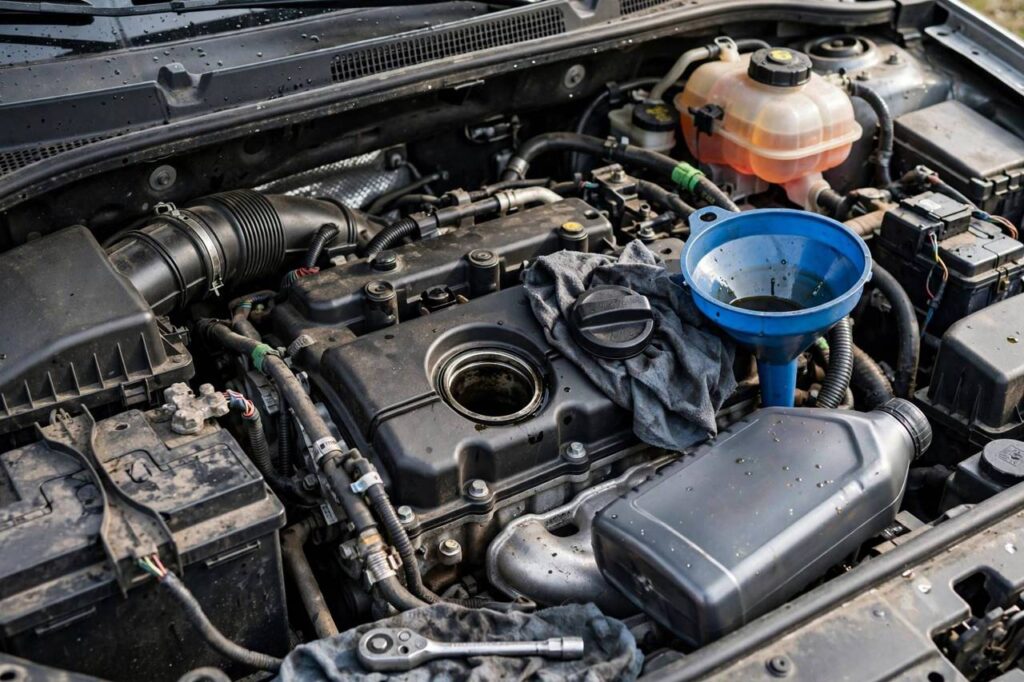
How Often Should You Change Car Oil? The Real Answer


Ask ten people the question “how often should you change car oil” and you will get ten different answers, delivered with total confidence. Your dad says every 3,000 miles. The sticker on your windshield says 5,000. Your owner’s manual says 7,500 or even 10,000. Somebody’s uncle swears the whole thing is a scam. I have spent twenty years under hoods, and I am going to give you the answer the industry gives when nobody is trying to sell you anything: it depends on your oil, your engine, and how you drive — but for most modern cars on full synthetic oil, somewhere between 7,500 and 10,000 miles (or once a year, whichever comes first) is the honest range.
That probably sounds vague, so let us get specific. The right interval for your car is not a folk number passed down through generations. It is a combination of what oil is in the engine, what the manufacturer engineered the engine for, and whether your driving is easy or brutal on oil. By the end of this guide you will know exactly which interval fits your situation — and why the old 3,000-mile rule belongs in a museum.
How Often Should You Change Car Oil? The Short Answer by Oil Type
The single biggest factor in your oil change interval is the type of oil in your crankcase. Here is how the three main types break down:
- Conventional oil: every 3,000 to 5,000 miles. This is the old-school refined crude oil. It breaks down faster under heat, so it needs replacing sooner. Fewer and fewer new cars use it.
- Synthetic blend: every 5,000 to 7,500 miles. A mix of conventional and synthetic base stocks — a middle ground on both price and longevity.
- Full synthetic: every 7,500 to 10,000 miles (some manufacturers allow up to 12,000-15,000 under ideal conditions). Engineered molecules resist heat breakdown far better. This is what most cars built in the last decade call for.
If you are not sure what is in your engine, check your owner’s manual — it specifies the required oil grade (something like 5W-30) and usually the type. And here is a rule that matters: never go longer than the interval for the cheapest oil currently in the engine. If a shop topped you off with conventional during a visit, your synthetic interval no longer applies.
The 3,000-Mile Rule: Where It Came From and Why It Died
The 3,000-mile oil change is the most persistent myth in car maintenance, and it is worth understanding why it existed — because it was not always wrong. In the 1970s and 80s, engines ran dirtier, oils were all conventional, fuel contained more contaminants, and 3,000 miles was genuinely sensible advice. Quick-lube shops then spent decades repeating it because, well, more frequent changes mean more visits.
Everything changed. Modern engines run cleaner and tighter. Oils are chemically engineered to resist breakdown. Filtration improved. The result: changing full synthetic oil at 3,000 miles is like throwing away a sandwich after one bite. You are not protecting your engine — you are just spending money and oil for no benefit. Your owner’s manual, written by the people who designed and warranty your engine, is the authority here, not a sticker from a shop that profits from your visits.
That said, there is one version of the old rule worth keeping: the time limit. Oil degrades sitting in an engine even if you barely drive. Most manufacturers say change it at least once a year regardless of mileage. If your car sits in a garage eleven months a year, the calendar — not the odometer — is your trigger.
Your Driving Conditions Change Everything
Here is where most generic advice falls apart. Manufacturers publish two schedules — “normal” and “severe” service — and a surprising number of drivers qualify for severe without knowing it. If any of these describe your driving, use the shorter end of your interval range:
- Frequent short trips (under 10 miles). The engine never fully warms up, moisture and fuel accumulate in the oil, and it never gets hot enough to burn them off. This is the number-one severe condition, and it describes most city commuters.
- Stop-and-go traffic or extensive idling. The odometer barely moves while the engine keeps working and the oil keeps aging.
- Dusty, muddy, or gravel roads. Contaminants find their way in.
- Towing, hauling heavy loads, or roof cargo. More load means more heat and stress on the oil.
- Extreme heat or extreme cold. Both ends of the thermometer are hard on oil chemistry.
Be honest with yourself here. The suburban parent doing school runs in winter traffic is running severe service, full stop. If that is you, take the manufacturer’s severe-service interval — or knock 20 to 30 percent off the normal number — and you will be in good shape.

How to Check Your Oil Level (Do This Monthly)
Whatever interval you choose, it assumes the engine actually has enough oil — and engines consume oil between changes, especially as they age. Checking takes ninety seconds and I wish more people did it:
- Park on level ground and wait a few minutes after shutting off the engine so oil settles.
- Pull the dipstick, wipe it clean with a rag, push it all the way back in, then pull it out again.
- Read the level between the min and max marks. If it is at or below minimum, add the correct oil — do not wait for the next change.
- Look at the color and feel. Fresh oil is amber and smooth. Very dark, gritty oil is telling you the change is overdue. Milky or foamy oil can signal coolant contamination — get that checked promptly.
Low oil kills engines faster than old oil does. I have seen more engines destroyed by running two quarts low than by stretching an interval a thousand miles. The dipstick is free. Use it.
Oil Life Monitors: Can You Trust the Dashboard?
Most cars built in the last fifteen years have an oil life monitoring system — that percentage on your dashboard. These are smarter than people give them credit for. They do not just count miles; they factor in engine temperature, RPM, trip length, and idle time to estimate how hard your oil has worked. In my experience, they are reasonably conservative and worth following.
Two caveats. First, the monitor does not know what oil is in the engine. If it was calibrated for synthetic and someone put in conventional, its math is wrong. Second, it does not measure oil level — it only estimates oil condition. A car can read 60% oil life and be a quart low. The monitor and the dipstick are partners, not substitutes.
What Actually Happens When You Wait Too Long
Let us talk about the stakes, because “change your oil” advice hits different when you know what is on the other side. As oil ages, it oxidizes, thickens, and loses its ability to keep contaminants suspended. Sludge forms — first in the tight passages, then everywhere. Bearings that should glide on a film of oil start making metal-to-metal contact. Wear accelerates quietly for a long time, and then one day it is not quiet anymore.
The expensive failures I see from neglected oil are depressingly consistent: worn timing chains and tensioners (a multi-thousand-dollar job on many engines), scored cylinder walls, and in the worst cases, seized engines. An oil change costs a fraction of any of those. This is the cheapest insurance your car has. Skipping it to save fifty bucks is the worst trade in all of car ownership.
On the flip side, changing too often has a cost too — just not to your engine. It is money and perfectly good oil down the drain. The sweet spot is the manufacturer’s interval, adjusted for your actual driving. Not your dad’s interval. Not the shop’s interval. Yours.
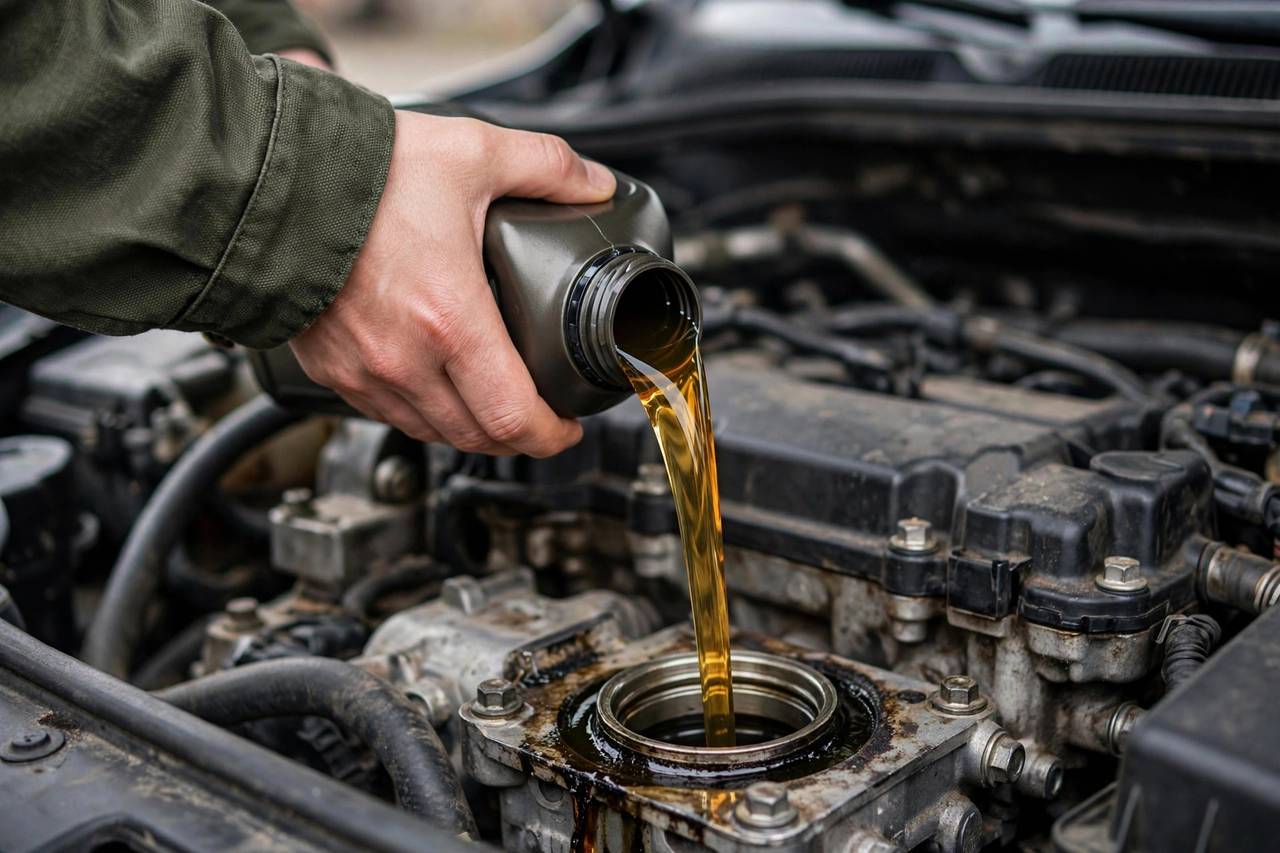
Picking Your Interval: A Simple Decision Framework
Here is how I would set it up if your car rolled into my shop:
- Start with the manual. Find the recommended oil type and interval. This is your baseline and your warranty protection.
- Identify your oil. Full synthetic gets the long interval; blend or conventional gets the short one. Match the interval to what is actually in the engine.
- Adjust for driving. Mostly highway miles in mild weather? Use the full published interval. Short trips, traffic, towing, or temperature extremes? Use the severe-service number.
- Set the calendar backstop. Once a year minimum, no matter what the odometer says.
- Check the level monthly. The interval only works if the oil is actually in there.
For a concrete example: a 2020 sedan on full synthetic, mostly highway commuting, manual says 10,000 miles — run it to 10,000 (or one year). Same car doing five-mile city trips in winter? I would do 6,000 to 7,500. Different cars, different lives, different answers — and both are right.
Frequently Asked Questions
How often should you change car oil with full synthetic?
Most manufacturers recommend every 7,500 to 10,000 miles or once a year, whichever comes first, for full synthetic oil. Always check your owner’s manual first, and use the shorter severe-service interval if you mostly drive short trips, sit in traffic, tow, or face extreme temperatures.
Is it bad to change your oil every 3,000 miles?
It will not harm your engine, but with modern full synthetic oil it is unnecessary — you are spending money and discarding good oil for no added protection. The 3,000-mile rule made sense decades ago with conventional oil and older engines, but today’s chemistry and engineering have moved on. Follow your manual instead.
What happens if you go too long without an oil change?
Old oil thickens, forms sludge, and stops protecting moving parts properly. Over time this accelerates wear on bearings, timing chains, and cylinder walls, which can lead to very expensive repairs or complete engine failure. Low oil level is even more dangerous than old oil, so check the dipstick monthly regardless of your interval.
Should you change oil based on time or mileage?
Both — whichever comes first. Oil degrades from heat cycles, moisture, and oxidation even when the car sits, which is why nearly every manufacturer specifies a time limit (usually 12 months) alongside the mileage interval. Low-mileage drivers should follow the calendar.
Can you switch from conventional to synthetic oil?
Yes, in virtually all modern engines you can switch to synthetic at any oil change with no special procedure. Synthetic is compatible with the seals and materials in modern engines. Just make sure the viscosity grade (like 5W-30) matches what your manual specifies, and reset your interval expectations to the longer synthetic schedule.
If you want to go deeper on the hands-on side, I have also covered how often to change engine oil with more detail on reading your dipstick and spotting the warning signs. But the core message of this guide fits on an index card: know your oil, know your driving, follow the manual, check the level. Do those four things and your engine will outlast your car payments — probably by a lot.